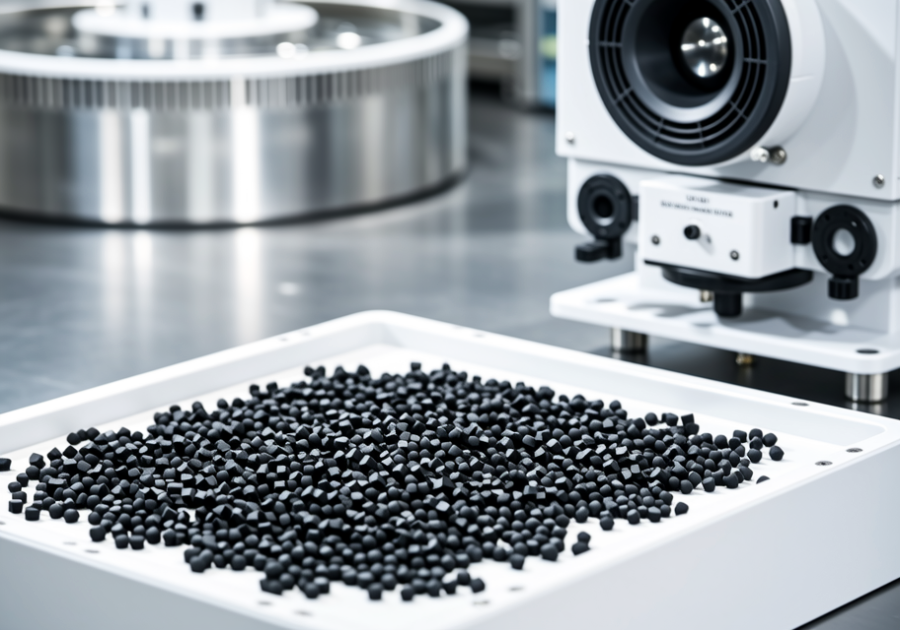
Covestro Announces Zero Carbon Footprint MDI (Diphenylmethane Diisocyanate)
On February 24, Covestro announced that it has started offering zero-carbon footprint MDI (diphenylmethane diisocyanate) to customers. Through an ISCC Plus certified mass balance approach, alternative raw materials based on plant waste are allocated to the product, thereby achieving zero carbon emissions from its cradle-to-gate lifecycle stage. This new level of MDI can be widely used in construction, cold chain and automotive fields.
According to the general calculation model, the production of this product in the above-mentioned stages of the value-added cycle produces no CO2 emissions as a whole. Covestro manufactures the zero-carbon footprint MDI and its precursors at its sites in Krefeld-Jurdingen, Germany, Antwerp, Belgium, and Shanghai, all three of which are ISCC Plus certified for mass balance.
Sucheta Govil, Chief Commercial Officer of Covestro, said: "With the launch of the Zero Carbon Footprint MDI, we are further expanding our zero carbon footprint product portfolio. I am delighted that this will allow us to better serve most of the world of our customers with support and services to help them achieve their sustainability goals and transition to a circular economy.” Just last December, Covestro announced the launch of a zero-carbon footprint polycarbonate product.
Hermann-Josef Dörholt, Global President of Covestro's Performance Materials business unit, said: "Products with a zero carbon footprint are the key to helping us achieve our sustainability goals. Our zero carbon footprint MDI has another significant advantage: as a ready-to-use MDI The solution – our customers can use it in production right away without changing the process and without compromising the quality of the final product.”
More sustainable building insulation materials
Take the application of building thermal insulation as an example. MDI is an indispensable raw material for the production of polyurethane (PU) insulation panels, sandwich panels and other products whose value has been proven over the years in achieving efficient thermal insulation of buildings.
By using polyurethane insulation, a building's heating or cooling needs can be reduced by up to 70%, which not only reduces carbon dioxide emissions, but also saves occupants money.
The thickness of the material can also be made thinner by design to achieve good thermal insulation properties, so they can also save resources and free up more usable space than other insulation materials.
On the basis of the good thermal insulation properties of polyurethane insulation materials, Covestro zero carbon footprint MDI also helps to reduce the embodied carbon emissions in the life cycle of buildings, which can bring further sustainable development benefits.
Therefore, by using polyurethane thermal insulation materials based on zero-carbon footprint MDI in new construction and renovation projects, an important contribution can be made to the responsible use of virgin resources and to a significant reduction in CO2 emissions.

You May Interested In


Glow70/KLOW80 99% China Peptides Warehouse Direct Delivery Lyophilized Powder in Stock
$169/UNIT FOB


2026-10-20
Trade Alert
Delivering the latest product trends and industry news straight to your inbox.
(We'll never share your email address with a third-party.)

Related News
-
Covestro Introduces Desmodur® ClimateValue to Cut pMDI Carbon Footprint by 25%
-
Wanhua USA Reaches $7.75 Million Settlement in MDI/TDI Antitrust Lawsuit
-
Huntsman Issues Two Consecutive MDI Price Hike Notices: €250 Increase in Europe, $300 Increase in India
-
Multiple Chemical Industry Leaders Post Strong H1 Earnings Growth as Sector Profitability Revives
-
Covestro CEO: The EU Must Decide Which Industries to Protect, or Energy-Intensive Sectors Will Move Out
-
Covestro CEO: The EU Must Decide Which Industries to Protect, or Energy-Intensive Sectors Will Move Out
-
Covestro Builds New 660,000-ton MDI Plant in China: Global Supply Gap Meets Chinese Overcapacity Head-On
-
Covestro Builds New 660,000-ton MDI Plant in China: Global Supply Gap Meets Chinese Overcapacity Head-On
-
Wanhua Chemical's Fujian 800,000 t/y MDI Plant Undergoes Scheduled Maintenance
-
Iran's Only MDI/TDI Plant Attacked, Middle East Supply Nearly Zero, Global Gap Widens
Recommend Reading
-
![Profit Crushed, Layoffs and Restructuring Follow: What WACKER Chemie’s 2025 Performance Reveals]()
Profit Crushed, Layoffs and Restructuring Follow: What WACKER Chemie’s 2025 Performance Reveals
-
![Croda’s First-Half Profit Outpaces Sales as Beauty Actives Grow 19%]()
Croda’s First-Half Profit Outpaces Sales as Beauty Actives Grow 19%
-
![GACL Approves Additional Hydrochloric Acid Unit at Dahej]()
GACL Approves Additional Hydrochloric Acid Unit at Dahej
-
![When the Chemical Industry Is No Longer Highly Profitable: Sinochem International’s 2.4 Billion Yuan Loss Reveals the Truth About Industry Cycles]()
When the Chemical Industry Is No Longer Highly Profitable: Sinochem International’s 2.4 Billion Yuan Loss Reveals the Truth About Industry Cycles
-
![Brenntag Expands Distribution of Givaudan’s Active Beauty Ingredients to Malaysia and Singapore]()
Brenntag Expands Distribution of Givaudan’s Active Beauty Ingredients to Malaysia and Singapore
-
![This Week's Domestic Petrocoke Market Shows Mixed Trends]()
This Week's Domestic Petrocoke Market Shows Mixed Trends
-
![FDA Revokes Orange B Authorization and Proposes Removing Citrus Red No. 2]()
FDA Revokes Orange B Authorization and Proposes Removing Citrus Red No. 2
-
![Business Society’s August 21, 2026 View on Isooctanol Market Trends: Clearly Upward]()
Business Society’s August 21, 2026 View on Isooctanol Market Trends: Clearly Upward
-
![January Activated Carbon Prices Fluctuate and Rise in China]()
January Activated Carbon Prices Fluctuate and Rise in China
-
![Business Society’s Market Outlook for Formic Acid on August 21, 2026: Volatile]()
Business Society’s Market Outlook for Formic Acid on August 21, 2026: Volatile