A protein may help prevent radiation damage
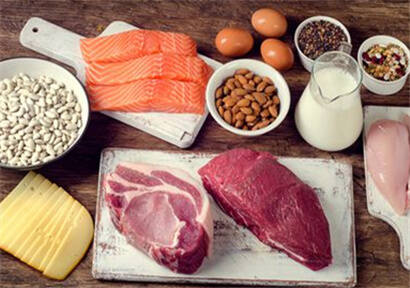
Spanish researchers recently reported in the American Journal of Science that raising the level of a protein in the body protects the gastrointestinal tract from radiation damage. This discovery not only reduces the side effects of radiation therapy on cancer patients, but also promises to protect the health of victims of nuclear disasters and astronauts. Radiotherapy inhibits the growth of cancer cells by high-energy radiation, but it also injures healthy cells, sometimes induces gastrointestinal syndrome and even leads to death. Researchers from the National Cancer Research Center of Spain and other institutions found that after exposure to high doses of radiation, mice with a high protein content called URI did not have gastrointestinal syndrome, but all survived, and 70% of normal mice with normal protein content died of gastrointestinal syndrome. The mice with lower protein content all died of gastrointestinal syndrome.
Researchers said that although the function of URI protein was not fully understood at present, they found a mechanism by which URI protects cells from radiation damage. URI proteins are expressed in a dormant stem cell population located in the intestinal crypt. When URI proteins are expressed in these stem cell populations, these cells do not proliferate and therefore are not exposed to radiation, because radiation only affects proliferating cells. When there is no such protein in the stem cell population, the overexpression of oncogene induces cell proliferation, which leads to cell sensitivity to radiation damage and cell death.

You May Interested In



2026-09-09
Trade Alert
Delivering the latest product trends and industry news straight to your inbox.
(We'll never share your email address with a third-party.)

Related News
-
Innovating Protein Enrichment: Balancing Taste, Texture, and Nutrition in Yoghurt
-
EIT Food Advocates Protein Diversification for a Sustainable Food Industry
-
Vegan Diet Awareness Drives Meat Substitutes Market to US$67.9 Billion by 2033 | Future Market Insights, Inc.
-
Biuret Test for Protein- Test to Determine the Presence of Protein
-
The importance of amino acids and the cost performance of livestock and poultry feed
-
Is Protein an Organic Compound? The Organic Compound You Never Knew
-
Understanding Hydrolyzed Protein
-
Protein And DHA Will Be Used As Functional Raw Materials For Record
-
How to reasonably intake amino acids from food?
-
Scientists extract protein from shrimp processing wastewater
Recommend Reading
-
![Titanium Dioxide Prices Are Up Again! This Round of Increases Has One Real Driver: Sulfuric Acid]()
Titanium Dioxide Prices Are Up Again! This Round of Increases Has One Real Driver: Sulfuric Acid
-
![Hormuz in Crisis: Freight Rates Surge to $6,000 as Global Trade Feels the Shock]()
Hormuz in Crisis: Freight Rates Surge to $6,000 as Global Trade Feels the Shock
-
![Saudi Aramco’s 400,000 bpd Jazan Refinery Shuts After Attack]()
Saudi Aramco’s 400,000 bpd Jazan Refinery Shuts After Attack
-
![The Last 10% Tariff Trap: A New Chapter in U.S.–China Negotiations on “Fentanyl Tariffs”]()
The Last 10% Tariff Trap: A New Chapter in U.S.–China Negotiations on “Fentanyl Tariffs”
-
![Selling the Family Silver for a New Suit? Why Bohai Chemical’s Transformation Drama Got Canceled After Just Two Acts]()
Selling the Family Silver for a New Suit? Why Bohai Chemical’s Transformation Drama Got Canceled After Just Two Acts
-
![Bull and Bear Factors Intertwined, Polyethylene at High Levels with Fluctuations]()
Bull and Bear Factors Intertwined, Polyethylene at High Levels with Fluctuations
-
![Business Society’s Market Outlook for Propylene Oxide on August 21, 2026: Price Trend Is Expected to Be Volatile]()
Business Society’s Market Outlook for Propylene Oxide on August 21, 2026: Price Trend Is Expected to Be Volatile
-
![Business Society’s Market Outlook for Phthalic Anhydride on September 8, 2026: More Likely to Resist Decline]()
Business Society’s Market Outlook for Phthalic Anhydride on September 8, 2026: More Likely to Resist Decline
-
![Cyclohexane Market Supply and Demand Balance, Operating Steadily in China]()
Cyclohexane Market Supply and Demand Balance, Operating Steadily in China
-
![International oil prices fall from high levels, polybutadiene rubber market weakens]()
International oil prices fall from high levels, polybutadiene rubber market weakens