China's per capita gross income is higher than the average middle-income country
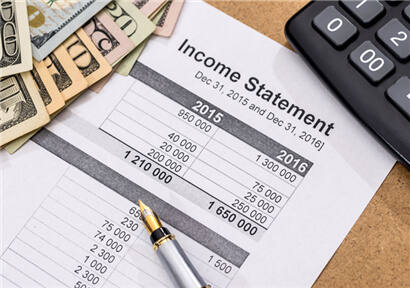
On July 1, the website of the National Statistical Bureau published "Seventy Years of Great Changes and Great Changes in National Renaissance Casting Glory - One of the series reports on the achievements of economic and social development on the 70th anniversary of the founding of New China". The report shows that since the 70th anniversary of the founding of New China, China's national economy has continued to grow rapidly and its total economic output has reached a new level. In 2018, China's per capita GNI reached US$9732, which is higher than the average level of middle-income countries. The full text of the report:
2019 is the 70th anniversary of the founding of New China. Over the past 70 years, under the strong leadership of the Communist Party of China, the people of all nationalities in the country have united to face difficulties, forged ahead, made great efforts to move forward, from closed and backward to open up and progress, from insufficient food and clothing to a well-off society in an all-round way, from poverty and weakness to prosperity and strength, and created one great miracle after another in the history of human development. The Chinese nation has ushered in a great leap from standing up, getting rich to becoming strong, and is striding on the new journey of the great rejuvenation of the Chinese nation. From being poor to being the second largest economy in the world, China's comprehensive national strength and international influence have achieved a historic leap over the past 70 years since the founding of the People's Republic of China.
(1) The national economy continues to grow rapidly, and the total economic output has reached a new level. When New China was born, its economic foundation was extremely weak. In 1952, China's GDP was only 67.9 billion yuan, with a per capita GDP of 119 yuan. After long-term efforts, China's GDP increased to 367.9 billion yuan in 1978, accounting for 1.8% of the world economy, ranking 11th in the world. Since the reform and opening up, China's economy has developed rapidly. In 1986, China's total economic volume exceeded 1 trillion yuan. In 2000, it exceeded Italy to become the sixth largest economy in the world. In 2010, it reached 41211.9 billion yuan, surpassed Japan and ranked second in the world year after year. Since the Eighteenth National Congress of the Communist Party of China, China's comprehensive national strength has been continuously enhanced. Over the past three years, China's total economic output has spanned 700,000, 800,000 and 900,000 billion yuan, reaching 90,030.9 billion yuan in 2018, accounting for nearly 16% of the world economy. According to the fixed price calculation, the gross domestic product in 2018 is 175 times higher than that in 1952, with an average annual growth rate of 8.1%. Among them, the average annual growth rate from 1979 to 2018 is 9.4%, which is much higher than the average annual growth rate of the world economy in the same period, and the annual contribution rate to the world economic growth is about 18%, second only to the United States in the world. In 2018, China's per capita GNI reached US$9732, which is higher than the average level of middle-income countries.
(2) Fiscal strength has increased from weak to strong, and foreign exchange reserves have increased substantially. In the early days of the founding of the People's Republic, China's finance was very difficult. In 1950, the national fiscal revenue was only 6.2 billion yuan, and increased to 113.2 billion yuan in 1978. Since the reform and opening up, with the rapid development of the economy, the fiscal revenue has increased substantially. In 1999, the national fiscal revenue exceeded 1000 billion yuan for the first time. After entering the new century, the fiscal revenue has achieved a continuous leap, reaching 11725.4 billion yuan in 2012. Since the Eighteenth National Congress of the Communist Party of China, fiscal revenue has continued to grow rapidly, reaching 18,335.2 billion yuan in 2018. From 1951 to 2018, the national fiscal revenue increased by 12.5% annually, of which, from 1979 to 2018, it increased by 13.6% annually, providing a strong financial guarantee for promoting economic development and improving people's lives. During the 1950s and 1970s, China's foreign exchange reserves were rather tight. At the end of 1952, China's foreign exchange reserves were only $108 million, and at the end of 1978, they were only $167 million, ranking 38th in the world. Since the reform and opening up, China's foreign exchange reserves have increased steadily, exceeding US$1 trillion at the end of 2006, ranking first in the world over Japan. At the end of 2018, the balance of foreign exchange reserves was US$3072.7 billion, ranking first in the world for 13 consecutive years.
(3) The international status has been significantly improved and the influence has become increasingly prominent. Before the founding of New China and the reform and opening up, China had less economic contacts with other countries in the world because of the external blockade. In the 1950s, exchanges were held with the former Soviet Union and Eastern European countries; in the 1970s, China regained its legitimate status in the United Nations and expanded its contacts with other countries and international organizations. Since the reform and opening up, China has actively integrated into the international community and played an increasingly important role in international affairs. In April and May 1980, China resumed its legitimate seats in the International Monetary Fund and the World Bank, and joined the World Trade Organization in 2001 to participate in international economic cooperation in a more active manner. Since 2003, China has successively built free trade zones with countries and regions in Asia, Oceania, Latin America and Europe. At present, 17 free trade agreements have been reached with 25 countries and regions, which promotes mutual benefit and win-win situation between China and other countries in the world. Since the eighteen Party Congress, China has actively promoted the "one belt and one road" initiative, and has been actively responded by more than 160 countries (regions) and international organizations. It has proposed building a community of human destiny, actively participating in the formulation of international economic and trade rules represented by the WTO reform, and contributing to the wisdom of China in the transformation of the global governance system.

You May Interested In


2026-09-20
Trade Alert
Delivering the latest product trends and industry news straight to your inbox.
(We'll never share your email address with a third-party.)

Related News
-
The per capita disposable income of residents increased 59.2 times
-
U.S. Chemical Tariff Deadline Nears as the Industry Faces Cost Repricing and Supply-Chain Adjustment
-
Global Chemical Inventories Hit Critical Lows as Over 200 Chinese Companies Suspend Quotations
-
Rising Naphtha Prices in Japan Drive Up Costs for Diapers, Sanitary Products, and Cosmetics
-
Arkema Triples Transparent Polyamide Capacity in Singapore: a Bet on Virtual Reality Growth or a Move to Strengthen Supply Resilience?
-
Chemicals Are Going Wild: Sulfur Surges 512%, Titanium Dioxide, Polyols and Sulfuric Acid Lose Control
-
Hengli Sanctions Spill Over: One Barrel of Iranian Crude Pulls an Aromatics Chain Into Risk
-
Chemours Sells Its Former Titanium Dioxide Site in Taiwan: Turning a “White Powder” Factory into “Wind Power Real Estate” for $360 Million—Buying Not Cash, But Breathing Room
-
The “Counter-Wind Ledger” of CHF 11.2 Billion: Sika Barely Grew in 2025—Yet Kept Taking Market Share
-
Saudi East-West Oil Pipeline Shut Down After Attack, Disrupting 4 Million bpd of Oil Flow
Recommend Reading
-
![China's National Narcotics Control Commission Issues Important Notice: Beware of These 8 Chemicals Being Diverted for Drug Production]()
China's National Narcotics Control Commission Issues Important Notice: Beware of These 8 Chemicals Being Diverted for Drug Production
-
![Qatar LNG Supply Disruption Persists for Nearly Six Months, Exports Plunge 96%]()
Qatar LNG Supply Disruption Persists for Nearly Six Months, Exports Plunge 96%
-
![Global Countries Impose Tariffs on Chinese Chemical Products]()
Global Countries Impose Tariffs on Chinese Chemical Products
-
![Lubei Chemical Expects First-Quarter Net Profit to Rise 57.29% as Cost Control Delivers Clear Results]()
Lubei Chemical Expects First-Quarter Net Profit to Rise 57.29% as Cost Control Delivers Clear Results
-
![DIC Raises Epoxy Resin and Curing Agent Prices by Up to 280 Yen/kg]()
DIC Raises Epoxy Resin and Curing Agent Prices by Up to 280 Yen/kg
-
![Business Society’s Melamine Trend Analysis on September 15, 2026: Downward Trend]()
Business Society’s Melamine Trend Analysis on September 15, 2026: Downward Trend
-
![U.S. Formally Publishes India PFA Trade Cases, Raising New Barriers for Fluoropolymer Supply]()
U.S. Formally Publishes India PFA Trade Cases, Raising New Barriers for Fluoropolymer Supply
-
![Business Society’s Trend Analysis for Ammonium Sulfate on September 15, 2026: Stagnation and Price Increase Warning]()
Business Society’s Trend Analysis for Ammonium Sulfate on September 15, 2026: Stagnation and Price Increase Warning
-
![China’s New Food-Contact Standards Take Effect, Resetting Compliance for Coatings and Silicone Rubber]()
China’s New Food-Contact Standards Take Effect, Resetting Compliance for Coatings and Silicone Rubber
-
![Business Society September 15, 2026 Ethyl Acetate Trend Analysis: Volatile]()
Business Society September 15, 2026 Ethyl Acetate Trend Analysis: Volatile