




Ludwigshafen develops new technology and implements new steam supply concept
Currently, around 50% of the steam demand at the Ludwigshafen site comes from the steam production process, which emits large amounts of CO2, while the new approach is to use electricity to produce steam.
According to publicly available information, BASF is working with Siemens Energy on the first project at the polyethylene unit to use heat pumps and water vapour recompression to boost waste heat and thereby generate steam power to supply the steam network across the site.
The integration of this heat pump project will not only produce around 60 tonnes of steam per hour, but will also avoid around 160,000 tonnes of CO2 emissions per year and reduce cooling water consumption by more than 20 million cubic metres. This technology is scheduled to be commissioned in the second quarter of 2024 and the day-to-day operational experience gained through this project will streamline future roll-out to other sites.

Another project underway at the Ludwigshafen site is the development of an electrically heated steam cracker. The cracker is currently heated by gas and produces approximately 1 tonne of CO2 per tonne of olefin. BASF has signed an agreement with Saudi Basic Industries Corporation (SABIC) and Linde to develop and test an electrically heated steam cracker.
The three parties are evaluating the construction of a multi-megawatt demonstration plant at the Ludwigshafen site, which could start as early as 2023, once the necessary funding has been approved. At the same time, BASF is also developing a new zero-carbon hydrogen production technology for methane pyrolysis.
Antwerp near net zero emissions by 2030
BASF's Antwerp site is the largest chemical production site in Belgium and BASF's second largest integration site worldwide after Ludwigshafen.
The integrated site is expected to reduce its CO2 emissions from 3.8 million tonnes in 2021 to nearly net zero by 2030. This target can be achieved through renewable electricity imported from offshore wind farms, combined with the deployment of new low-emissions technologies and a large-scale 'Carbon Capture and Storage' (or CCS) project planned for the Port of Antwerp.
Once this goal is achieved, the Antwerp integrated site will be the first petrochemical production site to reach net zero emissions by 2030.

You May Interested In


High Quality β-Nicotinamide adenine dinucleotide CAS 53-84-9 NADwith ready stock and best price
$3/UNIT FOB


2026-10-15
Trade Alert
Delivering the latest product trends and industry news straight to your inbox.
(We'll never share your email address with a third-party.)

Related News
-
IRENA: Renewables remain price-competitive amid fossil fuel crisis
-
China's Ministry of Ecology and Environment responds on environmental issues
-
Ministry of Ecology and Environment: 13 departments are studying and formulating action plans for the management of new pollutants
-
New energy vehicle raw materials soar How the national industry is coping
-
EU renewable energy power generation surpasses fossil fuel for the first time
-
Yulin and Tongchuan regulating coal washing and coal storage chaos
-
Environmental Protection Storm Shandong Chemical Industry Park
-
Exposure of Chemical Enterprises on the Open Day of Environmental Protection
-
Jerry Environmental Protection: Win Customer Trust with Strength
-
LG Chem Teams Up with Jianghua Microelectronics to Advance Semiconductor Ultra-High-Purity IPA
Recommend Reading
-
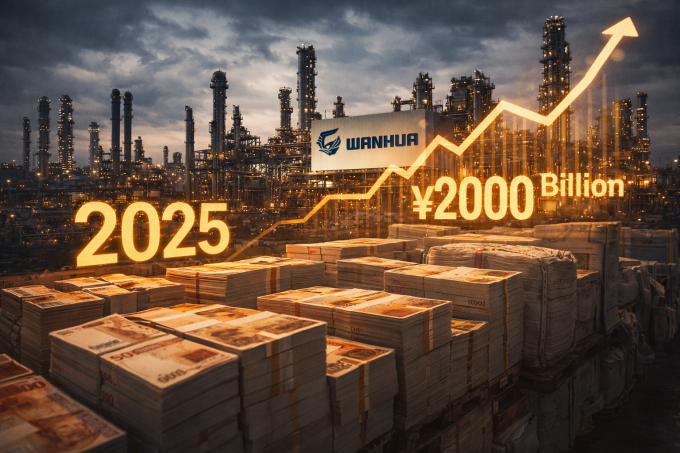
![Wanhua Chemical’s 2025 Revenue Exceeds RMB 200 Billion While Net Profit Remains Under Pressure]()
Wanhua Chemical’s 2025 Revenue Exceeds RMB 200 Billion While Net Profit Remains Under Pressure
-
![When the Skin of Ships Gets More Expensive: A 30% Price Shock Is Quietly Rewriting the Cost Floor of Global Shipping]()
When the Skin of Ships Gets More Expensive: A 30% Price Shock Is Quietly Rewriting the Cost Floor of Global Shipping
-
![U.S. Chemical Companies Are Benefiting from This Feedstock Shock]()
U.S. Chemical Companies Are Benefiting from This Feedstock Shock
-
![Ukraine Strikes Russia’s Ryazan Refinery Again, Setting 17-Million-Tonne Facility Ablaze]()
Ukraine Strikes Russia’s Ryazan Refinery Again, Setting 17-Million-Tonne Facility Ablaze
-
![Wanhua Chemical Raises Southeast Asia MDI and TDI Offers by $200 per Tonne]()
Wanhua Chemical Raises Southeast Asia MDI and TDI Offers by $200 per Tonne
-
![Recent EVA Market Trend Continues to Be Weak in China]()
Recent EVA Market Trend Continues to Be Weak in China
-
![Business Society September 14, 2026 MTBE Trend Analysis: Strong Consolidation]()
Business Society September 14, 2026 MTBE Trend Analysis: Strong Consolidation
-
![Styrene-butadiene Rubber Market Prices Slightly Rise]()
Styrene-butadiene Rubber Market Prices Slightly Rise
-
![Business Society’s Trend Analysis for Fuel Oil 180CST on September 14, 2026: Volatile Fluctuations]()
Business Society’s Trend Analysis for Fuel Oil 180CST on September 14, 2026: Volatile Fluctuations
-
![Adequate Supply, PP Market Weak in Mid-November in China]()
Adequate Supply, PP Market Weak in Mid-November in China






- Hot Searches
- acetate cellulose
- acryloyl chloride sds
- price of sodium sulphate
- best peptide sites
- dicalcium phosphate price
- retatrutide supplier
- sulphonated naphthalene formaldehyde price
- mono propylene glycol for sale
- reta peptides where to buy
- holmium oxide price 2025
- hexadecan
- sodium sulphate anhydrous price