Global demand to be slow to absorb new US Gulf capacity - BASF
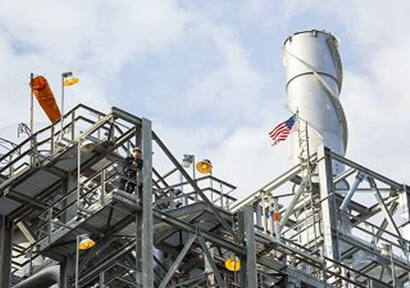
The ethylene capacity build-up on the US Gulf Coast will take some time to be absorbed by global demand, the CEO of Germany-based chemicals major BASF said on Thursday.
The ramp-up in US shale-derived oil and gas capacity, one of the key drivers of global crude supply growth in recent years, has prompted an explosion of new cracker capacity in the US Gulf as players from all over the world move to capitalise on cheap ethane feedstocks.
Domestic US demand growth was never expected to soak up the amount of ethylene chain product coming onto the market, but low growth and trade tensions with China mean that the level of capacity build-up in the region has pushed prices and margins to a 30-year low, according to BASF chief Martin Brudermuller.
“Further capacities are coming on stream, while domestic consumption is slowing. This increases the pressure to export, a challenge in view of the ongoing trade conflicts,” Brudermuller said, speaking at a press conference in Ludwigshafen, Germany.
“This also leads to increasing margin pressure on global derivatives, such as ethylene glycol [EG], in Asia and Europe. We do not expect this development to revert any time soon,” he added.
Producers added 4m tonnes of annual ethylene capacity last year and are set to add the same again in 2019, and will take some time for the market to absorb, according to CFO Hans-Ulrich Engel.
“We do not expect real improvement in North America, and it will take quite some time for this additional volumes to be absorbed, particular in situations where there is hardly any product flowing to Asia or China at present,” he said.
Producers had always expected to ship the bulk of new US ethylene-derived product overseas, with the view that some may go to Europe and some to the Middle East, but with Asia seen as a demand sponge for the lion’s share of the new supplies.
With little US chemicals product currently crossing the Pacific to China as a result of the trade war between the new countries, domestic margins are being squeezed.
BAST itself operates a flagship $1.5bn cracker in Port Arthur, Texas, with Total Petrochemicals, but the fact that the facility can take non-ethane feedstocks leaves it at a slight advantage to single-feed crackers, Brudermuller claimed.
“[Our] mixed-feed cracker eventually… puts us in an advantageous position. [Producing] not only ethylene but propylene and C4, other companies that have pure ethane crackers have a harder time to go through than we have,” he said.

You May Interested In


High Quality β-Nicotinamide adenine dinucleotide CAS 53-84-9 NADwith ready stock and best price
$3/UNIT FOB


2026-10-19
Trade Alert
Delivering the latest product trends and industry news straight to your inbox.
(We'll never share your email address with a third-party.)

Related News
-
LG Chem Restarts Yeosu No. 2 Cracker After More Than Six Months Offline
-
South Korea Retires 1.39 Million Tonnes of Ethylene Capacity as Northeast Asia’s Petrochemical Reset Turns Real
-
South Korea Approves Yeosu Restructuring Plan, Permanently Retiring 1.39 Million Tons of Ethylene Capacity
-
Lotte Chemical Signs 10-Year Ethylene Supply Agreement with Indonesian Company
-
Price increase! Raw materials soared 10%, price letter to the factory in advance!
-
Basf has broken ground on a world-class scale installation
-
Japan's monthly ethylene utilization rate hits 11-year low
-
In February, the utilization rate of ethylene equipment in Japan is still low
-
Utilization rate of ethylene equipment in Japan continues to decline
-
Tianjin Nangang Ethylene Project has made remarkable achievements in the utilization of solid waste resources
Recommend Reading
-
![Global Chemical Exports Are Freezing in 2026]()
Global Chemical Exports Are Freezing in 2026
-
![Bridgestone Reports Q3 Growth Amid Challenging North American Market]()
Bridgestone Reports Q3 Growth Amid Challenging North American Market
-
![Sika Undertakes Structural Adjustments Amid Weak Markets]()
Sika Undertakes Structural Adjustments Amid Weak Markets
-
![Two Saudi Crude Supertankers Hit in Hormuz as Brent Surges to Nearly $95]()
Two Saudi Crude Supertankers Hit in Hormuz as Brent Surges to Nearly $95
-
![Trinseo Faces Pressure in Resin Markets but Sees Growth in Recycled Products]()
Trinseo Faces Pressure in Resin Markets but Sees Growth in Recycled Products
-
![Polyethylene Supply-Side Pressure Remains Unabated, Short-Term Market Maintains Weakness]()
Polyethylene Supply-Side Pressure Remains Unabated, Short-Term Market Maintains Weakness
-
![Premium Global Chemical Sourcing Requests (10-14 Nov 2025)]()
Premium Global Chemical Sourcing Requests (10-14 Nov 2025)
-
![This Week, the Transaction Focus of China's Propylene Oxide Market Rises (11.10-11.14)]()
This Week, the Transaction Focus of China's Propylene Oxide Market Rises (11.10-11.14)
-
![Polyester bottle chip prices first fell then rebounded in February, weakening again at the end of the month in China]()
Polyester bottle chip prices first fell then rebounded in February, weakening again at the end of the month in China
-
![PVC Prices Decline After the Holiday; Short-Term Recovery Likely to Be Difficult]()
PVC Prices Decline After the Holiday; Short-Term Recovery Likely to Be Difficult