




Saudi Aramco takes a slice of Reliance's oil, refining and petrochemicals

The deal was speculated about for some time, as were concerns that it may not pan out due differences in the valuation sought. But when the announcement came from Reliance Industries Ltd. (RIL), it came with a few others that grabbed more headlines as they concerned ‘new’ businesses – in particular the roll-out of high speed broadband through fibre-to-home connections, and a joint venture with no less than Microsoft for ‘cloud’ computing and services.
But the deal announced for RIL’s oil, refining and petrochemicals businesses is no less significant. These businesses account for a sizeable chunk of the company’s current revenues and an even larger share of its profitability, though both will change in the next few years as the capital expenditure cycle on the new businesses are more or less complete, and revenues will start pouring in at a faster pace.
Desire to derisk
The desire to derisk the upstream part of the oil & refining business has been stressed by RIL’s management for some time now, and a partnership with the UK-based oil & gas giant, BP Plc, was the first manifestation of the new game plan. It also stemmed from a realisation of the stiff technical challenges that come with the uncertain business of exploration & production (E&P) of hydrocarbon assets, and more specifically in the Krishna-Godavari offshore gas fields where performance has lagged far behind prospects and promises.
In the latest announcement, made in the Annual General Meeting in front of shareholders, RIL announced that the refining, petrochemicals and fuels marketing businesses – which it collectively termed as Oil-to-Chemicals (O2C) will be carved out into a Special Purpose Vehicle (SPV) in which Saudi Aramco, the world’s largest and cheapest oil producer, will take a 20% stake for an investment of about US$15-bn. This would put an enterprise value of US$75-bn to the O2C business as a whole.
Ring-fenced operations
This is a preliminary agreement, which puts to rest any uncertainty over whether the two are talking. While there will be some tweaks in the days and months ahead in the finer aspects of the deal, the broad contours are not likely to change, and the deal should close before the end of the financial year along these lines.
According to senior RIL officials, the businesses will be ring-fenced from RIL’s other operations, and a future spin-off is a possibility. Operationally, the O2C will function on an arms length basis, with its own key management personnel, including from Saudi Aramco. The payments for the deal are expected in three tranches: 50% on closing; and the balance in two equal instalments spread over two years following closure.
Benefits to RIL
The deal offers several benefits to RIL. The obvious one is a reduction in the debt taken on by the company to fund its ambitious Jio and retail initiatives. As of June this year, this stood at a whopping US$42-bn. RIL is also expected to participate in the 5G round of bidding as and when they happen, and this will require ready cash to pay for license fees.
The second benefit comes from security of oil supply, even though scenarios of the world running out of oil are far-fetched. The Kingdom of Saudi Arabia – synonymous with Saudi Aramco as far as oil is concerned – is a significant supplier of crude oil to refineries in India. This reliance has increased in recent times to make up for the slack in supplies from Iran, Venezuela and Libya – the first two due to US-led economic sanctions. RIL itself has been a significant buyer of Saudi crude – its annual purchases from that country represent about 20% of its total needs of about 1.2-mbpd (million barrels per day). As part of the agreement now signed, RIL is committing to nearly double purchase of crude oil from Saudi Arabia to about 0.50-mbpd. This will be high quality, light crude, eminently suitable for processing and conversion into petrochemicals. The purchases will almost certainly be at market prices, though a large buyer and a strategic one tied in a close partnership could benefit from some preferential discounts.
The third benefit for RIL comes to its long-term strategy for which it will need partnerships. RIL has stated publicly and privately that it sees petrochemicals as the way to add greater value to a barrel of oil processed. Recent reports have quoted company officials as saying that it will eventually convert all of the hydrocarbons in a barrel of crude oil to petrochemicals and aviation fuel, in preparation for an era of electric mobility where demand for automotive fuels will decline. While the reports are probably an exaggeration, there is no denying that greater integration between refining and petrochemical operations is the approach to take.
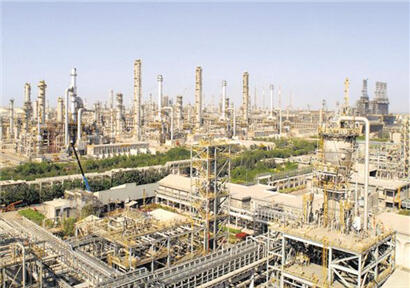
RIL’s operations – especially at Jamnagar where its two mammoth refineries operate – are even now tightly integrated, with production of polymers, chemicals, aromatics, and fibre intermediates tied to that of fuels, but the plan is to take this to a whole new level. This strategy, known as crude oil to chemicals (COTC), requires several path-breaking innovations, such as in the domain of catalysis, as well as astute engineering. The technologies to do this profitably at scale do not exist, and the partnership with Saudi Aramco with its deep pockets and ownership of petrochemicals giant, SABIC, will come in handy. SABIC has world-class R&D centres in the Kingdom and in India (at Bengaluru) and with its acquisitions in Europe, including of DSM, based in the Netherlands, it can leverage all of these to advantage. RIL too has had some modest successes at its innovation centre in its corporate headquarters, but partnerships such as this one with Saudi Aramco will provide a distinct edge.
Synergies for Saudi Aramco
For Saudi Aramco the deal has several positives as well. It offers a steady offtake of crude oil, and integration into the profitable and less volatile (compared to crude oil) business of petrochemicals. This growth strategy has been evident for some time now, and manifest in investments in several downstream ventures, most significantly the takeover of the Saudi government’s 70% stake in SABIC for $69.1-bn, which deal will be completed sometime next year.
Saudi Aramco has also stated that it has an additional war chest of $100-bn to fund acquisitions to drive its downstream business. It is betting on growing demand for fuels and petrochemicals in the large and fast growing markets of India and China, in particular, and is keen to enhance its footprint in both places. It is part of a three-way joint venture of Indian public sector companies (IOC, HPCL and BPCL), and Abu Dhabi’s national oil company, ADNOC, to build a 50-mtpa refinery in coastal Maharashtra. This project has faced some headwinds with respect site selection, but that has been resolved and an alternate location identified. Project configuration is being finalised, and a strong emphasis in petrochemicals is expected.
In China, Saudi Aramco signed a memorandum of understanding earlier this year to acquire a 9% stake in Zhejiang Petrochemical’s 0.80-mbpd integrated refinery and petrochemical complex in Zhoushan.
New Reliance
RIL’s highly efficient refinery and petrochemical operations in India have the highest earnings in Asia, outside of the mega-refiners of Sinopec and PetroChina in China. Undoubtedly, this was the lure for Saudi Aramco.
When completed the deal will represent the biggest foreign investment in the history of RIL. It is also a change from the ‘go it alone’ strategy that has driven the company’s growth for all these years. If successful, it will represent the first joint venture in the O2C business, aside of that with Russia’s Rosneft for making and selling butyl rubber.


You May Interested In


High Quality β-Nicotinamide adenine dinucleotide CAS 53-84-9 NADwith ready stock and best price
$3E+1/UNIT FOB


2026-10-24
Trade Alert
Delivering the latest product trends and industry news straight to your inbox.
(We'll never share your email address with a third-party.)

Related News
-
China-Saudi Gulei RMB 44.8 Billion Petrochemical Project to Start Production Soon
-
U.S.-Iran Détente Triggers Oil Price Plunge, Energy and Chemical Sectors Tumble
-
South Korea’s June Petrochemical Export Value Rises 18.8%, While Export Volume Falls 14.6%
-
Driving Business, Innovation, and Growth: Saudi PPPP Returns to Riyadh this June
-
An Explosion Has Occurred in the Jubail Industrial City, Putting 6–8% of Global Petrochemical Production Capacity at Risk
-
Indonesia Forges a Green Future for Its Highly Dynamic Packaging & Automotive Industries
-
Kazakhstan Launches $15 Billion Investment Plan to Accelerate Petrochemical Industry Development
-
Iran Launches New Projects to Boost Downstream Petrochemical Industry
-
DKSH Expands Distribution Partnership with Kahai in North America
-
Price increase! Raw materials soared 10%, price letter to the factory in advance!
Recommend Reading
-
![FDA Dye Phase-Out Push Opens a Bigger Window for Natural Color Solutions]()
FDA Dye Phase-Out Push Opens a Bigger Window for Natural Color Solutions
-
![U.S. API Dependence Turns Pharmaceutical Ingredients Into a National Security Issue]()
U.S. API Dependence Turns Pharmaceutical Ingredients Into a National Security Issue
-
![Glyphosate Faces New UK Pressure as EU Trade Alignment Returns to the Debate]()
Glyphosate Faces New UK Pressure as EU Trade Alignment Returns to the Debate
-
![Saudi Aramco Weighs Discounts of Up to $9/Barrel on Oman STS Crude as Freight Costs Surge]()
Saudi Aramco Weighs Discounts of Up to $9/Barrel on Oman STS Crude as Freight Costs Surge
-
![U.S. Onshoring Debate Exposes API Raw-Material Gap]()
U.S. Onshoring Debate Exposes API Raw-Material Gap
-
![Sulfate of Ammonia Market Prices Continue to Rise (3.1-3.5)]()
Sulfate of Ammonia Market Prices Continue to Rise (3.1-3.5)
-
![August TDI Market Fluctuates and Declines in China]()
August TDI Market Fluctuates and Declines in China
-
![Formic Acid Exports Drive Rebound, Upside Space Limited]()
Formic Acid Exports Drive Rebound, Upside Space Limited
-
![MTBE Market Continues to Rise in China]()
MTBE Market Continues to Rise in China
-
![Cost Support: Adipic Acid Sees Rising Prices]()
Cost Support: Adipic Acid Sees Rising Prices



- Hot Searches
- potassium chloride prices
- polyurethane melting point
- can you purchase formaldehyde
- retatrutide sale online
- o que é sesame oil
- methylene b
- retatrutide peptide supplier
- karatolytic
- non ionic surfactant for herbicides
- carbon tetrabromide
- cost of toluene
- dipotassium phosphate for food market