Agricultural security is an important guarantee of national security
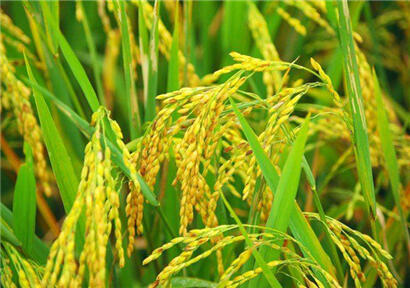
According to Li Guoxiang, researcher of Rural Development Research Institute of Chinese Academy of Social Sciences and director of agricultural product market and Trade Research Office, national security is a big concept, covering politics, economy, culture, ecology, resources, etc. And the agricultural safety is an important and basic part, because what agriculture protects is all living things, and the protection result is also for life - ourselves. Li Guoxiang said that when it comes to agricultural security, first of all, it is related to the overall food security. Food security is an important part of national security. The state should ensure that all its citizens can eat enough and have adequate nutrition supply at any time. In order to ensure food security, we need to ensure the security of agricultural industry, sustainable resources, ecological security, as well as a broader and comprehensive food security based on this. Although food safety is an integral part of food safety in a broad sense, it is also tied with food safety in practical level because of its higher requirements for quality.
In recent years, China has made remarkable achievements in food safety. In the past, food safety problems such as "Clenbuterol", "melamine", "malachite green" have been significantly reduced, and the momentum of illegal addition of additives and deterioration of various agricultural and veterinary drug residues has been effectively curbed. Now, food safety has been promoted to a strategic level. The government should play the function of supervision and accountability, and at the same time, through the market mechanism, make all participants, including producers, operators and consumers, participate in the food safety better. In today's era, agricultural trade is inevitable, and the safety of agricultural trade must be guaranteed. Li Guoxiang believes that in agricultural trade, it is necessary to ensure that China's main agricultural products have a certain self-sufficiency rate, which is a necessary condition for the safety of agricultural trade. Due to the lack of natural resources, it is difficult to meet the needs of Chinese people for all food in the new era, so it is possible to import some agricultural products moderately, but it must be moderate, not highly dependent on imports. When China joined the WTO, China was not allowed to subsidize agriculture and protect agriculture with high tariffs. The upper limit of "yellow box subsidy" in domestic support for agricultural products was 8.5%. On the issue of import, only three main grains, rice, wheat and corn, were granted tariff quotas, while soybeans, coarse grains and sorghum were not. After that, China's soybean import increased significantly. Unexpectedly, the import of corn distiller's grains, which can be used as feedstuff, also increased significantly, bypassing the limitation of corn quota, which had a certain impact on China's corn industry.
Of course, it needs a practical process to learn the rules of world agricultural trade, improve the level of trade and protect the agricultural industry and farmers in China. At present, China has gradually learned the rules for agricultural protection, such as replacing the yellow box policy with the green box policy to support green development; the target price of cotton has changed from a certain price in one year to a certain price in three years, so as to change the yellow box policy into the blue box policy in line with the provisions of the WTO. Of course, in the future, there are many ways to improve the competitiveness of China's agriculture, improve comprehensive efficiency, promote the integration of primary, secondary and tertiary industries, reduce costs, improve quality and realize green development. The protection of agricultural intellectual property is an aspect in line with the trend of the times. The protection of agricultural intellectual property rights includes the protection of agricultural product trademarks, geographical indications of agricultural and sideline products, protection of new plant varieties, protection of food patents, as well as the protection of folk culture and art such as paper-cut, print, opera, etc.
On the whole, China's agricultural intellectual property protection is still in its infancy. Taking the protection of new plant varieties as an example, at present, OEM, fake and shoddy still exist to a large extent. Li Guoxiang gave two examples: one was Cherry Valley duck, whose ancestor was Beijing duck of China. After being introduced into the UK, it was optimized and bred by the British to become a world-famous lean duck variety, and then "killed" back to the Chinese market from the UK; the other was Korean radish, which was widely introduced in China, but its parent has always been in Korea, and China can not keep its own species. Therefore, relying on and guided by the agricultural intellectual property system, through the effective implementation of the intellectual property system and the effective implementation of the intellectual property strategy, on the one hand, it can promote China to continuously produce more and better agricultural scientific and technological achievements, including new varieties; on the other hand, it can also better protect agricultural scientific and technological achievements. There are also big data protection in agriculture. Agricultural big data is an important information basis for our country's agricultural policy-making and scientific research, but in the past, the awareness of protection in this area was relatively weak. With the increasing frequency and depth of foreign exchanges, we should grasp the basic premise of big data security in academic exchanges with foreign countries and participation in overseas projects. The Zhongheng agricultural incubation center is a new type of wisdom and capital export-oriented company focusing on the equity investment of agricultural enterprises, the transformation and upgrading of agricultural enterprises, the integration of agricultural industry chain and the founders of agricultural products processing and sharing Industrial Park.

You May Interested In


High Quality β-Nicotinamide adenine dinucleotide CAS 53-84-9 NADwith ready stock and best price
$3/UNIT FOB


2026-09-27
Trade Alert
Delivering the latest product trends and industry news straight to your inbox.
(We'll never share your email address with a third-party.)

Related News
-
Hi & Fi Shenzhen 2026
-
Hi & Fi Shenzhen 2026
-
6th Drug Safety Symposium 2026 to Focus on “Beyond Algorithms & Assumptions, What Actually Matters in Pharmacovigilance”
-
Thailand issues GMO food labeling rules
-
All You Concerned about Silicon Dioxide in Food: Is It Harmful to Us?
-
Eu to evaluate the safety of an AMP deaminase
-
What is chemicals used in food processing industry? Know more
-
Postponement of Free From Food Asia 2022 and Announcement of New Concept
-
State Food And Drug Administration: 223 Drugs Have Been Cancelled!
-
Heavy metal contamination detected in 1 batch of shrimp mayflies
Recommend Reading
-
![Keshun Enters Industrial Coatings: Waterproofing Leader Seeks Growth Beyond Real Estate]()
Keshun Enters Industrial Coatings: Waterproofing Leader Seeks Growth Beyond Real Estate
-
![Vietnam Drives ASEAN Towards a Modern Economy]()
Vietnam Drives ASEAN Towards a Modern Economy
-
![Why Did Chemical Raw Materials Unexpectedly Escape the Latest Round of U.S. 301 Tariffs on 60 Economies?]()
Why Did Chemical Raw Materials Unexpectedly Escape the Latest Round of U.S. 301 Tariffs on 60 Economies?
-
![Qatar LNG Hit by Attack: 17% Export Capacity Lost, $20 Billion Wiped Out]()
Qatar LNG Hit by Attack: 17% Export Capacity Lost, $20 Billion Wiped Out
-
![New York’s Additive Ban Signals a Tougher Era for Food Formulation]()
New York’s Additive Ban Signals a Tougher Era for Food Formulation
-
![Costs Decline, Phthalic Anhydride Prices Soar and Then Plunge]()
Costs Decline, Phthalic Anhydride Prices Soar and Then Plunge
-
![Premium Global Chemical Sourcing Requests (22-24Jun, 2026)]()
Premium Global Chemical Sourcing Requests (22-24Jun, 2026)
-
![Cytosine: Structure, DNA Pairing, and Role in Genetics]()
Cytosine: Structure, DNA Pairing, and Role in Genetics
-
![Geopolitical Risks Significantly Cooled, Leading to a 7% Drop in Oil Prices]()
Geopolitical Risks Significantly Cooled, Leading to a 7% Drop in Oil Prices
-
![Bullish Factors Support Continued Rise in Adipic Acid Prices in China]()
Bullish Factors Support Continued Rise in Adipic Acid Prices in China