All You Concerned about Silicon Dioxide in Food: Is It Harmful to Us?
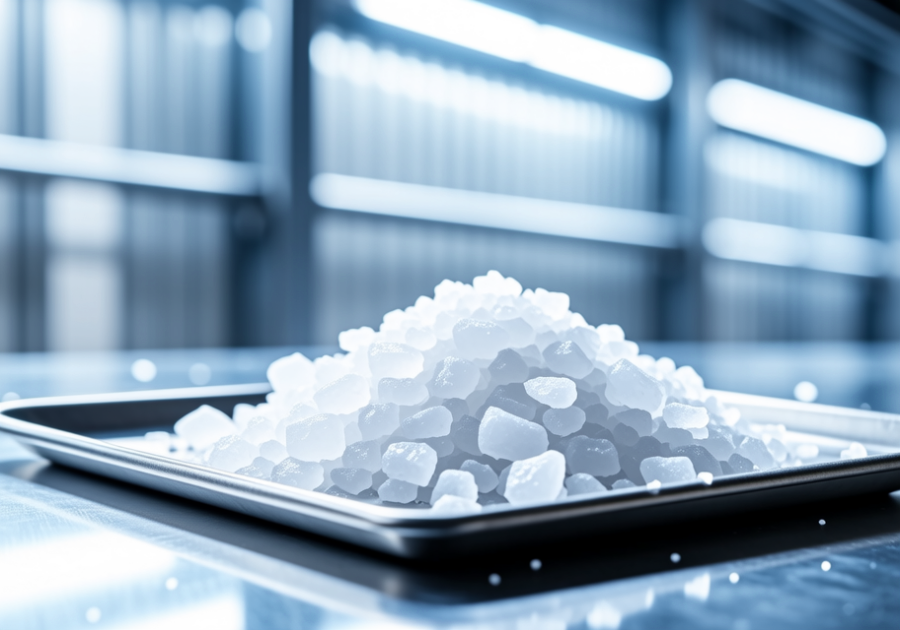
Silicon dioxide in food is a colorless, tasteless, and non-toxic ultrafine inorganic new material that is widely used in people's production and daily life.
Why is silicon dioxide widely used in food?
As a food additive, the main function of silicon dioxide is to prevent the clumping and improve the flowability of powdered foods, thus maintaining the good appearance of the powdered food. After being added to food, due to its large specific surface area, silicon dioxide acts as a "film" to wrap each powder particle, thereby separating the powder particles from each other and keeping them in the best free-flowing state, achieving the purpose of anti-caking. At the same time, silicon dioxide can absorb the moisture in the surrounding air through numerous internal micropores, preventing the food from becoming damp and clumping during storage.
In practical applications, silicon dioxide is mainly used as an anti-caking agent in egg powder, milk powder, cocoa powder, cocoa butter, powdered sugar, vegetable fat powder, instant coffee, powdered soup seasonings, and powdered flavorings. Powdered foods are prone to stick together and clump due to temperature changes, increased humidity, or stacking between packages during storage, which affects product quality and shelf life.
Silicon dioxide plays an anti-caking role in food by wrapping the powder particles and keeping each particle separated to maintain the best free-flowing state and achieve the purpose of anti-caking. In addition, the silicon dioxide wrapped around the powder can absorb the moisture in the surrounding air through numerous internal micropores, preventing the food from becoming damp and clumping during storage.
Is silicon dioxide harmful?
As a commonly tested food additive, it can be used safely as long as its addition complies with national standards.
The US FDA has set a maximum limit of 2% for this product as an anti-caking agent. It is allowed to be used in egg powder, milk powder, cocoa products, dehydrated egg products, powdered sugar, vegetable fat powder, solid beverages, maternal and infant formula foods, with a maximum use of 15g/kg; spices, solid compound seasonings with a maximum use of 20g/kg; and soy product processing with a maximum use of 0.025g/kg.
How does our body excrete silicon dioxide from food additives?
Food additives such as silicon dioxide need to undergo biotransformation, where they are metabolized and transformed to increase their polarity or water solubility for easier excretion through bile or urine. Most non-nutritive substances in the body require biotransformation due to their lipid solubility before they can be eliminated. The liver is the most important organ for biotransformation, but the lungs, kidneys, and skin also have some biotransformation capabilities.
The process of biotransformation of non-nutritive substances in the liver is extremely complex and involves various complex enzyme reactions. For example, aspirin has multiple conversion pathways, where it can be hydrolyzed into salicylic acid, which can then combine with glucuronic acid for excretion. Aspirin can also be hydrolyzed into salicylic acid, which can be converted into β-glucuronide by combining with glucuronic acid, or combine with glycine to form salicyluric acid, or oxidized into hydroxyl salicylic acid before undergoing various combination reactions.
Besides being used as a food additive, silica occurs naturally in many foods, including vegetables, fruits and grains. And the amounts of silica found in these foods are generally much lower than those added as an additive.
While silica is generally considered safe for consumption, some people may be sensitive to it and experience digestive upset or other adverse effects after eating foods containing the additive. People with pre-existing digestive disorders or allergies may be more susceptible to these effects.
The presence of silica in foods does not necessarily indicate a lack of quality or healthfulness. Many high-quality, healthy foods, such as dietary supplements and protein powders, contain silica as a flow agent to ensure consistent texture and quality.
In short, it is up to individuals to make informed decisions about their diet and to consider their own personal health needs and preferences when consuming foods containing silica or other food additives. But unfortunately, it is difficult to avoid food additives in our lives.
Looking for chemical products? Let suppliers reach out to you!
You May Interested In


Glow70/KLOW80 99% China Peptides Warehouse Direct Delivery Lyophilized Powder in Stock
$169/UNIT FOB


2026-10-18
Trade Alert
Delivering the latest product trends and industry news straight to your inbox.
(We'll never share your email address with a third-party.)

Related News
-
SiO2: Properties, Uses, and Applications
-
Are Nanoparticles Present in Silicon Dioxide Food Additives?
-
Silicon Dioxide In Supplements: Are They Safe
-
Uses of Sodium Citrate Dihydrate in Food Industry
-
Benzyl Alcohol: Uses in Cosmetics, Preservative Efficacy, and Safety
-
Ammonia Chemical Formula: NH3 Structure & Properties
-
Uses and Properties of Chromium Oxide
-
Chemical Properties and Uses of Caesium Fluoride
-
Vanillin: Properties, Uses, and Safety
-
Oxalic Acid: Acidity (pKa), Sources, and Kidney Stone Risk
Recommend Reading
-
![What is a Surfactant? (Definition, Types, and How They Work)]()
What is a Surfactant? (Definition, Types, and How They Work)
-
![Dicalcium Phosphate: Properties, Uses, and Applications]()
Dicalcium Phosphate: Properties, Uses, and Applications
-
![Flavin Adenine Dinucleotide (FAD): Functions and Applications]()
Flavin Adenine Dinucleotide (FAD): Functions and Applications
-
![Magnesium Chloride (MgCl₂): Properties, Uses, and Applications]()
Magnesium Chloride (MgCl₂): Properties, Uses, and Applications
-
![Applications of Copper Sulfate Pentahydrate]()
Applications of Copper Sulfate Pentahydrate
-
![Crude Oil Rises Sharply; Retail Prices of Finished Oil Products Raised Again This Round]()
Crude Oil Rises Sharply; Retail Prices of Finished Oil Products Raised Again This Round
-
![Caustic Soda Prices Consolidate This Week (Apr. 6–Apr. 10)]()
Caustic Soda Prices Consolidate This Week (Apr. 6–Apr. 10)
-
![Ethyl Acetate Market Operates Steadily Amidst Wait-and-See Attitude]()
Ethyl Acetate Market Operates Steadily Amidst Wait-and-See Attitude
-
![July Ethyl Acetate Market Operates Strongly in China]()
July Ethyl Acetate Market Operates Strongly in China
-
![Fundamentals Strengthen, Butadiene Market Rises in China]()
Fundamentals Strengthen, Butadiene Market Rises in China