Upadatinib's launch accelerated: Crohn's disease has simultaneously submitted marketing applications in FDA&EMA
On July 27, AbbVie announced that it had submitted to the U.S. Food and Drug Administration (FDA) and the European Medicines Agency (EMA) for upadacitinib (trade name Rinvoq, 45mg [induction dose] and 15mg and 30 mg [maintenance dose]) for a new indication for the treatment of adult patients with moderately to severely active Crohn's disease.
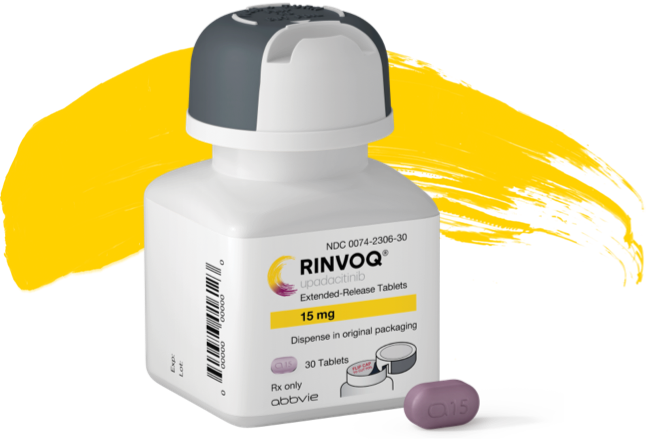
The application, submitted to the FDA and EMA, is supported by data from three Phase 3 clinical trials, including two induction studies (U-EXCEED and U-EXCEL) and one maintenance study (U-ENDURE).
In all three studies, patients treated with upadacitinib met the co-primary endpoint of clinical remission and endoscopic remission, as measured by Crohn's disease activity index (CDAI) or patient-reported stool frequency/abdominal pain symptoms (SF/AP) ) to evaluate.
In addition, patients who received 45 mg once daily at Week 12 in the induction study or 15 mg and 30 mg once daily at Week 52 in the maintenance study met the secondary endpoint of corticosteroid use at baseline compared to placebo In contrast, clinical remission without corticosteroids was achieved in CDAI and SF/AP.
The safety results of upadacitinib in U-EXCEED, U-EXCEL and U-ENDURE were largely consistent with the known upadacitinib safety profile, with no new safety risks observed.
It is worth mentioning that the European Commission (EC) approved Rinvoq (upadacitinib 45mg [induction dose] and 15mg and 30mg [maintenance dose]) a day earlier (July 26) for the treatment of insufficient response to conventional therapy or biologics Adult patients with moderately to severely active ulcerative colitis with loss of response or intolerance.
Rinvoq has been approved for use in rheumatoid arthritis, atopic dermatitis, psoriatic arthritis, ulcerative colitis, ankylosing spondylitis and other indications, among which axial spondyloarthritis, giant cell arteritis and Takayasu A phase 3 trial in arteritis is ongoing.

You May Interested In


High Quality β-Nicotinamide adenine dinucleotide CAS 53-84-9 NADwith ready stock and best price
$3E+1/UNIT FOB


2026-10-20
Trade Alert
Delivering the latest product trends and industry news straight to your inbox.
(We'll never share your email address with a third-party.)

Related News
-
First New UV Filter in Nearly 27 Years: BASF's Tinosorb® S Approved by FDA, Marking a Historic Shift for the U.S. Sunscreen Market
-
China’s Hybio Takes Generic Tirzepatide to FDA: Lilly’s GLP-1 Fortress Gets a Warning Shot
-
FDA approves bemotrizinol, a long-used UV filter, for U.S. sunscreens
-
FDA delays proposal to ban formaldehyde in hair straighteners
-
CDH6: Can It Support the Next $10.1 Billion Valuation?
-
Can Florida's Authorization to Import Prescription Drugs from Canada Lower Medication Prices?
-
Bristol Myers Squibb's Acquisition Spree: Will it Boost its Cancer Drug Portfolio?
-
Is AbbVie's Acquisition of ImmunoGen a Strategic Move to Expand its Oncology Portfolio?
-
2023 Senior Management Personnel Changes of Multinational Pharmaceutical Companies in China, what's behind it? - V
-
FDA Releases New Resources for Food Traceability Final Rule Compliance
Recommend Reading
-
Japanese Plastics Market Accelerates its Shifts to Recycled Materials and Bioplastics
-
![India Launches Concentrated Anti-Dumping Actions Against Eight Categories of Chinese Chemicals, Covering APIs/Intermediates, Polyurethanes, and Refrigerants]()
India Launches Concentrated Anti-Dumping Actions Against Eight Categories of Chinese Chemicals, Covering APIs/Intermediates, Polyurethanes, and Refrigerants
-
![MDI Price Surge Hits EMEAI: Is This a Market Correction or the Beginning of a Supply Crisis?]()
MDI Price Surge Hits EMEAI: Is This a Market Correction or the Beginning of a Supply Crisis?
-
![“Deregulation” or “Concession”? The Hidden Crisis Behind India’s Repeal of QCOs on Seven Key Petrochemicals]()
“Deregulation” or “Concession”? The Hidden Crisis Behind India’s Repeal of QCOs on Seven Key Petrochemicals
-
![Saint-Gobain Expands Its Construction Chemicals Operations in Indonesia]()
Saint-Gobain Expands Its Construction Chemicals Operations in Indonesia
-
![Insufficient Spot Buying Momentum, Acrylonitrile Market Continues to Weaken in China]()
Insufficient Spot Buying Momentum, Acrylonitrile Market Continues to Weaken in China
-
![Business Society September 24, 2026 BDO Trend Analysis: Strong Volatility]()
Business Society September 24, 2026 BDO Trend Analysis: Strong Volatility
-
![Business Society September 29, 2026 Maleic Anhydride Trend Analysis: Volatility]()
Business Society September 29, 2026 Maleic Anhydride Trend Analysis: Volatility
-
![Trade Structure Continues to Optimize, Acrylic Acid Export Dominance Further Consolidated in August]()
Trade Structure Continues to Optimize, Acrylic Acid Export Dominance Further Consolidated in August
-
![Business Society September 30, 2026 Phthalic Anhydride Trend Analysis: Volatile and Bearish]()
Business Society September 30, 2026 Phthalic Anhydride Trend Analysis: Volatile and Bearish