Is India’s “Luck” Finally Here? HPCL’s 10-Year LNG Deal Is a High-Stakes Bet on National Destiny
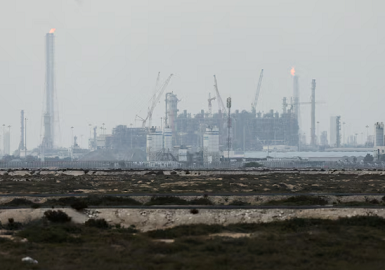
On January 21, 2026, a seemingly routine announcement slipped into the news cycle: Hindustan Petroleum Corporation Limited (HPCL), India’s state-owned energy giant, signed a 10-year liquefied natural gas (LNG) supply agreement with Abu Dhabi Liquefied Natural Gas Company (ALNG), a subsidiary of ADNOC Gas. Under the deal, ALNG will deliver stable volumes to HPCL’s 5-million-tonne-per-year LNG regasification terminal in Chhara, Gujarat—a facility inaugurated by Prime Minister Narendra Modi himself in September 2025 and hailed as a cornerstone of India’s energy security architecture.
On the surface, this appears to be just another standard long-term take-or-pay contract. But viewed through the lens of India’s energy transition ambitions, geopolitical realignments, and economic constraints, it becomes clear: this is not merely a purchase—it’s a strategic gamble on the nation’s future. HPCL’s move responds to surging domestic gas demand while anchoring India’s quest for energy certainty in an increasingly volatile world.

Why Now? India Is Teetering on the Edge of a “Gas Crisis”
For over a decade, the Indian government has championed an ambitious goal: raising natural gas’s share in the country’s energy mix from 6% to 15%, positioning it as the clean transitional fuel to replace coal, curb air pollution, and power industrial and urban growth. Yet reality has lagged far behind rhetoric. Domestic gas production has stagnated, forcing heavy reliance on imported LNG—a dependence made perilous by extreme price swings. During the 2022 energy crisis triggered by Russia’s invasion of Ukraine, Asian LNG spot prices spiked to $70 per million British thermal units (MMBtu), forcing Indian fertilizer plants and power stations to shut down or revert to dirtier fuel oil.
Even more alarming, India’s LNG imports remain dangerously exposed to short-term markets. According to the International Energy Agency (IEA), in 2024, roughly 60% of India’s LNG came from spot or short-term contracts—far higher than China (30%) or Japan (25%). This “naked” procurement strategy may yield cheap deals in calm times, but it leaves the economy acutely vulnerable when geopolitics or weather disrupt supply chains.
HPCL’s 10-year agreement directly addresses this structural flaw. Long-term contracts don’t just offer relative price stability—often linked to crude oil or Henry Hub indices—they guarantee volume certainty, which is existential for continuous operations in fertilizer production, combined-cycle power plants, and city gas distribution networks. For India, security of supply now trumps marginal cost savings.
Why Abu Dhabi? This Isn’t Commerce—It’s Strategic Alignment
Choosing the UAE as a long-term supplier is no accident. In recent years, India-UAE relations have evolved from conventional trade ties into a “comprehensive strategic energy alliance.” The two nations signed a Comprehensive Economic Partnership Agreement (CEPA) in 2023, established a dedicated “Energy Security Working Group,” and by 2024, India had become the largest buyer of UAE LNG, accounting for nearly 20% of its exports. ADNOC Gas—the national gas flagship under Abu Dhabi National Oil Company (ADNOC)—operates world-class liquefaction facilities like Ruwais and has rapidly scaled its export capacity to 15 million tonnes per year in 2025, targeting a doubling by 2030.
For India, the UAE offers three irreplaceable advantages:
First, geographic proximity—shipping takes only 7–10 days, far shorter than from the U.S. (25 days) or Qatar (15 days), reducing logistics risk and enabling faster response to demand spikes;
Second, political trust—the UAE maintains strong ties with the U.S., Russia, and China simultaneously, giving it unique “neutral buffer” status amid sanctions and bloc politics;
Third, financial synergy—both countries are actively promoting local currency settlements to reduce dollar dependency and hedge against exchange rate volatility.
HPCL’s deal embeds a commercial transaction within a broader national strategy. As the official statement noted, it will “deepen the India-UAE energy nexus”—not diplomatic fluff, but a pragmatic necessity. In an era of deglobalization and regionalized supply chains, energy security is no longer about access alone, but about finding partners willing and able to share long-term risk.
The Chhara Terminal: More Than a Receiving Facility—It’s the Nerve Center of India’s “Gas Ambition”
HPCL’s Chhara LNG terminal, with a design capacity of 5 million tonnes per year (equivalent to ~7 billion cubic meters of gas), represents 8–10% of India’s current total LNG imports. Its strategic value extends far beyond physical throughput:
- It supplies HPCL’s two major refineries (Mumbai and Visakhapatnam) with cleaner fuel to meet tightening emissions standards;
- It powers the expansion of city gas distribution (CGD) networks, serving tens of millions across Gujarat and neighboring states;
- It secures feedstock for critical sectors like fertilizers, power, and petrochemicals, preventing a repeat of the 2022 crisis when soaring gas prices slashed urea output.
Critically, the terminal uses a floating storage and regasification unit (FSRU)—a modular, low-cost, and rapidly deployable solution that offers unmatched flexibility. As India aims to expand its LNG import capacity from 40 million tonnes/year today to over 70 million by 2030, Chhara stands as a blueprint for agile, scalable infrastructure.
The Bigger Picture: Can Gas Lift India Over Its Development Trap?
India’s gas dilemma reflects a deeper mismatch between its industrial aspirations and energy endowments. As the world’s most populous nation and a consistent top performer in GDP growth, India still grapples with declining domestic gas output, coal-dominated power generation (over 60%), and some of the planet’s worst air quality. Natural gas is seen as the most realistic bridge fuel—capable of quickly displacing scattered coal use while offering more reliability than intermittent renewables.
Yet LNG is no panacea. High import costs (even under long-term deals can’t fully insulate against market shocks), inadequate pipeline coverage, and limited end-user affordability continue to hinder adoption. In 2025, industrial gas prices in India were already three times higher than residential electricity rates, pricing out many small and medium enterprises.
HPCL’s 10-year contract is essentially buying time: by locking in baseline supply, it stabilizes downstream expectations, incentivizes pipeline investment, accelerates pricing reforms, and spurs end-use innovation. If successful, India could replicate the virtuous cycles seen in South Korea or Taiwan—using gas to fuel industry, and industry to fund gas infrastructure. If it fails, the country risks falling into a vicious spiral of high-cost imports → user attrition → stranded assets.
| Dimension | Current Challenge | Potential Impact of HPCL’s Long-Term Deal |
|---|---|---|
| Supply Security | Over-reliance on spot markets, vulnerable to price spikes | 10-year contract ensures baseload supply, reduces disruption risk |
| Geopolitical Risk | Diversified but unanchored sourcing | Deep strategic tie with UAE creates regional energy resilience |
| Infrastructure | Insufficient regas terminals and pipelines | Chhara hub activates western gas network, enabling scale |
| End-Use Adoption | High costs deter industrial and residential uptake | Stable supply enables volume-driven cost reduction |
| Energy Transition | Coal dependency entrenched, emissions rising | Provides clean alternative for fertilizers, power, transport |
A Single Contract Carries a Nation’s Breath
HPCL’s LNG agreement with Abu Dhabi contains no grand declarations—yet it embodies a developing nation’s most fundamental hope: to keep factories running, cities heated, skies clearer, and the economy racing forward on a foundation of energy certainty.
In today’s fractured global order, “who can guarantee gas tomorrow” has become more critical than “who owns the latest technology.” India’s decision to trade flexibility for a decade of stability is both pragmatic and audacious—it bets on the UAE’s reliability, on domestic reform momentum, and above all, on its own ability to avoid being crushed between high costs and high pollution before true clean energy arrives.
When the next LNG carrier docks at Chhara, it won’t just offload supercooled methane—it will deliver an entire nation’s bet on its future.
This time, has India’s “gas luck” finally arrived? The answer will unfold in every cubic meter burned over the next ten years.

You May Interested In


High Quality β-Nicotinamide adenine dinucleotide CAS 53-84-9 NADwith ready stock and best price
$3E+1/UNIT FOB


2026-10-24
Trade Alert
Delivering the latest product trends and industry news straight to your inbox.
(We'll never share your email address with a third-party.)

Related News
-
India Launches Concentrated Anti-Dumping Actions Against Eight Categories of Chinese Chemicals, Covering APIs/Intermediates, Polyurethanes, and Refrigerants
-
Shandong’s Export Growth Is 2.8%; This Category Is 19%: Shandong Has a Chokehold on the Upstream of Global Manufacturing
-
Middle East Crude Exports Rebound Sharply in September as Saudi Arabia Returns to Market at 5.4 Million bpd
-
Saudi Aramco Weighs Discounts of Up to $9/Barrel on Oman STS Crude as Freight Costs Surge
-
Iran Closes Strait of Hormuz to All Vessels: Global Chemical Trade Gets Choked
-
Solvay's "Slimming Action": Soda Ash Production Capacity in Spain Slashed by 180,000 Tons, 77 Jobs to Go
-
U.S. Fighter Jet Strikes Commercial Cargo Ship in Gulf of Oman, Disabling Propulsion
-
Phillips 66 Locks Out 385 Workers at 275,000-bpd Bayway Refinery
-
Behind Japan's Tungsten Hexafluoride Crisis: Can China's Electronic Specialty Gases Seize a New Opportunity?
-
TSMC, Samsung, and SK Hynix Scramble for Electronic-Grade Hydrofluoric Acid as High-End Supply Tightens; Some Suppliers Raise Prices by 30% This Year
Recommend Reading
-
![Lotte Chemical Jumps Nearly 13% as Korean Petrochemical Stocks Rally on Supply-Tightening Bets]()
Lotte Chemical Jumps Nearly 13% as Korean Petrochemical Stocks Rally on Supply-Tightening Bets
-
![“The 40-Year Ethylene Giant Collapses”: ExxonMobil’s Premature Shutdown Is Not Just Scotland’s Tragedy—It’s the Twilight Elegy of European Industrial Civilization]()
“The 40-Year Ethylene Giant Collapses”: ExxonMobil’s Premature Shutdown Is Not Just Scotland’s Tragedy—It’s the Twilight Elegy of European Industrial Civilization
-
![USDA Puts Fresh Money Into Local Food Markets]()
USDA Puts Fresh Money Into Local Food Markets
-
![Qatar LNG Hit by Attack: 17% Export Capacity Lost, $20 Billion Wiped Out]()
Qatar LNG Hit by Attack: 17% Export Capacity Lost, $20 Billion Wiped Out
-
![EU Eyes Rare Trade Tool as PET, Epoxy Resin and Glass Fibre Face Import Curbs]()
EU Eyes Rare Trade Tool as PET, Epoxy Resin and Glass Fibre Face Import Curbs
-
![Weak Demand Leads to Continuous Decline in Butanol Prices in Shandong, China]()
Weak Demand Leads to Continuous Decline in Butanol Prices in Shandong, China
-
![Business Society’s Market Outlook for Petroleum Coke on September 10, 2026: Volatile]()
Business Society’s Market Outlook for Petroleum Coke on September 10, 2026: Volatile
-
![Business Society’s Market Outlook for Phthalic Anhydride on August 17, 2026: Continuing a Slight Rise]()
Business Society’s Market Outlook for Phthalic Anhydride on August 17, 2026: Continuing a Slight Rise
-
![This Week's Aniline Market Shows a Small Increase (11.17-11.21)]()
This Week's Aniline Market Shows a Small Increase (11.17-11.21)
-
![Business Society’s August 17, 2026 Toluene Market Outlook: Volatile]()
Business Society’s August 17, 2026 Toluene Market Outlook: Volatile