Recycled plastics - the performance challenges & current approaches
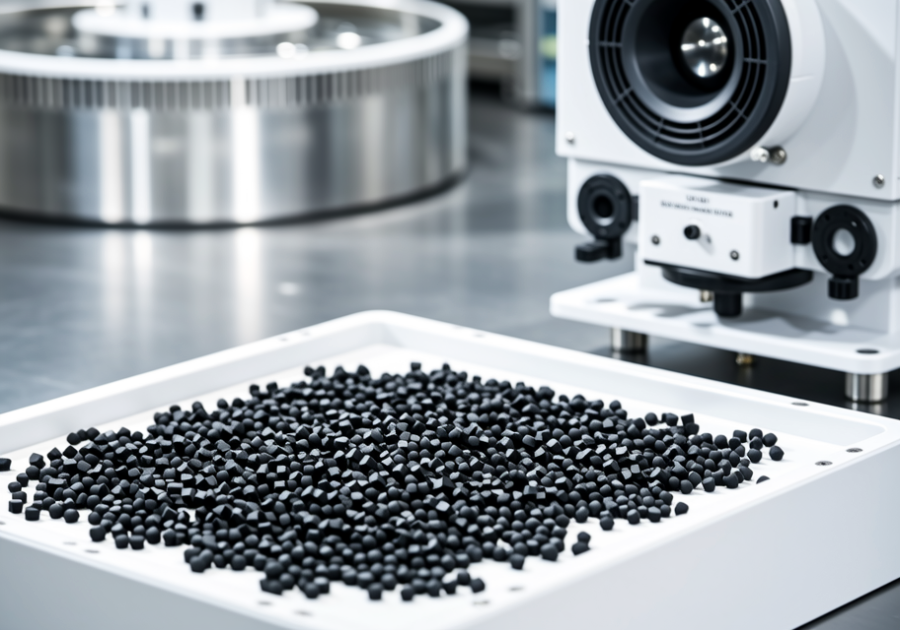
The recycling of plastics – giving new life to used materials – is touted as an important component of strategies to ensure better use of a valuable resource, and seen as key to improving its sustainability profile. But, as experience over several years has shown, mechanical recycling comes with several challenges, most notable of which are degradations in properties and performance, restricting usage to less-demanding applications. There are several ongoing efforts to improve the properties and profile of mechanically recycled polymers, but this is still very much work in progress, and there are limits as to how far it can go.
Availability issues
Thanks to regulatory pressures, and prodding by governments and consumers, several big brand-owners – the likes of Pepsi, Unilever, Proctor & Gamble, Nestle, Nike, etc. – have announced ambitious plans to reduce their consumption of virgin plastic packaging materials – by incorporating more of recycled materials in their packaging, by altering design of packaging and through other innovations. These plans span several years, but is already running into challenges, including the fact that there is not enough of recycled polymers available in the marketplace – especially those that meet performance guidelines set by the user companies.
Quality concerns
There are serious concerns over the consistency in quality. While in-process wastes is usually of high quality and is eminently suited for reuse, the same cannot be said of post-consumer wastes, and post-industrial wastes collected from the environment.
The problems include contamination with food and fluids (e.g. blood), or by other incompatible materials (paper, metal or even other polymers) – all of which pose severe challenges when taken into recycling processes. The problems stem due to differences in melt temperatures, material compatibility issues and can even lead, at times, to health and safety concerns.
While brand owners can hope to gain competitive advantage by leveraging an array of properties available through astute selection of one or more virgin polymers (and grades) from a wide range, the choices are often limited when it comes to recycled materials, which are almost always a blend of grades. Colour, in particular, is an important consideration, particularly for consumer products, and recycled materials do have inherent limitations when it comes to colour consistency due contamination. Colour is one of the reasons why recycled polyethylene terephthalate (PET) bottles are yet to find acceptance for the packaging of drinking water – the single largest use for this polymer, which otherwise has a high recycling rate.
How stabilisation systems – widely added to virgin materials to maintain integrity and performance during the lifetime of use – behave in the recycling processes adopted is as yet not well understood. This affects the performance of the recycled article – especially its long-term use. There are several efforts ongoing at leading polymer additive producers to understand these changes and compensate for the loss of the stabilisation package by the optimised addition of virgin material, additive, fillers and compatibilisers to the recyclate.
Simplifying structures
Eliminating diversity in material choices is widely seen as a way to improve recyclability. Multi-layer film incorporating diverse polymer structures are intrinsically challenging to recycle, and there are several initiatives to substitute with homogeneous film structures and/or use compatibilisers, to enable better recyclability. The key challenge here is to maintain functionality. Multi-layer films are used for good reasons – they provide important barrier properties (such as to oxygen, UV light, etc.) and substituting with a single-layer film is a big challenge for the resin producers – but one they are addressing.
While the packaging industry has for long been designing for improving aesthetics and enhancing performance, designing for sustainability is now part of their vocabulary as well. Considerable thought is now being given to end-of-life aspects, and this includes recyclability. Admittedly, this is a tough challenge – one in which some compromises may need to be made in the conventionally important attributes, in order to make the packaging more sustainable.
Simplification of packaging structures will need active collaborations between resin producers, processors (such as film extruders) and brand-owners (an FMCG company, for instance). These are now happening, but the pace is slow and much remains to be done.
Cost compulsions
The use of recycled plastics has also been restricted due economic reasons. Their costs of production need to reflect costs associated with collection, sorting, mechanical handling, cleaning and additional processing.
Collection costs, in particular, can be very significant, and in regions where infrastructure for enabling this is poorly structured, there may be need to create afresh or enhance. But technology can play a role here. Mobile phone Apps are now being used to call up collection agencies to takeaway plastic wastes (including in India), but not all costs can be eliminated.
While automated systems are now available to sort different types of plastics, the technology is not perfect and prone to leakages. Capital costs for the equipment needed are still high – though they will come down as the technologies become more widely used and economies of scale kick in. Manual sorting is more common in the developing world, including in India, and provides a livelihood – albeit an unhealthy one – for several thousands.
There are efforts being undertaken to make automated sorting machines more reliable. Additives, for example, can be incorporated into a virgin polymer, which can be picked out by cameras much more efficiently than hitherto possible.
What matters most is not just the absolute cost of recycled plastics, but its cost relative to that of virgin material. Over the last few years, prices of commodity polymers, such as polyethylene and polypropylene, have ruled low, partly due low oil prices. And the outlook in the medium-term is not very different. Oil demand is plateauing, on a global level, and the focus of oil companies and refiners is shifting towards petrochemicals. The mammoth oil-to-chemical plants now being talked about will fundamentally alter the economics of petrochemical (and polymer) manufacture, and by their sheer size and clout drive out high cost, non-integrated producers.
The narrowing of the price differential between virgin and recycled materials can be compensated by mandates (compulsorily requiring blending of x% of recycled material in a packaging, for example) or by providing fiscal incentives. Several countries are now in the process of framing regulations that do one or both, though there seems to a preference for more of the former.
Chemical recycling
The use of post-consumer and post-industrial recycled materials is still relatively new. As of now, these materials have lower performance due previous use and by contamination. While their performance attributes will improve to enable greater extent of mechanical recycling, it is apparent that there will be limitations in the applications that recyclate can be put to and the number of iterations of reuse practically possible.
This is where chemical recycling (which essentially involves deconstructing the polymer backbone to produce a hydrocarbon-like feedstock) that can then be used as a substitute to naphtha in crackers or as energy source will come in.

You May Interested In


High Quality β-Nicotinamide adenine dinucleotide CAS 53-84-9 NADwith ready stock and best price
$3E+1/UNIT FOB


2026-10-23
Trade Alert
Delivering the latest product trends and industry news straight to your inbox.
(We'll never share your email address with a third-party.)

Related News
-
The 18th edition of ArabPlast 2027
-
New Theme unlocked: “Advancing a Smarter, Circular Future - As One.” CHINAPLAS 2027 Drives the Industry-Wide Upgrade
-
Driving Business, Innovation, and Growth: Saudi PPPP Returns to Riyadh this June
-
Japanese Plastics Market Accelerates its Shifts to Recycled Materials and Bioplastics
-
ICE USA 2024
-
Sumitomo Chemical to achieve acrylic resin pyrolysis recovery MMA process
-
Ponding chemistry in the united states to increase production of foamed plastics
-
LG Chem is expected to build a new plastic recycling plant with an estimated capacity of more than 20,000 tons
-
Scientists create entirely new material with plastic and metal properties that ‘can’t be explained’
-
From 'Bottle' to 'Bottle' : The Recycling of beverage bottles, China awaits action
Recommend Reading
-
![Iran's Only MDI/TDI Plant Attacked, Middle East Supply Nearly Zero, Global Gap Widens]()
Iran's Only MDI/TDI Plant Attacked, Middle East Supply Nearly Zero, Global Gap Widens
-
![Keshun Enters Industrial Coatings: Waterproofing Leader Seeks Growth Beyond Real Estate]()
Keshun Enters Industrial Coatings: Waterproofing Leader Seeks Growth Beyond Real Estate
-
![U.S. 10% Temporary Tariff Expires, New Section 301 Tariffs Not Yet Implemented]()
U.S. 10% Temporary Tariff Expires, New Section 301 Tariffs Not Yet Implemented
-
![Why Did Chemical Raw Materials Unexpectedly Escape the Latest Round of U.S. 301 Tariffs on 60 Economies?]()
Why Did Chemical Raw Materials Unexpectedly Escape the Latest Round of U.S. 301 Tariffs on 60 Economies?
-
![Two Saudi Crude Supertankers Hit in Hormuz as Brent Surges to Nearly $95]()
Two Saudi Crude Supertankers Hit in Hormuz as Brent Surges to Nearly $95
-
![Inventory Increase, Acrylonitrile Market Fluctuates and Probes Downward]()
Inventory Increase, Acrylonitrile Market Fluctuates and Probes Downward
-
![November Activated Carbon Prices Rise in China]()
November Activated Carbon Prices Rise in China
-
![This week, PVC market continues to decline in China]()
This week, PVC market continues to decline in China
-
![Isopropyl alcohol market prices continue to fall in November in China]()
Isopropyl alcohol market prices continue to fall in November in China
-
![This week, the price of polyester bottle chips in China showed a slight decline]()
This week, the price of polyester bottle chips in China showed a slight decline