




How precision technologies can help farmers increase crop yields
Since time immemorial, increasing crop yields has been the bane of every farmer’s existence. Farming communities worldwide have researched, experimented and discussed extensively what factors affect crop yield most and how they can assure an increased crop yield per acre. Now, with a looming food security crisis, burgeoning world population, global supply chain disruptions and dwindling natural resources, the concern for increasing crop yield has become global.
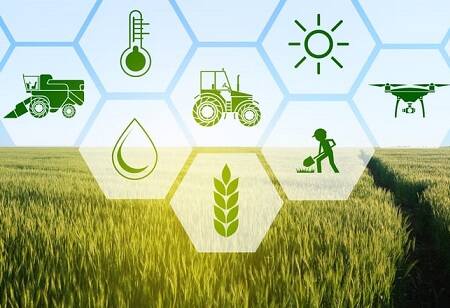
As old solutions- add more fertilisers and pesticides- become obsolete and new agrarian challenges surface, there are also new technologies and sciences to address and overcome these concerns. Among these tech-driven solutions is precision farming, a scientific approach to farm management that leverages high-tech sensors and analytic tools to optimise crop and soil health while ensuring profitability and sustainability. Thus, it is imperative to understand how precision technologies can increase crop yield and agrarian performance.
Regular Crop Scouting & Monitoring
From sowing seeds to harvesting, numerous problems can arise on farmland that directly impacts the crop yield. A farmer with acres of fields cannot scout acre by acre as it is time-consuming, laborious and ineffective. Given how critical crop scouting is, precision farming provides farmers with innovative tools and technologies to monitor their crops. These include in-field wireless sensors, aerial drones and satellites that eliminate farmers’grunt work and provide them round-the-clock crop and field insights. Consequently, farmers can monitor multiple crops and fields, follow their growth and health status and take timely interventions to increase crop yield.
Forecasting Weather Conditions
Weather conditions greatly influence the development of plants and ultimately, crop yield. Considering how climate change affects different regions across the globe, it becomes vitally important to forecast uncontrollable weather factors to take preventive measures. Precision technologies offer weather insights such as humidity, temperature, wind speed, etc., along with accurate forecasts, enabling farmers to protect their crops from extreme weather conditions, decide farming practices in advance and mitigate the damages. Precision farming provides farmers with current, historical and future weather analytics to make informed decisions and increase crop yield.
Optimising Irrigation & Fertilisation
Just as much as the weather is crucial in determining the fate of crop yield, so are irrigation and fertilisation. A surplus or deficit of either can significantly affect the crop yield. Consequently, farmers who aim to increase their crop yield must deploy a streamlined irrigation and fertiliser application system. Precision farming gathers insights from in-field sensors to analyse soil moisture, leaf wetness, crop growth, etc. and recommend to farmers when and how to irrigate their fields. Similarly, precision technologies identify the areas that require soil fertilisation more than others so farmers can use fertilisers selectively and maximise crop yield.
Testing Soil Condition & Fertility
Perhaps there is no other factor as crucial to crop yield as soil fertility. Soil fertility influences a farmer’s decision to grow one plant or other and its cost. To increase their crop yields, farmers must closely monitor their soil condition and quality throughout the growing season. Precision technologies employ wireless sensors that monitor soil health, such as pH levels, moisture,temperature, salinity, etc., to allow farmers to gain insights into soil fertility. Such a comprehensive analysis enables farmers to allocate minerals, fertilisers and irrigation accordingly and maximise their crop yield.
Protecting Crops from Weed & Pests
Agrarians cannot maximise their crop yield unless they minimise the impact of weeds, pests, or diseases. A single weed or pest infestation can spread like wildfire from field to field if overlooked. While physical inspection acre by acre can be a herculean task, precision farming allows farmers to sit back and supervise their crops from their screens. Depending on the problem, farmers use several measures such as herbicides, insecticides, desiccants, fungicides, etc., to protect their crops and maximise their yield. With timely area-specific alerts, farmers can protect their crops from weeds, pests and diseases.
The Bottom Line
As natural and manmade calamities hover over the horizon, precision technologies can pave the way for profitable and sustainable farming practices, which are the need of the hour. With precision technologies, farmers can make the best of accurate allocation of resources, minimum agrarian efforts and timely alerts and analytics to maximise crop yields and secure the future of future generations and the planet.
Looking for chemical products? Let suppliers reach out to you!

You May Interested In

Factory direct sales Industrial/Agricultural/Vehicle Urea 46%fertilizers and multiple other fields
$250/MT EXW


Industrial Grade 90% Formic Acid CAS 64-18-6 for Leather Tanning & Rubber Coagulation
$500-550/MT FOB


2026-06-20

-
ECHEMI-Intermediate for Pesticide 2024
The magazine will be published in Jan 2024 and distributed at the ICSCE 2024 in Dubai, UAE. CAC 2024 in Shanghai ,China .And online for permanent download.Published in: Feb.2024
Agrochemical News
-
Potassium Chloride Weekly Report (May 18, 2026 - May 24, 2026)
2026-05-25 -
Urea Weekly Report (May 18, 2026 - May 24, 2026)
2026-05-25 -
Complex Fertilizer Weekly Report (May 18, 2026 - May 24, 2026)
2026-05-25 -
Potassium Chloride Weekly Report (May 11, 2026 - May 17, 2026)
2026-05-18 -
Urea Weekly Report (May 11, 2026 - May 17, 2026)
2026-05-18