What Sodium Hydrogen Carbonate Is All About: A Brief Overview
Discovering where it belongs: sodium hydrogen carbonate acid or base will be thoroughly discussed here.
It would be surprising for many to discover that this chemical compound is almost everywhere.
Let this brief overview clarify everything about this chemical reaction from its uses, where it is found, and how to know if it is an acid or base.
Defining Acid and Base
Firstly, in knowing all about the answer to sodium hydrogen carbonate acid or base, there should be a clear distinction of what the difference is between the two.
Here is the simplest definition and introduction about what an Acid and Base are:
Acid
This chemical compound is capable of melting metal and making blue litmus paper turn red. If tasted, acids are sharp-tasting and sour to the palette.
A more technical definition would be a molecule with a balance of less than 7. This can also donate and accept electrons when needed to create a chemical reaction.
Base
It is commonly defined as a compound that is slippery to the touch and bitter to the taste. This chemical turns red litmus paper blue.
In Chemistry, the base is the chemical that accepts hydrogen ions. They scale a PH of greater than 7 in balance.
Later, it will be discussed how one can know if Sodium hydrogen carbonate (NaHCO3), commonly known as sodium bicarbonate, is considered an Acid or Base in the chemical world.
All About Sodium Hydrogen Carbonate
Before diving into where this chemical compound belongs, it's best to get to know what it is.
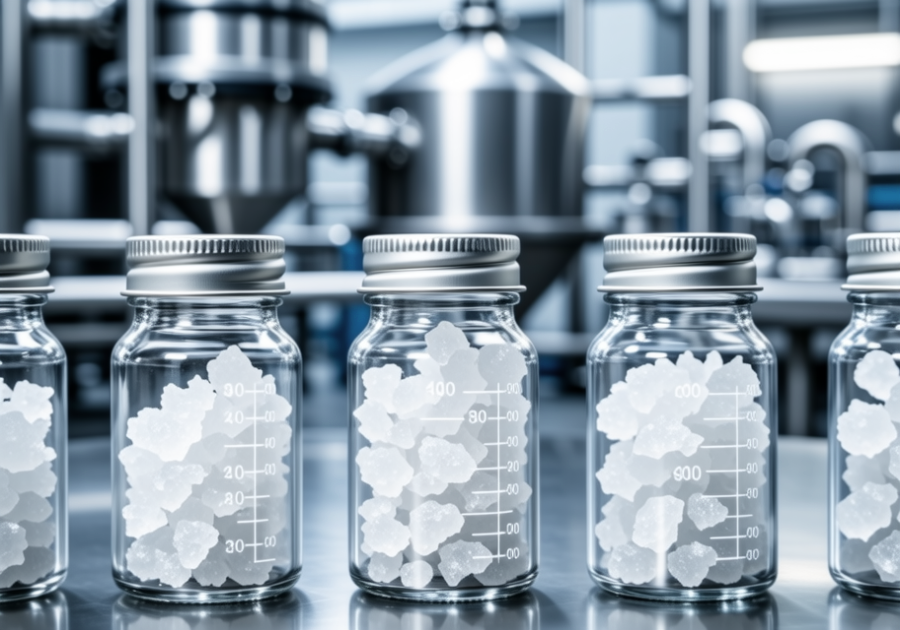
It can sometimes be known as Sodium bicarbonate. It is seen as a solid, crystal-like powder. It is slightly alkaline and similar in feel and appearance to a laundry detergent or powdered detergent.
Among other of its many names or synonyms include:
Bicarb
Sodium bicarb
Bicarb soda
bicarbonate
This chemical compound is composed of a Sodium Cation that is charged positively and a Bicarbonate Anion that is charged negatively.
Process Done To Make It
Sodium bicarbonate can be made using the Solvay process, which includes ammonia, carbon dioxide, water, and brine.
With the Solvay process, sodium bicarbonate is calcined to carbonate. It simply makes baking soda from salt by turning carbon dioxide into ammoniacal brine and is precipitated along the way resulting in sodium hydrogen carbonate.
Where Can It Be Found And Used
This type of chemical compound is very much present in the everyday things and equipment that one uses. It can be right at home or in industrial settings.
Here are a few uses and where sodium hydrogen carbonate can be found:
Baking Powder and Leavening Agents
Fire Extinguishers
Pest Control and Cleaning Agents
Acid Neutralizers
Some Sodas and Softdrinks
Odor Absorbers or Neutralizers
Medicine such as treatment of Indigestion and heartburn
Toothpaste and Soaps
How To Know If It Is An Acid or Base
Knowing which is which for sodium hydrogen carbonate acid or base multiple ways can be done.
While testing if the chemical of sodium bicarbonate is an acid or base, always remember to prioritize safety measures as handling chemicals, in general, can be fatal.
Here's how to go about it:
Applying it to Litmus Paper- If it turns red, it is acidic. If it stays blue, it is a base.
Have a small taste test (Proceed with caution)- when it is acidic, it will taste sour. If it is bitter, base.
Test for the PH Value- if it is more than seven, it is a base; if it is less than 7, it is an acid.
This compound element or chemical is composed of hydrogen carbonate (H2CO3 ), an acidic form of chemical, and the base of Sodium hydroxide (NaOH).
With this combination, sodium hydrogen carbonate (NaHCO3 ) or sodium bicarbonate is formed and has an 8.3 level of PH, making it a base chemical.
The Conclusion
The most common item in an individual's household or an industry's supplies includes this chemical element.
As a result of sodium hydrogen carbonate acid or base, it is solved as having this chemical tested and finalized that it is a form of base chemical.
In testing such chemicals as those done with the sodium bicarbonate example, each individual should be cautious and consider their safety.
Asking for help from experts can be beneficial in their journey to discovering what PH balance is and how it will be distinguished.
Looking for chemical products? Let suppliers reach out to you!
What Is Sodium Bicarbonate And NaCl
You May Interested In


Glow70/KLOW80 99% China Peptides Warehouse Direct Delivery Lyophilized Powder in Stock
$169/UNIT FOB


2026-10-25
Trade Alert
Delivering the latest product trends and industry news straight to your inbox.
(We'll never share your email address with a third-party.)

Related News
-
What factors affects sodium hydrogen carbonate boiling point?
-
What is the formula for sodium hydrogen carbonate and its uses
-
What does sodium hydrogen carbonate do to plants
-
What is another name for sodium hydrogen carbonate and its uses
-
Sulfuric Acid (H2SO4): Properties, Battery Uses, and Extreme Safety Hazards
-
What is Trametenolic Acid? (Structure, Sources & Research)
-
Aluminum Oxide (Al2O3): Abrasive Uses, Ceramic Applications, and Safety
-
Sodium Nitrate: Fertilizer, Food Curing, and Explosive History
-
A New Weapon Against Spider Mites: Canada Moves to Approve Novel Miticide for Greenhouse Growers
-
Uses and Benefits of Sodium Selenite
Recommend Reading
-
![Applications and Safety of Sodium Dichromate]()
Applications and Safety of Sodium Dichromate
-
![Sodium Hypochlorite: Uses, Concentration Guide, and Critical Safety Hazards]()
Sodium Hypochlorite: Uses, Concentration Guide, and Critical Safety Hazards
-
![Isopropyl Alcohol (IPA) vs Ethanol: Which Solvent or Disinfectant is Better?]()
Isopropyl Alcohol (IPA) vs Ethanol: Which Solvent or Disinfectant is Better?
-
![Understanding Titanium Oxide: Properties and Uses]()
Understanding Titanium Oxide: Properties and Uses
-
![Magnesium Stearate in Supplements: Is it Safe? (Vegan Status & Function)]()
Magnesium Stearate in Supplements: Is it Safe? (Vegan Status & Function)
-
![Premium Global Chemical Sourcing Requests (3-6Sep.,2026)]()
Premium Global Chemical Sourcing Requests (3-6Sep.,2026)
-
![Supply-Demand Contradiction Continues, Acrylonitrile Market Prices in China Decline Further]()
Supply-Demand Contradiction Continues, Acrylonitrile Market Prices in China Decline Further
-
![China Fuel Oil 180CST Market Consolidation Mainly (10.27-11.3)]()
China Fuel Oil 180CST Market Consolidation Mainly (10.27-11.3)
-
![Supply and Demand Support Continuous Rise in Domestic Refinery Petroleum Coke Prices]()
Supply and Demand Support Continuous Rise in Domestic Refinery Petroleum Coke Prices
-
![October Maleic Anhydride Market Shakes Downward]()
October Maleic Anhydride Market Shakes Downward