What Is Sodium Bicarbonate And NaCl
Today we will discuss sodium bicarbonate and NaCl, but first we will clarify what each of these substances represents, the qualities that identify them, the applications they are given, and everything concerning sodium bicarbonate in different fields, and NaCl.
What is meant by Sodium Bicarbonate?
When we talk about sodium bicarbonate, it is about a compound of inorganic materials, as can be seen, it is not enough for this substance to be one of those with carbón.
Details highlight the Sodium bicarbonate
When looking closely the physical structure that presents, the conclusion about the appearance it shows is:
Solid material
White color
Tendency to a transparent material
It also presents characteristics of a material with very nice solubility in liquids, particularly in water
It has an alkaline taste, with similarity to sodium carbonate
Among other characteristics that make it stand out:
Melting point reaches 323 degrees Celsius
Molar mass with value of 84.01 gr/mol
Acidity that this substance presents has a pH value that registers 10.33 pKa.
Continuing with the details of sodium bicarbonate and NaCl, it is good to know that in chemistry, the study of sodium bicarbonate requires an identification, which is NaHCO, which when ungelled means:
Na, acronym to identify sodium, without subscript, meaning which has only 1 atom of this element.
H, symbol in chemistry that represents hydrogen, like the previous one, without a subscript it is indicating that in the bicarbonate molecule there is only the presence of 1 atom.
C, means carbon, only 1 carbon atom.
O3, symbol in chemistry of oxygen, the subscript 3 specifies the presence of 3 atoms.
Outstanding applications of Sodium bicarbonate
Speaking from sodium bicarbonate and NaCl, we can begin to enunciate the use is given to sodium bicarbonate, taking advantage to say that Echemi sells a range of materials to satisfy as a supplier the requirements of this substance, among those offered:
Bicarbonate Sodium, at 99%
https://www.echemi.com/produce/pr2111021075-bicarbonate-sodium-99-white-powder-144-55-8-joa.html
There are many and diverse applications of this substance in different fields, industrial, commercial, and every day, one of them that is very relevant is in the field of food, where this compound provides a number of utilities, on the other hand in the field of cosmetology has various uses, also in the field of personal hygiene where it stands out as a main ingredient in the preparation of different types of deodorants, cleaning creams, and soaps.
In the field of medicine, it is used in the preparation of antacids, where it also becomes a fundamental ingredient, in other areas such as gardening, in different household cleaners, as a basic ingredient of repellents, and essential in production of carbonated beverages.
NaCl
As we are talking about sodium bicarbonate and NaCl, the last substance, is known in chemistry with the term sodium chloride, is inorganic, classified as salt, it is also within the group of binary salts.
NaCl, most outstanding characteristics
NaCl is soluble in liquids, including water, and other acids, and liquids.
The boiling point of this salt is around 1,466 degrees Celsius, the melting is 802 degrees Celsius, the density is 2.16 gr/cm3, and the molar mass is equivalent to 58.45 gr/mol.
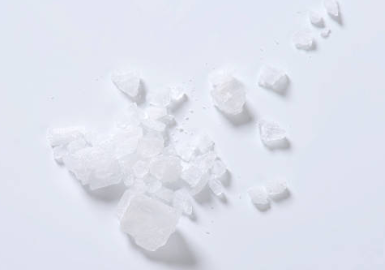
NaCl is presented in a solid state, as a powder or in the form of granules that are almost transparent, white, with a salty taste and a not very strong but peculiar odor.
In the formula NaCl, chemically it is deduced that it has 1 atom of sodium, with 1 of chlorine for each molecule.
NaCl, functions that are given to him
Seasoning, preservation of foodstuffs.
Hydration in medicine.
In transit, for remove ice on the roads.
Has applications in cosmetology, in ceramics, soaps, detergents.
Sodium bicarbonate and NaCl
As we have seen they are two compounds considered inorganic, and belonging to the salts, each one with it characteristics that identify them, and the uses that are given to them in different fields, and with 1 atom of sodium per molecule as another similarity, in the solubility they could be described as similar, in physical appearance we can affirm that although they are two whitish powders, they can present something of similarity but of textures and consistencies that differ, they present marked differences in terms of melting and boiling points and molar masses.
Looking for chemical products? Let suppliers reach out to you!
You May Interested In


Glow70/KLOW80 99% China Peptides Warehouse Direct Delivery Lyophilized Powder in Stock
$169/UNIT FOB


2026-10-17
Trade Alert
Delivering the latest product trends and industry news straight to your inbox.
(We'll never share your email address with a third-party.)

Related News
-
India Unleashes a Triple-Action Defender: Parijat Introduces NILANIX SC into the Rice Battlefront
-
France’s Vineyards Find a New Shield: Eden’s Mevalone Enters the Frontline of a Changing Fungicide Era
-
Applications of Caesium Iodide
-
Sodium Benzoate (E211): Safety, Benzene Risk, and Preservative Uses
-
Chemical Properties and Uses of Tetraetil
-
Salinity Solution: Preparation and Uses
-
Rubber Cement: Applications and Safety Guidelines
-
Nature’s Blueprint, Science’s Edge: Corteva Unveils Twin Breakthroughs to Tackle the $70 Billion Insect Threat
-
Key Reactions and Uses of Allene
-
Uses of Sodium Acetate Trihydrate
Recommend Reading
-
![Applications of Copper Sulfate Pentahydrate]()
Applications of Copper Sulfate Pentahydrate
-
Sodium Metabisulfite: Properties, Uses, and Safety
-
![Thymol Gel Wins EPA Approval for Beekeepers]()
Thymol Gel Wins EPA Approval for Beekeepers
-
![Sodium Chloride (NaCl): Food Grade vs Industrial Grade Uses & Safety Data]()
Sodium Chloride (NaCl): Food Grade vs Industrial Grade Uses & Safety Data
-
![Chemical Raw Materials: How to Source Quality Suppliers & Understand Grades]()
Chemical Raw Materials: How to Source Quality Suppliers & Understand Grades
-
![Multiple Positive Factors Support a Rise in the Butadiene Market]()
Multiple Positive Factors Support a Rise in the Butadiene Market
-
![Double Benefits: Aniline Market Rises Multiple Times]()
Double Benefits: Aniline Market Rises Multiple Times
-
![Rise in Chinese Urea Market Prices (1.12-1.16)]()
Rise in Chinese Urea Market Prices (1.12-1.16)
-
![Construction Start Boosts Costs; January Isooctanol Prices Show Volatile Rise]()
Construction Start Boosts Costs; January Isooctanol Prices Show Volatile Rise
-
![Firm Costs and Weak Demand Lead to High-Level Fluctuations in the Chinese PTA Market]()
Firm Costs and Weak Demand Lead to High-Level Fluctuations in the Chinese PTA Market