HYDROGENSULFIDE Pharmacy grade
3 Inquiries
7783-06-4
Pharmaceutical Grade
QINGDAO
20kg/0.2kg Bag
2017-01-13

-
Product Description
-
Seller Information
-
Inquiry History
-
Description
Hydrogen sulfide, the formula for H2S, the molecular weight of 34.076, a standard condition is a flammable acidic gas, colorless, low concentration have a rotten egg smell, highly toxic. [1] its aqueous solution for hydrogen sulfate. Molecular weight is 34.08, the vapor pressure of 2026.5 kPa / 25.5 ℃, flash point for < - 50 ℃, the melting point is 85.5 ℃, boiling point is 60.4 ℃, the relative density of air (= 1) 1.19. Soluble in water, soluble in alcohol, solvent oil and crude oil. Flash point is 292 ℃. Hydrogen sulfide is flammable for, mixed with air to form explosive mixture, caused an explosion of the combustion flame, high heat. Hydrogen sulfide is a kind of important chemical raw material.
Physical and chemical properties
Molecular structure, central atom S atomic take sp after hybridization (according to the bond Angle calculation results are close to p after hybridization), electron pair configurations are all fit, molecular configuration for V, H, S, H bond Angle is 92.1 °, 0.97 D, dipole moment is a polar molecule. Because H - S key to weaker, around 300 ℃ h2s decomposition.
Ignition point: 260 ℃, the saturation vapor pressure: 2026.5 kPa / 25.5 ℃, solubility: soluble in water, dissolved ratio 1:2. 6), ethanol, carbon disulfide, glycerin, gasoline, kerosene, etc. [2]. Critical temperature: 100.4 ℃, the critical pressure: 9.01 MPa. [2]
Danger tags: 2.1 type of flammable gas, 2.3 class toxic gas, toxic.
Color and smell [3] : hydrogen sulfide is a colorless, highly toxic, acidic gas. The smell of a special kind of rotten eggs, olfactory threshold: 0.00041 PPM, even a low concentration of hydrogen sulfide, also can damage people's sense of smell. High concentration but no smell (because of high concentration hydrogen sulfide can paralyze olfactory nerve). With his nose as a means of detecting the gas can be deadly.
The relative density of 1.189 (15 ℃, 0.10133 MPa). It exists in the lower level, such as pit, the basement. If it is found that in was told that there are hydrogen sulfide, then it should be immediately self-protection measures. As long as possible, in the direction of the wind, to higher ground. [3]
Explosion limit: with air or oxygen in appropriate proportion (4.3% ~ 46%) would explode. Therefore containing hydrogen sulfide gas existing monitor the job site shall be provided with hydrogen sulfide. [3]
Flammability: completely dry hydrogen sulfide does not react with oxygen in the air at room temperature, but can be in the air when the ignition burning, drilling, downhole operation choke when combustion, the combustion rate is only 86%. Hydrogen sulfide produced in blue flame combustion, and generate toxic sulfur dioxide, sulfur dioxide gas can damage the eyes and lungs. When air is enough, generating SO2 and H2O. [3]
If insufficient or air temperature is low, the generated free S and H2O. [3]
In addition to the oxygen or air, hydrogen sulfide can burn in the presence of chlorine and fluorine.
Solubility: hydrogen sulfide gas is soluble in water, ethanol and glycerol, the chemical properties of instability. Slightly soluble in water, weak acid formation, called a "hydrogen sulfate. Its aqueous solution containing hydrogen sulfate HS - (in 18 degrees Celsius, concentration of 0.01 to 0.01 per liter of solution, pKa = 6.9) and the ion sulfur S (pKa = 11.96). First clear hydrogen sulfate placed after a period of time will become turbid, this is because the hydrogen sulfate and dissolved oxygen in the water on the slow response, insoluble in water elemental sulfur.
Hydrogen sulfide is a kind of binary acid. At 20 ℃ water can dissolve 1 volume 2.6 volume of hydrogen sulfide, generated called hydrogen sulfuric acid aqueous solution, concentration of 0.1 mol/L [3]. Hydrogen sulfide in the water of the second ionization degree is quite low, so that the sodium sulfide concentration of aqueous solution of alkali than sodium hydroxide is slightly lower, can serve as strong base using:
Hydrogen sulfide in solution equilibrium which were as follows:
Hydrogen sulfate than hydrogen sulfide gas has more strong reducibility, easy oxidation by air and sulfur precipitation, make the solution become cloudy. In acidic solution, hydrogen sulfide can make Fe3 + reduction of Fe2 +, Br2 reduction of Br -, I2 reduction as I -, reduction of Mn2 +, reduction of Cr3, +, HNO3 to NO2, which itself is often oxidation of elemental sulfur. [3] H2S can also restore solution of copper ions (Cu2 +), selenite (H2SeO3), tetravalent polonium (Po4 +) ions, etc., such as:
Hydrogen sulfide gas and metal to produce the precipitation, often removed using sedimentary, removal of hydrogen sulfide gas in the laboratory, the method used is the hydrogen sulfide gas into the copper sulfate solution, the formation of insoluble from general acid copper sulfide (non oxidizing acid) :
But if hydrogen sulfide and ferric sulfate reaction, reduce the quantity of hydrogen sulfide can only generate elemental sulfur, because Fe3 + and S2 - REDOX reaction will happen:
Note: hydrogen sulfide sulfur is - 2 price, at the lowest price. But hydrogen is + 1 price, price can drop to zero, so there is still a oxidation, such as:
Hydrogen sulfide can occur to response:
The hydrogen sulfide is a reducing agent, sulfur dioxide is antioxidant, sulfur is oxidation products.
Main use edit
Used for synthesis of phosphor powder, electric light, the light conductor, photoelectric exposure meter manufacturing, etc. Reducing agent in organic synthesis. Used in metal refining, pesticide, medicine, catalyst regeneration. General reagents. Making all kinds of sulfide.
Used in the manufacture of inorganic sulfide, also used for chemical analysis of metal ions, such as identification. [2]
ECHEMI Editorial ReferenceHydrogen sulfide is generally found as a pungent colorless flammable gas, although it is commonly shipped as liquefied compressed gas (NIOSH, 2011). Its characteristic odor of “rotten eggs” cannot be considered indicative of its concentration, as olfactory fatigue occurs quite rapidly, even at relatively low concentration levels (100–150 ppm). It has a vapor density of 1.19, which makes it heavier than air and will cause it to accumulate in low lying areas rather than disperse easily in air and
Hydrogen Sulfide is a colorless, very poisonous, flammable gas with the characteristic foul odor of rotten eggs. It often results from the bacterial breakdown of organic matter in the absence of oxygen, such as in swamps and sewers where anaerobic digestion can take place. It also occurs in volcanic gases, “natural gas”, and some well waters. Hydrogen sulfide has numerous names, some of which are archaic.Small amounts of hydrogen sulfide occur in crude oil, but natural gas can contain up to 90%. About 10% of the total global emission of H2S is due to human activity.
Hydrogen sulfide is a colourless gas with strong odour of rotten eggs (odour threshold ca 0.2 ppt).
ChEBI: A sulfur hydride consisting of s single sulfur atom bonded to two hydrogen atoms. A highly poisonous, flammable gas with a characteristic odour of rotten eggs, it is often produced by bacterial decomposition of organic matter in the absence of oxygen.
ReproductiveEffector; Human Data. Hydrogen sulfide is used in the syn-thesis of inorganic sulfides, sulfuric acid, and organic sulfurcompounds; as an analytical reagent; as a disinfectant inagriculture; and in metallurgy. It is generated in many industrial processes as a by-product and also during thedecomposition of sulfur-containing organicmatter,sopotential for exposure exists in a variety of situations.Hydrogensulfide is found in natural gas, volcanic gas, andin certain natural spring waters. Its may also be encounteredin the manufacture of barium carbonate, barium salt, cello-phane,depilatories, dyes, pigments, felt, fertilizer, adhe-sives, viscoserayon, lithopone, synthetic petroleumproducts; in the processing of sugar beets; in mining, partic-ularly where sulfide ores are present; in sewers and sewagetreatment plants; during excavation of swampy or filledground for tunnels, wells, and caissons; during drilling ofoil and gas wells; in purification of hydrochloric acid andphosphates; during the low-temperature carbonization ofcoal; in tanneries, breweries, slaughterhouses; in fat render-ing; and in lithography and photoengraving.Basic Info-
Product Name:
Hydrogen Sulfide
Other Name:HYDROGEN SULFIDE, SOLID;HYDROGEN SULFIDE WATER;HYDROGEN SULFIDE WATER, SAT;HYDROGEN SULFIDE;Acide sulfhydrique;acidesulfhydrique;acidesulfhydrique(french);acidesulphhydrique
CAS No.:7783-06-4
Molecular Formula:H2S
InChIKeys:RWSOTUBLDIXVET-UHFFFAOYSA-N
Molecular Weight:34.08
Exact Mass:33.988
BRN:3535004
EC Number:231-977-3
TSCA:TSCA listed
Color/Form:colorless gas; flammable
HScode:2830909000
Categories:
Characteristics-
PSA:
1
Physical Properties:H2S is soluble in carbon disulfide, methanol, acetone and alkanolamines. A solution of hydrogen sulfide in water is initially clear but over time turns cloudy. This is due to the slow reaction of hydrogen sulfide with the oxygen dissolved in water, yielding elemental sulfur, which precipitates out.
XLogP3:0.5
Appearance:Hydrogen sulfide appears as a colorless gas having a strong odor of rotten eggs. Boiling point -60.2°C. Shipped as a liquid confined under its own vapor pressure. Density (liquid) 8.3 lb / gal. Contact with the unconfined liquid can cause frostbite by evaporative cooling. Gas is very toxic by inhalation. Fatigues the sense of smell which cannot be counted on to warn of the continued presence of the gas. Prolonged exposure of closed containers to heat may result in their violent rupturing and rocketing. Rate of onset: Immediate & Delayed Persistence: Minutes to hours Odor threshold: 0.1 ppm Source/use/other hazard: Disinfectant lubricant/oils; interm for HC manufacture; deadens sense of smell.
Density:dgas 1.19 (air = 1.00)
Melting Point:−85 °C(lit.)
Boiling Point:−60 °C(lit.)
Flash Point:-17℃
Water Solubility:1g dissolves in H2O: 187mL (10°C), 242mL (20°C), 314 (30°C) [MER06]
Storage Conditions:2-8°C
Vapor Pressure:252 psi ( 21 °C)
Vapor Density:1.19 (15 °C, vs air)
Toxicity:Toxicity of hydrogen sulfide is most likely related to inhibition of metal-containing enzymes such as cytochrome oxidase, the final enzyme of the mitochondrial respiratory chain, and carbonic anhydrase. Therefore, hydrogen sulfide affects cellular energy production and respiration. Mucous membranes and tissues with a high oxygen demand, like nervous and cardiac tissues are most susceptible tissues in exposure to hydrogen sulfide. In addition, sulfide also seems to act on the respiratory drive through other mechanisms such as suppression of synaptic activity, inhibition of monoamine oxidase, a direct action on respiratory centers in the brain, and stimulation of the glutamate receptors in the brain. The hydrosulfide anion also forms a complex with methemoglobin and creates sulfmethemoglobin. On the other hand, hydrosulfide can be produced endogenously, particularly in mammalian cells, through an enzymatic pathway and in a smaller part via a nonenzymatic pathway. Among enzymes involved in hydrosulfide production, cystathionine- synthase and cystathionine-lyase have been investigated extensively; both use vitamin B6 as a cofactor. Captopyruvate sulfurtransferase along with cysteine aminotransferase are involved in transsulfuration and reverse transsulfuration pathways in different capacities and utilize specific substrates. Of course, the regulation mechanisms for the expression and activities of these hydrosulfide-generating enzymes under physiological or pathophysiological conditions needs more research. These enzymes are differentially expressed in neuronal, immune, cardiovascular, renal, gastrointestinal, reproductive, respiratory, liver, and endocrine systems and affect the functions of these systems through production of hydrosulfide. Meanwhile, different molecular targets, such as different ion channels and signaling proteins, mediate physiological functions of hydrogen sulfide. Alternations of hydrosulfide metabolism lead to an array of pathological disturbances in the form of hypertension, diabetes, cirrhosis, atherosclerosis, heart failure, inflammation, sepsis, erectile dysfunction, asthma, and neurodegenerative disease.
Flammability characteristics:Hydrogen sulfide is flammable in air in the range of 4.3 to 45.5% (NFPA rating = 4). Combustion products (sulfur oxides) are also toxic by inhalation. In the event of a hydrogen sulfide fire, stop the flow of gas if possible without risk of harmful exposure and let the fire burn itself out.
Explosive limit:6%
Odor:Strong rotten egg odor detectable at 0.001 to 0.1 ppm (mean = 0.0094 ppm); olfactory fatigue occurs quickly at high concentrations
Taste:Sweetish taste
PH:pKa1= 6.90, pKa2 = 13.48(25℃)
PKA:7(at 25℃)
Henrys Law Constant:1.0×10⁻³mol/(m3Pa) at 25℃, Burkholder et al. (2019)
Air and Water Reactions:Highly flammable; a flame can very easily flash back to the source of leak. Soluble in water to a maximum of 0.4% by mass at room temperature .
Reactivity Profile:HYDROGEN SULFIDE reacts as an acid and as a reducing agent. Explodes on contact with oxygen difluoride, bromine pentafluoride, chlorine trifluoride, dichlorine oxide, silver fulminate. May ignite and explode when exposed to powdered copper in oxygen [Mertz, V. et al., Ber., 1880, 13, p. 722]. May react similarly with other powdered metals. Ignites on contact with metal oxides and peroxides (barium peroxide, chromium trioxide, copper oxide, lead dioxide, manganese dioxide, nickel oxide, silver oxide, silver dioxide, thallium trioxide, sodium peroxide, mercury oxide, calcium oxide) [Mellor, 1947, vol. 10, p. 129, 141]. Ignites with silver bromate, lead(II) hypochlorite, copper chromate, nitric acid, lead(IV) oxide and rust. May ignite if passed through rusty iron pipes [Mee, A. J., School Sci. Rev., 1940, 22(85), p. 95]. Reacts exothermically with bases. The heat of the reaction with soda lime, sodium hydroxide, potassium hydroxide, barium hydroxide may lead to ignition or explosion of the unreacted portion in the presence of air / oxygen [Mellor, 1947, vol. 10, p. 140].
Autoignition Temperature:260 °C
Critical Temperature & Pressure:2-8°C
Hazard IdentificationClassification of the substance or mixture
Gases under pressure: Liquefied gas
Flammable gases, Category 1A, Flammable gas
Acute toxicity - Category 2, Inhalation
Hazardous to the aquatic environment, short-term (Acute) - Category Acute 1
GHS label elements, including precautionary statements
Pictogram(s) 

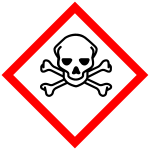

Signal word Danger
Hazard statement(s) H220 Extremely flammable gas
H330 Fatal if inhaled
H400 Very toxic to aquatic life
Precautionary statement(s) Prevention P210 Keep away from heat, hot surfaces, sparks, open flames and other ignition sources. No smoking.
P260 Do not breathe dust/fume/gas/mist/vapours/spray.
P271 Use only outdoors or in a well-ventilated area.
P284 [In case of inadequate ventilation] wear respiratory protection.
P273 Avoid release to the environment.
Response P377 Leaking gas fire: Do not extinguish, unless leak can be stopped safely.
P381 In case of leakage, eliminate all ignition sources.
P304+P340 IF INHALED: Remove person to fresh air and keep comfortable for breathing.
P316 Get emergency medical help immediately.
P320 Specific treatment is urgent (see ... on this label).
P391 Collect spillage.
Storage P410+P403 Protect from sunlight. Store in a well-ventilated place.
P403 Store in a well-ventilated place.
P403+P233 Store in a well-ventilated place. Keep container tightly closed.
Disposal P501 Dispose of contents/container to an appropriate treatment and disposal facility in accordance with applicable laws and regulations, and product characteristics at time of disposal.
Other hazards which do not result in classification
no data available
Handling and StoragePrecautions for safe handling
NO open flames, NO sparks and NO smoking. Closed system, ventilation, explosion-proof electrical equipment and lighting. Prevent build-up of electrostatic charges (e.g., by grounding) if in liquid state. Do NOT use compressed air for filling, discharging, or handling. Handling in a well ventilated place. Wear suitable protective clothing. Avoid contact with skin and eyes. Avoid formation of dust and aerosols. Use non-sparking tools. Prevent fire caused by electrostatic discharge steam.
Conditions for safe storage, including any incompatibilities
Fireproof. Separated from strong oxidants. Cool. Keep in a well-ventilated room. Install continous monitoring system with alarm.Store in cool, dry, well-ventilated location. Separate from chlorates, nitrates, other oxidizing materials, and hydrocarbons.
-
-
Seller Information
-
Business Type:
Manufactory
-
Location:
While luzhou creek area big cross the town
Sichuan torch chemical group co., LTD in 2000, was registered on Dec. 21, in the big cross the town, at the beginning of the company is mainly engaged in "801" products, deuteride reagents, high purity hydrogen sulfide, medical oxygen, lodging, registration number of employees for 3 people, registered capital of 103.25 million yuan
-
-
Inquiry History3 Inquiries
Country Product Purchase Quantity Date Posted  Spain
Spain
Hydrogen Sulfide 99% gas 7783-06-4
1000 KG Oct 9, 2023
Spain
Hydrogen Sulfide 99% gas 7783-06-4 Dideu
200000000 KG Jun 15, 2025
Spain
hydrogen sulfide
700 MT Jul 15, 2025 Post an enquiry for this product
Hot Related Products
-
 Factory Supply Phosphoric Acid 85% Food Grade H3po4 CAS 7664-38-2 Phosphoric Acid
$850-1050/MT FOB
-
 Bioglutide7732-18-5
 -
 High-purity Phosphoric Acid 85% Industrial Grade / Food Grade Stable performance
$1058.51-1166.32/MT FOB
-
 L-Cysteine 99.9% HAIDE Biotech
 -
 Plant 75% 85% Food Grade IBC Tank Price 7664-38-2 H3PO4 Phosphoric Acid
$855-1111/MT FOB
-
 Phosphoric Acid 7664-38-2
$1-1.3/KG EXW
-
 75%/85% PHOSPHORIC ACID Food Grade E338 / tech grade
 -
 China one-stop supply N-acetyl-l-cysteine 99% / glycine 99% / L-cysteine 99% powder
 -
 10ml/3ml. CAS No, 7732-18-5") Bacteriostatic Water (BAC water) 10ml/3ml. CAS No, 7732-18-5
Bacteriostatic Water (BAC water) 10ml/3ml. CAS No, 7732-18-5$7-9/UNIT EXW
-
 Calcium chloride anhydrous94%