Glyphosate 95%
41 Inquiries
1071-83-6
Pesticide Grade
95%
25kg/0.2kg Bag
Yes
2026-11-18

-
Product Description
-
Seller Information
-
Inquiry History
-
Description<p> </p><div class="translated_result"><p class="tgt">Many herbicide glyphosate is widely used in the active chemical components, the use of it in the European Union by strict regulation. The European food safety authority (EFSA) and the European Union member states have completed the herbicide glyphosate, they issued a report pointed out that glyphosate is unlikely to have the risk of cancer in humans, and also puts forward some new strengthening control of glyphosate residues in food safety measures. This conclusion will decide whether to continue in the European Union committee approved the use of glyphosate as important reference, it will also review for eu member states including the safety of glyphosate herbicide. [1-2]</p><p class="tgt"> </p><p class="tgt">Preparation for use</p><p class="tgt"> </p><p class="tgt"> editor</p><p class="tgt"> </p><p class="tgt">Glyphosate is a kind of non-selective, no residual sterilant herbicides, root weeds is very effective for many years, is widely used in rubber, orchards, mulberry, tea and sugar cane. Main inhibition of enol acetone in plant base shikimic phosphate synthetase, thus inhibiting shikimic element to the transformation of phenylalanine, tyrosine and tryptophan to distract protein synthesis, cause plant death. Glyphosate is through stem conduction to each part of the plant after absorption, can control the single cotyledon and dicotyledonous, annual and perennial, herbs and shrubs more than 40 families of plants. Glyphosate the grave after combined with iron, aluminum and other metal ions and soon lose activity, hidden in the soil of seed and soil microbial without adverse effects.</p><p class="tgt"> </p><p class="tgt">Originally used in rubber plantation thatch and some other weeds, can make the rubber tree tapping a year early, the old rubber production. Presently gradually promote resourceful, orchards, mulberry field, tea plantations, rice and wheat, rice and rapeseed crop rotation, etc. Various weeds on the sensitive degree of glyphosate is different, so dose is different also. Such as barnyard grass, green bristlegrass, see mai niang, eleusine indica, digitaria, cleavers, such as annual weed, dose in effective components of 6 ~ 10.5 g / 100 m. Of semen plantaginis, small fleabane active ingredients, such as duck plantar grass dose with meter is 11.4 ~ 15 g / 100 m. On imperata cylindrica and bony grass, reed is 18 ~ 30 g / 100 m, generally 3 ~ 4.5 kg of water, to weed stem leaf directional spray evenly. Generally broadleaf weeds or flowering period in the early budding, gramineae in late or early heading jointing stage 20-30 kg water spray dose per acre. Weeds have cut out the stem leaves of plants should be c born to have enough again when new leaves. Control perennial weeds a dose points 2 times, interval of five days can improve the control effect.</p><p class="tgt"> </p><p class="tgt">Control apple orchards, taoyuan, vineyards, liyuan, tea, mulberry field, and leisure to farmland weeds, the barnyard grass green bristlegrass, "mai niang, eleusine indica, digitaria, xanthium sibiricum, quinoa, chickweed, cleavers, etc Annual weed.</p><p class="tgt"> </p><p class="tgt">Have a role after glyphosate exposure to green groups. Due to the sensitivity of the various weeds to glyphosate is different, so dose is different also.</p><p class="tgt"> </p><p class="tgt">1. Orchard, mulberry field weeding weeds control 1 year born with 10% water 0.5 1 kg per mu, herbicide, perennial weeds with 10% water 1-1.5 kg per acre. 20-30 kilograms of water, to weed stem leaf directional spray.</p><p class="tgt"> </p><p class="tgt">2. The farmland weed Farmland weeds before sowing seed low-toxin chemical field has growth of weeds, dose can consult orchard weeding. The cotton growing period, with the belt cover spray directional spray. With 10% water, 0.5 to 0.75 kilograms per mu, water 20-30 kg.</p><p class="tgt"> </p><p class="tgt">3. Leisure, tanabe, roadside weeding weeds in 4 to 6 leaf stage, 0.5 1 kg per mu with 10% water, 100 ml diesel, water 20-30 kg, for weeds spray.</p><p class="tgt"> </p><p class="tgt">4. For some malignant weeds, such as rhizoma cyperi reed, etc., can be in accordance with the RMB $200 grams add fertilizer, weed control effect is good.</p></div><p></p>ECHEMI Editorial ReferenceGlyphosate is a kind of organic phosphorus herbicide. It is a kind of non-selective systemic stem leaf herbicide. It was developed by the Monsanto Company in the early 1970s. It is typically used in the form of its isopropylamine salt or sodium salt. The isopropylamine salt is the active component of a famous trademark herbicide ''Roundup''. The proto-drug is a white or slightly yellow crystalline powder with the melting point being at 232~236 ℃ (decomposition), it is easily soluble in water,Basic Info
-
Product Name:
Glyphosate
Other Name:Glycine,N-(phosphonomethyl)-;N-(Phosphonomethyl)glycine;Glyphosate;MON 2139;Glialka;Phosphonomethyliminoacetic acid;N-Phosphomethylglycine;MON 6000;(Carboxymethylamino)methylphosphonic acid;Phosphonomethylglycine;Forsat;Phorsat;Folusen;Rebel Garden;Glyphosate CT;Glyphodin A;Accord XRT II;Hockey;Herbatop;Glialka 36;Lancer;Carboxymethylaminomethanephosphinic acid;Glyphomax;Kickdown;NSC 151063;Gliz 480CS;Gliz;Glyfos;Silglif;Klinik;MON 3539;GlyGran;Total;HM 2028;Buccaneer;Atila;Ground Bio;Leone;Glifoglex;C-K Yuyos FAV;Scout (herbicide);Scout;Glifosan 747;Lancer (herbicide);Safal;Gibson;Green Fire 50SL;Weedmaster 50SL;Accord 4L;2-[(Phosphonomethyl)amino]acetic acid;Glydon;Faena;Glyphosate atar 48;37337-60-3;42618-09-7;75241-08-6;1585457-94-8
CAS No.:1071-83-6
Molecular Formula:C3H8NO5P
InChIKeys:InChIKey=XDDAORKBJWWYJS-UHFFFAOYSA-N
Molecular Weight:169.07300
Exact Mass:169.07
EC Number:213-997-4
HScode:2931900041
Categories:
Characteristics-
PSA:
116.67000
XLogP3:-0.81330
Appearance:Glyphosate is an odorless white powder. Decomposition begins at approximately 419°F (darkens). pH (1% solution in water) 2.5. (NTP, 1992)
Density:0.5 g/cm3
Melting Point:230 °C (decomp)
Boiling Point:465.8ºC at 760 mmHg
Flash Point:235.5ºC
Refractive Index:1.576
Water Solubility:Solubility in water, g/100ml at 25°C: 1.2
Storage Conditions:APPROX 4ºC
Vapor Pressure:Vapour pressure at 20°C: negligible
Toxicity:LD50 in rats, mice (mg/kg): 4873, 1568 orally (Bababunmi)
Flammability characteristics:combustion produces toxic gases of nitrogen oxides and phosphorus oxides
Odor:Odorless
Hazard IdentificationClassification of the substance or mixture
Serious eye damage, Category 1
Hazardous to the aquatic environment, long-term (Chronic) - Category Chronic 2
GHS label elements, including precautionary statements
Pictogram(s) 
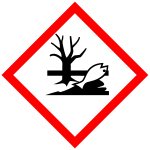
Signal word Danger
Hazard statement(s) H318 Causes serious eye damage
H411 Toxic to aquatic life with long lasting effects
Precautionary statement(s) Prevention P280 Wear protective gloves/protective clothing/eye protection/face protection/hearing protection/...
P273 Avoid release to the environment.
Response P305+P354+P338 IF IN EYES: Immediately rinse with water for several minutes. Remove contact lenses, if present and easy to do. Continue rinsing.
P317 Get medical help.
P391 Collect spillage.
Storage none
Disposal P501 Dispose of contents/container to an appropriate treatment and disposal facility in accordance with applicable laws and regulations, and product characteristics at time of disposal.
Other hazards which do not result in classification
no data available
Handling and StoragePrecautions for safe handling
NO open flames, NO sparks and NO smoking. Prevent build-up of electrostatic charges (e.g., by grounding). Closed system, dust explosion-proof electrical equipment and lighting. Prevent deposition of dust. Handling in a well ventilated place. Wear suitable protective clothing. Avoid contact with skin and eyes. Avoid formation of dust and aerosols. Use non-sparking tools. Prevent fire caused by electrostatic discharge steam.
Conditions for safe storage, including any incompatibilities
Provision to contain effluent from fire extinguishing. Separated from food and feedstuffs. Well closed. Do NOT store or transport in containers made from galvanized steel or unlined steel. Store in an area without drain or sewer access.Safe Storage of Pesticides. Always store pesticides in their original containers, complete with labels that list ingredients, directions for use, and first aid steps in case of accidental poisoning. Never store pesticides in cabinets with or near food, animal feed, or medical supplies. Do not store pesticides in places where flooding is possible or in places where they might spill or leak into wells, drains, ground water, or surface water.
-
-
Seller Information
-
Business Type:
Manufactory
-
Location:
Rudong ocean chemical industrial park along the yellow sea
-
-
Inquiry History41 Inquiries
Country Product Purchase Quantity Date Posted  Germany
1071-83-6
25 KG Feb 3, 2024  India
India
Glyphosate 95%
200 MT Apr 2, 2026  Togo
Togo
Glyphosate
5 20' Fcl Mar 11, 2024  France
Herbicide Glyphosate 95%
1 KG Mar 9, 2026  United Arab Emirates
Glyphosate
300 MT Mar 27, 2026
India
Glyphosate
250 L Jul 23, 2026  Brazil
glyphosate
2000 L Jul 20, 2026  Egypt
Egypt
Glyphosate
480 G Jul 2, 2026  Indonesia
Technical Acid Glyphosate 95%
1 L May 21, 2026
France
Herbicide Glyphosate
1 Apr 30, 2026  Lebanon
glyphosate
1 KG Oct 21, 2025  Ghana
Ghana
Glyphosate
1 40' Fcl Oct 11, 2025  Nigeria
Agrochemical Herbicide Glyphosate
1 KG Sep 26, 2025  Pakistan
Glyphosate
200 KG Sep 23, 2025
India
Glyphosate
3.00 MT Jul 3, 2025  Sri Lanka
Glyphosate 36%
1 20' Fcl Mar 26, 2025
India
Glyphosate 95% powder
18 MT Nov 14, 2024  Ethiopia
Glyphosate
1 40' Fcl Aug 4, 2026  Mongolia
Glyphosate
1 KG Feb 28, 2026  Czech
Czech
Glyphosate
5000 KG Feb 27, 2026 Post an enquiry for this product
Hot Related Products
-
 Caustic Soda-Batong
 -
 Caustic Soda Flakes / Pearl Sodium Hydroxide Naoh High Purity 99% 98.5% 98% price
$450-550/MT FOB
-
 Industrial Grade 99% Caustic Soda in Flake Pearl and Solid Forms
 -
 Factory Supply Phosphoric Acid 85% Food Grade H3po4 CAS 7664-38-2 Phosphoric Acid
$850-1050/MT FOB
-
 Caustic Soda Flakes White
 -
 High-purity Phosphoric Acid 85% Industrial Grade / Food Grade Stable performance
 -
 Caustic soda and Sodium hydroxide
 -
 Sodium hydroxide White translucent crystalline solid
 -
 Sodium Hydroxide 50% Liquid Vietchem Vietchem
 -
 Caustic soda flakes/pearls 99% 99% flakes or pearls