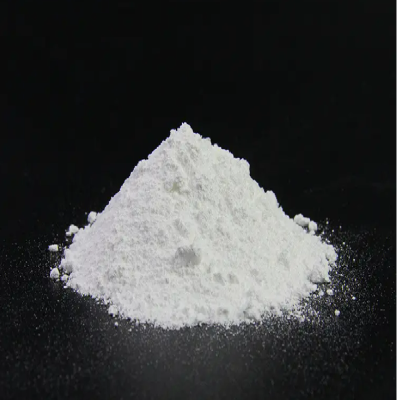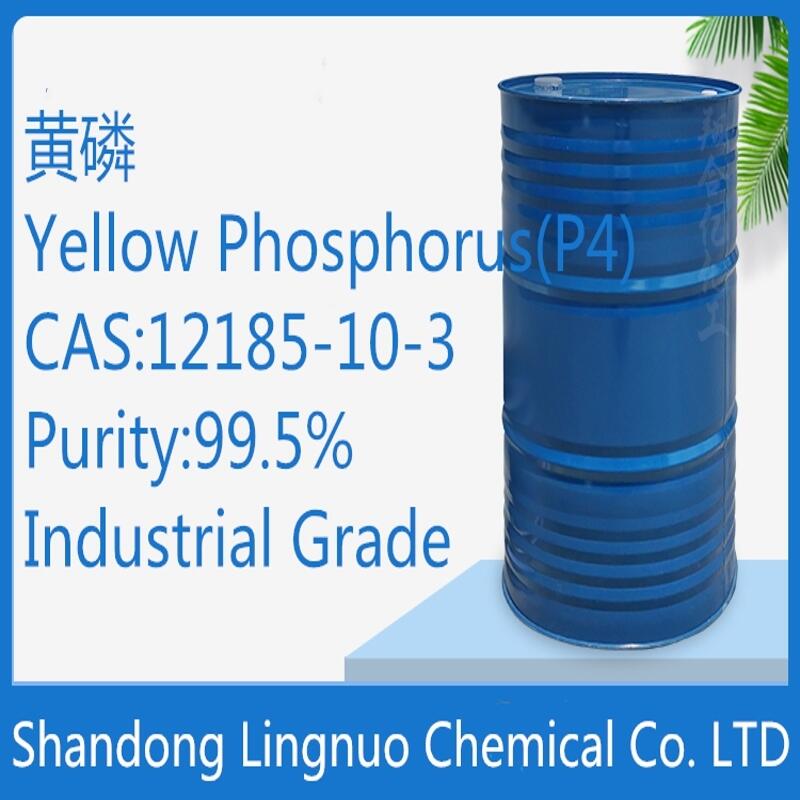


Yellow Phosphorus(P4) 99.5% Industrial Grade Yellow waxy solid
29 Inquiries
12185-10-3
Industrial Grade
99.5%
the port of Qingdao
25kg/bag
Yes
2023-04-30

Melamine,ethyl acetate,maleic anhydride,acetic acid,tetrahydrofuran,butyl acetate
-
Product Description
-
Seller Information
-
Inquiry History
-
DescriptionBasic Info
-
Product Name:
Tetraphosphorus
Other Name:Phosphorus,mol. (P4);Phosphorus molecule (P4);Phosphorus (P4);Molecular phosphorus (P4);Tetraatomic phosphorus;Phosphorus tetraatomic molecule;Tetrameric phosphorus;Tetraphosphorus;White phosphorus;Yellow phosphorus;Phosphorus tetramer;P4;51273-58-6
CAS No.:12185-10-3
UN No.:1338
Molecular Formula:P4
InChIKeys:OAICVXFJPJFONN-UHFFFAOYSA-N
Molecular Weight:123.89500
Exact Mass:123.89500
EC Number:231-768-7
Categories:
Characteristics-
PSA:
54.36000
XLogP3:3.44480
Appearance:Phosphorus, white, dry or under water or in solution appears as a soft waxy solid with a sharp pungent odor similar to garlic. Insoluble in water and ethyl alcohol. Soluble in carbon disulfide. Shipped as a solid or liquid in an atmosphere of inert gas or as a solid under water. Barely soluble in water and denser than water. Hence, sinks in water. Uses include munitions manufacture, pyrotechnics, explosives, smoke bombs, artificial fertilizers, and rat poisons. Density approximately 15.2 lb / gal.
Density:1.831 g/cm3
Melting Point:44.77 °C
Boiling Point:280 °C
Water Solubility:H2O: 1 part/300,000 parts H2O; 1g/400mL absolute alcohol; 1 g/200mL CHCl2; 1g/40mL benzene
Vapor Pressure:0.03 mm Hg (NIOSH, 2016)
Hazard IdentificationClassification of the substance or mixture
Pyrophoric solids, Category 1
Acute toxicity - Category 2, Oral
Skin corrosion, Sub-category 1A
Acute toxicity - Category 2, Inhalation
Hazardous to the aquatic environment, short-term (Acute) - Category Acute 1
GHS label elements, including precautionary statements
Pictogram(s) 



Signal word Danger
Hazard statement(s) H250 Catches fire spontaneously if exposed to air
H300 Fatal if swallowed
H314 Causes severe skin burns and eye damage
H330 Fatal if inhaled
H400 Very toxic to aquatic life
Precautionary statement(s) Prevention P210 Keep away from heat, hot surfaces, sparks, open flames and other ignition sources. No smoking.
P222 Do not allow contact with air.
P233 Keep container tightly closed.
P280 Wear protective gloves/protective clothing/eye protection/face protection/hearing protection/...
P264 Wash ... thoroughly after handling.
P270 Do not eat, drink or smoke when using this product.
P260 Do not breathe dust/fume/gas/mist/vapours/spray.
P271 Use only outdoors or in a well-ventilated area.
P284 [In case of inadequate ventilation] wear respiratory protection.
P273 Avoid release to the environment.
Response P302+P335+P334 IF ON SKIN: Brush off loose particles from skin. Immerse in cool water [or wrap in wet bandages].
P370+P378 In case of fire: Use ... to extinguish.
P301+P316 IF SWALLOWED: Get emergency medical help immediately.
P321 Specific treatment (see ... on this label).
P330 Rinse mouth.
P301+P330+P331 IF SWALLOWED: Rinse mouth. Do NOT induce vomiting.
P363 Wash contaminated clothing before reuse.
P304+P340 IF INHALED: Remove person to fresh air and keep comfortable for breathing.
P316 Get emergency medical help immediately.
P305+P351+P338 IF IN EYES: Rinse cautiously with water for several minutes. Remove contact lenses, if present and easy to do. Continue rinsing.
P320 Specific treatment is urgent (see ... on this label).
P391 Collect spillage.
Storage P405 Store locked up.
P403+P233 Store in a well-ventilated place. Keep container tightly closed.
Disposal P501 Dispose of contents/container to an appropriate treatment and disposal facility in accordance with applicable laws and regulations, and product characteristics at time of disposal.
Other hazards which do not result in classification
no data available
Handling and StoragePrecautions for safe handling
NO open flames, NO sparks and NO smoking. NO contact with flammables. NO contact with air. NO contact with hot surfaces. NO contact with oxidizing agents, halogens, sulfur or strong bases. Handling in a well ventilated place. Wear suitable protective clothing. Avoid contact with skin and eyes. Avoid formation of dust and aerosols. Use non-sparking tools. Prevent fire caused by electrostatic discharge steam.
Conditions for safe storage, including any incompatibilities
Fireproof. Separated from strong oxidants and food and feedstuffs. Keep under water.
-
-
Seller Information
-
Business Type:
Trader
-
Main Products:
Melamine,ethyl acetate,maleic anhydride,acetic acid,tetrahydrofuran,butyl acetate
-
Location:
Room 21-1, 14th floor, Zone (A), Guangrao City Commercial Complex, Quanfu Yuan, Guangrao County, Dongying City, Shandong Province
-
Payment Terms:
TT against copy of documents,L/C
-
Average lead Time:
20 days
-
Total Annual Revenue:
$50 million-$100 million
-
Total Employees:
51-100
-
Year of Establishment:
2018
Company Certificates-
 Certificate 1
-
 Certificate 2
-
 Certificate 3
-
 Certificate 4
-
-
Inquiry History29 Inquiries
Country Product Purchase Quantity Date Posted  United States
White phosphorus CAS No: 12185-10-3
500 G Jan 7, 2024  India
India
White phosphorus
100 G Sep 22, 2026
India
yellow phosphorus
25 MT May 20, 2026  Czech
Czech
White phosphorus
500 G Sep 8, 2024  Greece
White phoshorus
100 G Apr 14, 2024
Greece
White phosphorus
200 G Apr 14, 2024
Greece
White phoshorus
100 G Apr 12, 2024
United States
White phosphorus
30 KG Jan 17, 2024  Saudi Arabia
White phosphorus
100 MT Dec 25, 2023
India
Yellow Phosphorus
25 MT Aug 17, 2026  Pakistan
White phosphorus
2 G Aug 10, 2026  Japan
Japan
YELLOW PHOSPHORUS
1 20' Fcl Aug 10, 2026  Indonesia
White phosphorus P4
1 KG Jun 30, 2026
United States
White phosphorus 99.95%
1 MT Apr 5, 2026
India
Yellow Phosphorus
50 MT Aug 7, 2025
United States
White phosphorus
1 TON Feb 7, 2025
Greece
White phosphorus
1 KG Apr 14, 2024
Greece
White phosphorus 99.99% white powder Pinmai
1 KG Apr 14, 2024  Thailand
White phosphorus
200 KG Jan 26, 2024
United States
White Phosphorus
500 G Jan 8, 2024 Post an enquiry for this product
More from this Seller
-
-
 99.5% colourless liquid")
-
Triethyl Orthoformate (TEOF) 99.5% colourless liquid
Industrial Grade / 99.5%
-
-
-

-
Propylene Glycol/PG 99.5% colourless liquid Lingnuo
Industrial Grade / 99.5%
-
-
-
 99% Industrial Grade Purplish red cubic crystalline or amorphous powder")
-
Red Phosphorus (P4) 99% Industrial Grade Purplish red cubic crystalline or amorphous powder
Industrial Grade / 99%
-
-
-
 99.5% colourless liquid")
-
Acrylic Acid(AA) 99.5% colourless liquid
Industrial Grade / 99.5%
-
-
-

-
Sodium nitrite 99% Rhombic crystal or powder white or yellowish
Industrial Grade / 99%
-


Hot Related Products
-
 Factory Supply Phosphoric Acid 85% Food Grade H3po4 CAS 7664-38-2 Phosphoric Acid
$850-1050/MT FOB
-
 High-purity Phosphoric Acid 85% Industrial Grade / Food Grade Stable performance
 -
 Plant 75% 85% Food Grade IBC Tank Price 7664-38-2 H3PO4 Phosphoric Acid
$855-1111/MT FOB
-
 Powder/Crystal Mono Ammonium Phosphate Map Fertilizer 12-61 for Agricultural Use
 -
 Phosphorus 99% white powder aly-Phosphorus lk
 -
 Phosphoric Acid 7664-38-2
$1-1.3/KG EXW
-
 Phosphoric Acid, CAS 7664-38-2 | 75%,85%, Food & Industrial Grade Acidulant
 -
 Agricultural Grade Watersoluble Fertilizer Phosphate Fertilizer, Monoammonium Phosphate Map
 -
 Phosphoric Acid food grade 7664-38-2
 -
 Diammonium phosphate White crystalline SNC | Good Fortune