







Methyl anthranilate 134-20-3
TDS 3 Inquiries
134-20-3
Industrial Grade
99%
QINGDAO
EAST CHEMSOURCES
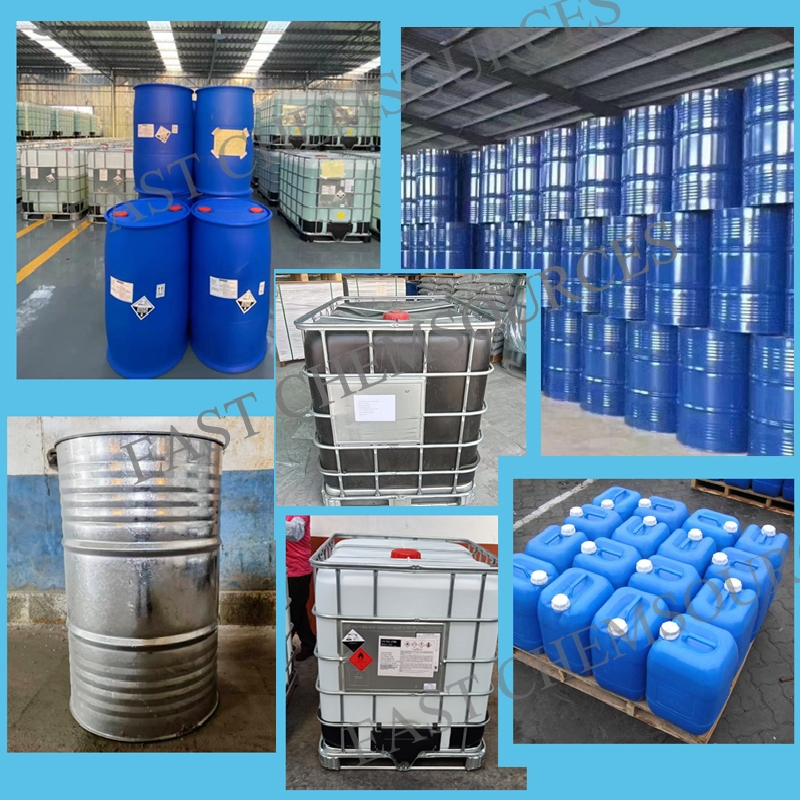
200KG DRUM
2024-03-14

Food additives,Pharmaceutical raw materials,Chemicals,Comestic raw materials
-
Product Description
-
Seller Information
-
Inquiry History
-
DescriptionECHEMI Editorial ReferenceSolid
Methyl anthranilate is a clear colorless to tan liquid with an odor of grapes. Has light blue fluorescence. (NTP, 1992)|Liquid|Solid|Colourless to pale yellow liquid or crystals with bluish fluorescence; Grape-like or orange aroma
Methyl anthranilate is a clear colorless to tan liquid with an odor of grapes. Has light blue fluorescence. (NTP, 1992)|Methyl anthranilate is a benzoate ester that is the methyl ester of anthranilic acid. It has a role as a metabolite and a flavouring agent. It derives from an anthranilic acid.CertificatesBasic Info-
Product Name:
Methyl anthranilate
Other Name:Benzoic acid,2-amino-,methyl ester;Anthranilic acid,methyl ester;Methyl 2-aminobenzoate;Methyl anthranilate;Methyl o-aminobenzoate;2-Aminobenzoic acid methyl ester;2-(Methoxycarbonyl)aniline;o-Carbomethoxyaniline;2-Carbomethoxyaniline;o-Aminobenzoic acid methyl ester;ReJex-iT;Bird Shield;Rejex-iT TP 40;Rejex-iT AP 50;[2-(Methoxycarbonyl)phenyl]amine;o-(Methoxycarbonyl)aniline;NSC 3109;Grain 96-1;Sunarome UVA;Methyl 6-aminobenzoate;Fog Force;RejeX-it Fog Force;2-Amino-1-methylbenzoate;PPC 17F
CAS No.:134-20-3
Molecular Formula:C8H9NO2
InChIKeys:InChIKey=VAMXMNNIEUEQDV-UHFFFAOYSA-N
Molecular Weight:151.16300
Exact Mass:151.16
EC Number:205-132-4
UNII:981I0C1E5W
NSC Number:3109
DSSTox ID:DTXSID6025567
Color/Form:Crystals|Pale-yellow liquid with bluish fluorescence|Colorless to pale-yellow liquid or crystals with bluish fluorescence|Colorless to pale yellow liquid or solid
HScode:2922499990
Categories:
Characteristics-
PSA:
52.32000
XLogP3:1.63660
Appearance:Methyl anthranilate is a clear colorless to tan liquid with an odor of grapes. Has light blue fluorescence. (NTP, 1992)
Density:1.168 g/cm3 @ Temp: 20 °C
Melting Point:24.5 °C
Boiling Point:256 °C
Flash Point:104ºC
Refractive Index:1.581-1.584
Water Solubility:H2O: slightly soluble
Storage Conditions:Store in a cool, dry place. Keep container closed when not in use.
Vapor Pressure:1 mm Hg ( 20 °C)
Explosive limit:Not a fire or explosion hazard when stored under normal conditions. Closed containers may explode (due to the build-up of pressure) when exposed to extreme heat.
Odor:Grape-like odor
Taste:Slightly bitter, pungent
Henrys Law Constant:Henry's Law constant = 1.89X10⁻⁶ atm cu m/mol at 25 °C (est)
Dissociation Constants:pKa = 2.23 (conjugate acid)
Experimental Properties:Congealing point: 23.8 °C, 24 °C|It has lowest molar absorptivity of all sunscreens and does not absorb throughout the near-ultraviolet range|Hydroxyl radical reaction rate constant: 3.48X10⁻¹¹ cu cm/molecule-sec at 25 °C (est)
Air and Water Reactions:This compound is sensitive to air and light. Slightly water soluble (NTP, 1992).
Reactive Group:Esters, Sulfate Esters, Phosphate Esters, Thiophosphate Esters, and Borate Esters
Reactivity Profile:An aromatic amine and ester. Amines are chemical bases. They neutralize acids to form salts plus water. These acid-base reactions are exothermic. The amount of heat that is evolved per mole of amine in a neutralization is largely independent of the strength of the amine as a base. Amines may be incompatible with isocyanates, halogenated organics, peroxides, phenols (acidic), epoxides, anhydrides, and acid halides. Flammable gaseous hydrogen is generated by amines in combination with strong reducing agents, such as hydrides. Esters react with acids to liberate heat along with alcohols and acids. Strong oxidizing acids may cause a vigorous reaction that is sufficiently exothermic to ignite the reaction products. Heat is also generated by the interaction of esters with caustic solutions. Flammable hydrogen is generated by mixing esters with alkali metals and hydrides.
Hazard IdentificationClassification of the substance or mixture
Eye irritation, Category 2
GHS label elements, including precautionary statements
Pictogram(s) 
Signal word Warning
Hazard statement(s) H319 Causes serious eye irritation
Precautionary statement(s) Prevention P264 Wash ... thoroughly after handling.
P280 Wear protective gloves/protective clothing/eye protection/face protection/hearing protection/...
Response P305+P351+P338 IF IN EYES: Rinse cautiously with water for several minutes. Remove contact lenses, if present and easy to do. Continue rinsing.
Storage none
Disposal none
Other hazards which do not result in classification
no data available
Handling and StoragePrecautions for safe handling
Handling in a well ventilated place. Wear suitable protective clothing. Avoid contact with skin and eyes. Avoid formation of dust and aerosols. Use non-sparking tools. Prevent fire caused by electrostatic discharge steam.
Conditions for safe storage, including any incompatibilities
Store only in original container, in a dry place, inaccessible to children, pets, and domestic animals. Store apart from pesticides, fertilizers, food, or feed that may cause cross-contamination from odor.
-
-
Seller Information
-
Business Type:
Trader
-
Main Products:
Food additives,Pharmaceutical raw materials,Chemicals,Comestic raw materials
-
Location:
Room 501, Unit 6, No. 40, hushan road,Licang,Qingdao
-
Payment Terms:
TT against copy of documents,TT against B/L draft before shipment,100% TT in advance
-
Average lead Time:
10
-
Total Annual Revenue:
$1 million-$2.5 million
-
Total Employees:
11-50
-
Year of Establishment:
2017
-
-
Inquiry History3 Inquiries
Country Product Purchase Quantity Date Posted  Singapore
Methyl anthranilate
1 KG Dec 23, 2024  United States
methyl anthranilate 99%
1 MT Jun 20, 2025
United States
Methyl anthranilate 99% high purity certified Professional producer Greenbo
15 KG Oct 21, 2023 Post an enquiry for this product

Hot Related Products
-
 Methanol 99.85% colourless liquid
 -
 High Purity industrial grade Methanol 99.9% / Methyl Alcohol CAS 67-56-1
$550-650/MT FOB
-
 Sodium Hypochlorite 1
 -
 67-56-1 Methanol 99.9% Colourless Liquid Batong
 -
 Sodium hypochlorite 99% Light yellow liquid ZSHHY-7681-52-9 SHANDONG ZHISHANG CHEMICAL
 -
 Sodium hypochlorite 10% Pale yellow Vietchem Vietchem


