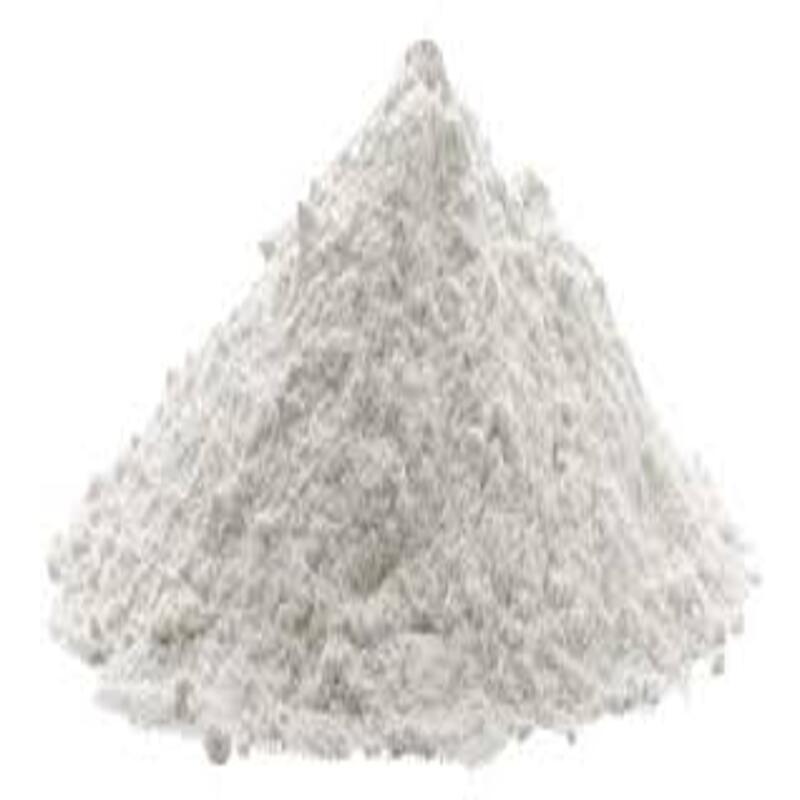

High Quality CAS 63-91-2 L Phenylalanine Powder Best Price L Phenylalanine Raw Material L Phenylalanine
8 Inquiries
63-91-2
Industrial Grade
99%
Durban
Custom
As per customer requirement
2024-05-19
Sodium Lauryl Ether Sulfate,Caustic Soda,Soda Ash,Citric Acid,Calcium Hypochlorite,Oxalic Acid
-
Product Description
-
Seller Information
-
Inquiry History
-
DescriptionECHEMI Editorial ReferenceL-Phenylalanine is an antagonist at α2δ calcium channels with a Ki of 980 nM. IC50 Value: 980 nM [1]Target: Calcium ChannelL-Phenylalanine (LPA) is an electrically neutral amino acid, one of the twenty common amino acids used to biochemically form proteins. In the brain, L-phenylalanine is a competitive antagonist at the glycine binding site of NMDA receptor and at the glutamate binding site of AMPA receptor [2, 3]. At the glycine binding site of NMDA receptor L-phenylalanine has an appa
L-phenylalanine is an odorless white crystalline powder. Slightly bitter taste. pH (1% aqueous solution) 5.4 to 6. (NTP, 1992)|DryPowder|Solid|Colourless or white platelike crystals or crystalline powder; odourless
L-phenylalanine is an odorless white crystalline powder. Slightly bitter taste. pH (1% aqueous solution) 5.4 to 6. (NTP, 1992)|L-phenylalanine is the L-enantiomer of phenylalanine. It has a role as a nutraceutical, a micronutrient, an Escherichia coli metabolite, a Saccharomyces cerevisiae metabolite, a plant metabolite, an algal metabolite, a mouse metabolite, a human xenobiotic metabolite and an EC 3.1.3.1 (alkaline phosphatase) inhibitor. It is an erythrose 4-phosphate/phosphoenolpyruvate family amino acid, a proteinogenic amino acid, a phenylalanine and a L-alpha-amino acid. It is a conjugate base of a L-phenylalaninium. It is a conjugate acid of a L-phenylalaninate. It is an enantiomer of a D-phenylalanine. It is a tautomer of a L-phenylalanine zwitterion.|Phenylalanine is an essential aromatic amino acid that is a precursor of melanin, [dopamine], [noradrenalin] (norepinephrine), and [thyroxine].|Phenylalanine is an essential aromatic amino acid in humans (provided by food), Phenylalanine plays a key role in the biosynthesis of other amino acids and is important in the structure and function of many proteins and enzymes. Phenylalanine is converted to tyrosine, used in the biosynthesis of dopamine and norepinephrine neurotransmitters. The L-form of Phenylalanine is incorporated into proteins, while the D-form acts as a painkiller. Absorption of ultraviolet radiation by Phenylalanine is used to quantify protein amounts. (NCI04)|An essential aromatic amino acid that is a precursor of MELANIN; DOPAMINE; noradrenalin (NOREPINEPHRINE), and THYROXINE.Basic Info-
Product Name:
L-Phenylalanine
Other Name:L-Phenylalanine;Alanine,phenyl-,L-;(S)-α-Aminohydrocinnamic acid;(S)-α-Amino-β-phenylpropionic acid;Phenylalanine;β-Phenyl-L-alanine;β-Phenyl-α-alanine;Antibiotic FN 1636;Benzenepropanoic acid,α-amino-,(S)-;Phenyl-α-alanine;3-Phenyl-L-alanine;3-Phenylalanine;(S)-Phenylalanine;(S)-α-Aminobenzenepropanoic acid;(S)-2-Amino-3-phenylpropionic acid;L-Alanine,3-phenyl-;(S)-2-Amino-3-phenylpropanoic acid;(S)-(-)-Phenylalanine;(-)-Phenylalanine;L-(-)-Phenylalanine;NSC 79477;(2S)-2-Amino-3-phenylpropanoic acid;(2s)-2-Amino-3-phenylpropanoic acid;3617-44-5;5297-02-9;10549-09-4;67675-33-6;801204-11-5;2416148-28-0
CAS No.:63-91-2
Molecular Formula:C9H11NO2
InChIKeys:InChIKey=COLNVLDHVKWLRT-QMMMGPOBSA-N
Molecular Weight:165.18900
Exact Mass:165.19
EC Number:200-568-1
UNII:47E5O17Y3R
DSSTox ID:DTXSID4040763
NCI Thesaurus Code:C29601
Color/Form:Prisms form water|Monoclinic plates, leaflets from warm concentrated aqueous solution; hydrated needles from dilute solutions
HScode:29224995
Categories:
Characteristics-
PSA:
63.32000
XLogP3:1.34130
Appearance:L-phenylalanine is an odorless white crystalline powder. Slightly bitter taste. pH (1% aqueous solution) 5.4 to 6. (NTP, 1992)
Density:1.24 g/cm3
Melting Point:283 °C (decomp)
Boiling Point:307.5ºC at 760 mmHg
Flash Point:139.8ºC
Refractive Index:1.576
Water Solubility:1-5 g/100 mL at 25 ºC
Storage Conditions:Store at RT.
Vapor Pressure:<1 Pa (25 °C)
Specific rotation:Specific optical rotation: -35.1 deg at 20 °C/D (c = 1.94)
Odor:Slight
Taste:Bitter
PKA:1.24(at 25 °C)
Henrys Law Constant:Henry's Law constant = 1.2X10⁻¹⁰ atm-cu m/mol at 25 °C (est)
Dissociation Constants:1.24 (at 25 °C)|pK1 = 1.83; pK2 = 9.13|pKa = 1.24
Collision Cross Section:140.3 Ų [M+H]+ [CCS Type: DT, Method: single field calibrated with Agilent tune mix (Agilent)]|138.91 Ų [M+Na]+ [CCS Type: DT, Method: stepped-field]|146.52 Ų [M-H]- [CCS Type: DT, Method: stepped-field]|135 Ų [M+H]+ [CCS Type: TW, Method: calibrated with polyalanine]|140.2 Ų [M+H]+ [CCS Type: DT, Method: single field calibrated with ESI Low Concentration Tuning Mix (Agilent)]|138.3 Ų [M+Na]+ [CCS Type: DT, Method: single field calibrated with ESI Low Concentration Tuning Mix (Agilent)]|139.4 Ų [M-H]- [CCS Type: DT, Method: single field calibrated with ESI Low Concentration Tuning Mix (Agilent)]|141.29 Ų [M-H]- [CCS Type: DT, Method: stepped-field]|141.28 Ų [M+H]+ [CCS Type: DT, Method: stepped-field]|140.1 Ų [M-H]-
Experimental Properties:Sublimes in vacuo|Leaflets from water, decomposes at 285 °C. Specfic optical rotation: +35.0 deg at 20 °C/D (c = 2.04); +7.1 deg at 20 °C/D (c = 3.8 in 18% HCl). One gram dissolves in 35.5 mL water at 16 °C. Sparingly soluble in methanol /Phenylalanine D-form/|OCCURS IN ISOMERIC FORMS /PHENYLALANINE/
Air and Water Reactions:Water soluble. Aqueous solutions are weak acids.
Reactive Group:Salts, Acidic
Reactivity Profile:L-PHENYLALANINE may be light sensitive. Acts as a weak acid in solution.
Hazard IdentificationClassification of the substance or mixture
Not classified.
GHS label elements, including precautionary statements
Pictogram(s) No symbol. Signal word No signal word
Hazard statement(s) none
Precautionary statement(s) Prevention none
Response none
Storage none
Disposal none
Other hazards which do not result in classification
no data available
Handling and StoragePrecautions for safe handling
Handling in a well ventilated place. Wear suitable protective clothing. Avoid contact with skin and eyes. Avoid formation of dust and aerosols. Use non-sparking tools. Prevent fire caused by electrostatic discharge steam.
Conditions for safe storage, including any incompatibilities
Store the container tightly closed in a dry, cool and well-ventilated place. Store apart from foodstuff containers or incompatible materials.
-
-
Seller Information
-
Business Type:
Distributor
-
Main Products:
Sodium Lauryl Ether Sulfate,Caustic Soda,Soda Ash,Citric Acid,Calcium Hypochlorite,Oxalic Acid
-
Location:
13 PROTEA PARK MILKWOOD STREET RANGEVIEW GAUTENG 1739
-
Payment Terms:
TT against copy of documents,TT against B/L draft before shipment
-
Average lead Time:
60 days
-
Total Annual Revenue:
$1 million-$2.5 million
-
Total Employees:
11-50
-
Year of Establishment:
2012
-
-
Inquiry History8 Inquiries
Country Product Purchase Quantity Date Posted  United Kingdom
L-phenylalanine 63-91-2
200 KG Jan 29, 2024  India
L-Phenylalanine
25 KG Apr 21, 2025
United Kingdom
L-phenylalanine
1 MT Dec 18, 2024
India
L-Phenylalanine
15 KG Sep 25, 2023  Greece
PHENYLALANINE (Phe, F)
1000.00 KG Sep 25, 2025
India
L-Phenylalanine
1 MT Apr 23, 2025  Ireland
Phenyl Alanine
5 TON May 27, 2025
United Kingdom
L-phenylalanine CAS 63-91-2
200 KG Jan 26, 2024 Post an enquiry for this product


More from this Seller
-
-
 In Bulk")
-
Best Seller Of Dioxolane CAS NO (646-06-0) In Bulk
Industrial Grade / 99%
-
-
-

-
100% virgin PET resin PET raw material 100% new PET material price
Industrial Grade / 100%
-
-
-
 AVAILABLE IN BULK")
-
Top Quality 1-Hexanol CAS NO (111-27-3) AVAILABLE IN BULK
Industrial Grade / 99%
-
-
-
")
-
Top Quality Best Seller of best selling TRIMYRISTIN CAS NO (555-45-3)
Industrial Grade / 99%
-
-
-
 99% White Powder At Low Price")
-
Sulfanilamide CAS NO (63-74-1) 99% White Powder At Low Price
Industrial Grade / 99%
-
-
-

-
Nickel Carbonate for Electroplating CAS No 3333-67-3 in bulk
Industrial Grade / 46%
-



Hot Related Products
-
 Bioglutide7732-18-5
-
 formic acide grade
-
 Food Grade Dextrose Monohydrate Powder 99.5% | Bulk Glucose for Food & Beverage
$470.45/MT EXW
-
 methanoic acid 94%
-
 Liquid CH2o2 Formic Acid Leather Lowest Price 85% Methanoic Formic Acid Industrial Grade price
$500-600/MT FOB
-
-Glucose food grade 99% white powder SNC | Good Fortune") Dextrose Monohydrate/D(+)-Glucose food grade 99% white powder SNC | Good Fortune
-
 Dextrose Anhydrous, Food Grade CAS: 50-99-7
-
 Formic Acid Colorless liquid
-
 CAS 50-99-7 White Powder Food Sweeteners Dextrose Anhydrous with Food Grade
$550-700/MT FOB
-
 Formalin; Methanal