Product
Supplier
Encyclopedia
Inquiry
Home > Inorganic Chemistry > Inorganic Salts > Nickel carbonate (NiCO3) for Sale > Nickel Carbonate for Electroplating CAS No 3333-67-3 in bulk
Nickel Carbonate for Electroplating CAS No 3333-67-3 in bulk buy - large image1
Nickel Carbonate for Electroplating CAS No 3333-67-3 in bulk buy - image1
Nickel Carbonate for Electroplating CAS No 3333-67-3 in bulk buy - image2
Nickel Carbonate for Electroplating CAS No 3333-67-3 in bulk buy - image3
Nickel Carbonate for Electroplating CAS No 3333-67-3 in bulk buy - image4
Nickel Carbonate for Electroplating CAS No 3333-67-3 in bulk buy - image5
Nickel Carbonate for Electroplating CAS No 3333-67-3 in bulk buy - image6

Nickel Carbonate for Electroplating CAS No 3333-67-3 in bulk

1 Inquiries

Unit Price: Get Latest Price
CAS No.:

3333-67-3

Grade:

Industrial Grade

Content:

46%

Port:

Durban

Brand:

Custom

Packaging:

As per customer requirement

Price valid (until):

2024-05-07

Company Type:
Distributor
Location:
South Africa
Qualification:
Main Products:

Sodium Lauryl Ether Sulfate,Caustic Soda,Soda Ash,Citric Acid,Calcium Hypochlorite,Oxalic Acid

  • Product Description

  • Seller Information

  • Inquiry History

  • Description


      Product Detail  


    1. Chemical Composition: Nickel carbonate 46% is a chemical compound composed of nickel, carbon, and oxygen. Its chemical formula is NiCO₃.

    2. Concentration:

    • The designation "46%" indicates the percentage by weight of nickel carbonate in the solution. This means that for every 100 grams of the solution, there are 46 grams of nickel carbonate.

    3. Physical Properties:

    • Appearance: Nickel carbonate typically appears as a light green solid.
    • Solubility: It is sparingly soluble in water but more soluble in acids due to the formation of soluble nickel salts.

    4. Production:

    • Nickel carbonate can be produced through the precipitation reaction between a soluble nickel salt (such as nickel sulfate or nickel chloride) and a carbonate source (such as sodium carbonate or sodium bicarbonate).

    5. Applications:

    • Nickel Plating: Nickel carbonate serves as a precursor in the electroplating industry for the production of nickel-plated surfaces, which provide corrosion resistance and decorative finishes.
    • Catalysis: It is utilized as a catalyst or catalyst precursor in various chemical reactions, including organic synthesis and hydrogenation processes.
    • Ceramics: Nickel carbonate is used in the ceramics industry as a colorant and flux in glazes, contributing to the development of specific colors and properties in ceramic products.

    6. Chemical Reactions:

    • Nickel carbonate can undergo decomposition upon heating to form nickel oxide (NiO) and carbon dioxide (CO₂): NiCO₃ → NiO + CO₂
    • This decomposition reaction is often used in the production of nickel oxide for various applications.

    7. Safety Considerations:

    • Nickel compounds, including nickel carbonate, can pose health risks upon inhalation or ingestion, and skin contact may cause irritation or allergic reactions.
    • Proper safety precautions, including wearing appropriate personal protective equipment (PPE) such as gloves and goggles, should be followed when handling nickel carbonate and its solutions.

    8. Environmental Impact:

    • Spills or improper disposal of nickel carbonate solutions can lead to environmental contamination, posing risks to aquatic life and ecosystems.
    • Proper waste management practices should be followed to minimize environmental impact, including recycling where feasible and appropriate disposal methods for waste materials.

    9. Storage and Handling:

    • Nickel carbonate should be stored in a cool, dry place away from sources of heat and moisture to prevent decomposition and degradation.
    • Care should be taken to avoid contact with incompatible materials, such as acids and oxidizing agents, which may react with nickel carbonate and produce hazardous byproducts.

    10. Regulatory Compliance:

    • Nickel carbonate and its solutions should comply with regulatory standards and guidelines established by relevant authorities regarding handling, storage, transportation, and environmental impact.
    • Regulatory requirements may include specifications for product purity, labeling, and safety data sheets (SDS) to ensure safe handling and use.


      Specifications  


    Items Specifications
    Chemical Name Nickel Carbonate
    Chemical Formula NiCO3
    Molecular Weight 118.70 g/mol
    Appearance Light green to pale blue powder
    Concentration 46% (w/w)
    Solubility Insoluble in water; slightly soluble in acids
    Density Approximately 4.39 g/cm³
    Melting Point Decomposes before melting
    Stability Generally stable under normal conditions
    Uses - Catalyst: Used in various catalytic processes in chemical industry. - Electroplating: Employed as a source of nickel ions for electroplating processes to apply nickel coatings onto metal surfaces. - Ceramic Industry: Used as a pigment and in the production of ceramic glazes and colors. - Chemical Synthesis: Used as a precursor in the synthesis of other nickel compounds.
    Production Methods Typically synthesized through the reaction between a soluble nickel salt (such as nickel chloride or nickel sulfate) and a soluble carbonate (such as sodium carbonate or sodium bicarbonate), followed by precipitation, filtration, and drying processes.
    Toxicity Considered relatively low toxicity, but inhalation of dust and prolonged skin contact should be avoided. Proper safety measures should be followed during handling and processing.
    Environmental Impact Disposal should be in accordance with local regulations. Large-scale disposal or accidental release may have environmental impacts, particularly in aquatic ecosystems.
    Regulatory Status Subject to regulations governing the use, handling, and disposal of nickel compounds, particularly in industries such as metal plating, chemical synthesis, and ceramics. Safety standards may exist for occupational exposure limits and environmental discharge limits.


      Product Detail  


    Shop Nickel Carbonate for Electroplating CAS No 3333-67-3 in bulk-Detailed Image 1

    Basic Info
    Product Name:

    Nickel carbonate (NiCO3)

    Other Name:

    Carbonic acid,nickel(2+) salt (1:1);Nickel carbonate (NiCO3);Nickel carbonate;Nickel(II) carbonate;Nickelous carbonate;Nickel(2+) carbonate;Nickel carbonate (1:1);Nickel(2+) carbonate (NiCO3);Nickel monocarbonate;17301-01-8

    CAS No.:

    3333-67-3

    Molecular Formula:

    CH2O3.Ni

    InChIKeys:

    InChIKey=SAEBCFDIJRQJQB-UHFFFAOYSA-N

    Molecular Weight:

    118.70200

    Exact Mass:

    117.92000

    EC Number:

    240-408-8

    UNII:

    WM50SQU829

    ICSC Number:

    0927

    UN Number:

    3288|3082

    DSSTox ID:

    DTXSID3025708

    NCI Thesaurus Code:

    C45870

    Color/Form:

    Green rhombohedral crystals

    HScode:

    2836999000

    Categories:

    Inorganic Salts

    Characteristics
    PSA:

    63.19000

    XLogP3:

    -2.44700

    Appearance:

    DryPowder; Liquid; OtherSolid; WetSolid

    Density:

    4 x 10⁻⁶ g/cm3

    Melting Point:

    270 °C (decomp)

    Boiling Point:

    333.6ºC at 760 mmHg

    Flash Point:

    169.8ºC

    Water Solubility:

    Solubility in water, mg/l at 25°C: 93 (practically insoluble )

    Storage Conditions:

    Store in a tightly closed container. Store in a cool, dry, well-ventilated area away from incompatible substances.

    Hazard Identification

    Classification of the substance or mixture

    Acute toxicity - Category 4, Oral

    Skin irritation, Category 2

    Skin sensitization, Category 1

    Acute toxicity - Category 4, Inhalation

    Respiratory sensitization, Category 1

    Germ cell mutagenicity, Category 2

    Specific target organ toxicity – repeated exposure, Category 1

    Hazardous to the aquatic environment, short-term (Acute) - Category Acute 1

    Hazardous to the aquatic environment, long-term (Chronic) - Category Chronic 1

    Carcinogenicity, Category 1A

    Reproductive toxicity, Category 1B

    GHS label elements, including precautionary statements

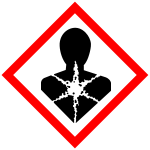
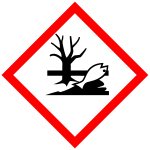
    Pictogram(s)

    Signal word

    Danger

    Hazard statement(s)

    H302 Harmful if swallowed

    H315 Causes skin irritation

    H317 May cause an allergic skin reaction

    H332 Harmful if inhaled

    H334 May cause allergy or asthma symptoms or breathing difficulties if inhaled

    H341 Suspected of causing genetic defects

    H372 Causes damage to organs through prolonged or repeated exposure

    H410 Very toxic to aquatic life with long lasting effects

    Precautionary statement(s)
    Prevention

    P264 Wash ... thoroughly after handling.

    P270 Do not eat, drink or smoke when using this product.

    P280 Wear protective gloves/protective clothing/eye protection/face protection/hearing protection/...

    P261 Avoid breathing dust/fume/gas/mist/vapours/spray.

    P272 Contaminated work clothing should not be allowed out of the workplace.

    P271 Use only outdoors or in a well-ventilated area.

    P284 [In case of inadequate ventilation] wear respiratory protection.

    P203 Obtain, read and follow all safety instructions before use.

    P260 Do not breathe dust/fume/gas/mist/vapours/spray.

    P273 Avoid release to the environment.

    Response

    P301+P317 IF SWALLOWED: Get medical help.

    P330 Rinse mouth.

    P302+P352 IF ON SKIN: Wash with plenty of water/...

    P321 Specific treatment (see ... on this label).

    P332+P317 If skin irritation occurs: Get medical help.

    P362+P364 Take off contaminated clothing and wash it before reuse.

    P333+P317 If skin irritation or rash occurs: Get medical help.

    P304+P340 IF INHALED: Remove person to fresh air and keep comfortable for breathing.

    P317 Get medical help.

    P342+P316 If experiencing respiratory symptoms: Get emergency medical help immediately.

    P318 IF exposed or concerned, get medical advice.

    P319 Get medical help if you feel unwell.

    P391 Collect spillage.

    Storage

    P405 Store locked up.

    Disposal

    P501 Dispose of contents/container to an appropriate treatment and disposal facility in accordance with applicable laws and regulations, and product characteristics at time of disposal.

    Other hazards which do not result in classification

    no data available

    Handling and Storage

    Precautions for safe handling

    Handling in a well ventilated place. Wear suitable protective clothing. Avoid contact with skin and eyes. Avoid formation of dust and aerosols. Use non-sparking tools. Prevent fire caused by electrostatic discharge steam.

    Conditions for safe storage, including any incompatibilities

    Separated from food and feedstuffs. See Chemical Dangers.

  • Seller Information
    Business Type:

    Distributor

    Main Products:

    Sodium Lauryl Ether Sulfate,Caustic Soda,Soda Ash,Citric Acid,Calcium Hypochlorite,Oxalic Acid

    Location:

    13 PROTEA PARK MILKWOOD STREET RANGEVIEW GAUTENG 1739

    Payment Terms:

    TT against copy of documents,TT against B/L draft before shipment

    Average lead Time:

    60

    Total Annual Revenue:

    $1 million-$2.5 million

    Total Employees:

    11-50

    Year of Establishment:

    2012

  • Inquiry History
    1 Inquiries
    Country Product Purchase Quantity Date Posted
    United States

    nickel carbonate

    10 MT Mar 4, 2025
    Post an enquiry for this product
pic ×

Scan the QR Code to Share

All products displayed on this website are only for non-medical purposes such as industrial applications or scientific research, and cannot be used for clinical diagnosis or treatment of humans or animals. They are not medicinal or edible.

According to relevant laws and regulations and the regulations of this website, units or individuals who purchase hazardous materials should obtain valid qualifications and qualification conditions.

The information shown above is provided by the enterprise itself, and the authenticity, accuracy and legitimacy of the content are the responsibility of the publishing company. ECHEMI does not bear any guarantee responsibility for this. Please be aware that risks in internet transactions objectively exist.

Feedback & Suggestions
Send Message

Thank you for your feedback. If you require further assistance, please contact us by email at info@echemi.com or call us at +86-532-55729510.