


n-Butyl ether 142-96-1
ISO
142-96-1
Pharmaceutical Grade
99%
Qingdao
Shengtai
Drum/IBC
2025-05-31

Epichlorohydrin,Epoxy resin,Calcium chloride,2-Hydroxyethyl acrylate (HEA),2-HYDROXYPROPYLACRYLATE(HPA),2-Hydroxy Ethyl Methacrylate (HEMA)
-
Product Description
-
Seller Information
-
DescriptionECHEMI Editorial ReferenceCOLOURLESS LIQUID.
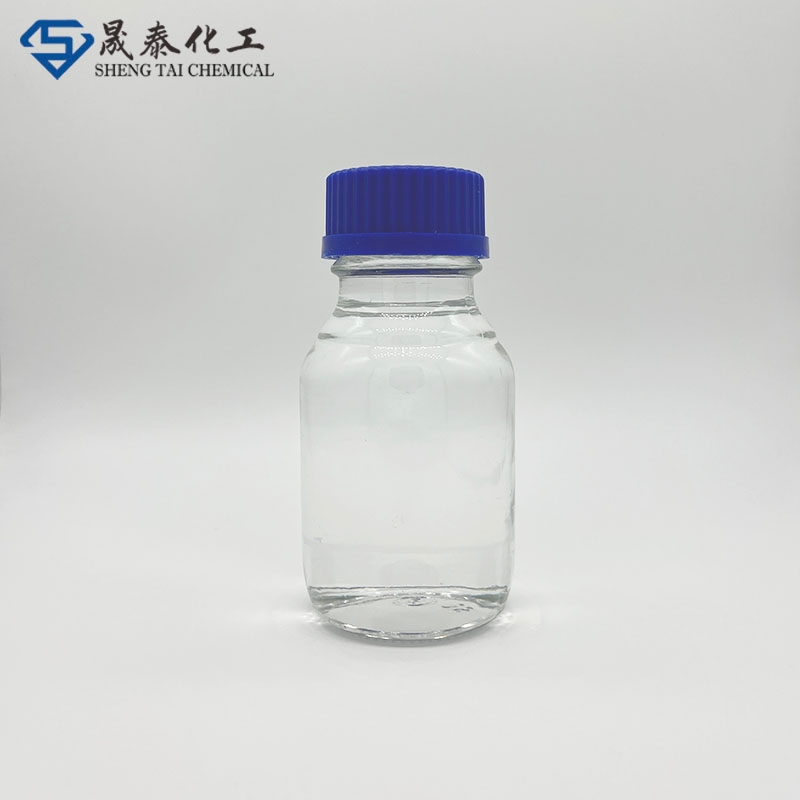
N-butyl ether appears as a clear colorless liquid with an ethereal odor. Flash point below 141°F. Less dense than water and insoluble in water. Vapors heavier than air. Irritates the eyes, nose, throat, and respiratory tract.|Liquid|COLOURLESS LIQUID.
N-butyl ether appears as a clear colorless liquid with an ethereal odor. Flash point below 141°F. Less dense than water and insoluble in water. Vapors heavier than air. Irritates the eyes, nose, throat, and respiratory tract.CertificatesBasic Info-
Product Name:
Butyl ether
Other Name:Butane,1,1′-oxybis-;Butyl ether;1,1′-Oxybis[butane];Di-n-butyl ether;Dibutyl oxide;n-Butyl ether;Dibutyl ether;Butyl oxide;NSC 8459;n-Bu2O;1-Butoxybutane
CAS No.:142-96-1
Molecular Formula:C8H18O
InChIKeys:InChIKey=DURPTKYDGMDSBL-UHFFFAOYSA-N
Molecular Weight:130.22800
Exact Mass:130.23
EC Number:205-575-3
UNII:PBM2R52P5G
ICSC Number:1150
NSC Number:8459
UN Number:1149
DSSTox ID:DTXSID1022007
Color/Form:Colorless liquid
HScode:2909199090
Categories:
Characteristics-
PSA:
9.23000
XLogP3:2.60320
Appearance:N-butyl ether appears as a clear colorless liquid with an ethereal odor. Flash point below 141°F. Less dense than water and insoluble in water. Vapors heavier than air. Irritates the eyes, nose, throat, and respiratory tract.
Density:0.7684 g/cm3 @ Temp: 20 °C
Melting Point:-95.2 °C
Boiling Point:140.2 °C
Flash Point:25ºC
Refractive Index:1.3978-1.3998
Water Solubility:H2O: 0.03 g/100 mL (20 ºC)
Storage Conditions:Flammables area
Vapor Pressure:4.8 mm Hg ( 20 °C)
Vapor Density:4.48 (vs air)
Flammability characteristics:Lower flammable limit: 1.5% by volume; Upper flammable limit: 7.6% by volume
Explosive limit:vol% in air: 0.9.5
Odor:Mild, ethereal odor
OH:2.88e-11 cm3/molecule*sec
Henrys Law Constant:0.01 atm-m3/mole|Henry's Law constant = 6.0X10⁻³ atm cu-m/mol at 25 °C
Experimental Properties:1 PPM= APPROX 5.33 MG/CU M @ 25 °C, 760 MM HG; 1 MG/L= APPROX 188 PPM @ 25 °C, 760 MM HG|LIQUID-WATER INTERFACIAL TENSION: (EST) 30 DYNES/CM= 0.030 N/M @ 20 °C|Azeotrope 67 wt% at 92.9 °C|Hydroxyl radical reaction rate constant = 2.88X10⁻¹¹ cu cm/molecule-sec at 25 °C
Air and Water Reactions:Highly flammable. Oxidizes readily in air to form unstable peroxides that may explode spontaneously [Bretherick 1979 p.151-154, 164]. A mixture of liquid air and diethyl ether exploded spontaneously [MCA Case History 616 1960]. Insoluble in water.
Reactive Group:Ethers
Reactivity Alerts:Highly Flammable
Reactivity Profile:Ethers, such as BUTYL ETHER can act as bases. They form salts with strong acids and addition complexes with Lewis acids. The complex between diethyl ether and boron trifluoride is an example. Ethers may react violently with strong oxidizing agents. In other reactions, which typically involve the breaking of the carbon-oxygen bond, ethers are relatively inert.
Peroxide Forming Chemical:Dibutyl ether|B*: Compounds that form peroxides on concentration (distillation/evaporation)|Moderate peroxides found in new commerically available containers|Bretherick's, Pubchem|Dasler,W.etal.,Ind.Eng.Chem.(Anal.Ed.),1946,18,52
Autoignition Temperature:382 °F (USCG, 1999)|382 °F (194 °C)|175 °C
Heat of Combustion:-17,670 BTU/LB= -9,820 CAL/G= -411X10+5 JOULES/KG
Flammable Limits:Lower flammable limit: 1.5% by volume; Upper flammable limit: 7.6% by volume
Physical Dangers:As a result of flow, agitation, etc., electrostatic charges can be generated.
Heat of Vaporization:Latent heat of vaporization: 67.8 cal/g at 140.9 °C
Hazard IdentificationClassification of the substance or mixture
Flammable liquids, Category 3
Skin irritation, Category 2
Eye irritation, Category 2
Specific target organ toxicity â single exposure, Category 3
Hazardous to the aquatic environment, long-term (Chronic) - Category Chronic 3
GHS label elements, including precautionary statements
Pictogram(s) 

Signal word Warning
Hazard statement(s) H226 Flammable liquid and vapour
H315 Causes skin irritation
H319 Causes serious eye irritation
H335 May cause respiratory irritation
H412 Harmful to aquatic life with long lasting effects
Precautionary statement(s) Prevention P210 Keep away from heat, hot surfaces, sparks, open flames and other ignition sources. No smoking.
P233 Keep container tightly closed.
P240 Ground and bond container and receiving equipment.
P241 Use explosion-proof [electrical/ventilating/lighting/...] equipment.
P242 Use non-sparking tools.
P243 Take action to prevent static discharges.
P280 Wear protective gloves/protective clothing/eye protection/face protection/hearing protection/...
P264 Wash ... thoroughly after handling.
P261 Avoid breathing dust/fume/gas/mist/vapours/spray.
P271 Use only outdoors or in a well-ventilated area.
P273 Avoid release to the environment.
Response P303+P361+P353 IF ON SKIN (or hair): Take off immediately all contaminated clothing. Rinse affected areas with water [or shower].
P370+P378 In case of fire: Use ... to extinguish.
P302+P352 IF ON SKIN: Wash with plenty of water/...
P321 Specific treatment (see ... on this label).
P332+P317 If skin irritation occurs: Get medical help.
P362+P364 Take off contaminated clothing and wash it before reuse.
P305+P351+P338 IF IN EYES: Rinse cautiously with water for several minutes. Remove contact lenses, if present and easy to do. Continue rinsing.
P304+P340 IF INHALED: Remove person to fresh air and keep comfortable for breathing.
P319 Get medical help if you feel unwell.
Storage P403+P235 Store in a well-ventilated place. Keep cool.
P403+P233 Store in a well-ventilated place. Keep container tightly closed.
P405 Store locked up.
Disposal P501 Dispose of contents/container to an appropriate treatment and disposal facility in accordance with applicable laws and regulations, and product characteristics at time of disposal.
Other hazards which do not result in classification
no data available
Handling and StoragePrecautions for safe handling
NO open flames, NO sparks and NO smoking. NO contact with hot surfaces. Above 25°C use a closed system, ventilation and explosion-proof electrical equipment. Prevent build-up of electrostatic charges (e.g., by grounding). Handling in a well ventilated place. Wear suitable protective clothing. Avoid contact with skin and eyes. Avoid formation of dust and aerosols. Use non-sparking tools. Prevent fire caused by electrostatic discharge steam.
Conditions for safe storage, including any incompatibilities
Fireproof. Separated from incompatible materials. See Chemical Dangers. Cool. Keep in the dark. Store only if stabilized./DUE TO FIRE HAZARD, ETHERS/ ... SHOULD BE KEPT COOL & CONTAINERS ELECTRICALLY GROUNDED TO AVOID SPARKS . ETHERS
-
-
Seller Information
-
Business Type:
Trader
-
Main Products:
Epichlorohydrin,Epoxy resin,Calcium chloride,2-Hydroxyethyl acrylate (HEA),2-HYDROXYPROPYLACRYLATE(HPA),2-Hydroxy Ethyl Methacrylate (HEMA)
-
Location:
C5-517, Magnetic Capital International Central Avenue, Nankai District, Tianjin, China 300381
-
Payment Terms:
TT against copy of documents,D/P,L/C,D/A,O/A,TT against B/L draft before shipment,100% TT in advance
-
Average lead Time:
10
-
Total Annual Revenue:
$10 million-$25 million
-
Total Employees:
51-100
-
Year of Establishment:
2023
-
Certifications:
Hazardous chemicals business license,Hazardous chemicals business license
-
-
Country Product Purchase Quantity Date Posted Post an enquiry for this product
Hot Related Products
-
 Butyl Acetate Industrial Grade
 -
 Methanol 99.85% colourless liquid
 -
 High Purity industrial grade Methanol 99.9% / Methyl Alcohol CAS 67-56-1
$550-650/MT FOB
-
 Best Price ENSIGN TTCA Lemon Star RZBC Food Grade Citric Acid Kosher Certified Flavor Ingredients Dried Style Cas 77-92-9 Mono
$650-660/MT FOB
-
 67-56-1 Methanol 99.9% Colourless Liquid Batong
 -
 Butyl acetate CAS#123-86-4
$650-750/MT FOB