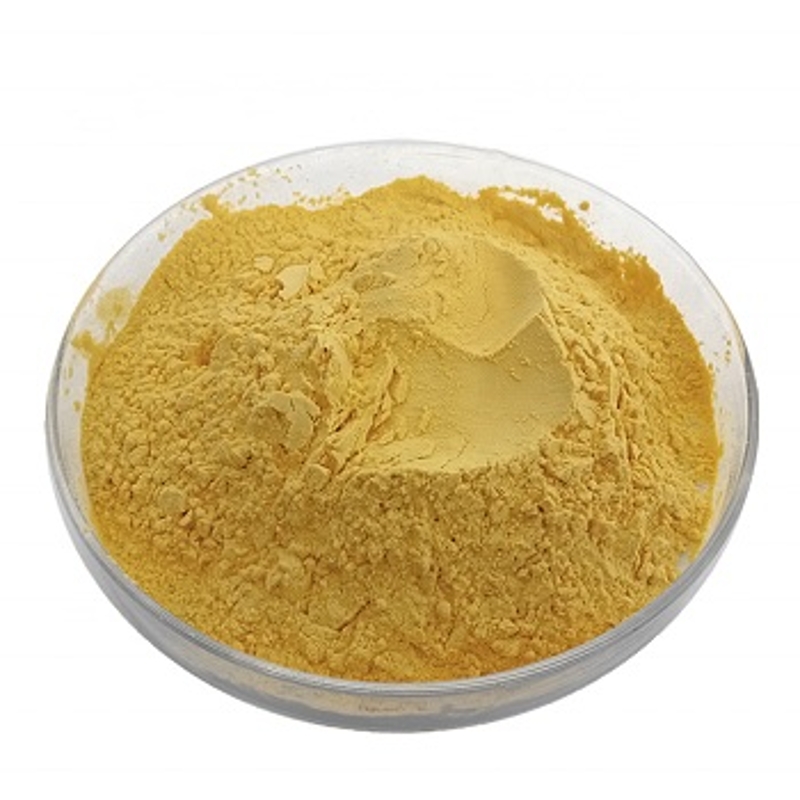
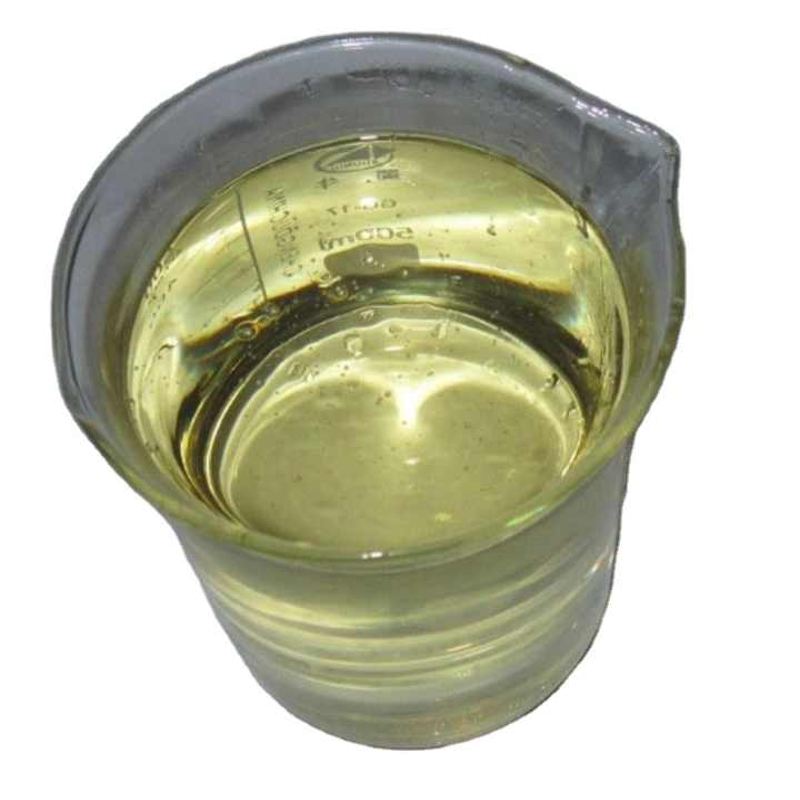
Best Seller of high quality Furfuryl alcohol (98-00-0) in bulk
8 Inquiries
98-00-0
Industrial Grade
99%
Durban
Custom
As per customer requirement
2024-05-29
Sodium Lauryl Ether Sulfate,Caustic Soda,Soda Ash,Citric Acid,Calcium Hypochlorite,Oxalic Acid
-
Product Description
-
Seller Information
-
Inquiry History
-
DescriptionECHEMI Editorial Referenceclear yellow liquid Furfural alcohol is a colorless to amber liquidthat darkens on exposure to light. It has a faint, burning odor. Furfuryl alcohol has a very mild, warm, oily, “burnt” odor and a cooked sugar taste.
Furfuryl alcohol appears as a clear colorless liquid. Flash point 167°F. Boiling point 171°F. Denser than water. Contact may irritate skin, eyes and mucous membranes. May be toxic by ingestion and skin contact and moderately toxic by inhalation.|Liquid|COLOURLESS LIQUID WITH CHARACTERISTIC ODOUR. TURNS RED OR BROWN ON EXPOSURE TO LIGHT AND AIR.|Colourless or pale yellowish liquid, mild, warm oily, "burnt" odour|Colorless to amber liquid with a faint, burning odor.|Colorless to amber liquid with a faint, burning odor. [Note: Darkens on exposure to light.]
Furfuryl alcohol appears as a clear colorless liquid. Flash point 167°F. Boiling point 171°F. Denser than water. Contact may irritate skin, eyes and mucous membranes. May be toxic by ingestion and skin contact and moderately toxic by inhalation.|Furfuryl alcohol is a furan bearing a hydroxymethyl substituent at the 2-position. It has a role as a Maillard reaction product. It is a primary alcohol and a member of furans.Basic Info-
Product Name:
Furfuryl alcohol
Other Name:2-Furanmethanol;Furfuryl alcohol;2-Furancarbinol;Furfuralcohol;α-Furylcarbinol;2-Furylcarbinol;Furylcarbinol;2-Furfuryl alcohol;2-(Hydroxymethyl)furan;5-Hydroxymethylfuran;α-Furfuryl alcohol;2-Furylmethanol;2-Furanylmethanol;Chem-Rez 200;Furfuranol;NSC 8843;2-Furylmethyl alcohol;Chem-Rez Fury 454;1262335-14-7
CAS No.:98-00-0
UN No.:2874
Molecular Formula:C5H6O2
InChIKeys:InChIKey=XPFVYQJUAUNWIW-UHFFFAOYSA-N
Molecular Weight:98.09990
Exact Mass:98.10
EC Number:202-626-1
UNII:D582054MUH
ICSC Number:0794
NSC Number:8843
UN Number:2874
DSSTox ID:DTXSID2025347|DTXSID9049742
Color/Form:Colorless to yellow liquid|Colorless, mobile liquid (becomes brown to dark-red on exposure to light and air)
HScode:2932130000
Categories:
Characteristics-
PSA:
33.37000
XLogP3:0.7719
Appearance:Transparent yellow liquid
Density:1.1296 g/cm3 @ Temp: 20 °C
Melting Point:-15 °C
Boiling Point:171 °C @ Press: 750 Torr
Flash Point:149 °F
Refractive Index:n20/D 1.486(lit.)
Water Solubility:Miscible
Storage Conditions:Packing intact、handling with care,Warehouse ventilation、Keep away from open flames、 high temperature、Separate storage with oxidant and acid
Vapor Pressure:Vapour pressure, Pa at 20°C: 53
Vapor Density:3.4 (vs air)
Toxicity:LC50 (4 hr) in rats: 233 ppm (Jacobson)
Flammability characteristics:Class IIIA Combustible Liquid: Fl.P. at or above 140°F and below 200°F.
Explosive limit:vol% in air: 1.86.3
Odor:Faint burning odor
Taste:Bitter
Henrys Law Constant:Henry's Law constant = 7.9X10⁻⁸ atm cu m/mol at 25 °C (est)
Dissociation Constants:pKa = 9.55
Experimental Properties:Detectable concentration in atmosphere by odor = 8 ppm|Easily resinified by acids|Heat of formation = -276.2 kJ/mol at 25 °C; Heat capacity = 204.0 J/mol-K at 25 °C|Heat of fusion = 13.13 kJ/mol|For more Other Experimental Properties (Complete) data for FURFURYL ALCOHOL (8 total), please visit the HSDB record page.
Air and Water Reactions:Slightly soluble in water.
Reactive Group:Alcohols and Polyols
Reactivity Profile:Acetyl bromide reacts violently with alcohols or water, [Merck 11th ed., 1989]. Mixtures of alcohols with concentrated sulfuric acid and strong hydrogen peroxide can cause explosions. Example: An explosion will occur if dimethylbenzylcarbinol is added to 90% hydrogen peroxide then acidified with concentrated sulfuric acid. Mixtures of ethyl alcohol with concentrated hydrogen peroxide form powerful explosives. Mixtures of hydrogen peroxide and 1-phenyl-2-methyl propyl alcohol tend to explode if acidified with 70% sulfuric acid, [Chem. Eng. News 45(43):73(1967); J, Org. Chem. 28:1893(1963)]. FURFURYL ALCOHOL will polymerize rapidly and at times with explosive force in the presence of strong mineral acids, [NFPA 491M, 1991]. Alkyl hypochlorites are violently explosive. They are readily obtained by reacting hypochlorous acid and alcohols either in aqueous solution or mixed aqueous-carbon tetrachloride solutions. Chlorine plus alcohols would similarly yield alkyl hypochlorites. They decompose in the cold and explode on exposure to sunlight or heat. Tertiary hypochlorites are less unstable than secondary or primary hypochlorites, [NFPA 491 M, 1991]. Base-catalysed reactions of isocyanates with alcohols should be carried out in inert solvents. Such reactions in the absence of solvents often occur with explosive violence, [Wischmeyer(1969)]. An explosion occurred in a laboratory when cyanoacetic acid was reacted with furfuryl alcohol in an attempt to form the ester, furfuryl cyanoacetate. The explosion occurred a few minutes after the agitator was turned on and heat applied, [MCA Case History 858(1963)]. In the attempt to prepare furfuryl formate from furfuryl alcohol and concentrated formic acid an explosion occurred, [Chem. Eng. News 18:72(1940)].
Autoignition Temperature:736 °F (USCG, 1999)|+490 °C (915 °F)|390 °C
Heat of Combustion:-2548 kJ/mol
Flammable Limits:LOWER 1.8%, UPPER 16.3% BY VOL|Class IIIA Combustible Liquid: Fl.P. at or above 140°F and below 200°F.
Heat of Vaporization:53.6 kJ/mol at 171 °C
Hazard IdentificationClassification of the substance or mixture
Acute toxicity - Category 4, Oral
Acute toxicity - Category 4, Dermal
Eye irritation, Category 2
Acute toxicity - Category 3, Inhalation
Specific target organ toxicity â single exposure, Category 3
Carcinogenicity, Category 2
Specific target organ toxicity â repeated exposure, Category 2
GHS label elements, including precautionary statements
Pictogram(s) 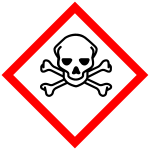
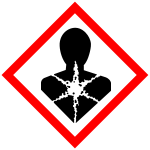
Signal word Danger
Hazard statement(s) H302 Harmful if swallowed
H312 Harmful in contact with skin
H319 Causes serious eye irritation
H331 Toxic if inhaled
H335 May cause respiratory irritation
H351 Suspected of causing cancer
H373 May cause damage to organs through prolonged or repeated exposure
Precautionary statement(s) Prevention P264 Wash ... thoroughly after handling.
P270 Do not eat, drink or smoke when using this product.
P280 Wear protective gloves/protective clothing/eye protection/face protection/hearing protection/...
P261 Avoid breathing dust/fume/gas/mist/vapours/spray.
P271 Use only outdoors or in a well-ventilated area.
P203 Obtain, read and follow all safety instructions before use.
P260 Do not breathe dust/fume/gas/mist/vapours/spray.
Response P301+P317 IF SWALLOWED: Get medical help.
P330 Rinse mouth.
P302+P352 IF ON SKIN: Wash with plenty of water/...
P317 Get medical help.
P321 Specific treatment (see ... on this label).
P362+P364 Take off contaminated clothing and wash it before reuse.
P305+P351+P338 IF IN EYES: Rinse cautiously with water for several minutes. Remove contact lenses, if present and easy to do. Continue rinsing.
P304+P340 IF INHALED: Remove person to fresh air and keep comfortable for breathing.
P316 Get emergency medical help immediately.
P319 Get medical help if you feel unwell.
P318 IF exposed or concerned, get medical advice.
Storage P403+P233 Store in a well-ventilated place. Keep container tightly closed.
P405 Store locked up.
Disposal P501 Dispose of contents/container to an appropriate treatment and disposal facility in accordance with applicable laws and regulations, and product characteristics at time of disposal.
Other hazards which do not result in classification
no data available
Handling and StoragePrecautions for safe handling
NO open flames. Above 75°C use a closed system and ventilation. Handling in a well ventilated place. Wear suitable protective clothing. Avoid contact with skin and eyes. Avoid formation of dust and aerosols. Use non-sparking tools. Prevent fire caused by electrostatic discharge steam.
Conditions for safe storage, including any incompatibilities
Separated from strong oxidants, strong acids and food and feedstuffs. Well closed. Ventilation along the floor.... SHOULD BE STORED IN A COOL, WELL VENTILATED PLACE, OUT OF THE DIRECT RAYS OF THE SUN, AWAY FROM AREAS OF HIGH FIRE HAZARD .
-
-
Seller Information
-
Business Type:
Distributor
-
Main Products:
Sodium Lauryl Ether Sulfate,Caustic Soda,Soda Ash,Citric Acid,Calcium Hypochlorite,Oxalic Acid
-
Location:
13 PROTEA PARK MILKWOOD STREET RANGEVIEW GAUTENG 1739
-
Payment Terms:
TT against copy of documents,TT against B/L draft before shipment
-
Average lead Time:
60 days
-
Total Annual Revenue:
$1 million-$2.5 million
-
Total Employees:
11-50
-
Year of Establishment:
2012
-
-
Inquiry History8 Inquiries
Country Product Purchase Quantity Date Posted  India
India
Furfuryl Alcohol
20 MT Nov 6, 2025
India
Furfuryl Alcohol
20000 MT Sep 5, 2024
India
FURFURYL ALCOHOL
1 KG May 28, 2026
India
Furfuryl Alcohol
24 MT Sep 22, 2025  United States
furfuryl alcohol
1 MT Mar 26, 2025
India
FURFURYL ALCOHOL
50 MT May 28, 2026
India
Furfuryl alcohol
20.00 KG Jun 7, 2025  Germany
furfuryl alcohol
250 MT Feb 6, 2025 Post an enquiry for this product


More from this Seller
-
-

-
Aluminum hypophosphite CAS NO 7784-22-7 Available For Sale
Industrial Grade / 99%
-
-
-
 Available for sale at cheap price")
-
Phosphate CAS NO (14265-44-2) Available for sale at cheap price
Chemical Grade / 99%
-
-
-

-
Popular selling didecyl dimethyl ammonium chloride CAS 7173-51-5 available
Industrial Grade / 80%
-
-
-

-
Best Chlorinated Paraffin CAS NO.63449-39-8
Industrial Grade / 99%
-
-
-
 Available For Sale At Good Price")
-
Triethylamine CAS NO (121-44-8) Available For Sale At Good Price
Industrial Grade / 99%
-




Hot Related Products
-
 soda ash Lisa shop
 -
 Waste water Treatment Chemicals
 -
 TCCA 90% Trichloroisocyanuric Acid
 -
 Sodium Lauryl Ether Sulphate - SLES 70%
$1000-1300/MT EXW
-
 Aluminum chlorohydrate supplier
 -
 TCCA 90% Trichloroisocyanuric Acid Chlorine Tablet Granular Powder for swimming pool
 -
 Industry/Food-grade Poly Aluminum Chloride20%-30% For water treatment Additive
$235.22/MT EXW
-
 Sodium Hypochlorite 1
 -
 Sodium hypochlorite 99% Light yellow liquid ZSHHY-7681-52-9 SHANDONG ZHISHANG CHEMICAL
 -
 Hope--Zinc oxide