Product
Supplier
Encyclopedia
Inquiry
Home > Pharmaceutical Intermediates > Bulk Drug Intermediates > 4-Methylaniline for Sale > High Quality Methylaniline CAS NO (106-49-0) available at reasonable price
High Quality Methylaniline  CAS NO (106-49-0) available at reasonable price buy - large image1
High Quality Methylaniline  CAS NO (106-49-0) available at reasonable price buy - image1
High Quality Methylaniline  CAS NO (106-49-0) available at reasonable price buy - image2
High Quality Methylaniline  CAS NO (106-49-0) available at reasonable price buy - image3
High Quality Methylaniline  CAS NO (106-49-0) available at reasonable price buy - image4
High Quality Methylaniline  CAS NO (106-49-0) available at reasonable price buy - image5
High Quality Methylaniline  CAS NO (106-49-0) available at reasonable price buy - image6

High Quality Methylaniline CAS NO (106-49-0) available at reasonable price

2 Inquiries

Unit Price: Get Latest Price
CAS No.:

106-49-0

Grade:

Pharmaceutical Grade

Content:

99%

Port:

Durban

Brand:

Custom

Packaging:

As per customer requirement

Price valid (until):

2024-05-29

Company Type:
Distributor
Location:
South Africa
Qualification:
Main Products:

Sodium Lauryl Ether Sulfate,Caustic Soda,Soda Ash,Citric Acid,Calcium Hypochlorite,Oxalic Acid

  • Product Description

  • Seller Information

  • Inquiry History

  • Description


      Product Detail  


                                                                                          1. 1. Introduction to Methanol (67-56-1)

                                                                                            Methanol, also known as wood alcohol or methyl alcohol, is a simple organic compound with the chemical formula CH3OH. It is a colorless, volatile liquid with a mild, slightly sweet odor. Methanol is one of the most commonly produced industrial chemicals and is utilized in various applications, including as a solvent, fuel, antifreeze, and feedstock for chemical synthesis.

                                                                                            2. Chemical Structure and Composition

                                                                                            Methanol consists of a single carbon atom bonded to three hydrogen atoms (forming a methyl group) and a hydroxyl group (-OH), giving it its characteristic properties. Its molecular structure enables it to participate in various chemical reactions, including oxidation, esterification, and condensation, making it a versatile precursor in organic synthesis.

                                                                                            3. Physical Properties of Methanol

                                                                                            Methanol is a highly polar solvent with a boiling point of approximately 64.7°C and a density of around 0.79 g/cm³. It is miscible with water and many organic solvents, exhibiting strong hydrogen bonding interactions with polar molecules. Methanol's low viscosity and high volatility make it suitable for use as a solvent and fuel in various industrial processes.

                                                                                            4. Industrial Applications

                                                                                            Methanol serves as a key raw material in the production of formaldehyde, acetic acid, methyl tert-butyl ether (MTBE), and other chemicals. It is used in the manufacturing of plastics, resins, paints, adhesives, and pharmaceuticals. Additionally, methanol is employed as a solvent for coatings, varnishes, and inks, as well as a denaturant in ethanol production.

                                                                                            5. Fuel and Energy Applications

                                                                                            Methanol is utilized as an alternative fuel in internal combustion engines, fuel cells, and energy storage systems. It can be used as a standalone fuel or blended with gasoline or diesel to reduce emissions and improve fuel efficiency. Methanol fuel cells offer potential applications in portable electronics, electric vehicles, and stationary power generation.

                                                                                            6. Antifreeze and Deicing Agent

                                                                                            Methanol is commonly used as an antifreeze agent in automotive cooling systems and windshield washer fluids. Its ability to lower the freezing point of water helps prevent engine coolant from solidifying in cold temperatures and protects vehicle components from damage. Methanol is also employed as a deicing agent for removing ice and snow from roads, runways, and aircraft.

                                                                                            7. Chemical Intermediates and Synthesis

                                                                                            Methanol serves as a versatile building block in organic synthesis, enabling the production of various chemicals, including formaldehyde, acetic acid, methylamines, and olefins. It can undergo catalytic reactions to produce higher-value compounds, such as dimethyl ether (DME), methyl methacrylate (MMA), and acetic anhydride, which have diverse industrial applications.

                                                                                            8. Environmental Considerations and Sustainability

                                                                                            Methanol offers potential environmental benefits as a renewable and low-carbon alternative to fossil fuels. It can be produced from biomass, municipal waste, or carbon dioxide (CO2) through sustainable processes, reducing greenhouse gas emissions and dependence on finite resources. Methanol's versatility and energy density make it a promising candidate for sustainable fuel and chemical production.

                                                                                            9. Safety Considerations and Handling Practices

                                                                                            While methanol has numerous industrial applications, it is toxic if ingested or absorbed through the skin or respiratory system. Exposure to high concentrations of methanol vapor or liquid can cause headaches, dizziness, nausea, and central nervous system depression, with severe cases leading to blindness, coma, and death. Proper handling, storage, and ventilation are essential to minimize risks associated with methanol exposure.

                                                                                            10. Regulatory Oversight and Compliance

                                                                                            Regulatory agencies impose strict guidelines and standards for the production, storage, transportation, and use of methanol to protect worker safety and public health. Compliance with occupational exposure limits, safety data sheets (SDS), and labeling requirements is mandatory to ensure safe handling and usage of methanol-containing products. Regulatory oversight also extends to environmental regulations governing emissions, wastewater discharge, and waste management practices in methanol production facilities.

    Items Specifications
    Chemical Formula C₇H₉N
    Molecular Weight 107.15 g/mol
    CAS Number 106-49-0
    Appearance Colorless to pale yellow liquid
    Odor Amine-like
    Density 0.938 g/cm³ at 20°C
    Boiling Point 194-196°C
    Melting Point -56.5°C
    Flash Point 71°C (closed cup)
    Solubility Slightly soluble in water, soluble in organic solvents
    pH Neutral
    Vapor Pressure 0.3 mmHg at 20°C
    Purity ≥ 99%
    Storage Store in a cool, well-ventilated area away from incompatible substances. Keep container tightly closed. Protect from moisture and direct sunlight.
    Handling Avoid contact with eyes, skin, and clothing. Use appropriate protective equipment. Avoid ingestion and inhalation. Dispose of according to local regulations.


      Product Detail  


    Shop Best Manufacturer of high quality Methylaniline CAS NO  (106-49-0) in bulk-Detailed Image 1Shop Best Manufacturer of high quality Methylaniline CAS NO  (106-49-0) in bulk-Detailed Image 2Shop Best Manufacturer of high quality Methylaniline CAS NO  (106-49-0) in bulk-Detailed Image 3Shop Best Manufacturer of high quality Methylaniline CAS NO  (106-49-0) in bulk-Detailed Image 4Shop Best Manufacturer of high quality Methylaniline CAS NO  (106-49-0) in bulk-Detailed Image 5Shop Best Manufacturer of high quality Methylaniline CAS NO  (106-49-0) in bulk-Detailed Image 6

    Basic Info
    Product Name:

    4-Methylaniline

    Other Name:

    Benzenamine,4-methyl-;p-Toluidine;4-Methylbenzenamine;p-Aminotoluene;4-Aminotoluene;p-Tolylamine;4-Methylaniline;p-Methylaniline;p-Methylbenzenamine;4-Toluidine;C.I. 37107;C.I. Azoic Coupling Component 107;Naphtol AS-KG;Naphtol AS-KGLL;1-Amino-4-methylbenzene;p-Methylphenylamine;4-Methylphenylamine;4-Methyl-1-aminobenzene;4-Tolylamine;NSC 114040;NSC 15350;Naphthol AS-KG;4-Amino-1-methylbenzene;12221-03-3

    CAS No.:

    106-49-0

    Molecular Formula:

    C7H9N

    InChIKeys:

    InChIKey=RZXMPPFPUUCRFN-UHFFFAOYSA-N

    Molecular Weight:

    107.15

    Exact Mass:

    107.15

    BRN:

    471281

    EC Number:

    203-403-1

    UNII:

    I1D0KL7I4U

    ICSC Number:

    0343

    NSC Number:

    15350

    UN Number:

    3451|1708

    DSSTox ID:

    DTXSID6021872

    Color/Form:

    Lustrous plates or leaflets|White solid|Colorless leaflets

    HScode:

    2921430090

    Characteristics
    PSA:

    26

    XLogP3:

    1.39

    Appearance:

    tan to brown powder

    Density:

    1.046 g/cm3 @ Temp: 20 °C

    Melting Point:

    44-45 °C

    Boiling Point:

    200.4 °C

    Flash Point:

    192 °F

    Refractive Index:

    1.5636

    Water Solubility:

    H2O: 1.1 g/100 mL;soluble in ethanol, pyridine, diethyl ether, acetone, carbon tetrachloride, methanol, carbon disulfide, oils and dilute acids.

    Storage Conditions:

    2-8°C

    Vapor Pressure:

    0.26 mm Hg ( 25 °C)

    Vapor Density:

    3.9 (vs air)

    Toxicity:

    Oral-rat LD50: 336 mg/kg; Oral-Mouse LD50: 330 mg/kg

    Flammability characteristics:

    Open flame, high heat, oxidant is combustible; burning releases toxic nitrogen oxide fumes

    Explosive limit:

    6.6%

    Odor:

    Aromatic, wine-like odor

    Taste:

    Burning taste

    Henrys Law Constant:

    2.02e-06 atm-m3/mole|Henry's Law constant = 2.02X10⁻⁶ atm-cu m/mol at 25 °C

    Dissociation Constants:

    pKa = 5.10 at 25 °C (conjugate acid)

    Experimental Properties:

    Heat of fusion: 18.9 kJ/mol at 43.6 °C|Combustible|Hydroxyl radical reaction rate constant = 1.3X10⁻¹⁰ cu cm/molec-sec at 25 °C (est)

    Air and Water Reactions:

    Very slightly soluble in water.

    Reactive Group:

    Amines, Aromatic

    Reactivity Profile:

    P-TOLUIDINE neutralizes acids to form salts plus water in exothermic reactions. May be incompatible with isocyanates, halogenated organics, peroxides, phenols (acidic), epoxides, anhydrides, and acid halides. Flammable gaseous hydrogen is generated in combination with strong reducing agents, such as hydrides. Can react vigorously with oxidizing reagents. Emits very toxic fumes of oxides of nitrogen when heated to decomposition. Hypergolic reaction with red fuming nitric acid [Kit and Evered, 1960, p. 239, 242].

    Autoignition Temperature:

    899 °F (USCG, 1999)|900 °F (482 °C)|480 °C

    Ionization Potential:

    7.50 eV

    Flammable Limits:

    Combustible Solid

    Physical Dangers:

    As a result of flow, agitation, etc., electrostatic charges can be generated.

    Heat of Vaporization:

    44.3 kJ/mol at 200.4 °C

    Critical Temperature & Pressure:

    Critical temperature = 667 K; critical pressure = 2.4 Mpa

    Hazard Identification

    Classification of the substance or mixture

    Acute toxicity - Category 3, Oral

    Acute toxicity - Category 3, Dermal

    Eye irritation, Category 2

    Skin sensitization, Category 1

    Acute toxicity - Category 3, Inhalation

    Carcinogenicity, Category 2

    Hazardous to the aquatic environment, short-term (Acute) - Category Acute 1

    GHS label elements, including precautionary statements

    Pictogram(s)
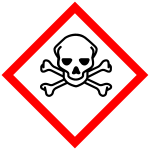
    Signal word

    Danger

    Hazard statement(s)

    H301 Toxic if swallowed

    H311 Toxic in contact with skin

    H319 Causes serious eye irritation

    H317 May cause an allergic skin reaction

    H331 Toxic if inhaled

    H351 Suspected of causing cancer

    H400 Very toxic to aquatic life

    Precautionary statement(s)
    Prevention

    P264 Wash ... thoroughly after handling.

    P270 Do not eat, drink or smoke when using this product.

    P280 Wear protective gloves/protective clothing/eye protection/face protection/hearing protection/...

    P261 Avoid breathing dust/fume/gas/mist/vapours/spray.

    P272 Contaminated work clothing should not be allowed out of the workplace.

    P271 Use only outdoors or in a well-ventilated area.

    P203 Obtain, read and follow all safety instructions before use.

    P273 Avoid release to the environment.

    Response

    P301+P316 IF SWALLOWED: Get emergency medical help immediately.

    P321 Specific treatment (see ... on this label).

    P330 Rinse mouth.

    P302+P352 IF ON SKIN: Wash with plenty of water/...

    P316 Get emergency medical help immediately.

    P361+P364 Take off immediately all contaminated clothing and wash it before reuse.

    P305+P351+P338 IF IN EYES: Rinse cautiously with water for several minutes. Remove contact lenses, if present and easy to do. Continue rinsing.

    P333+P317 If skin irritation or rash occurs: Get medical help.

    P362+P364 Take off contaminated clothing and wash it before reuse.

    P304+P340 IF INHALED: Remove person to fresh air and keep comfortable for breathing.

    P318 IF exposed or concerned, get medical advice.

    P391 Collect spillage.

    Storage

    P405 Store locked up.

    P403+P233 Store in a well-ventilated place. Keep container tightly closed.

    Disposal

    P501 Dispose of contents/container to an appropriate treatment and disposal facility in accordance with applicable laws and regulations, and product characteristics at time of disposal.

    Other hazards which do not result in classification

    no data available

    Handling and Storage

    Precautions for safe handling

    NO open flames. Above 87°C use a closed system and ventilation. Handling in a well ventilated place. Wear suitable protective clothing. Avoid contact with skin and eyes. Avoid formation of dust and aerosols. Use non-sparking tools. Prevent fire caused by electrostatic discharge steam.

    Conditions for safe storage, including any incompatibilities

    Provision to contain effluent from fire extinguishing. Separated from strong oxidants, strong acids and food and feedstuffs. Well closed. Ventilation along the floor. Keep in the dark. Store in an area without drain or sewer access.Store in cool, dry, well-ventilated location. Store away from heat, oxidizers, and sunlight.

  • Seller Information
    Business Type:

    Distributor

    Main Products:

    Sodium Lauryl Ether Sulfate,Caustic Soda,Soda Ash,Citric Acid,Calcium Hypochlorite,Oxalic Acid

    Location:

    13 PROTEA PARK MILKWOOD STREET RANGEVIEW GAUTENG 1739

    Payment Terms:

    TT against copy of documents,TT against B/L draft before shipment

    Average lead Time:

    60

    Total Annual Revenue:

    $1 million-$2.5 million

    Total Employees:

    11-50

    Year of Establishment:

    2012

  • Inquiry History
    2 Inquiries
    Country Product Purchase Quantity Date Posted
    United Arab Emirates

    para-toluidine

    5000 TON Jul 27, 2023
    Russia

    p-toluidine

    6000 KG Jul 5, 2024
    Post an enquiry for this product
pic ×

Scan the QR Code to Share

All products displayed on this website are only for non-medical purposes such as industrial applications or scientific research, and cannot be used for clinical diagnosis or treatment of humans or animals. They are not medicinal or edible.

According to relevant laws and regulations and the regulations of this website, units or individuals who purchase hazardous materials should obtain valid qualifications and qualification conditions.

The information shown above is provided by the enterprise itself, and the authenticity, accuracy and legitimacy of the content are the responsibility of the publishing company. ECHEMI does not bear any guarantee responsibility for this. Please be aware that risks in internet transactions objectively exist.

Feedback & Suggestions
Send Message

Thank you for your feedback. If you require further assistance, please contact us by email at info@echemi.com or call us at +86-532-55729510.