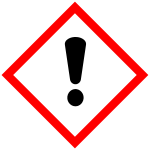
P280: Wear protective gloves/eye protection/face protection.
Response Precautionary Statements:
P302 + P352: IF ON SKIN: Wash with plenty water.
P332 + P313: If skin irritation occurs: Get medical advice/attention.
P362 + P364: Take off contaminated clothing and wash it before reuse.
P305 + P351 + P338: IF IN EYES: Rinse cautiously with water for several minutes. Remove contact lenses, ifpresent
and easy to do. Continue rinsing.
P337 + P313: If eye irritation persists: Get medical advice/attention.
Storage precautionary statements:
No special requirement.
Disposal precautionary statements:
P501: Dispose of contents/container according to relevant local and nationalregulations.
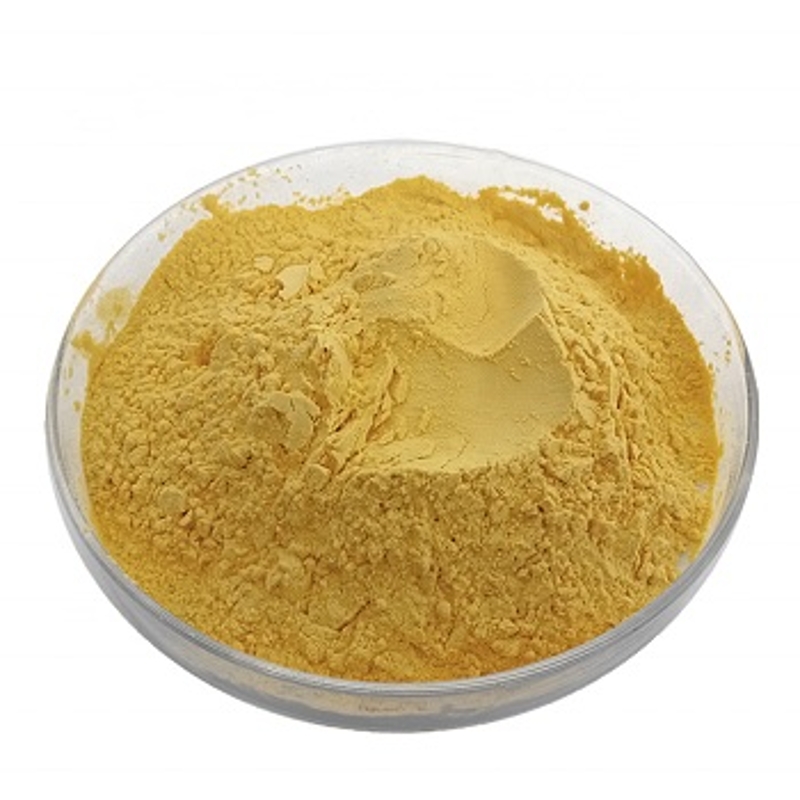
Physical and chemical hazards: It is white or light yellow gelatinous paste without peculiar smell.The product is not
flammable, no special danger.
Health hazards: Causes skin irritation. Causes serious eye irritation.
Environmental hazards: Harmful to aquatic life.
Other hazards: No information available.
3. Composition/information on ingredients
Product description: substance (); preparation/mixture(√)
Ingredient (s)
CAS number
% by weight
Sodium lauryl ether sulfate
68585-34-2
70%
Water
7732-18-5
29%
Others
--
1%
Main indicators:
Items
Technical specifications
Active matter (%)
70±2
Unsulfated matter
≤3.5
Sodium sulfate
≤1.5
4 First aid measures
Persons using this product should consult a physician or other medical professional if an accident involving this
product in injury. Specific first-aid measures are as follows:
Inhalation: If discomfort occurs after inhaling vapours from processing or thermal decomposition, remove to a place
where air is fresh.
Skin Contact: In case of contact with melts, immediately flush with cold water. If irritation persists, get medical
advice/attention. Take off contaminated clothing and wash it before reuse.
Eyes Contact: IF IN EYES: Rinse cautiously with water for several minutes. Remove contact lenses, if present and easy
to do. Continue rinsing. Immediately call a POISONCENTER/doctor.
Ingestion: Rinse mouth. Do not induce vomiting without professional instruction. Get medical attention if discomfort3 / 8
occurs.
Acute effect and delayed effect: Acute effect: Causes skin irritation. Causes serious eye irritation. Delayed effect: Not
found.
Personal protective equipment: Recommend wearing protective gloves (e.g. rubber gloves). Wear safety goggleswhen
exposure limits are exceeded or liquid may splash.
Indication of any immediate medical attention and special treatment needed: No special requirements.
5. Fire-fighting measures
Extinguishing Media: In case of a fire, use dry chemical for small fire; water fog, foam or CO2 for large fire. Do NOT
use water jet which may make molten material splash. Seek advice from local fire-fighting authority. Seek advice from
local fire-fighting authority.
Special hazards arising from the chemical: The product is not flammable. No special danger is found. It may release
smoke, carbon monoxide, carbon dioxide, hydrogen sulphide and other hazardous gas from burning.
Special Fire-Fighting Method:
Remove all ignition sources when this can be done without anyrisk.
Extinguish fire from upwind, and the fire extinguishing method should be appropriate to the situation in the
surroundings.
Cool surrounding facilities, etc. with water spray.
Remove containers from fire area if it can be done withoutrisk.
Special actions for fire-fighters: Firefighters must wear gas mask, self-contained breathing apparatus and full protective
equipment. Check whether the protective equipment is in good condition beforeuse.
6. Accidental release measures
Personal precautions: Wear protective gloves, clothing, safety glasses and mask. Workers should be well trained before
handling. The leakage may cause slipping hazard, so recommend wearing antiskidshoes.
Emergency procedures: Due to the nature of this product, there is no special requirement.
Environmental Precautions: Keep collected waste out of municipal sewers and open bodies of water. Comply with
local and national laws and regulations.
Measures for Cleaning/Collection:
Small Spill:
Mop up or absorb with an inert dry material (e.g. sand) and place in an appropriately labeled waste disposal container.
Large Spill:
Isolate contaminated area and set up a warning board. The persons handling emergency are recommended wearing
protective gloves, clothing, safety glasses and antiskid shoes. Make sure all the present persons safe. Avoid slipping.
Containers should be clearly marked for recycling or disposed as waste.
Precautions for secondary hazards: Keep collected waste out of municipal sewers and open bodies of water.
7. Handling and storage
Precautions for safe handling:
Wash hands thoroughly after handling.
Avoid release to the environment.
Wear gloves, safety glasses/mask/antiskid shoes.
Requirements to be met by storerooms: Store it in a well-ventilated, cool and dry store room. Storage temperature
should not exceed 50 ℃.
Incompatible materials: No special requirement.
Packing material: Plastic
Additional Information: The storeroom should be equipped with proper facilities for accidental leakage andfire.
8. Exposure controls/personal protection
Occupational ExposureLimits:
Ingredients
OELs (mg/m3 ) (GBZ 2.1-2007)
ACGIH TLV-TWA
MAC
PC-TWA
PC-STEL
remark
TLV-TWA
remark
Not applicable
Not
applicable
Not
applicable
Not
applicable
Not
applicable
Not
applicable
Not
applicable
Monitoring Method: The hazardous substances should be monitored per GBZ 159 “Sampling code for monitoringof
hazardous substances in workplace air ". The well-accepted monitoring methods of other countries are also can be
adopted.
Biological limit: Not data available
Engineering Controls:
Use process enclosures, local exhaust ventilation, or other engineering controls to keep airborne levels below
recommended exposure limits.
Install washer eyes and safety showers near to the handling and storage area.
Personal Protective Equipment (for workers):
Protection of Hands:
Recommend wearing protective gloves for industrial hygienic purpose.
Protection of Eyes: Wear safety glasses when liquid may splash.
Respiratory Protection: There is no special requirement under normalconditions.
Protection of Body: Recommend wearing protective clothing and antiskidshoes.
General protective and hygienic measures:
Keep away from foodstuffs, beverages and feed.
Wash hands before breaks and at the end of work.
Avoid contact with eyes and skin.5 / 8
9. Physical and chemical properties
General Information
Form
Gelatinous paste
Color
White or light yellow
Odor
No peculiar smell
pH
6.5-10.5
Boiling Range
>100℃
Melting point/Melting range
No data available
Flash point
>100°C
Flammable/Explosive Limits-Lower Vol%
No data available
Flammable/Explosive Limits-Upper Vol%
No data available
Density
No data available
Relative Vapordensity
No data available
Vapor pressure (@20℃)
No data available
Solubility in/Miscibility with Water
Soluble in water and ethanol
n-octanol/Water Partition Coefficient
No data available
Self-igniting
No data available
Decomposition Temperature
No data available
Odor Threshold Value
No data available
Evaporation Rate
No data available
Flammability (solid, gas, etc.)
This product is not classified as flammable liquid.
10. Stability and reactivity
Chemical Stability: Stable under normal temperatures andpressures.
Possibility of hazardous reactions: The product is not flammable. No special danger isfound.
Conditions to Avoid: High temperature.
Incompatible materials: No special requirement.
Hazardous decomposition products: It may release smoke, carbon monoxide, Sulfur dioxide and other hazardous gas
from burning.
11. Toxicological information
Product Toxicity Data:
Ingredient (s)/Product
CAS#
LD50/LC50 (median lethal dose)
Classification of the whole
product
--
Acute toxicity (Oral) LD50: 1,700mg/kg-5,000 mg/kg (rat)
Data source: Data from the manufacturer: Brown, Muir (1970),
Tusing (1962), Walker (1967), Continental Oil company, P&G,
Stepan company.
Classification of the whole product
not classified
Skin corrosion/irritation: This product is classified as Category 2. This product contains Sodium lauryl ether sulfate
(CAS: 68585-34-2) which is classified as Category 2 (Data source: CCID). Considering the total percentage of this
ingredient exceeds the classification criteria, the whole product is classified as Category 2.6 / 8
Serious eye damage/eye irritation: This product is classified as Category 2A. This product contains Sodium lauryl
ether sulfate (CAS: 68585-34-2) which is classified as Category 2A (Data source: CCID). Considering the total
percentage of this ingredient exceeds the classification criteria, the whole product is classified as Category 2A.
Respiratory /Skin sensitizer: No classification for this product.
Germ cell mutagenicity: No classification for thisproduct.
Carcinogenicity: No classification for this product.
Reproductive Toxicity: No classification for this product.
STOT SE/RE: No classification for this product.
Aspiration hazard: No classification for this product.
Effects on or via lactation: No classification for this product.
Toxicokinetics, metabolism and distribution of information: No relevant information.
Other health hazards: No relevantinformation.
12. Ecological information
Ecotoxicity:
Sodium lauryl ether sulfate (CAS: 68585-34-2):
48h-EC50: 3.43mg/LCrustaceans
Data source: CCID
Whole product: LC50:1-450mg/L Fish
Data source: Data from the manufacturer: Brown, Muir(1970),
Tusing (1962), Walker (1967), Continental Oil company, P&G, Stepan company.
Classification of the whole product: Hazardous to the aquatic environment, acute hazard-3
Persistence and Degradability:
Whole product: biodegradability:>95%
Data source: Data from the manufacturer
Bioaccumulative Potential: No dataavailable.
Mobility in Soil: As it is in liquid status, it can move in soil.
13. Disposal considerations
Chemical Waste: Transport to specialized waste disposal sites for disposal. It must strictly follow local regulations for
disposal.
Contaminated packaging: Do not throw away the used containers and wash thoroughly before recycling. The waste
water should be treated as to be not hazardous beforedischarge.
Cautions for disposal:
Do not allow product to reach sewage system.
Do not throw it into any open bodies of water.
14. Transport Information
DOT/ Air-Transportation-IATA/ICAO/Sea-Transportation-IMO/IMDG:
Proper Shipping Name: Notregulated.
Hazard Class: Not classified.
UN Code: Not regulated.
Packing Group: Not classified.7 / 8
Packing Group Symbol: Not classified.
Marine Pollutant (Yes/No): No
EMS NO.: Not regulated.
Note:
Check whether the package is completed or sealed before transporting; make sure there are no damage and no falling
down of packages during transporting; the transport vehicle should be equipped with fire-fighting equipments and
emergency facilities for handling with release; do NOT transport this product together with incompatible substances.
15. Regulatory information
Laws and Regulations of China:
General rule for classification and hazard communication of chemicals (GB 13690-2009):
Physical hazards: Not classified.
Health hazards: Skin corrosion/irritation-2, Serious eye damage/eye irritation-2A.
Environmental hazards: Hazardous to the aquatic environment, acute hazard-3
The Principle of Classification of Transport Packaging Groups of Dangerous Goods (GB/T 15098-2008):
Not applicable
Dangerous Chemicals List (GB 12268-2012): Not listed.
Dangerous chemicals directory (2015): Not applicable
Production Safety Law of the People's Republic of China: As for safe production and management, emergency
handling and legal liability, comply with relevant provisions of this law.
Occupation Disease Prevention Law the People's Republic of China: As for precautions, prevention, management
and occupational disease diagnosis, comply with relevant provisions of thislaw.
The Environment Protection Law of the People's Republic of China: As for the prevention of environmentpollution
and environment protection, comply with relevant provisions of thislaw.
International Laws and Regulations:
TSCA (Toxic Substance Control Act): Sodium lauryl ether sulfate (CAS: 68585-34-2) is listed in the U.S. Toxic
Substances Control Act Chemicals Substance InventoryList.
(EC) 1272/2008 Annex VI Table3.1:
Ingredient(s)
EC No. 1272/2008 Classification
CLASS. CODE
HAZARD CODE
Not applicable
Not applicable
Not applicable
Carcinogenicity categories: Not listed by EPA, NTP, ACGIH andIARC.
Clean WaterAct:
None of the chemicals in this product are listed as Hazardous Substances under theCWA.
None of the chemicals in this product are listed as Priority Pollutants under theCWA.
None of the chemicals in this product are listed as Toxic Pollutants under theCWA.
16. Other information
DISCLAIMER: Employers should use this information only as a supplement to other information gathered by
them, and should make independent judgement of suitability of this information to ensure proper use and protect
the health and safety of employees. This information is furnished without warranty, and any use of the product
not in conformance with this Safety Data Sheet, or in combination with any other product or process, is the responsibility of the user.
References:
GB 16483-2008, GB 13690-2009, GB/T 17519-2013, GB 30000.2-2013~30000.29-2013, GB/T 15098-2008,
GB12268-2012, Dangerous chemicals directory (2015), etc.
Full description of someacronyms:
GHS-Globally Harmonized System of Classification and Labelling of Chemicals
CAS-Chemical Abstracts Service
EINECS-European Inventory of Existing Commercial ChemicalSubstances
ACGIH- American Conference of Governmental Industrial Hygienists
OSHA-Occupational Safety and HealthAdministration
IARC- International Agency for Research on Cancer
NTP- The National Toxicology Program
IMO-International Maritime Organization
IMDG-International Maritime Dangerous Goods
IATA-InternationalAir Transport Association
ICAO-International Civil Aviation Organization
TSCA-Toxic Substance ControlAct
ECHA- European Chemicals Agency
CWA- Clean Water Act
HSDB-Hazardous Substances Data Bank (HSDB)
The latest version issuing date: Mar 5, 2021
SDS Version: 1.1








 Malaysia
 Germany
 South Africa
 Turkey
 India
India
 United States
 United Kingdom
 Pakistan
 Egypt
Egypt
 Japan
Japan
 Chile
Chile
 Nigeria
 Bangladesh
 Russia
 Uganda