Product
Supplier
Encyclopedia
Inquiry
Home > Surfactant > Cationic Surfactants > Hexadecyltrimethylammonium chloride for Sale > Cetrimonium Chloride 30% Light yellow transparent liquid CTAC30 HTAC Liquid CAS No.: 112-02-7 Grade: Industrial Grade
Cetrimonium Chloride 30% Light yellow transparent liquid CTAC30 HTAC Liquid CAS No.: 112-02-7  Grade: Industrial Grade buy - large image1
Cetrimonium Chloride 30% Light yellow transparent liquid CTAC30 HTAC Liquid CAS No.: 112-02-7  Grade: Industrial Grade buy - image1
Cetrimonium Chloride 30% Light yellow transparent liquid CTAC30 HTAC Liquid CAS No.: 112-02-7  Grade: Industrial Grade buy - image2
Cetrimonium Chloride 30% Light yellow transparent liquid CTAC30 HTAC Liquid CAS No.: 112-02-7  Grade: Industrial Grade buy - image3
Cetrimonium Chloride 30% Light yellow transparent liquid CTAC30 HTAC Liquid CAS No.: 112-02-7  Grade: Industrial Grade buy - image4
Cetrimonium Chloride 30% Light yellow transparent liquid CTAC30 HTAC Liquid CAS No.: 112-02-7  Grade: Industrial Grade buy - image5
Cetrimonium Chloride 30% Light yellow transparent liquid CTAC30 HTAC Liquid CAS No.: 112-02-7  Grade: Industrial Grade buy - image6

Cetrimonium Chloride 30% Light yellow transparent liquid CTAC30 HTAC Liquid CAS No.: 112-02-7 Grade: Industrial Grade

11 Inquiries

Unit Price: Get Latest Price
CAS No.:

112-02-7

Grade:

Industrial Grade

Content:

79.68%

Port:

Shanghai

Brand:

EAST CHEMSOURCES LIMITED

Packaging:

IBC

Price valid (until):

2024-06-16

Company Type:
Trader
Location:
China
Qualification:
Main Products:

Food additives,Pharmaceutical raw materials,Chemicals,Comestic raw materials

  • Product Description

  • Seller Information

  • Inquiry History

  • Description
    Shop CETYL TRIMETHYL AMMONIUM CHLORIDE 50%-Detailed Image 1 SAFETY DATA SHEETS
    According to Globally Harmonized System of Classification and Labelling of
    Chemicals (GHS) - Sixth revised edition
    Version: 1.0
    Creation Date: Nov. 22, 2023
    Revision Date: Nov. 22, 2023
    Identification
    GHS Product identifier
    Product name
    Cetyltrimethylammonium Chloride
    Other means of identification
    Product number
    -
    Other names
    Hexadecyltrimethylammonium chloride;Cetyltrimethylammonium
    Chloride;Hexadecyltrimethylammonium Chloride
    Recommended use of the chemical and restrictions on use
    Identified uses
    water treatment chemical, disinfectant
    Uses advised against
    no data available

    Shop CETYL TRIMETHYL AMMONIUM CHLORIDE 50%-Detailed Image 2
    Prevention
    P264 Wash ... thoroughly after handling.
    P270 Do not eat, drink or smoke when using this product.
    P280 Wear protective gloves/protective clothing/eye protection/face
    protection.
    P260 Do not breathe dust/fume/gas/mist/vapours/spray.
    P273 Avoid release to the environment.
    Response
    P301+P312 IF SWALLOWED: Call a POISON CENTER/doctor/…if
    you feel unwell.
    P330 Rinse mouth.
    P302+P352 IF ON SKIN: Wash with plenty of water/...
    P312 Call a POISON CENTER/doctor/…if you feel unwell.
    P321 Specific treatment (see ... on this label).
    P361+P364 Take off immediately all contaminated clothing and wash it
    before reuse.
    P301+P330+P331 IF SWALLOWED: Rinse mouth. Do NOT induce
    vomiting.
    P303+P361+P353 IF ON SKIN (or hair): Take off immediately all
    contaminated clothing. Rinse skin with water [or shower].
    P363 Wash contaminated clothing before reuse.
    P304+P340 IF INHALED: Remove person to fresh air and keep
    comfortable for breathing.
    P310 Immediately call a POISON CENTER/doctor/…
    P305+P351+P338 IF IN EYES: Rinse cautiously with water for several
    minutes. Remove contact lenses, if present and easy to do. Continue
    rinsing.
    P391 Collect spillage.
    Storage
    P405 Store locked up.
    Disposal
    P501 Dispose of contents/container to an appropriate treatment and
    disposal facility in accordance with applicable laws and regulations, and
    product characteristics at time of disposal.
    Other hazards which do not result in classification
    no data available
    Composition/information on ingredients
    Substances
    Chemical name
    Common names and
    synonyms
    CAS
    number
    EC
    number Concentration
    Cetrimonium
    chloride
    Hexadecyl trimethyl ammonium
    chloride
    112-02-7
    203-928-6
    50%
    Water
    Water
    7732-18-5
    231-791-2
    50%
    First-aid measures
    Description of necessary first-aid measures
    General advice
    Medical attention is required. Consult a doctor. Show this safety data sheet (SDS) to the doctor in
    attendance.
    If inhaled
    Move the victim into fresh air. If breathing is difficult, give oxygen. If not breathing, give artificial
    respiration and consult a doctor immediately. Do not use mouth to mouth resuscitation if the victim
    ingested or inhaled the chemical.
    Following skin contact
    Take off contaminated clothing immediately. Wash off with soap and plenty of water. Consult a doctor.
    Following eye contact
    Hexadecyl trimethyl ammonium chloride
    Page 2 of 94.2
    4.3
    5.
    5.1
    5.2
    5.3
    6.
    6.1
    6.2
    6.3
    7.
    7.1
    7.2
    8.
    8.1
    Rinse with pure water for at least 15 minutes. Consult a doctor.
    Following ingestion
    Rinse mouth with water. Do not induce vomiting. Never give anything by mouth to an unconscious
    person. Call a doctor or Poison Control Center immediately.
    Most important symptoms/effects, acute and delayed
    Ingestion may produce toxic effects. Contact with eyes or skin may cause severe damage. (USCG,
    1999)
    Indication of immediate medical attention and special treatment needed, if
    necessary
    no data available
    Fire-fighting measures
    Extinguishing media
    Suitable extinguishing media
    ...DRY CHEM, /ALCOHOL/ FOAM, OR CARBON DIOXIDE. WATER MAY BE INEFFECTIVE
    ON FIRE. COOL EXPOSED CONTAINERS WITH WATER. /CETYLTRIMETHYLAMMONIUM
    CHLORIDE SOLN/
    Specific hazards arising from the chemical
    Special Hazards of Combustion Products: Irritating fumes of hydrogen chloride may form in fires.
    Behavior in Fire: Solvent vapors are heavier than air and may travel to a source of ignition and flash
    back. (USCG, 1999)
    Special protective actions for fire-fighters
    Wear self-contained breathing apparatus for firefighting if necessary.
    Accidental release measures
    Personal precautions, protective equipment and emergency procedures
    Avoid dust formation. Avoid breathing mist, gas or vapours. Avoid contacting with skin and eye. Use
    personal protective equipment. Wear chemical impermeable gloves. Ensure adequate ventilation.
    Remove all sources of ignition. Evacuate personnel to safe areas. Keep people away from and upwind
    of spill/leak.
    Environmental precautions
    Prevent further spillage or leakage if it is safe to do so. Do not let the chemical enter drains. Discharge
    into the environment must be avoided.
    Methods and materials for containment and cleaning up
    Collect and arrange disposal. Keep the chemical in suitable and closed containers for disposal. Remove
    all sources of ignition. Use spark-proof tools and explosion-proof equipment. Adhered or collected
    material should be promptly disposed of, in accordance with appropriate laws and regulations.
    Handling and storage
    Precautions for safe handling
    Handling in a well ventilated place. Wear suitable protective clothing. Avoid contact with skin and
    eyes. Avoid formation of dust and aerosols. Use non-sparking tools. Prevent fire caused by electrostatic
    discharge steam.
    Conditions for safe storage, including any incompatibilities
    Store the container tightly closed in a dry, cool and well-ventilated place. Store apart from foodstuff
    containers or incompatible materials.
    Exposure controls/personal protection
    Control parameters
    Hexadecyl trimethyl ammonium chloride
    Page 3 of 98.2
    8.3
    Occupational Exposure limit values
    Component
    Ethanol
    CAS No.
    64-17-5
    Limit value - Eight hours
    Limit value - Short term
    ppm
    mg/m3
    ppm
    mg/m3
    Australia
    1000
    1880
    Austria
    1000
    1900
    2000
    3800
    Belgium
    1000
    1907
    Canada - Ontario
    1000
    Canada - Québec
    1000
    1880
    Denmark
    1000
    1900
    2000
    3800
    Finland
    1000
    1900
    1300 (1)
    2500 (1)
    France
    1000
    1900
    5000
    9500
    Germany (AGS)
    500
    960
    1000 (1)
    1920 (1)
    Germany (DFG)
    500
    960
    1000 (1)
    1920 (1)
    Hungary
    1900
    7600
    Ireland
    1000 (1)
    Latvia
    1000
    New Zealand
    1000
    1880
    Poland
    1900
    Singapore
    1000
    1880
    South Korea
    1000
    1900
    Spain
    1000
    1910
    Sweden
    500
    1000
    1000 (1)
    1900 (1)
    Switzerland
    500
    960
    1000
    1920
    The Netherlands
    260
    1900
    USA - NIOSH
    1000
    1900
    USA - OSHA
    1000
    1900
    United Kingdom
    1000
    1920
    Remarks
    Finland
    (1) 15 minutes average value
    Germany (AGS)
    (1) 15 minutes average value
    Germany (DFG)
    (1) 15 minutes average value
    Ireland
    (1) 15 minutes reference period
    Sweden
    (1) 15 minutes average value
    Appropriate engineering controls
    Ensure adequate ventilation. Handle in accordance with good industrial hygiene and safety practice. Set
    up emergency exits and the risk-elimination area.
    Individual protection measures, such as personal protective equipment (PPE)
    Eye/face protection
    Wear tightly fitting safety goggles with side-shields conforming to EN 166(EU) or NIOSH (US).
    Skin protection
    Wear fire/flame resistant and impervious clothing. Handle with gloves. Gloves must be inspected prior
    to use. Wash and dry hands. The selected protective gloves have to satisfy the specifications of EU
    Directive 89/686/EEC and the standard EN 374 derived from it.
    Hexadecyl trimethyl ammonium chloride
    Page 4 of 99.
    10.
    10.1
    10.2
    10.3
    10.4
    10.5
    10.6
    Respiratory protection
    If the exposure limits are exceeded, irritation or other symptoms are experienced, use a full-face
    respirator.
    Thermal hazards
    no data available
    Physical and chemical properties
    Physical state
    Colour
    White.
    Odour
    no data available
    Melting point/ freezing point 99 °C. Remarks:Melting temperature range: 90 to 99ºC.
    Boiling point or initial
    boiling point and boiling
    range
    248 °C. Remarks:Boiling temperature range was 235 to 248ºC.
    Flammability
    no data available
    Lower and upper explosion
    limit / flammability limit
    IN AIR: 2%-12% /ISOPROPYL ALCOHOL SOLN OF
    CETYLTRIMETHYLAMMONIUM CHLORIDE/
    Flash point
    69° F (USCG, 1999)
    Auto-ignition temperature
    750° F (USCG, 1999)
    Decomposition temperature no data available
    pH
    no data available
    Kinematic viscosity
    no data available
    Solubility
    Water solubility: 440 mg/l at 30 deg C
    Partition coefficient n
    octanol/water
    Pow = 1 208.3. Temperature:25 °C.;log Pow = 3.08. Temperature:25
    °C.
    Vapour pressure
    < 0.002 Pa. Temperature:20 °C. Remarks:(i.e., equivalent to.;< 0.006
    Pa. Temperature:25 °C. Remarks:(i.e., equivalent to.
    Density and/or relative
    density
    0.96 g/cm³. Temperature:20 °C.;960. Temperature:20 °C.
    Relative vapour density
    no data available
    Particle characteristics
    no data available
    Stability and reactivity
    Reactivity
    No rapid reaction with air. No rapid reaction with water.
    Chemical stability
    no data available
    Possibility of hazardous reactions
    HEXADECYLTRIMETHYLAMMONIUM CHLORIDE is a quaternary ammonium compound.
    Therefore it has a permanently charged nitrogen atom with four alkyl or aryl groups on it. Compounds
    in this group are generally soluble in water and are near pH 7 (neutral). They do not undergo the acid
    base reactions typical of primary, secondary, or tertiary ammonium ions. Quaternary ammonium salts
    often serve as catalysts in reactions. They are incompatible with many strong oxidizers and reducing
    agents, such as metal hydrides, alkali/active metals, and organometallics.
    Conditions to avoid
    no data available
    Incompatible materials
    no data available
    Hazardous decomposition products
    When heated to decomposition it emits very toxic fumes of /hydrogen chloride and nitrogen oxides/.
    Hexadecyl trimethyl ammonium chloride
    Page 5 of 911.
    12.
    12.1
    12.2
    12.3
    12.4
    Toxicological information
    Acute toxicity
    Oral: LD50 - rat (male/female) - ca. 699 mg/kg bw.
    Inhalation: no data available
    Dermal: LD50 - rabbit (male) - 1 300 mg/kg bw.
    Skin corrosion/irritation
    no data available
    Serious eye damage/irritation
    no data available
    Respiratory or skin sensitization
    no data available
    Germ cell mutagenicity
    no data available
    Carcinogenicity
    no data available
    Reproductive toxicity
    no data available
    STOT-single exposure
    no data available
    STOT-repeated exposure
    no data available
    Aspiration hazard
    no data available
    Ecological information
    Toxicity
    Toxicity to fish: LC50 - Danio rerio (previous name: Brachydanio rerio) - 0.59 mg/L - 96 h.
    Remarks:(no information on % ai).
    Toxicity to daphnia and other aquatic invertebrates: EC50 - Daphnia magna - 280 µg/L - 48 h.
    Toxicity to algae: EC50 - Pseudokirchneriella subcapitata (previous names: Raphidocelis
    subcapitata, Selenastrum capricornutum) - 0.11 mg/L - 96 h.
    Toxicity to microorganisms: EC10 - Pseudomonas putida - 0.4 mg/L - 16 h. Remarks:(based on ca.
    30% a.i. in test substance).
    Persistence and degradability
    THE CATIONIC SURFACTANTS BIODEGRADATION IN SEWAGE AND RIVER WATER WAS
    STUDIED, MEASURING THE REDUCTION OF THE ACTIVE SUBSTANCE BY A
    COLORIMETRIC METHOD USING SODIUM ALIZARINE SULFONATE.
    Bioaccumulative potential
    An estimated BCF of 71 was calculated for trimethylhexadecylammonium chloride(SRC), using an
    estimated log Kow of 3.23(1) and a regression-derived equation(2). According to a classification
    scheme(3), this BCF suggests the potential for bioconcentration in aquatic organisms is moderate.
    Mobility in soil
    Hexadecyl trimethyl ammonium chloride
    Page 6 of 912.5
    13.
    13.1
    14.
    14.1
    14.2
    14.3
    14.4
    14.5
    14.6
    14.7
    15.
    15.1
    Using a structure estimation method based on molecular connectivity indices(1), the Koc for
    trimethylhexadecylammonium chloride can be estimated to be 2.2X10+5(SRC). According to a
    classification scheme(2), this estimated Koc value suggests that trimethylhexadecylammonium chloride
    is expected to immobile in soil.
    Other adverse effects
    no data available
    Disposal considerations
    Disposal methods
    Product
    The material can be disposed of by removal to a licensed chemical destruction plant or by controlled
    incineration with flue gas scrubbing. Do not contaminate water, foodstuffs, feed or seed by storage or
    disposal. Do not discharge to sewer systems.
    Contaminated packaging
    Containers can be triply rinsed (or equivalent) and offered for recycling or reconditioning.
    Alternatively, the packaging can be punctured to make it unusable for other purposes and then be
    disposed of in a sanitary landfill. Controlled incineration with flue gas scrubbing is possible for
    combustible packaging materials.
    IMDG: UN1760
    IATA: UN1760
    Transport information
    UN Number
    ADR/RID: UN1760
    UN Proper Shipping Name
    ADR/RID: CORROSIVE LIQUID, ACIDIC, ORGANIC, N.O.S.
    IMDG: CORROSIVE LIQUID, ACIDIC, ORGANIC, N.O.S.
    IATA: CORROSIVE LIQUID, ACIDIC, ORGANIC, N.O.S.
    Transport hazard class(es)
    IMDG: 8
    IATA: 8
    IMDG: III
    IATA: III
    IMDG: NO
    IATA: NO
    ADR/RID: 8
    Packing group, if applicable
    ADR/RID: III
    Environmental hazards
    ADR/RID: NO
    Special precautions for user
    no data available
    Transport in bulk according to Annex II of MARPOL 73/78 and the IBC Code
    no data available
    Regulatory information
    Safety, health and environmental regulations specific for the product in question
    Chemical name
    Common names and synonyms
    CAS number EC number
    Cetrimonium chloride Hexadecyl trimethyl ammonium chloride
    112-02-7
    203-928-6
    European Inventory of Existing Commercial Chemical Substances
    (EINECS)
    Not Listed.
    EC Inventory
    Not Listed.
    United States Toxic Substances Control Act (TSCA) Inventory
    Not Listed.
    China Catalog of Hazardous chemicals 2015
    Not Listed.
    Hexadecyl trimethyl ammonium chloride
    Page 7 of 916.
    New Zealand Inventory of Chemicals (NZIoC)
    Not Listed.
    Philippines Inventory of Chemicals and Chemical Substances
    (PICCS)
    Not Listed.
    Vietnam National Chemical Inventory
    Not Listed.
    Chinese Chemical Inventory of Existing Chemical Substances (China
    IECSC)
    Not Listed.
    Chemical name
    Common names and synonyms
    CAS number
    EC number
    Water
    Water
    7732-18-5
    231-791-2
    European Inventory of Existing Commercial Chemical Substances
    (EINECS)
    Not Listed.
    EC Inventory
    Not Listed.
    United States Toxic Substances Control Act (TSCA) Inventory
    Not Listed.
    China Catalog of Hazardous chemicals 2015
    Not Listed.
    New Zealand Inventory of Chemicals (NZIoC)
    Not Listed.
    Philippines Inventory of Chemicals and Chemical Substances
    (PICCS)
    Not Listed.
    Vietnam National Chemical Inventory
    Not Listed.
    Chinese Chemical Inventory of Existing Chemical Substances (China
    IECSC)
    Not Listed.
    Chemical name
    Common names and synonyms
    CAS number
    EC number
    Ethanol
    Ethanol
    64-17-5
    200-578-6
    European Inventory of Existing Commercial Chemical Substances
    (EINECS)
    Not Listed.
    EC Inventory
    Not Listed.
    United States Toxic Substances Control Act (TSCA) Inventory
    Not Listed.
    China Catalog of Hazardous chemicals 2015
    Not Listed.
    New Zealand Inventory of Chemicals (NZIoC)
    Not Listed.
    Philippines Inventory of Chemicals and Chemical Substances
    (PICCS)
    Not Listed.
    Vietnam National Chemical Inventory
    Not Listed.
    Chinese Chemical Inventory of Existing Chemical Substances (China
    IECSC)
    Not Listed.
    Other information
    Information on revision
    Creation Date
    Revision Date
    Nov. 22, 2023
    Nov. 22, 2023
    Abbreviations and acronyms
    CAS: Chemical Abstracts Service
    ADR: European Agreement concerning the International Carriage of Dangerous Goods by Road
    RID: Regulation concerning the International Carriage of Dangerous Goods by Rail
    IMDG: International Maritime Dangerous Goods
    IATA: International Air Transportation Association
    TWA: Time Weighted Average
    STEL: Short term exposure limit
    LC50: Lethal Concentration 50%
    LD50: Lethal Dose 50%
    EC50: Effective Concentration 50%
    References
    IPCS - The International Chemical Safety Cards (ICSC), website:
    Hexadecyl trimethyl ammonium chloride
    HSDB - Hazardous Substances Data Bank, website: https://toxnet.nlm.nih.gov/newtoxnet/hsdb.htm
    IARC - International Agency for Research on Cancer, website: http://www.iarc.fr/
    eChemPortal - The Global Portal to Information on Chemical Substances by OECD, website:
    ERG - Emergency Response Guidebook by U.S. Department of Transportation, website:
    Germany GESTIS-database on hazard substance, website: http://www.dguv.de/ifa/gestis/gestis
    stoffdatenbank/index-2.jsp
    ECHA - European Chemicals Agency, website: https://echa.europa.eu/
    Disclaimer: The above information is believed to be correct but does not purport to be all inclusive
    and shall be used only as a guide. The information in this document is based on the present state of
    our knowledge and is applicable to the product with regard to appropriate safety precautions. It does
    not represent any guarantee of the properties of the product. We as supplier shall not be held liable
    for any damage resulting from handling or from contact with the above product. 

    Pls input...

    Shop CETYL TRIMETHYL AMMONIUM CHLORIDE 50%-Detailed Image 3

    Items Specifications
    Appearance 
    Colourless to light yellow clear liquid 
    Active Content
    80%±2% 
    PH of 10% solution 
    5-9
    Free amine(w/w) 
    ≤2.0%

    Shop CETYL TRIMETHYL AMMONIUM CHLORIDE 50%-Detailed Image 4

    Shop CETYL TRIMETHYL AMMONIUM CHLORIDE 50%-Detailed Image 5Shop CETYL TRIMETHYL AMMONIUM CHLORIDE 50%-Detailed Image 6Shop CETYL TRIMETHYL AMMONIUM CHLORIDE 50%-Detailed Image 7

    Basic Info
    Product Name:

    Hexadecyltrimethylammonium chloride

    Other Name:

    1-Hexadecanaminium,N,N,N-trimethyl-,chloride (1:1);Ammonium,hexadecyltrimethyl-,chloride;Hexadecyltrimethylammonium chloride;1-Hexadecanaminium,N,N,N-trimethyl-,chloride;Aliquat 6;Cetyltrimethylammonium chloride;Intexan CTC 29;Morpan CHA;Trimethylhexadecylammonium chloride;Trimethylcetylammonium chloride;Arquad 16-50;Dehyquart A;HTAC;Cetrimonium chloride;Cation PB 40;Genamin CTAC;Barquat CT 29;Intexsan CTC 29;Intexsan CTC 50;PB 40;Nissan Cation PB 40;n-Hexadecyltrimethylammonium chloride;Palmityltrimethylammonium chloride;Arquad 16-29;Variquat E 228;Adogen 444;Dodigen 1383;CTMA;Lebon TM 16;CTAC;CETAC;Surfroyal CTAC;N,N,N-Trimethyl-1-hexadecanaminium chloride;Arquad 16;Pionin B 611;Arquad 16-25W;FSM 28;Carsoquat CT 429;Swanol CA 2350;Catinal CTC 70ET;HDTMA-Cl;Ammonyx Cetac 30;Quartamin 60W;Arquad 16-29W;Quatramine C 16/29;Lebon TM 60;BP 40;Dehyquart A-CA;Varisoft 300;Arquad 16-26;Arquad 16-25LO;Incroquat CTC 30;Cetac 30;Catiogen TMP;Protaquat CT 29;CTAC 30KC;C 16TAC;Genamin CTAC 50;Genamin CTAC 50ET;CTACL;1631CL;Arquad 16-25;Cationic 1631;D 1631;Carsoquat CT 425;Dehyquart A-CE;Ammonyx Cetac;Adogen 444-29;CA 2350;CTAC 1;Catiogen TMR;Cetyltrimethylammomium chloride;Aliquat 1529;Nissan Cation PB 40R;Ammonyx CETAC 25;Cation PB 300;N-Palmityl-N,N,N-trimethylammonium chloride;Saboquat;Quartamin 60W30;CTAC CT-429;CM 29;Cationic Surfactant 1631;Lipoquad 16-29;Nikkol CA-2350E;53023-95-3;79728-63-5;129290-73-9;139272-33-6;146909-27-5;217468-43-4;2124222-94-0

    CAS No.:

    112-02-7

    Molecular Formula:

    C19H42N.Cl

    InChIKeys:

    InChIKey=WOWHHFRSBJGXCM-UHFFFAOYSA-M

    Molecular Weight:

    320

    Exact Mass:

    319.30100

    EC Number:

    203-928-6

    UNII:

    UC9PE95IBP

    UN Number:

    3082

    DSSTox ID:

    DTXSID6026901|DTXSID2029402

    HScode:

    29239000

    Categories:

    Cationic Surfactants

    Characteristics
    PSA:

    0

    XLogP3:

    log Kow= 3.23

    Appearance:

    White Amorphous Powder

    Density:

    0.88 g/cm3 @ Temp: 60 °C

    Melting Point:

    70 °C

    Boiling Point:

    180° F at 760 mm Hg (isopropyl alcohol) (USCG, 1999)

    Flash Point:

    69° F (USCG, 1999)

    Refractive Index:

    n20/D 1.3778

    Water Solubility:

    Water solubility: 440 mg/l at 30 deg C

    Storage Conditions:

    -196°C

    Flammability characteristics:

    IN AIR: 2%-12% /ISOPROPYL ALCOHOL SOLN OF CETYLTRIMETHYLAMMONIUM CHLORIDE/

    Experimental Properties:

    CLEAR TO PALE YELLOW LIQUID; RUBBING ALCOHOL ODOR /CETYLTRIMETHYLAMMONIUM CHLORIDE SOLN/

    Air and Water Reactions:

    No rapid reaction with air. No rapid reaction with water.

    Reactive Group:

    Non-Redox-Active Inorganic Compounds

    Reactivity Profile:

    HEXADECYLTRIMETHYLAMMONIUM CHLORIDE is a quaternary ammonium compound. Therefore it has a permanently charged nitrogen atom with four alkyl or aryl groups on it. Compounds in this group are generally soluble in water and are near pH 7 (neutral). They do not undergo the acid-base reactions typical of primary, secondary, or tertiary ammonium ions. Quaternary ammonium salts often serve as catalysts in reactions. They are incompatible with many strong oxidizers and reducing agents, such as metal hydrides, alkali/active metals, and organometallics.

    Autoignition Temperature:

    750 °F (USCG, 1999)|750 °F /ISOPROPYL ALCOHOL SOLN OF CETYLTRIMETHYLAMMONIUM CHLORIDE/

    Flammable Limits:

    IN AIR: 2%-12% /ISOPROPYL ALCOHOL SOLN OF CETYLTRIMETHYLAMMONIUM CHLORIDE/

    Hazard Identification

    Classification of the substance or mixture

    Acute toxicity - Category 4, Oral

    Acute toxicity - Category 3, Dermal

    Skin corrosion, Sub-category 1C

    Serious eye damage, Category 1

    Hazardous to the aquatic environment, short-term (Acute) - Category Acute 1

    Hazardous to the aquatic environment, long-term (Chronic) - Category Chronic 1

    GHS label elements, including precautionary statements

    Pictogram(s)
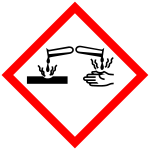
    Signal word

    Danger

    Hazard statement(s)

    H302 Harmful if swallowed

    H311 Toxic in contact with skin

    H314 Causes severe skin burns and eye damage

    H410 Very toxic to aquatic life with long lasting effects

    Precautionary statement(s)
    Prevention

    P264 Wash ... thoroughly after handling.

    P270 Do not eat, drink or smoke when using this product.

    P280 Wear protective gloves/protective clothing/eye protection/face protection/hearing protection/...

    P260 Do not breathe dust/fume/gas/mist/vapours/spray.

    P273 Avoid release to the environment.

    Response

    P301+P317 IF SWALLOWED: Get medical help.

    P330 Rinse mouth.

    P302+P352 IF ON SKIN: Wash with plenty of water/...

    P316 Get emergency medical help immediately.

    P321 Specific treatment (see ... on this label).

    P361+P364 Take off immediately all contaminated clothing and wash it before reuse.

    P301+P330+P331 IF SWALLOWED: Rinse mouth. Do NOT induce vomiting.

    P363 Wash contaminated clothing before reuse.

    P304+P340 IF INHALED: Remove person to fresh air and keep comfortable for breathing.

    P305+P351+P338 IF IN EYES: Rinse cautiously with water for several minutes. Remove contact lenses, if present and easy to do. Continue rinsing.

    P305+P354+P338 IF IN EYES: Immediately rinse with water for several minutes. Remove contact lenses, if present and easy to do. Continue rinsing.

    P317 Get medical help.

    P391 Collect spillage.

    Storage

    P405 Store locked up.

    Disposal

    P501 Dispose of contents/container to an appropriate treatment and disposal facility in accordance with applicable laws and regulations, and product characteristics at time of disposal.

    Other hazards which do not result in classification

    no data available

    Handling and Storage

    Precautions for safe handling

    Handling in a well ventilated place. Wear suitable protective clothing. Avoid contact with skin and eyes. Avoid formation of dust and aerosols. Use non-sparking tools. Prevent fire caused by electrostatic discharge steam.

    Conditions for safe storage, including any incompatibilities

    Store the container tightly closed in a dry, cool and well-ventilated place. Store apart from foodstuff containers or incompatible materials.

  • Seller Information
    Business Type:

    Trader

    Main Products:

    Food additives,Pharmaceutical raw materials,Chemicals,Comestic raw materials

    Location:

    Room 501, Unit 6, No. 40, hushan road,Licang,Qingdao

    Payment Terms:

    TT against copy of documents,TT against B/L draft before shipment,100% TT in advance

    Average lead Time:

    10

    Total Annual Revenue:

    $1 million-$2.5 million

    Total Employees:

    11-50

    Year of Establishment:

    2017

    QINGDAO EASTCHEMSORCES TRADE LIMITED is a leading Manufactory supplier of Sorbitol, Citric acid, Sodium hypochlorite based in Qingdao, Shandong, China. With a commitment to quality and customer satisfaction, QINGDAO EASTCHEMSORCES TRADE LIMITED has become a trusted name in the industry. Our product line includes a range of high-quality Sorbitol, Citric acid, Sodium hypochlorite, which are available at competitive prices. QINGDAO EASTCHEMSORCES TRADE LIMITED has established itself as a reliable supplier of chemical products on the echemi.com.

  • Inquiry History
    11 Inquiries
    Country Product Purchase Quantity Date Posted
    Bangladesh

    Pharmacy Grade N-Hexadecyltrimethylammonium Chloride Raw Materials 99% Powder Evergreen EGC-CAS 112-02-7

    1000 KG Nov 21, 2023
    South Africa

    N-Hexadecyltrimethylammonium Chloride

    1 MT Jul 26, 2023
    Kuwait

    Cetrimonium Chloride

    1000 KG Oct 7, 2023
    Kuwait

    Cetyltrimethylammonium chloride

    1000 PCS Jun 1, 2026
    Germany

    Hexadecyltrimethylammoniumchlorid

    20000 L Feb 25, 2026
    Pakistan

    Cetrimonium trimethylammonium Chloride

    10000 KG Mar 6, 2025
    Bangladesh

    Hexadecyltrimethylammonium Chloride

    1 MT Jan 24, 2025
    France

    Cetrimonium chloride 99% White Amorphous Powder

    20 KG Aug 1, 2024
    United Arab Emirates

    Cetrimonium Chloride

    4000 KG Feb 19, 2024
    United States

    China Manufacturers Active Concentrate Detergent Raw Material Liquid 86438-79-1 Capb T-50 Betaine 50%

    55 G Jul 11, 2023
    Kuwait

    Skin Care 99% Tranexamic Acid Powder CAS 1197-18-8

    50 KG Sep 25, 2023
    Post an enquiry for this product
pic ×

Scan the QR Code to Share

All products displayed on this website are only for non-medical purposes such as industrial applications or scientific research, and cannot be used for clinical diagnosis or treatment of humans or animals. They are not medicinal or edible.

According to relevant laws and regulations and the regulations of this website, units or individuals who purchase hazardous materials should obtain valid qualifications and qualification conditions.

The information shown above is provided by the enterprise itself, and the authenticity, accuracy and legitimacy of the content are the responsibility of the publishing company. ECHEMI does not bear any guarantee responsibility for this. Please be aware that risks in internet transactions objectively exist.

Feedback & Suggestions
Send Message

Thank you for your feedback. If you require further assistance, please contact us by email at info@echemi.com or call us at +86-532-55729510.