D - Alanine
2 Inquiries
338-69-2
Pharmaceutical grade / Food grade
99%
Qingdao
East Chemsources
25kg/Cardboard Drum
Yes
2025-09-26

Food additives,Pharmaceutical raw materials,Chemicals,Comestic raw materials
-
Product Description
-
Seller Information
-
Inquiry History
-
DescriptionECHEMI Editorial ReferenceD-Alanine is a weak GlyR (inhibitory glycine receptor) and PMBA agonist, with an EC50 of 9 mM for GlyR.
Solid
D-alanine is the D-enantiomer of alanine. It has a role as a human metabolite, an EC 4.3.1.15 (diaminopropionate ammonia-lyase) inhibitor and an Escherichia coli metabolite. It is a D-alpha-amino acid and an alanine. It is a conjugate base of a D-alaninium. It is a conjugate acid of a D-alaninate. It is an enantiomer of a L-alanine. It is a tautomer of a D-alanine zwitterion.|The D-enantiomer of alanine.|A non-essential amino acid that occurs in high levels in its free state in plasma. It is produced from pyruvate by transamination. It is involved in sugar and acid metabolism, increases IMMUNITY, and provides energy for muscle tissue, BRAIN, and the CENTRAL NERVOUS SYSTEM.Basic Info-
Product Name:
D-Alanine
Other Name:D-Alanine;Alanine,D-;Ba 2776;D-(-)-Alanine;D-α-Alanine;D(-)-α-Alanine;(R)-Alanine;NSC 158286;(2R)-2-Aminopropanoic acid;(R)-2-Aminopropanoic acid;2: PN: RU2506269 PAGE: 13 claimed sequence
CAS No.:338-69-2
Molecular Formula:C3H7NO2
InChIKeys:InChIKey=QNAYBMKLOCPYGJ-UWTATZPHSA-N
Molecular Weight:89.09
Exact Mass:89.09
BRN:1720249
EC Number:206-418-1
UNII:E3UDS4613U
DSSTox ID:DTXSID3045649
HScode:29224995
Categories:
Characteristics-
PSA:
63.3
XLogP3:-3
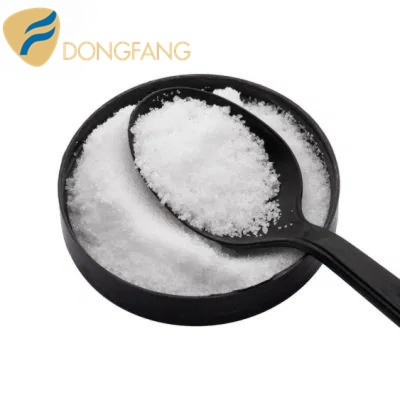
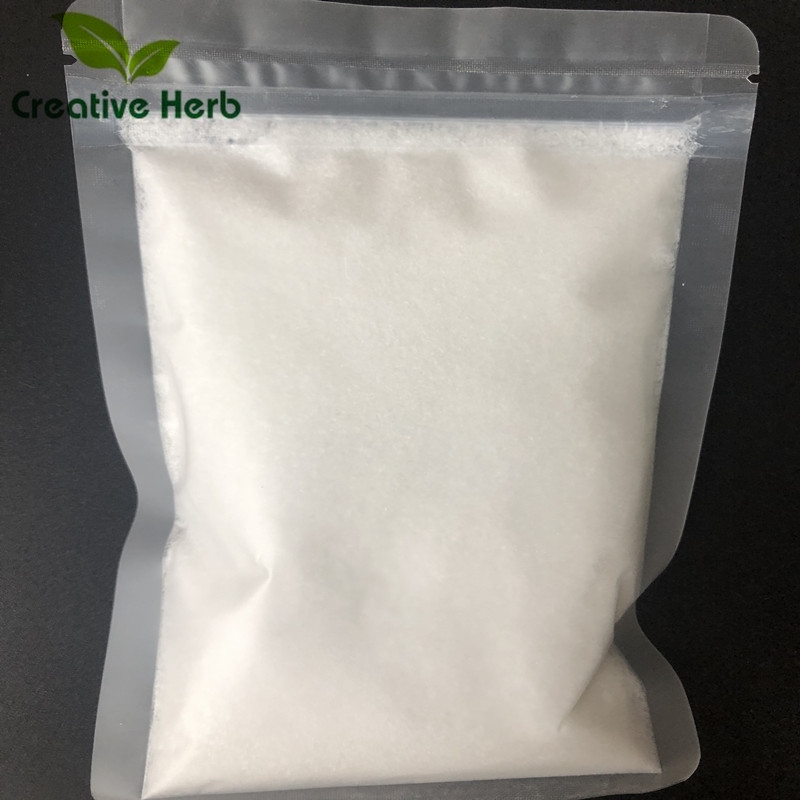
Appearance:White to off-white Crystalline Powder or Crystals
Density:1.432 g/cu cm at 22 deg C
Melting Point:292 °C
Boiling Point:250 deg C (sublimes)
Flash Point:82.6±22.6 °C
Refractive Index:1.460
Water Solubility:H2O: 155 g/L (20 ºC)
Storage Conditions:Store at RT.
Vapor Pressure:1.05X10⁻⁷ mm Hg at 25 deg C (est)
Specific rotation:-14.5 º (c=10, 6N HCl)
Hazard IdentificationClassification of the substance or mixture
Not classified.
GHS label elements, including precautionary statements
Pictogram(s) No symbol. Signal word No signal word
Hazard statement(s) none
Precautionary statement(s) Prevention none
Response none
Storage none
Disposal none
Other hazards which do not result in classification
no data available
Handling and StoragePrecautions for safe handling
Handling in a well ventilated place. Wear suitable protective clothing. Avoid contact with skin and eyes. Avoid formation of dust and aerosols. Use non-sparking tools. Prevent fire caused by electrostatic discharge steam.
Conditions for safe storage, including any incompatibilities
Store the container tightly closed in a dry, cool and well-ventilated place. Store apart from foodstuff containers or incompatible materials.
-
-
Seller Information
-
Business Type:
Trader
-
Main Products:
Food additives,Pharmaceutical raw materials,Chemicals,Comestic raw materials
-
Location:
Room 501, Unit 6, No. 40, hushan road,Licang,Qingdao
-
Payment Terms:
TT against copy of documents,TT against B/L draft before shipment,100% TT in advance
-
Average lead Time:
10 days
-
Total Annual Revenue:
$1 million-$2.5 million
-
Total Employees:
11-50
-
Year of Establishment:
2017
-
-
Inquiry History2 Inquiries
Country Product Purchase Quantity Date Posted  India
India
D- Alanine
500 KG Dec 25, 2025
India
D-Alanine
500 G Apr 23, 2024 Post an enquiry for this product

More from this Seller
-
-

-
L - Tryptophan
Pharmaceutical grade / Food grade / 99%
-
-
-

-
99%1-Chloro-4-nitrobenzene
Industrial Grade / 99%
-
-
-
")
-
Factory of Hydroxypropyl Methyl Cellulose (HPMC)
Industrial Grade / 99%
-
-
-

-
Triethylene glycol monomethyl ether, borate
Industrial Grade / 99.5%
-
-
-

-
Di-n-butyl ether 142-96-1
Industrial Grade / 99%
-




Hot Related Products
-
 Glycine,CAS 56-40-6
 -
 China Supplies N-Methyl-Dl-Alanine CAS 600-21-5 with High Purity Amino Acid Nutrition Supplement Food Grade 99% Purity Powder CAS 302-72-7 Dl-Alanine
 -
 China Supplier Glycine Powder 25kg Bag Food Grade Additives Amino Acid L-Glycine for Promote Health
 -
 Glycine | Amino Acid supplement, Glyphosate Intermediate, USP& tech Grade
$2000-2200/MT EXW
-
 Glycine hot sale
 -
 Bulk supply Food grade Glycine 99%
 -
 Glycine 56-40-6
 -
 AMINO ACIDS, Twenty amino acids
 -
 Food grade Glycine with Factory price 99.5% White crystal powder CHF-101 Granray
 -
 Wholesale price Factory price top quality sample D-cycloserine cas 68-41-7