Product
Supplier
Encyclopedia
Inquiry
Home > Agrochemicals > Herbicides > Bentazon for Sale > bentazone 24% 48% 480g/l SL bentazone 40%+ MCPA-sodium 10% SL
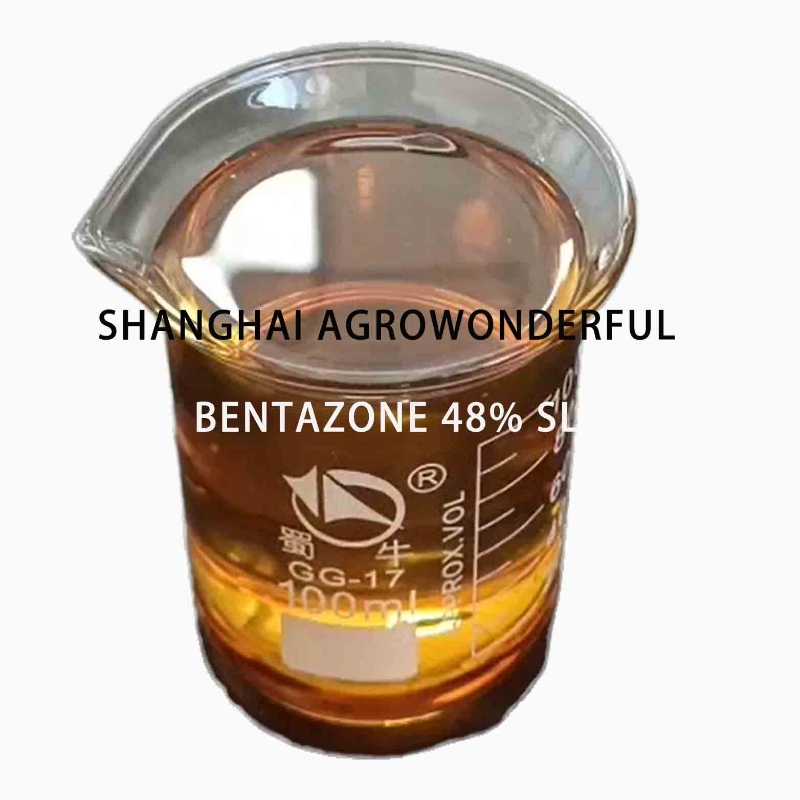
bentazone 24% 48% 480g/l SL bentazone 40%+ MCPA-sodium 10% SL buy - large image1
bentazone 24% 48% 480g/l SL bentazone 40%+ MCPA-sodium 10% SL buy - image1
bentazone 24% 48% 480g/l SL bentazone 40%+ MCPA-sodium 10% SL buy - image2
bentazone 24% 48% 480g/l SL bentazone 40%+ MCPA-sodium 10% SL buy - image3
bentazone 24% 48% 480g/l SL bentazone 40%+ MCPA-sodium 10% SL buy - image4
bentazone 24% 48% 480g/l SL bentazone 40%+ MCPA-sodium 10% SL buy - image5
bentazone 24% 48% 480g/l SL bentazone 40%+ MCPA-sodium 10% SL buy - image6

bentazone 24% 48% 480g/l SL bentazone 40%+ MCPA-sodium 10% SL

TDS 2 Inquiries

Unit Price: Get Latest Price
CAS No.:

25057-89-0

Grade:

Pesticide Grade

Content:

24%

Port:

shanghai

Brand:

Agrowonderful

Packaging:

1L/bottle,10L/carton

Price valid (until):

2025-02-21

Company Type:
Trader
Location:
China
Qualification:
Main Products:

glyphosate,herbicide,agrochemical,sniper ddvp,abamectin,emamectin benzoate

  • Product Description

  • Seller Information

  • Inquiry History

  • Description

    bentazone 24% 48% 480g/l SL bentazone 40%+ MCPA-sodium 10% SL

    Items Specifications
    bentazone 24% 48% 480g/l SL  package size can be from 100ml to IBC drum
     bentazone 40%+ MCPA-sodium 10% SL package size can be from 100ml to IBC drum

    NOMENCLATURE

    bentazone

    Common name bentazone (BSI, E-ISO, (f) F-ISO, JMAF); bentazon (ANSI, Canada, WSSA); bendioxide (Republic of South Africa)

    IUPAC name 3-isopropyl-1H-2,1,3-benzothiadiazin-4(3H)-one 2,2-dioxide  

    Chemical Abstracts name 3-(1-methylethyl)-1H-2,1,3-benzothiadiazin-4(3H)-one 2,2-dioxide  

    CAS RN [25057-89-0]  EEC no. 246-585-8  Development codes BAS 351H ()  


    bentazone-sodium

    CAS RN [50723-80-3], formerly [92309-31-4]  


    COMMERCIALISATION

    History Herbicide reported by A. Fischer (Proc. Br. Weed Control Conf., 9th, 1968, 2, 1042). Introduced by  AG in 1972.  Patents US 3708277; DE 1542836  


    APPLICATIONS

    Biochemistry Photosynthetic electron transport inhibitor at the photosystem II receptor site.  Mode of action Selective contact herbicide, absorbed mainly by the foliage, with very little translocation, but also absorbed by the roots, with translocation acropetally in the xylem.  Uses A contact herbicide controlling Anthemis, Chamomilla and Matricaria spp., Chrysanthemum segetum, Galium aparine, Lapsana communis and Stellaria media in winter and spring cereals, at 1.0-2.2 kg/ha. Other crops include peanuts, maize, peas, Phaseolus beans, rice (Cyperus difformis, C. esculentus, C. serotinus, Monochoria vaginalis, Sagittaria pygmaea, S. sagittifolia, Alisma and Commelina spp., Scirpus maritimus and S. mucronatus) and soya beans (Abutilon theophrasti, Capsella bursa-pastoris, Cyperus esculentus, Datura stramonium, Helianthus spp., Polygonum spp., Portulaca spp., Sida spinosa, Ambrosia spp., Sinapis arvensis and Xanthium spp.). Formulation types SL.  


    bentazone-sodium

    Selected products: 'Basagran' (); mixtures: 'Doble' (+ acifluorfen-sodium) (Latin America) (); 'Galaxy' (+ acifluorfen-sodium) (); 'Storm' (+ acifluorfen-sodium) (); 'Clincher Bas' (+ cyhalofop-butyl)


    ANALYSIS

    Product analysis by rplc with u.v. detection (AOAC Methods, 17th Ed., 993.02; CIPAC Handbook, 1985, 1C, 1973) or by glc of a derivative. Residues determined by glc of a derivative with ECD (BBA Kurzfassungen zur Analytik von Pflanzenschutzmitteln in Wasser, 1989, 2, Auflage S. 42). In drinking water, by conversion to methyl ester with diazomethane, then glc with ECD (AOAC Methods, 17th Ed., 992.32). Details available from .  


    MAMMALIAN TOXICOLOGY

    Reviews FAO/WHO 83, 85, 86 (see part 2 of the Bibliography).  Oral Acute oral LD50 for rats >1000, dogs >500, rabbits 750, cats 500 mg/kg.  Skin and eye Acute percutaneous LD50 for rats >2500 mg/kg. Moderately irritating to skin and eyes (rabbits).  Inhalation LC50 (4 h) for rats >5.1 mg/l air.  NOEL (1 y) for dogs 13.1 mg/kg b.w.; (2 y) for rats 10 mg/kg b.w.; (90 d) for rats 25, dogs 10 mg/kg b.w.; (78 w) for mice 12 mg/kg b.w.  ADI (JMPR) 0.1 mg/kg [1998, 1999].  Water GV 300 mg/l (based on ADI).  Toxicity class WHO (a.i.) III; EPA (formulation) III  EC classification Xi; R36| R43| R52, R53  


    ECOTOXICOLOGY

    bentazone

    Birds Acute oral LD50 for bobwhite quail 1140 mg/kg. Dietary LC50 for bobwhite quail and mallard ducks >5000 ppm.  Fish LC50 (96 h) for rainbow trout and bluegill sunfish >100 mg/l.  Daphnia LC50 (48 h) 125 mg/l.  Algae EC50 (72 h) for green algae (Ankistrodesmus) 47.3 mg/l.  Bees Not toxic to bees; LD50 (oral) >100 mg/bee.  Worms EC50 (14 d) >1000 mg/kg soil.  


    ENVIRONMENTAL FATE

    Animals Metabolism studies in three different species showed that bentazone was only poorly metabolised, the parent compound being the predominant product. Only small amounts of hydroxylated bentazone metabolites could be detected. No conjugated products were found.  Plants In plants, rapidly metabolised to derivatives of anthranilic acid, the principal metabolites being the 6- and 8-hydroxy derivatives, which are conjugated to sugars, forming glycosides.  Soil/Environment In soil, short-lived hydroxy compounds are first formed, which rapidly undergo further degradation (R. Huber & S. Otto in Rev. Environ. Contam. Toxicol., 137, 111-134). In sunlight, bentazone undergoes rapid degradation, ultimately to CO2. It has low soil persistence: in freshly collected field soils, aerobic DT50 (lab., 20) was 14 d. In lab. degradation studies, with soils of proven biological activity, DT50 (average) was 17.8 d; DT50 (field, average) was c. 12 d; corresponding DT90 was 44 d. Koc 13.3-176 ml/g (average 42 ml/g), indicating mobility. However, when used according to good agricultural practice, bentazone is degraded more quickly than it can leach; in all lysimeter studies, average annual leachates contained <0.1 mg/l.  

    Shop bentazone 24% 48% 480g/l SL bentazone 40%+ MCPA-sodium 10% SL-Detailed Image 1
    Shop bentazone 24% 48% 480g/l SL bentazone 40%+ MCPA-sodium 10% SL-Detailed Image 2
    Shop bentazone 24% 48% 480g/l SL bentazone 40%+ MCPA-sodium 10% SL-Detailed Image 3

    Certificates

    Basic Info
    Product Name:

    Bentazon

    Other Name:

    1H-2,1,3-Benzothiadiazin-4(3H)-one,3-(1-methylethyl)-,2,2-dioxide;1H-2,1,3-Benzothiadiazin-4(3H)-one,3-isopropyl-,2,2-dioxide;3-Isopropyl-2,1,3-benzothiadiazin-4-one 2,2-dioxide;3-Isopropyl-4-oxo-2,1,3-benzothiadiazine 2,2-dioxide;BAS 3510H;Basagran;Bentazon;BAS 351H;BAS 3510;BAS 3512H;3-Isopropyl-2,1,3-benzothiadiazine-4-one 2,2-dioxide;3,4-Dihydro-3-isopropyl-1H-2,1,3-benzothiadiazin-4-one 2,2-dioxide;3-Isopropyl-2,1,3-benzothiadiazinon-(4)-2,2-dioxide;3,4-Dihydro-3-isopropyl-4-oxo-1H-2,1,3-benzothiadiazine 2,2-dioxide;3-Isopropyl-1H-2,1,3-benzothiadiazin-4(3H)-one S,S-dioxide;3-Isopropyl-1H-2,1,3-benzothiadiazin-4(3H)-one 2,2-dioxide;3-Isopropyl-1H-2,1,3-benzothiadiazine-4(3H)-one 2,2-dioxide;3-Isopropyl-2,1,3-benzothiodiazin-4-one 2,2-dioxide;Bentazone;BAS 351-07H;BAS 3517H;Bendioxide;Basagran 480;Leader;Corsar;Basamais;Bazargan;Basagran 480SL;Miecaosong;12705-05-4;21723-40-0;58856-82-9

    CAS No.:

    25057-89-0

    Molecular Formula:

    C10H12N2O3S

    InChIKeys:

    InChIKey=ZOMSMJKLGFBRBS-UHFFFAOYSA-N

    Molecular Weight:

    240.28

    Exact Mass:

    240.28

    EC Number:

    246-585-8

    UNII:

    R4S7ZGZ9CT

    ICSC Number:

    0828

    DSSTox ID:

    DTXSID0023901

    Color/Form:

    Colorless crystals; tech. is an ochre-yellow solid [|White, crystalline powder

    HScode:

    2934999027

    Categories:

    Herbicides

    Characteristics
    PSA:

    74.9

    XLogP3:

    -0.46

    Appearance:

    White Solid

    Density:

    1.41 g/cm3 @ Temp: 20 °C

    Melting Point:

    139.4-141 °C

    Boiling Point:

    395.7±25.0 °C at 760 mmHg

    Flash Point:

    2 °C

    Refractive Index:

    1.583

    Water Solubility:

    Solubility in water: none

    Storage Conditions:

    APPROX 4°C

    Vapor Pressure:

    Vapour pressure, Pa at 20°C:

    Toxicity:

    Oral-Rat  LD50: 1100 mg/kg

    Flammability characteristics:

    Combustion produces toxic nitrogen oxide and sulfur oxide gas

    Odor:

    Odorless

    Dissociation Constants:

    pKa = 3.3 at 24 °C|Dissociation constant: pKa = 2.92 at 20 °C

    Collision Cross Section:

    147.66 Ų [M-H]-

    Experimental Properties:

    Slightly brown solid /Technical bentazon/|Kow logP = 0.77 (pH 5), -0.46 (pH 7), -0.55 (pH 9)|Very resistant to hydrolysis in both acidic and alkaline media. Decomposed by sunlight

    Corrosivity:

    Not corrosive

    Hazard Identification

    Classification of the substance or mixture

    Acute toxicity - Category 4, Oral

    Eye irritation, Category 2

    Skin sensitization, Category 1

    Hazardous to the aquatic environment, long-term (Chronic) - Category Chronic 3

    GHS label elements, including precautionary statements

    Pictogram(s)

    Signal word

    Warning

    Hazard statement(s)

    H302 Harmful if swallowed

    H319 Causes serious eye irritation

    H317 May cause an allergic skin reaction

    H412 Harmful to aquatic life with long lasting effects

    Precautionary statement(s)
    Prevention

    P264 Wash ... thoroughly after handling.

    P270 Do not eat, drink or smoke when using this product.

    P280 Wear protective gloves/protective clothing/eye protection/face protection/hearing protection/...

    P261 Avoid breathing dust/fume/gas/mist/vapours/spray.

    P272 Contaminated work clothing should not be allowed out of the workplace.

    P273 Avoid release to the environment.

    Response

    P301+P317 IF SWALLOWED: Get medical help.

    P330 Rinse mouth.

    P305+P351+P338 IF IN EYES: Rinse cautiously with water for several minutes. Remove contact lenses, if present and easy to do. Continue rinsing.

    P302+P352 IF ON SKIN: Wash with plenty of water/...

    P333+P317 If skin irritation or rash occurs: Get medical help.

    P321 Specific treatment (see ... on this label).

    P362+P364 Take off contaminated clothing and wash it before reuse.

    Storage

    none

    Disposal

    P501 Dispose of contents/container to an appropriate treatment and disposal facility in accordance with applicable laws and regulations, and product characteristics at time of disposal.

    Other hazards which do not result in classification

    no data available

    Handling and Storage

    Precautions for safe handling

    Handling in a well ventilated place. Wear suitable protective clothing. Avoid contact with skin and eyes. Avoid formation of dust and aerosols. Use non-sparking tools. Prevent fire caused by electrostatic discharge steam.

    Conditions for safe storage, including any incompatibilities

    Provision to contain effluent from fire extinguishing. Separated from food and feedstuffs.Avoid freezing.

  • Seller Information
    Business Type:

    Trader

    Main Products:

    glyphosate,herbicide,agrochemical,sniper ddvp,abamectin,emamectin benzoate

    Location:

    Room 1018, 10th Floor, No. 78, Taigu Road, Waigaoqiao Free Trade Zone, Pudong New Area, China (Shanghai) Pilot Free Trade Zone

    Payment Terms:

    TT against copy of documents,L/C,TT against B/L draft before shipment,100% TT in advance

    Average lead Time:

    40

    Total Annual Revenue:

    $2.5 million-$5 million

    Total Employees:

    51-100

    Year of Establishment:

    2022

  • Inquiry History
    2 Inquiries
    Country Product Purchase Quantity Date Posted
    Uganda

    Bentazon

    100 MT Jun 19, 2024
    Brazil

    bentazone

    2 KG Jul 13, 2026
    Post an enquiry for this product
pic ×

Scan the QR Code to Share

All products displayed on this website are only for non-medical purposes such as industrial applications or scientific research, and cannot be used for clinical diagnosis or treatment of humans or animals. They are not medicinal or edible.

According to relevant laws and regulations and the regulations of this website, units or individuals who purchase hazardous materials should obtain valid qualifications and qualification conditions.

The information shown above is provided by the enterprise itself, and the authenticity, accuracy and legitimacy of the content are the responsibility of the publishing company. ECHEMI does not bear any guarantee responsibility for this. Please be aware that risks in internet transactions objectively exist.

Feedback & Suggestions
Send Message

Thank you for your feedback. If you require further assistance, please contact us by email at info@echemi.com or call us at +86-532-55729510.