




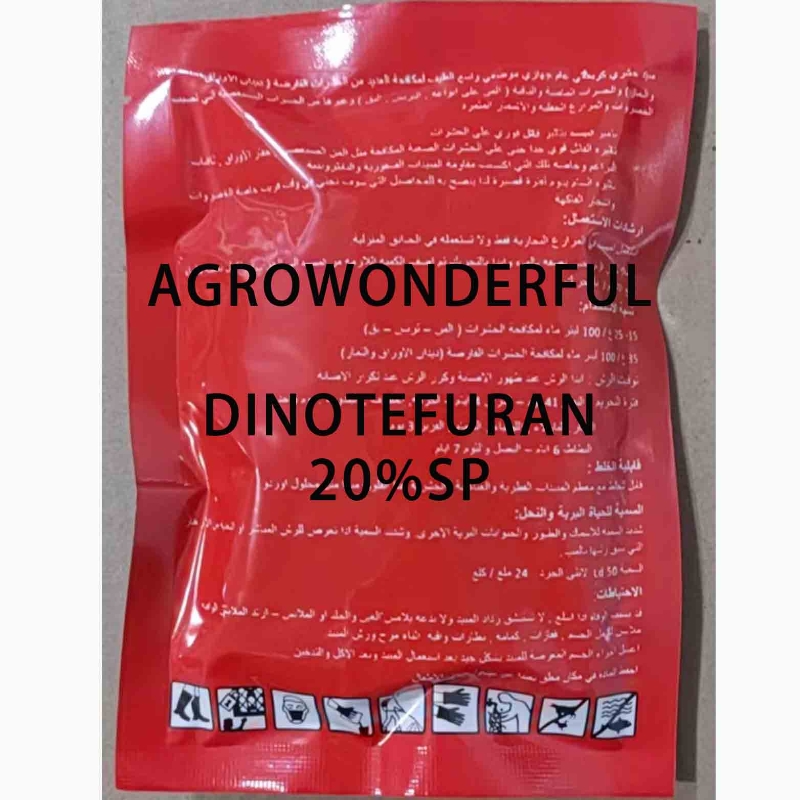

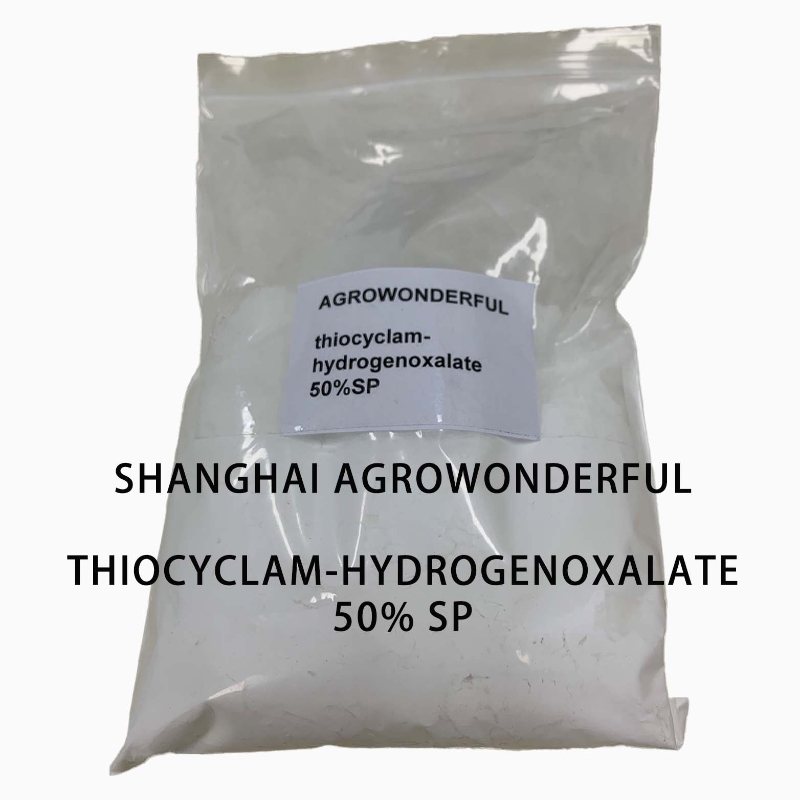

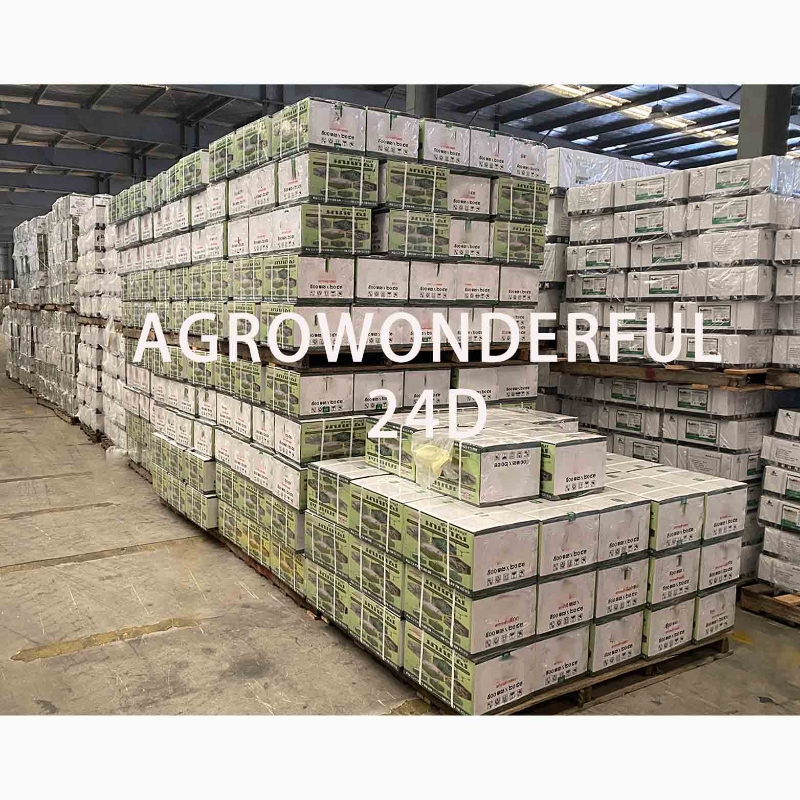

plant growth regulator b nine daminozide 50% SP 92% SP 99% TC plant growth promoters
TDS 6 Inquiries
1596-84-5
Pesticide Grade
50%
shnaghai
Agrowonderful
1L/bottle,10L/carton
2025-03-03

glyphosate,herbicide,agrochemical,sniper ddvp,abamectin,emamectin benzoate
-
Product Description
-
Seller Information
-
Inquiry History
-
DescriptionECHEMI Editorial ReferenceDaminozide is a colorless crystalline solid. white crystalline powderOdorless white crystals or powder.Daminozide is one of the first plant growth retardants[PGRs] registered for use on agricultural crops. It was first registered in 1963 for use on potted chrysanthemums in the US and was later approved for use on food crops[1-2]. Although it is still allowed for used on ornamentals plants, its use on food crops was withdrawn in 1990 by the United States environmental protection agenc.
Succinic acid 2,2-dimethylhydrazide appears as odorless white crystals or powder. (NTP, 1992)
Succinic acid 2,2-dimethylhydrazide appears as odorless white crystals or powder. (NTP, 1992)|Daminozide is a straight-chain fatty acid.CertificatesBasic Info-
Product Name:
Daminozide
Other Name:Butanedioic acid,1-(2,2-dimethylhydrazide);Succinic acid,mono(2,2-dimethylhydrazide);Butanedioic acid,mono(2,2-dimethylhydrazide);B 995;N-(Dimethylamino)succinamic acid;DMASA;Alar;B-Nine;Succinic acid 2,2-dimethylhydrazide;Aminozide;Alar 85;SADH;Kylar;Aminozid;Daminozide;Succinic acid N,N-dimethylhydrazide;Succinic N′,N′-dimethylhydrazide;Dimas;DYaK;DIMG;Dazide;Bijiu;1861-26-3;74913-15-8
CAS No.:1596-84-5
Molecular Formula:C6H12N2O3
InChIKeys:InChIKey=NOQGZXFMHARMLW-UHFFFAOYSA-N
Molecular Weight:160.17
Exact Mass:160.17
EC Number:216-485-9
UNII:F6KF33M5UB
DSSTox ID:DTXSID9020370
Color/Form:WHITE CRYSTALLINE SOLID
HScode:29280000
Categories:
Characteristics-
PSA:
69.6
XLogP3:-1.5 at pH 5
Appearance:Succinic acid 2,2-dimethylhydrazide appears as odorless white crystals or powder. (NTP, 1992)
Density:1.2751 (rough estimate)
Melting Point:154-155 °C
Boiling Point:286.06°C (rough estimate)
Flash Point:153.1±28.4 °C
Refractive Index:1.4500 (estimate)
Water Solubility:H2O: 100 g/L
Storage Conditions:2-8°C
Vapor Pressure:2X10⁻⁴ mm Hg at 23 deg C
Toxicity:Oral-Rat LD50: 8400 mg/kg; Oral-Mouse LD50: 6300 mg/kg
Flammability characteristics:Combustion produces toxic nitrogen oxide gas
Odor:Faint amine like odor
PH:3.8 (5% aq soln)
Henrys Law Constant:Henry's Law constant= 4.2X10⁻¹⁰ atm-cu m/mole at 25 °C /Estimated/
Dissociation Constants:pKa = 4.68
Experimental Properties:Hydroxyl radical reaction rate constant: 1.2X10⁻¹¹ cu cm/molec-sec at 25 °C /Estimated/
Air and Water Reactions:Slightly soluble in water.
Reactive Group:Acids, Carboxylic
Reactivity Profile:SUCCINIC ACID 2,2-DIMETHYLHYDRAZIDE may be heat sensitive. Incompatible with strong oxidizing agents, strong acids, and bases. Also incompatible with wetting agents, alkaline materials, oils and copper-containing compounds. May corrode metals (NTP, 1992). May generate toxic gases with acids, aldehydes, amides, carbamates, cyanides, inorganic fluorides, halogenated organics, isocyanates, ketones, metals, nitrides, peroxides, phenols, epoxides, acyl halides, and strong oxidizing or reducing agents. May generate flammable gases with alkali metals. Explosive reactions can occur with strong oxidizing agents, metal salts, peroxides, and sulfides.
Hazard IdentificationClassification of the substance or mixture
Skin irritation, Category 2
Eye irritation, Category 2
GHS label elements, including precautionary statements
Pictogram(s) 
Signal word Warning
Hazard statement(s) H315 Causes skin irritation
H319 Causes serious eye irritation
Precautionary statement(s) Prevention P264 Wash ... thoroughly after handling.
P280 Wear protective gloves/protective clothing/eye protection/face protection/hearing protection/...
Response P302+P352 IF ON SKIN: Wash with plenty of water/...
P321 Specific treatment (see ... on this label).
P332+P317 If skin irritation occurs: Get medical help.
P362+P364 Take off contaminated clothing and wash it before reuse.
P305+P351+P338 IF IN EYES: Rinse cautiously with water for several minutes. Remove contact lenses, if present and easy to do. Continue rinsing.
Storage none
Disposal none
Other hazards which do not result in classification
no data available
Handling and StoragePrecautions for safe handling
Handling in a well ventilated place. Wear suitable protective clothing. Avoid contact with skin and eyes. Avoid formation of dust and aerosols. Use non-sparking tools. Prevent fire caused by electrostatic discharge steam.
Conditions for safe storage, including any incompatibilities
Store the container tightly closed in a dry, cool and well-ventilated place. Store apart from foodstuff containers or incompatible materials.
-
-
Seller Information
-
Business Type:
Trader
-
Main Products:
glyphosate,herbicide,agrochemical,sniper ddvp,abamectin,emamectin benzoate
-
Location:
Room 1018, 10th Floor, No. 78, Taigu Road, Waigaoqiao Free Trade Zone, Pudong New Area, China (Shanghai) Pilot Free Trade Zone
-
Payment Terms:
TT against copy of documents,L/C,TT against B/L draft before shipment,100% TT in advance
-
Average lead Time:
40 days
-
Total Annual Revenue:
$2.5 million-$5 million
-
Total Employees:
51-100
-
Year of Establishment:
2022
-
-
Inquiry History6 Inquiries
Country Product Purchase Quantity Date Posted  Chile
Chile
Daminozide
5 G Sep 2, 2026  Brazil
Daminozide 99%
1 KG May 9, 2026  Pakistan
Daminozide
50.00 KG Jun 2, 2026
Pakistan
Daminozide
50.00 KG Jan 21, 2026  Kazakstan
Daminozide
1 KG Jun 22, 2026  Vietnam
Daminozide TC & SP
1000.00 KG Feb 24, 2026 Post an enquiry for this product



More from this Seller
-
-

-
sulfometuron-methyl 75% WDG WP 10% SC factory whole sell price
Pesticide Grade / 75%
-
-
-

-
diazinon 5% GR 40% 50% 60% EC 98% TC super killing agrochemical made in China
Pesticide Grade / 5%
-
-
-

-
MCPA 4.5%+ glyphosate 80%SP super weed killer factory price
Pesticide Grade / 15%
-
-
-

-
bifenthrin 2.5% EW 25g/l EC 100g/l EC 97%TC high quality agrochemical made in China
Pesticide Grade / 30%
-
-
-

-
fenoxaprop-P-ethyl 69g/l EW 10% EC 98% TC high quality best price
Pesticide Grade / 10%
-


Hot Related Products
-
 Succinic Acid Industrial Grade
 -
 Succinic acid Holypharm
 -
 Succinic anhydride 99% Colorless needle or granular crystal
 -
 Bio-based Succinic Acid 99.5%
 -
 Succinic acid
 -
 Succinic acid on sale
 -
 Succinic anhydride 99.5% Pharmacy grade
 -
 High Quality Succinic Acid CAS 110-15-6 Food Grade Amber Acid
$2.46-2.94/KG EXW
-
 succinic acid 100% Liquid
 -
 Biobased Succinic Acid


