Product
Supplier
Encyclopedia
Inquiry
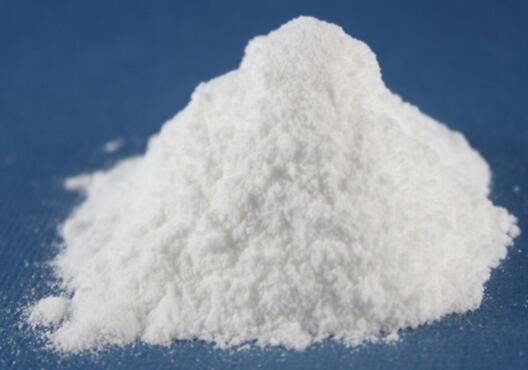
Microcrystalline Cellulose9004-34-6 API buy - large image1
Microcrystalline Cellulose9004-34-6 API buy - image1
Microcrystalline Cellulose9004-34-6 API buy - image2
Microcrystalline Cellulose9004-34-6 API buy - image3
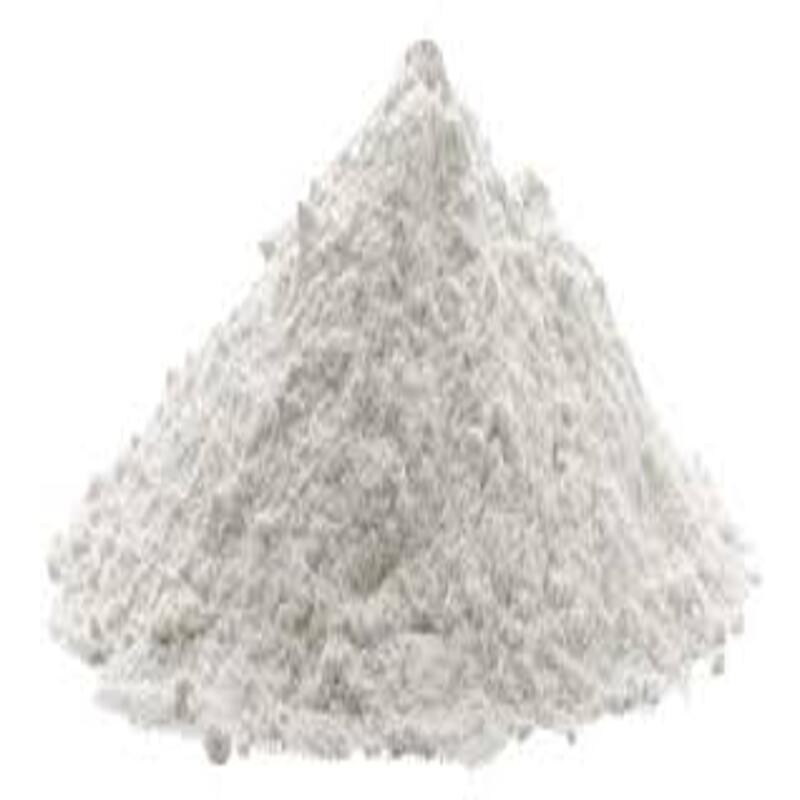
Microcrystalline Cellulose9004-34-6 API buy - image4
Microcrystalline Cellulose9004-34-6 API buy - image5

Microcrystalline Cellulose9004-34-6 API

69 Inquiries

Unit Price:

$100-120/MT FOB

Get Latest Price
CAS No.:

9004-34-6

Grade:

Pharmaceutical Grade

Content:

99.9%

Port:

SHANGHAI

Brand:

AVICEL

Packaging:

25KG

Price valid (until):

2026-07-08

Company Type:
Trader
Location:
China
Qualification:
Main Products:

pharmaceutical intermediates,peptides,electronic chemicals

  • Product Description

  • Seller Information

  • Inquiry History

  • Description


      Product Detail  

    Microcrystalline cellulose Basic information
    Product Name: Microcrystalline cellulose
    Synonyms: AVICEL PH;AVICEL PH 101(R);AVICEL PH 102;AVICEL PH 105(R);AVICEL(R);''AVICEL(R)'';AVICEL SF;AVIRIN
    CAS: 9004-34-6
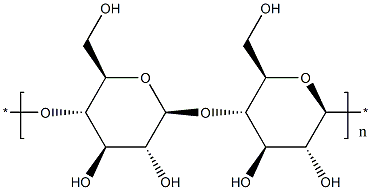
    MF: (C12H20O10)n
    MW: 324.28
    EINECS: 232-674-9
    Product Categories: CarbohydrateSerum-free Media;Companion Products and Reagents;Nutritional Supplements;Insect Platform;Metabolic Pathways;Metabolites and Cofactors on the Metabolic Pathways Chart;Carbohydrate;Cellulose;Materials Science;Natural Polymers;Polymer Science;Polymers;API;9004-34-6
    Mol File: 9004-34-6.mol
    Shop Microcrystalline Cellulose9004-34-6 API-Detailed Image 1

    Microcrystalline cellulose Chemical Properties
    Melting point  76-78 °C(Solv: acetone (); )
    bulk density 70-400kg/m3
    density  1.5 g/cm3 (20℃)
    refractive index  n20/D 1.504
    Fp  164 °C
    storage temp.  room temp
    solubility  Practically insoluble in water, in acetone, in anhydrous ethanol, in toluene, in dilute acids and in a 50 g/L solution of sodium hydroxide
    form  powder
    color  White or almost white
    Odor Odorless
    PH 5-7.5 (100g/l, H2O, 20℃)(slurry)
    Optical Rotation -120 (Cuprammonium hydroxide solution)
    biological source spruce
    Water Solubility  insoluble
    Merck  14,1965
    Exposure limits ACGIH: TWA 10 mg/m3
    OSHA: TWA 15 mg/m3; TWA 5 mg/m3
    NIOSH: TWA 10 mg/m3; TWA 5 mg/m3; TWA 1 mg/m3
    Dielectric constant 3.2(Ambient)
    Stability: Stable. Combustible. Incompatible with strong oxidizing agents.
    Cosmetics Ingredients Functions OPACIFYING
    LIGHT STABILIZER
    ABSORBENT
    BULKING
    EMULSION STABILISING
    ABRASIVE
    ANTICAKING
    VISCOSITY CONTROLLING
    Cosmetic Ingredient Review (CIR) Microcrystalline cellulose (9004-34-6)
    InChI 1S/C12H22O11/c13-1-3-5(15)6(16)9(19)12(22-3)23-10-4(2-14)21-11(20)8(18)7(10)17/h3-20H,1-2H2/t3,4,5,6,7,8,9,10-,11,12+/m1/s1
    InChIKey UFHFLCQGNIYNRP-UHFFFAOYSA-N
    SMILES O1[C@H](C(C(C(C1CO)O)O)O)O[C@@H]2C(OC(C(C2O)O)O)CO
    EPA Substance Registry System Cellulose (9004-34-6)

    Safety Information
    Hazard Codes  Xi
    Risk Statements  37
    Safety Statements  24/25
    OEB B
    OEL TWA: 10 mg/m3 (total)
    WGK Germany  3
    RTECS  FJ5950200
    3
    Autoignition Temperature 232 °C
    TSCA  TSCA listed
    HS Code  39129090
    Storage Class 11 - Combustible Solids
    Toxicity LD50 orally in Rabbit: > 5000 mg/kg LD50 dermal Rabbit > 2000 mg/kg
    MSDS Information
    Provider Language
    Cellulose microcrystalline English
    SigmaAldrich English
    ACROS English
    ALFA English

    Microcrystalline cellulose Usage And Synthesis
    Chemical Properties Microcrystalline cellulose and carboxymethylcellulose sodium occurs as a white or off-white odorless and tasteless hygroscopic powder containing 5–22% sodium carboxymethylcellulose. It is a water-dispersible organic hydrocolloid.Shop Microcrystalline Cellulose9004-34-6 API-Detailed Image 2
    Chemical Properties Microcrystalline cellulose is a purified, partially depolymerized cellulose that occurs as a white, odorless, tasteless, crystalline powder composed of porous particles. It is commercially available in different particle sizes and moisture grades that have different properties and applications.
    Occurrence The fiber in typical paper can be called “cellulosic”, meaning that cellulose is its most prominent component. Cellulose is present not only in wood, but also in various non-woody plants, such as straw, sugarcane (bagasse), reeds, and hemp.
    Uses High purity cellulose powders for partition chromatography.
    Uses ACCEL-101 is most widely used for direct compression tableting and wet granulation. ACCEL-102 has similar compression properties to ACCEL-101. However, it has larger particle size and therefore, may be of value in improving the flow if fine powders. ACCEL
    Uses cellulose is a thickener and an emulsifier. It is obtained from plants. cellulose (microcrystalline) is used as an emulsifier in cosmetic creams. It is the chief constituent of plant fiber.
    Uses

    Wood contains 50–70% cellulose; cotton and other textile fibers of plant origin contain 65–95%; rayon is prepared by dissolving natural cellulose and then precipitating it from solution, with some loss of crystallinity. Cellulose is made into cellophane film and is used to form fibers, resins, coatings and gums.

    Uses Cellulose is a carbohydrate polymer made up of glucose units. It consists of fibrous particles and is used as a fiber source and bulking agent in low-calorie formulations.
    Uses Microcrystalline Cellulose is a gum that is the nonfibrous form of cellulose, an alpha-cellulose. It is dispersible in water but not soluble, requiring considerable energy to disperse and hydrate. In this form it is used in dry applications such as tableting, capsules, and shredded cheese where it functions as a non-nutritive filler, binder, flow aid, and anticaking agent. By the addition of carboxymethylcellulose to the alpha-cellulose prior to drying, improved functional properties of hydration and dispersion are obtained. This product is designed for use in water dispersions, being insoluble in water but dispersing in water to form colloidal sols below 1% and white opaque gels above the 1% usage level. It is used as a heat shock stabilizer and bodying agent in frozen desserts, as an opacifier in low-fat dressings, as a foam stabilizer in whipped toppings, and as an emulsifier in dressings. Also termed cellulose gel.
    Definition A natural carbohydrate high polymer (polysaccha- ride) consisting of anhydroglucose units joined by an oxygen linkage to form long molecular chains that are essentially linear. It can be hydrolyzed to glucose. The degree of polymerization is from 1000 for wood pulp to 3500 for cotton fiber, giving a molecular weight from 160,000 to 560,000. Cellulose is a colorless solid, d approximately 1.50, insoluble in water and organic solvents. It will swell in sodium hydroxide solution and is soluble in Schweitzer’s reagent. It is the fundamental con- stituent of all vegetable tissues (wood, grass, cotton, etc.) and the most abundant organic material in the world. Cotton fibers are almost pure cellulose; wood contains approximately 50%. The physical structure of cellulose is unusual in that it is not a single crystal but consists of crystalline areas embedded in amorphous areas. Chemical reagents penetrate the latter more easily than the former. Cel- lulose is virtually odorless and tasteless and is com- bustible, with an ignition point of approximately 450F. In some forms, it is flammable. For example, railroad shipping regulations require a flammable label on such items as burnt fiber, burnt cotton, wet waste paper, and wet textiles. Fires have been known to occur in warehouses in which telephone books were stored. These were undoubtedly due to heat buildup in the paper caused by microbial activity and self-sustaining oxidation.
    Production Methods Microcrystalline cellulose and carboxymethylcellulose sodium is a spray- or bulk-dried blend of microcrystalline cellulose and sodium carboxymethylcellulose. It is prepared by the chemical depolymerization of highly purified wood pulp. The original crystalline areas of the pulp fibers are combined with sodium carboxymethylcellulose, which serves as a protective colloid and also facilitates dispersion of the product; it is then either spray- or bulk-dried.
    Production Methods Microcrystalline cellulose is manufactured by controlled hydrolysis with dilute mineral acid solutions of α-cellulose, obtained as a pulp from fibrous plant materials. Following hydrolysis, the hydrocellulose is purified by filtration and the aqueous slurry is spraydried to form dry, porous particles of a broad size distribution.
    General Description Odorless, white powdery fibers. Density 1.5 g cm-3. The biopolymer composing the cell wall of vegetable tissues. Prepared by treating cotton with an organic solvent to de-wax Cellulose microcrystalline and removing pectic acids by extration with a solution of sodium hydroxide. The principal fiber composing the cell wall of vegetable tissues (wood, cotton, flax, grass, etc.). Technical uses depend on the strength and flexibility of its fibers. Insoluble in water. Soluble with chemical degradation in sulfuric aicd, and in concentrated solutions of zinc chloride. Soluble in aqueous solutions of cupric ammonium hydroxide (Cu(NH3)4(OH)2).
    Reactivity Profile Cellulose microcrystalline is combustible. Incompatible with strong oxidizing agents including bromine pentafluoride, sodium , fluorine, pers, , sodium , magnesium per, F2, zinc , sodium nitrite, sodium , sodium . Nitration with a mixture of nitric and sulfuric acids produces Cellulose microcrystalline  (celluloid, soluble ,  which are flammable or explosive.
    Health Hazard Cellulose is inert and is classified as a nuisance dust.
    It has little, if any, adverse effect on the lung, and there are no reports of organic disease or toxic effect. The health effects attributed to wood, cotton, flax, jute, and hemp are not attributable to their cellulose content but rather to the presence of other substances.
    Cellulose fibers were found in the blood and urine of human volunteers fed dyed cellulose; there were no ill effects.
    Pharmaceutical Applications Microcrystalline cellulose and carboxymethylcellulose sodium is used to produce thixotropic gels suitable as suspending vehicles in pharmaceutical and cosmetic formulations. The sodium carboxymethylcellulose aids dispersion and serves as a protective colloid.
    Concentrations of less than 1% solids produce fluid dispersions, while concentrations of more than 1.2% solids produce thixotropic gels. When properly dispersed, it imparts emulsion stability, opacity and suspension in a variety of products, and is used in nasal sprays, topical sprays and lotions, oral suspensions, emulsions, creams and gels.
    Industrial uses Cellulose is the main constituent of the structureof plants (natural polymer) that, whenextracted, is employed for making paper,plastics, and in many combinations. Celluloseis made up of long-chain molecules inwhich the complex unit C6H10O5 is repeatedas many as 2000 times. It consists of glucose molecules with three hydroxyl groups foreach glucose unit.
    One of the simplest forms of cellulose usedindustrially is regenerated cellulose, in whichthe chemical composition of the finished productis similar to that of the original cellulose. Itis made from wood or cotton pulp digested ina caustic solution. Cellophane is a regeneratedcellulose in thin sheets for wrapping and otherspecial uses include windings on wire andcable.
    Biochem/physiol Actions Cellulose helps in maintaining the structural stability of plant cell walls. It is an important component of paper and fabrics made from cotton, and linen.
    Safety Profile A nuisance dust. When heated to decomposition it emits acrid smoke and irritating fumes.
    Safety Microcrystalline cellulose is widely used in oral pharmaceutical formulations and food products and is generally regarded as a relatively nontoxic and nonirritant material.
    Microcrystalline cellulose is not absorbed systemically following oral administration and thus has little toxic potential. Consumption of large quantities of cellulose may have a laxative effect, although this is unlikely to be a problem when cellulose is used as an excipient in pharmaceutical formulations.
    Deliberate abuse of formulations containing cellulose, either by inhalation or by , has resulted in the formation of cellulose granulomas.
    storage Microcrystalline cellulose and carboxymethylcellulose sodium is hygroscopic and should not be exposed to moisture. It is stable over a pH range of 3.5–11. Store in a cool, dry place. Avoid exposure to excessive heat.
    Incompatibilities Microcrystalline cellulose is incompatible with strong oxidizing agents.
    Regulatory Status Microcrystalline cellulose and carboxymethylcellulose sodium is a mixture of two materials both of which are generally regarded as nontoxic:
    Microcrystalline cellulose GRAS listed. Accepted for use as a food additive in Europe. Included in the FDA Inactive Ingredients Database (inhalations; oral capsules, powders, suspensions, syrups, and tablets; topical and vaginal preparations). Included in nonparenteral medicines licensed in the UK. Included in the Canadian List of Acceptable Non-medicinal Ingredients.
    Carboxymethylcellulose sodium GRAS listed. Accepted as a food additive in Europe. Included in the FDA Inactive Ingredients Database (dental preparations; intra-articular, intrabursal, intradermal, intralesional, and intrasynovial s; oral drops, solutions, suspensions, syrups and tablets; topical preparations). Included in nonparenteral medicines licensed in the UK. Included in the Canadian List of Acceptable Nonmedicinal Ingredients.


    Pls input...Shop Microcrystalline Cellulose9004-34-6 API-Detailed Image 3 Shop Microcrystalline Cellulose9004-34-6 API-Detailed Image 4 Shop Microcrystalline Cellulose9004-34-6 API-Detailed Image 5 Shop Microcrystalline Cellulose9004-34-6 API-Detailed Image 6 Shop Microcrystalline Cellulose9004-34-6 API-Detailed Image 7 Shop Microcrystalline Cellulose9004-34-6 API-Detailed Image 8

    Items Specifications


    Basic Info
    Product Name:

    Microcrystalline cellulose

    Other Name:

    AVICEL PH;AVICEL PH 101(R);AVICEL PH 102;AVICEL PH 105(R);AVICEL(R);''AVICEL(R)'';AVICEL SF;AVIRIN

    CAS No.:

    9004-34-6

    Molecular Formula:

    (C12H20O10)n

    InChIKeys:

    UFHFLCQGNIYNRP-UHFFFAOYSA-N

    Molecular Weight:

    324.28

    EC Number:

    232-674-9

    TSCA:

    TSCA listed

    Color/Form:

    White or almost white

    HScode:

    39129090

    Categories:

    Diagnostic Agents

    Characteristics
    Density:

    1.5 g/cm3 (20℃)

    Melting Point:

    76-78 °C(Solv: acetone (67-64-1); chloroform (67-66-3))

    Refractive Index:

    n20/D 1.504

    Water Solubility:

    insoluble

    Toxicity:

    LD50 orally in Rabbit: > 5000 mg/kg LD50 dermal Rabbit > 2000 mg/kg

    Odor:

    Odorless

    PH:

    5-7.5 (100g/l, H2O, 20℃)(slurry)

    Reactivity Profile:

    Cellulose microcrystalline is combustible. Incompatible with strong oxidizing agents including bromine pentafluoride, sodium nitrate, fluorine, perchlorates, perchloric acid, sodium chlorate, magnesium perchlorate, F2, zinc permanganate, sodium nitrite, sodium nitrate, sodium peroxide. Nitration with a mixture of nitric and sulfuric acids produces Cellulose microcrystalline nitrates (celluloid pyroxylin, soluble pyroxyline, guncotton) which are flammable or explosive.

    Autoignition Temperature:

    232 °C

    Critical Temperature & Pressure:

    room temp

  • Seller Information
    Business Type:

    Trader

    Main Products:

    pharmaceutical intermediates,peptides,electronic chemicals

    Location:

    Room 102, 1st Floor, East Office Building, No. 45 Pengwan Road, Qianwan Bonded Port Area, Qingdao Zone, China (Shandong) Pilot Free Trade Zone

    Payment Terms:

    100% TT in advance

    Average lead Time:

    10

    Total Annual Revenue:

    $10 million-$25 million

    Total Employees:

    51-100

    Year of Establishment:

    2024

    A reliable supplier is like insurance.

    We are mainly specilized in supply of pharmaceutical intermediates, electronic chemicals,food additives, and other fine chemical products.
    Integrity is the foundation, quality is life. We would like to work together with you to build a greener and brighter future.

    Website: orientchem.cc
    Email: scarlett@orientchem.cc
    WhatsApp: +86 17753254221

  • Inquiry History
    69 Inquiries
    Country Product Purchase Quantity Date Posted
    Peru

    cellulose powder

    200 KG Sep 14, 2024
    Yemen

    Cellulose Microcrystalline

    20 20' Fcl Dec 30, 2024
    Pakistan

    PH102

    1 KG Jun 8, 2026
    Pakistan

    Microcrystalline Cellulose (Avicel PH 102)

    1000 KG Jun 8, 2026
    Pakistan

    MICRO CRYSTALLINE CELLULOSE

    4500 KG Mar 13, 2026
    Pakistan

    Microcrystalline Cellulose (Avicel PH 102)

    2000 KG Feb 17, 2026
    Pakistan

    MICROCRYSTALLINE CELLULOSE

    500 KG Jan 4, 2026
    Pakistan

    AVICEL PH102-BP

    1 20' Fcl Dec 11, 2025
    Malaysia

    Cellulose Filter Aid

    10 MT Nov 2, 2025
    Pakistan

    Microcrystalline Cellulose

    5000 KG Oct 30, 2025
    Poland

    microcrystalline cellulose

    100 KG Oct 29, 2025
    United Kingdom

    Microcrystalline Cellulose 200

    100 KG Oct 19, 2025
    India

    Microcrystalline Cellulose

    1.00 KG Aug 22, 2025
    Switzerland

    Microcrystalline Cellulose (102)

    600.00 KG Jul 22, 2025
    Pakistan

    MICROCRYSTALLINE CELLULOSE

    5000 KG Jul 15, 2025
    Pakistan

    MICROCRYSTALLINE CELLULOSE

    7 MT Jun 27, 2025
    Pakistan

    MICROCRYSTALLINE CELLULOSE PH 102

    4000 KG Jun 19, 2025
    Canada

    MCC 102

    500 KG Jun 3, 2025
    Thailand

    Cellulose Powder

    5 KG Apr 18, 2025
    Pakistan

    MICROCRYSTALLINE CELLULOSE

    1000 KG Apr 7, 2025
    Post an enquiry for this product
pic ×

Scan the QR Code to Share

All products displayed on this website are only for non-medical purposes such as industrial applications or scientific research, and cannot be used for clinical diagnosis or treatment of humans or animals. They are not medicinal or edible.

According to relevant laws and regulations and the regulations of this website, units or individuals who purchase hazardous materials should obtain valid qualifications and qualification conditions.

The information shown above is provided by the enterprise itself, and the authenticity, accuracy and legitimacy of the content are the responsibility of the publishing company. ECHEMI does not bear any guarantee responsibility for this. Please be aware that risks in internet transactions objectively exist.

Feedback & Suggestions
Send Message

Thank you for your feedback. If you require further assistance, please contact us by email at info@echemi.com or call us at +86-532-55729510.