Product
Supplier
Encyclopedia
Inquiry
Home > Organic Chemistry > Aldehydes > Paraformaldehyde for Sale > Paraformaldehyde30525-89-4(CH2O)x
Paraformaldehyde30525-89-4(CH2O)x buy - large image1
Paraformaldehyde30525-89-4(CH2O)x buy - image1
Paraformaldehyde30525-89-4(CH2O)x buy - image2
Paraformaldehyde30525-89-4(CH2O)x buy - image3
Paraformaldehyde30525-89-4(CH2O)x buy - image4
Paraformaldehyde30525-89-4(CH2O)x buy - image5
Paraformaldehyde30525-89-4(CH2O)x buy - image6

Paraformaldehyde30525-89-4(CH2O)x

129 Inquiries

Unit Price:

$33-34/MT FOB

Get Latest Price
CAS No.:

30525-89-4

Grade:

Pharmaceutical Grade

Content:

99.5%

Port:

上海

Brand:

OORENT

Packaging:

Vial/Bottle/Bag/Carton

Price valid (until):

2026-07-16

Company Type:
Trader
Location:
China
Qualification:
Main Products:

pharmaceutical intermediates,peptides,electronic chemicals

  • Product Description

  • Seller Information

  • Inquiry History

  • Description

    Product Detail  

    Paraformaldehyde Basic information
    Product Name: Paraformaldehyde
    Synonyms: ACETAL RESIN;PARAFORM;PARAFORMALDEHYDE;P-FORMALDEHYDE;POLYACETAL;POLYACETAL RESIN;POLY(OXYMETHYLENE), ACETATE END-CAPPED;POLY(TRIOXANE)
    CAS: 30525-89-4
    MF: (CH2O)x
    MW: 30.03
    EINECS: 608-494-5
    Product Categories: Aldehydes;Building Blocks;C1 to C6;Carbonyl Compounds;Chemical Synthesis;Organic Building Blocks;Polymers;Chemical;30525-89-4
    Mol File: 30525-89-4.mol
    Shop Paraformaldehyde30525-89-4(CH2O)x-Detailed Image 1

    Paraformaldehyde Chemical Properties
    Melting point  120-170 °C (lit.)
    Boiling point  107.25°C (rough estimate)
    density  0.88 g/mL at 25 °C (lit.)
    vapor density  1.03 (vs air)
    vapor pressure  <1.45 mm Hg ( 25 °C)
    refractive index  1.4540 (estimate)
    Fp  158 °F
    storage temp.  2-8°C
    solubility  chlorophenol above 70°C: soluble
    form  prilled
    color  White to off-white
    Odor odor of formaldehyde
    PH 5.5 (H2O, 20℃)(saturated solution)
    PH Range 4 - 5.5
    explosive limit 7-73%(V)
    Water Solubility  sparingly soluble
    Merck  14,7025
    BRN  102769
    Dielectric constant 4.0(Ambient)
    Stability: Stable. Incompatible with strong acids, organic acids, strong oxidizing agents, oxides, alkalies, strong bases, amines. Combustible. Dust may form an explosive mixture with air. Liberates poisonous gases on combustion.
    InChI 1S/CH2O/c1-2/h1H2
    InChIKey VHWYCFISAQVCCP-UHFFFAOYSA-N
    SMILES [O-]#[C+H2]
    EPA Substance Registry System Paraformaldehyde (30525-89-4)

    Safety Information
    Hazard Codes  Xn,F
    Risk Statements  31-43-40-36/37/38-20/22-41-37/38-42/43-20/21/22-11
    Safety Statements  36-45-36/37/39-26-24-22
    RIDADR  UN 2213
    WGK Germany  3
    RTECS  RV0540000
    Autoignition Temperature 572 °F
    TSCA  TSCA listed
    HazardClass  4.1
    PackingGroup  III
    HS Code  38084090
    Storage Class 4.1B - Flammable solid hazardous materials
    Hazard Classifications Acute Tox. 4 Inhalation
    Acute Tox. 4 Oral
    Carc. 1B
    Eye Dam. 1
    Flam. Sol. 2
    Muta. 2
    Skin Irrit. 2
    Skin Sens. 1
    STOT SE 3
    Hazardous Substances Data 30525-89-4(Hazardous Substances Data)
    Toxicity LD50 orally in Rabbit: 592 mg/kg
    MSDS Information
    Provider Language
    Polyoxymethylene English
    SigmaAldrich English
    ACROS English
    ALFA English

    Paraformaldehyde Usage And Synthesis
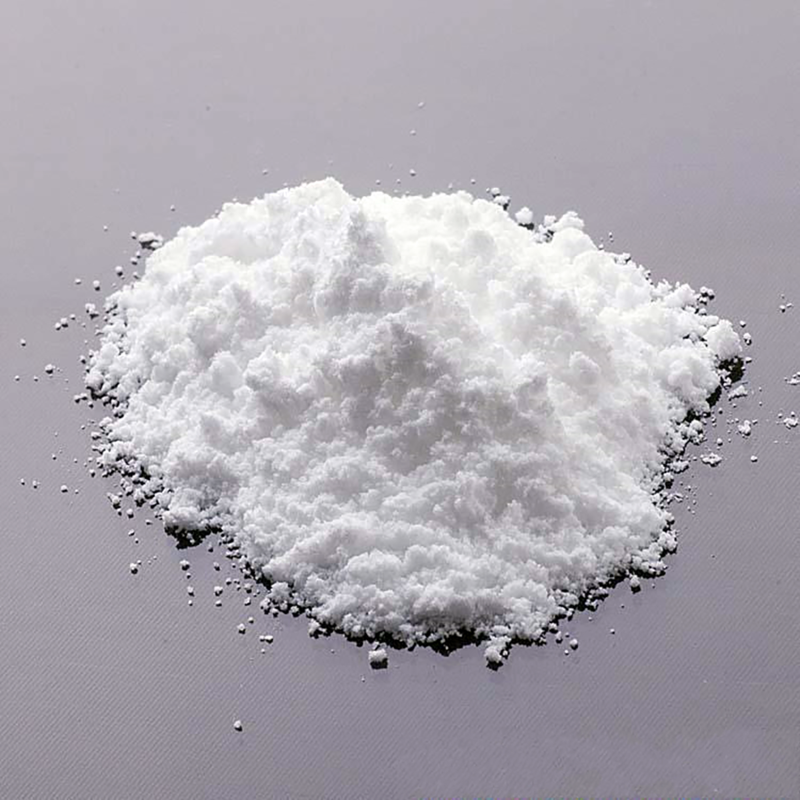
    Chemical Properties Paraformaldehyde is a polymerized form of formaldehyde (CHO) and is a stable white crystalline powder with the odor of monomeric formaldehyde. Because pure formaldehyde is unstable at ambient conditions, paraformaldehyde is used as a readily-usable form of formaldehyde at use sites. Then,formaldehyde gas is generated during heating. Paraformaldehyde is used for different applications as a source of either gaseousformaldehyde or solution formaldehyde.
    Characteristics Paraformaldehyde is the smallest solid form of liquid formaldehyde, formed by the polymerization of formaldehyde with a typical degree of polymerization of 8-100 units. As paraformaldehyde is basically a condensed form of formaldehyde, it possesses the common characteristics with a wide range of applications. It does not need to be dissolved in water in order to take part in a chemical reaction. Use of paraformaldehyde is convenient and safe. It avoids pollution arising from the disposal of the distillate obtained in the thermosetting resin production which is contaminated with organic matter. Paraformaldehyde made with very low acid content in a chemical resistant environment can prevent the formation of acidic by-products.
    Uses Paraformaldehyde is used as a fumigant, a disinfectant and in the manufacture of synthetic resins like melamine resin, phenol resin and polyacetal resin. It is also used in cell culture. It also serves as a fixative in electron microscopy. It is also used in the preparation of formalin fixatives for tissues or cells. To use the chemical as a fixative, it must be converted to the monomer formaldehyde by heating as formaldehyde is the active chemical in fixation.
    Preparation Paraformaldehyde [30525-89-4] was first produced in 1859. This polymer, at first mistakenly called dioxymethylene and trioxymethylene, consists of a mixture of poly(oxymethylene) glycols HO-(CH2O)n-H with n=8-100. The formaldehyde content varies between 90 and 99 % depending on the degree of polymerization n (the remainder is bound or free water). It is an industrially important linear polyoxymethylene.
    Paraformaldehyde is prepared industrially in continuously operated plants by concentrating aqueous formaldehyde solutions under vacuum conditions. At first, colloidal, waxy gels are obtained, which later become brittle. The use of a fractionating column through which gases were passed dates from about 1925.
    Paraformaldehyde is currently produced in several steps which are carried out at low pressure and various temperatures. Highly reactive formaldehyde is produced under vacuum conditions starting with solutions that contain 50-100 ppm of formic acid and also 1-15 ppm of metal formates where the metals have an atomic number of 23-30 (e.g., Mn, Co, and Cu). The solutions are processed in thin-layer evaporators and spray dryers.
    Definition ChEBI: Paraformaldehyde is a macromolecule composed of repeating methyleneoxy units arising from polymerisation of formaldehyde.
    General Description Paraformaldehyde appears as a white solid with a light pungent odor. A linear polymer of formaldehyde of formula HO(CH2-O)xH where x averages about 30. Soluble in water when x is less than 12; higher polymers are not immediately soluble. Slow dissolution in water proceeds by means of hydrolysis to give fragments of lower x. Flammable, although may take some effort to ignite. Flash point 158 °F. Used in fungicides, bactericides, and in the manufacture of adhesives. A hazard to the environment. Immediate steps should be taken to limit spread to the environment.
    Air & Water Reactions Flammable. Forms aqueous solution of formaldehyde, often quite slowly.
    Reactivity Profile Paraformaldehyde may react violently with strong oxidizing agents (hydrogen peroxide, performic acid, perchloric acid in the presence of aniline, potassium permanganate, nitromethane). May react with bases (sodium hydroxide, potassium hydroxide, ammonia), and with nitrogen dioxide (explosive reaction around 180°C). Reacts with hydrochloric acid to form highly toxic bis(chloromethyl) ether. Polymerization reaction with phenol may develop sudden destructive pressure [Bretherick, 5th ed., 1995, p.168]. May generate flammable and/or toxic gases in combination with azo, diazo compounds, dithiocarbamates, nitrides, and strong reducing agents. Generates toxic formaldehyde gas when heated. Can react with air to give first peroxo acids, and ultimately formic acid. These reactions are activated by light, catalyzed by salts of transition metals, and are autocatalytic (catalyzed by the products of the reaction). Incompatible with liquid oxygen.
    Health Hazard Vapor or dust irritates eyes, mucous membranes, and skin; may cause dermatitis. Ingestion of solid or of a solution in water irritates mouth, throat, and stomach and may cause death.
    Fire Hazard Behavior in Fire: Changes to formaldehyde gas, which is highly flammable.
    Safety Profile Moderately toxic by ingestion. A severe eye and skin irritant. Mutation data reported. Flammable when exposed to heat or flame; can react with oxidzing materials. To fight fire, use alcohol foam, COr, dry chemical. Incompatible with liquid oxygen. Dangerous; when heated to decomposition it emits toxic formaldehyde gas. See also FORMALDEHYDE.
    Potential Exposure Paraformaldehyde is used in polyacetal resin manufacture; as a food additive; and as an odorless fuel.
    Shipping UN2213 Paraformaldehyde, Hazard Class: 4.1; Labels: 4.1-Flammable solid.
    Incompatibilities Paraformaldehyde dust forms an explosive mixture with air. Decomposes on contact with oxidizers, strong acids; acid fumes; and bases; with elevated temperatures, forming formaldehyde. May explode when heated. May explode on impact if peroxide contamination develops. Mixtures with hydrogen peroxide or liquid oxygen are explosives sensitive to heat, shock, or contact with lead.
    Waste Disposal Dissolve or mix the material with a combustible solvent and burn in a chemical incinerator equipped with an afterburner and scrubber. All federal, state, and local environmental regulations must be observed.


        Shop Hypophosphorous acid6303-21-5-Detailed Image 3 Shop Hypophosphorous acid6303-21-5-Detailed Image 4 Shop Hypophosphorous acid6303-21-5-Detailed Image 5 Shop Hypophosphorous acid6303-21-5-Detailed Image 6 Shop Hypophosphorous acid6303-21-5-Detailed Image 7 Shop Hypophosphorous acid6303-21-5-Detailed Image 8


    Basic Info
    Product Name:

    Paraformaldehyde

    Other Name:

    Paraformaldehyde;Flo-Mor;Paraform;Aldacide;TransFix;Granuform;PFA;Granuform 96;WANPFA 92;Granuform M;Granuform 91;53026-80-5;104512-58-5;104512-63-2;104814-22-4;1417997-02-4

    CAS No.:

    30525-89-4

    InChIKeys:

    InChIKey=WSFSSNUMVMOOMR-UHFFFAOYSA-N

    Molecular Weight:

    62.068

    Exact Mass:

    62.036777

    EC Number:

    200-001-8

    HScode:

    2912600000

    Categories:

    Aldehydes

    Characteristics
    PSA:

    17.07000

    XLogP3:

    -0.88

    Appearance:

    Solids containing varying amounts of formaldehyde, probably as paraformaldehyde (polymers of formula HO(CH2O)xH where x averages about 30). A hazard to the environment. Immediate steps should be taken to limit spread to the environment.

    Density:

    1.46 g/cm3

    Melting Point:

    164 °C (decomp)

    Boiling Point:

    135-136 °C @ Press: 13 Torr

    Flash Point:

    39.9±6.3 °C

    Refractive Index:

    1.364

    Water Solubility:

    sparingly soluble

    Storage Conditions:

    Keep container tightly closed in a dry and well-ventilated place. Containers which are opened must be carefully resealed and kept upright to prevent leakage. Storage class (TRGS 510): Non-combustible, acute toxic Cat.3 / toxic hazardous materials or hazardous materials causing chronic effects. /Formaldehyde solution, 36.5-38%/

    Vapor Pressure:

    <1.45 mm Hg ( 25 °C)

    Vapor Density:

    1.04

    Toxicity:

    LD50 orally in Rabbit: 592 mg/kg

    Flammability characteristics:

    Flammable Gas

    Explosive limit:

    Explosive limits , vol% in air: 7.0-73.0

    Odor:

    Pungent, suffocating odor

    PH:

    pH: 2.8 to 4.0 /Formaldehyde soln/

    PKA:

    13.3(at 25 °C)

    Hazard Identification

    Classification of the substance or mixture

    Flammable solids, Category 2

    Acute toxicity - Category 4, Oral

    Skin irritation, Category 2

    Skin sensitization, Category 1

    Serious eye damage, Category 1

    Acute toxicity - Category 4, Inhalation

    Respiratory sensitization, Category 1

    GHS label elements, including precautionary statements

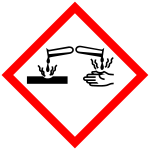
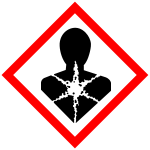
    Pictogram(s)
    Signal word

    Danger

    Hazard statement(s)

    H228 Flammable solid

    H302 Harmful if swallowed

    H315 Causes skin irritation

    H317 May cause an allergic skin reaction

    H318 Causes serious eye damage

    H332 Harmful if inhaled

    H334 May cause allergy or asthma symptoms or breathing difficulties if inhaled

    Precautionary statement(s)
    Prevention

    P210 Keep away from heat, hot surfaces, sparks, open flames and other ignition sources. No smoking.

    P240 Ground and bond container and receiving equipment.

    P241 Use explosion-proof [electrical/ventilating/lighting/...] equipment.

    P280 Wear protective gloves/protective clothing/eye protection/face protection/hearing protection/...

    P264 Wash ... thoroughly after handling.

    P270 Do not eat, drink or smoke when using this product.

    P261 Avoid breathing dust/fume/gas/mist/vapours/spray.

    P272 Contaminated work clothing should not be allowed out of the workplace.

    P271 Use only outdoors or in a well-ventilated area.

    P284 [In case of inadequate ventilation] wear respiratory protection.

    Response

    P370+P378 In case of fire: Use ... to extinguish.

    P301+P317 IF SWALLOWED: Get medical help.

    P330 Rinse mouth.

    P302+P352 IF ON SKIN: Wash with plenty of water/...

    P321 Specific treatment (see ... on this label).

    P332+P317 If skin irritation occurs: Get medical help.

    P362+P364 Take off contaminated clothing and wash it before reuse.

    P333+P317 If skin irritation or rash occurs: Get medical help.

    P305+P354+P338 IF IN EYES: Immediately rinse with water for several minutes. Remove contact lenses, if present and easy to do. Continue rinsing.

    P317 Get medical help.

    P304+P340 IF INHALED: Remove person to fresh air and keep comfortable for breathing.

    P342+P316 If experiencing respiratory symptoms: Get emergency medical help immediately.

    Storage

    none

    Disposal

    P501 Dispose of contents/container to an appropriate treatment and disposal facility in accordance with applicable laws and regulations, and product characteristics at time of disposal.

    Other hazards which do not result in classification

    no data available

    Handling and Storage

    Precautions for safe handling

    NO open flames. Above 71°C use a closed system and ventilation. Closed system, ventilation, explosion-proof electrical equipment and lighting. Prevent deposition of dust. Prevent build-up of electrostatic charges (e.g., by grounding). Handling in a well ventilated place. Wear suitable protective clothing. Avoid contact with skin and eyes. Avoid formation of dust and aerosols. Use non-sparking tools. Prevent fire caused by electrostatic discharge steam.

    Conditions for safe storage, including any incompatibilities

    Cool. Dry. Keep in a well-ventilated room. Separated from strong oxidants, strong bases and strong acids.

  • Seller Information
    Business Type:

    Trader

    Main Products:

    pharmaceutical intermediates,peptides,electronic chemicals

    Location:

    Room 102, 1st Floor, East Office Building, No. 45 Pengwan Road, Qianwan Bonded Port Area, Qingdao Zone, China (Shandong) Pilot Free Trade Zone

    Payment Terms:

    100% TT in advance

    Average lead Time:

    10

    Total Annual Revenue:

    $10 million-$25 million

    Total Employees:

    51-100

    Year of Establishment:

    2024

    A reliable supplier is like insurance.

    We are mainly specilized in supply of pharmaceutical intermediates, electronic chemicals,food additives, and other fine chemical products.
    Integrity is the foundation, quality is life. We would like to work together with you to build a greener and brighter future.

    Website: orientchem.cc
    Email: scarlett@orientchem.cc
    WhatsApp: +86 17753254221

  • Inquiry History
    129 Inquiries
    Country Product Purchase Quantity Date Posted
    Malaysia

    SHD

    1 TON Oct 31, 2024
    India

    Paraformaldehyde (PFA)

    1.00 MT Aug 18, 2023
    India

    Paraformaldehyde (PFA)

    15.00 MT Feb 7, 2024
    Pakistan

    Para Formaldehyde

    100 MT Mar 31, 2026
    India

    Paraformaldehyde (PFA)

    10.00 MT Dec 15, 2023
    India

    Paraformaldehyde (PFA)

    20.00 MT Aug 25, 2023
    India

    Paraformaldehyde (PFA)

    10.00 MT Jan 31, 2024
    India

    Paraformaldehyde (PFA)

    1.00 20' Fcl Jul 17, 2023
    India

    Paraformaldehyde (PFA)

    1.00 MT Aug 21, 2023
    India

    Paraformaldehyde (PFA)

    1.00 20' Fcl Oct 9, 2023
    India

    Paraformaldehyde (PFA)

    25.00 MT Nov 8, 2023
    Russia

    Paraform

    1 KG Nov 1, 2024
    India

    Paraformaldehyde (PFA)

    1.00 20' Fcl Sep 15, 2023
    India

    Paraformaldehyde (PFA)

    1.00 MT Aug 24, 2023
    India

    Paraformaldehyde (PFA)

    1.00 20' Fcl Sep 12, 2023
    India

    Paraformaldehyde (PFA)

    1.00 20' Fcl Aug 25, 2023
    India

    Paraformaldehyde (PFA)

    1.00 20' Fcl Sep 5, 2023
    Pakistan

    paraformaldehyde

    20 MT Apr 13, 2026
    France

    Paraformaldehyde 96% Para Formaldehyde White Powder Granular Prills

    200 MT Dec 6, 2025
    Bangladesh

    Para Formaldehyde

    200 MT Sep 9, 2025
    Post an enquiry for this product

pic ×

Scan the QR Code to Share

All products displayed on this website are only for non-medical purposes such as industrial applications or scientific research, and cannot be used for clinical diagnosis or treatment of humans or animals. They are not medicinal or edible.

According to relevant laws and regulations and the regulations of this website, units or individuals who purchase hazardous materials should obtain valid qualifications and qualification conditions.

The information shown above is provided by the enterprise itself, and the authenticity, accuracy and legitimacy of the content are the responsibility of the publishing company. ECHEMI does not bear any guarantee responsibility for this. Please be aware that risks in internet transactions objectively exist.

Feedback & Suggestions
Send Message

Thank you for your feedback. If you require further assistance, please contact us by email at info@echemi.com or call us at +86-532-55729510.