Poly Vinyl Alcohol/Pharmaceutical Grade | 99.99% Purity | CAS 9002-89-5
TDS 109 Inquiries
9002-89-5
Pharmaceutical Grade
99.99%
shanghai
Orient
Vial/Bottle/Bag/Carton
2026-08-21

pharmaceutical intermediates,peptides,electronic chemicals
-
Product Description
-
Seller Information
-
Inquiry History
-
DescriptionECHEMI Editorial ReferencePolyvinyl alcohol is a hydrolysis product of polyvinyl acetate, rather than by the polymerization of monomers; the molecular backbone contains
. The specific gravity of this product 1.25 to 1.35 and the melting point is 212 ~ 267 ℃. It is soluble in hot water and hot dimethyl sulfoxide. Animal experiments show that polyvinyl alcohol, without stimulation, causes no significant toxicity upon subcutaneous, intramuscular, intravenous injection. Polyvinyl alcohol resin products appear as white
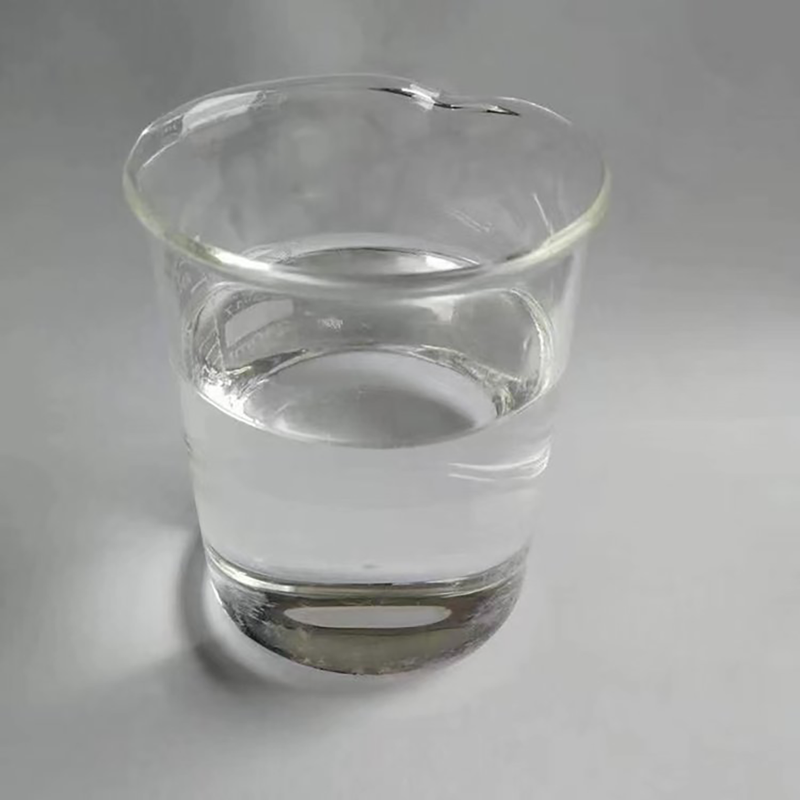
Polyvinyl alcohol appears as odorless white to cream-colored granules or powder. Pure aqueous solutions are neutral or faintly acid and subject to mold growth. pH (4% aqueous solution): 5-8. Strongly hydrophilic. (NTP, 1992)|Odourless, tasteless, translucent, white or cream-coloured granular powder|COLOURLESS-TO-WHITE SOLID IN VARIOUS FORMS.
Polyvinyl alcohol appears as odorless white to cream-colored granules or powder. Pure aqueous solutions are neutral or faintly acid and subject to mold growth. pH (4% aqueous solution): 5-8. Strongly hydrophilic. (NTP, 1992)|A polymer prepared from polyvinyl acetates by replacement of the acetate groups with hydroxyl groups. It is used as a pharmaceutic aid and ophthalmic lubricant as well as in the manufacture of surface coatings artificial sponges, cosmetics, and other products.CertificatesBasic Info-
Product Name:
Poly(vinyl alcohol)
Other Name:Ethenol,homopolymer;Vinyl alcohol,polymers;Lemol 5-88;Lemol 5-98;Lemol 12-88;Lemol 16-98;Lemol 24-98;Lemol 30-98;Lemol 51-98;Lemol 60-98;Lemol 75-98;Alvyl;Elvanol;Lemol;Lemol GF 60;Polyviol;PVA;Rhodoviol;Vinalak;Vinarol;Vinol;Vinacol MH;Vinarol DT;Vinarol ST;Gohsenol GL 02;NM 14;Vinavilol 2-98;Kuralon VP;Polyvinol;Aracet APV;Gelvatol 1-30;Elvanol 52-22;Vinyl alcohol polymer;Mowiol;Gohsenol NM 114;Elvanol 70-05;Poly(vinyl alcohol);Cipoviol W 72;Gohsenol GH 23;Gohsenol NH 20;M 13/20;Mowiol N 30-88;Mowiol N 70-98;PVA 008;PVS 4;Polydesis;Gelvatol;Gelvatol 1-60;Vinylon Film 2000;Gohsenol NH 17;NH 18;Gohsenol NH 05;Gelvatol 20-30;Mowiol N 50-98;Vinol 351;Kuraray Poval 120;NM 11;Rhodoviol R 16/20;Rhodoviol 4-125P;Covol 971;Sumitex H 10;Rhodoviol 4/125;Gohsenol NL 05;Gelvatol 3-91;Elvanol 50-42;Gohsenol AH 22;Polyviol M 13/140;Gohsenol;EP 160;Elvanol 90-50;Poval 117;Gohsenol GH;Gohsenol NH 18;Covol;Polyviol M 05/140;Polyviol W 25/140;Polyviol W 40/140;Gohsenol GL 08;Gelvatol 1-90;Gohsenol GM 94;Gohsenol NH 26;Elvanol 73125G;Elvanol 522-22;Kuraray Poval 1700;Poval 120;Poval 1700;Gohsenol NM 14;Rhodoviol 16/200;Poval C 17;Vinylon Film VF-A 2500;Vinylon Film 3000;Poval;Polyviol W 28/20;Gohsenol N 300;Poval 217S;Poval 205S;Mowiol N 50-88;Elvanol T 25;Enbra OV;Alcotex 17F-H;Elvanol 51-05G;Elvanol 52-22G;PVAL 55/12;PVAL 45/02;Alcotex 99/10;Gohsenol MG 14;Warcopolymer A 20;Lamephil OJ;9014-14-6;9050-53-7;9066-05-1;25038-51-1;39320-29-1;53241-16-0;58740-50-4;61584-38-1;73298-53-0;75923-48-7;82428-08-8;98002-48-3;106442-33-5;110736-47-5;118168-83-5;147827-36-9;151439-02-0;152987-51-4;153569-70-1;155421-52-6;162261-31-6;172452-03-8;176742-14-6;353276-42-3;372077-13-9;416899-99-5;495413-85-9;551960-18-0;860310-93-6;875587-23-8;875587-24-9;1159795-77-3;1221137-85-4;1251055-03-4;1353578-76-3;1360538-16-4;1360617-28-2;1379820-54-8;1391975-95-3;1417904-88-1;1422717-36-9;1613402-31-5
CAS No.:9002-89-5
Molecular Formula:(C2H4O)x
InChIKeys:InChIKey=IMROMDMJAWUWLK-UHFFFAOYSA-N
Molecular Weight:44.05260
Exact Mass:44.02620
EC Number:618-340-9
ICSC Number:1489
NSC Number:108129
DSSTox ID:DTXSID4031930|DTXSID8051467
Color/Form:Dry, unplasticized powders are white or cream colored|Colorless, white or cream, amorphous powder
HScode:3905300000
Categories:
Characteristics-
PSA:
20.23000
XLogP3:0.6879
Appearance:White or cream colored solid
Density:1.19-1.31 g/cm3
Melting Point:250 °C
Boiling Point:23.5ºC at 760 mmHg
Flash Point:79ºC
Refractive Index:1.381
Water Solubility:soluble in hot water
Storage Conditions:Polyvinyl alcohol is stable when stored in a tightly sealed container in a cool, dry place. Aqueous solutions are stable in corrosionresistant sealed containers. Preservatives may be added to the solution if extended storage is required. Polyvinyl alcohol undergoes slow degradation at 100°C and rapid degradation at 200°C; it is stable on exposure to light.
Vapor Pressure:Negligible
Toxicity:LD50 orally in Rabbit: > 20000 mg/kg
Explosive limit:Slight explosion hazard in form of dust when exposed to flame.
Odor:Odorless
Taste:Tasteless
PH:5,0 to 6,5 (4 % solution)
Experimental Properties:Polymer average molecular weight: 120,000|Softens at about 200 °C with decomposition|Subject to mold growth|Decomposes at 228 °C|For more Other Experimental Properties (Complete) data for POLYVINYL ALCOHOL (7 total), please visit the HSDB record page.
Air and Water Reactions:Water soluble.
Reactive Group:Alcohols and Polyols
Reactivity Profile:Mixtures of alcohols with concentrated sulfuric acid and strong hydrogen peroxide can cause explosions. Example: an explosion will occur if dimethylbenzylcarbinol is added to 90% hydrogen peroxide then acidified with concentrated sulfuric acid. Mixtures of ethyl alcohol with concentrated hydrogen peroxide form powerful explosives. Mixtures of hydrogen peroxide and 1-phenyl-2-methyl propyl alcohol tend to explode if acidified with 70% sulfuric acid [Chem. Eng. News 45(43):73. 1967; J, Org. Chem. 28:1893. 1963]. Alkyl hypochlorites are violently explosive. They are readily obtained by reacting hypochlorous acid and alcohols either in aqueous solution or mixed aqueous- carbon tetrachloride solutions. Chlorine plus alcohols would similarly yield alkyl hypochlorites. They decompose in the cold and explode on exposure to sunlight or heat. Tertiary hypochlorites are less unstable than secondary or primary hypochlorites [NFPA 491 M 1991]. Base-catalysed reactions of isocyanates with alcohols should be carried out in inert solvents. Such reactions in the absence of solvents often occur with explosive violence [Wischmeyer 1969].
Physical Dangers:Dust explosion possible if in powder or granular form, mixed with air. As a result of flow, agitation, etc., electrostatic charges can be generated.
Hazard IdentificationClassification of the substance or mixture
Carcinogenicity, Category 2
GHS label elements, including precautionary statements
Pictogram(s) 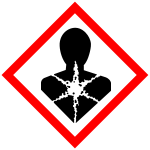
Signal word Warning
Hazard statement(s) H351 Suspected of causing cancer
Precautionary statement(s) Prevention P203 Obtain, read and follow all safety instructions before use.
P280 Wear protective gloves/protective clothing/eye protection/face protection/hearing protection/...
Response P318 IF exposed or concerned, get medical advice.
Storage P405 Store locked up.
Disposal P501 Dispose of contents/container to an appropriate treatment and disposal facility in accordance with applicable laws and regulations, and product characteristics at time of disposal.
Other hazards which do not result in classification
no data available
Handling and StoragePrecautions for safe handling
NO open flames. Closed system, dust explosion-proof electrical equipment and lighting. Prevent deposition of dust. Prevent build-up of electrostatic charges (e.g., by grounding). Handling in a well ventilated place. Wear suitable protective clothing. Avoid contact with skin and eyes. Avoid formation of dust and aerosols. Use non-sparking tools. Prevent fire caused by electrostatic discharge steam.
Conditions for safe storage, including any incompatibilities
Separated from strong oxidants and strong acids.
-
-
Seller Information
-
Business Type:
Trader
-
Main Products:
pharmaceutical intermediates,peptides,electronic chemicals
-
Location:
Room 102, 1st Floor, East Office Building, No. 45 Pengwan Road, Qianwan Bonded Port Area, Qingdao Zone, China (Shandong) Pilot Free Trade Zone
-
Payment Terms:
100% TT in advance
-
Average lead Time:
10
-
Total Annual Revenue:
$10 million-$25 million
-
Total Employees:
51-100
-
Year of Establishment:
2024
-
-
Inquiry History109 Inquiries
Country Product Purchase Quantity Date Posted  Indonesia
High Purity Wholesale PVA Polyvinyl Alcohol for Multiple Types 9002-89-5
20 MT Sep 19, 2023  India
India
PVA
50.00 KG Jun 7, 2025  South Korea
Poly vinyl alcohol
1 MT Jul 30, 2024
India
PVA
10.00 KG May 17, 2025
India
PVA
30.00 KG May 22, 2025  Malaysia
Polyvinyl Alcohol
1 MT Jan 20, 2025
India
PVA
50.00 KG May 24, 2025  United Arab Emirates
PVA
1 20' Fcl Aug 10, 2026  Spain
Spain
Poly(vinyl alcohol)
200.00 KG Jul 20, 2026  Bangladesh
Polyvinyl Alcohol
25 KG Jul 14, 2026
India
Polyvinyl alcohol
1000 KG Jun 24, 2026  Kazakstan
Poly (vinyl) Alcohol
50000 PCS May 19, 2026  Japan
Japan
Polyvinyl Alcohol
1 20' Fcl Apr 17, 2026
India
PVA 2488 (Polyvinyl Alcohol)
1.00 MT Mar 6, 2026
United Arab Emirates
Polyvinyl alcohol (PVA)
1.00 20' Fcl Feb 28, 2026
India
Polyvinyl Alcohol
1000 KG Feb 10, 2026
India
Polyvinyl Alcohol
500.00 KG Feb 4, 2026
United Arab Emirates
Polyvinyl alcohol (PVA)
1.00 20' Fcl Jan 9, 2026  Uganda
PVA
250 MT Nov 19, 2025
India
Poly(vinyl alcohol)
1 KG Nov 17, 2025 Post an enquiry for this product