




Cosmetic Ingredient
- • Abrasive (124)
- • Absorbent (84)
- • Anticaking (66)
- • Anticorrosive (25)
- • Antifoaming (19)
- • Antimicrobials (291)
- • Antioxidant Ingredient (393)
- • Antiperspirant (20)
- • Antiplaque (48)
- • Anti-seborrheic (38)
- • Anti-sebum (38)
- • Antistatic (457)
- • Astringent (162)
- • Binding Agent (171)
- • Bleaching Agent (53)
- • Buffering (190)
- • Bulking (109)
- • Chelating (122)
- • Cleansing (680)
- • Cosmetic Colorant (212)
- • Cosmetic Preservative (158)
- • Denaturant (45)
- • Deodorant (98)
- • Depilatory (27)
- • Dissolving Agent (297)
- • Emollient (795)
- • Emulsifying Agent (481)
- • Emulsion Stabilising (153)
- • Exfoliating (19)
- • Film Forming (299)
- • Flavouring (72)
- • Foam Boosting (161)
- • Foaming (101)
- • Fragrance Ingredient (732)
- • Gel Forming (19)
- • Hair Conditioning (672)
- • Hair Dyeing (363)
- • Hair Fixing (36)
- • Hair Waving or Straightening (45)
- • Humectant (281)
- • Hydrotrope (92)
- • Keratolytic (20)
- • Light Stabilizer (77)
- • Moisturising Agent (50)
- • Nail Conditioning (42)
- • Occlusive (20)
- • Opacifying (119)
- • Oral Care (123)
- • Oxidising (19)
- • Perfuming (2106)
- • Plasticiser (98)
- • Propellant (19)
- • Reducing (51)
- • Refatting (12)
- • Refreshing (27)
- • Skin Cleansing (387)
- • Skin Conditioning (1747)
- • Skin Humectant (21)
- • Skin Protecting (281)
- • Smoothing (32)
- • Soothing (72)
- • Tonics (155)
- • UV Filter (33)
- • Viscosity Controlling (530)
Chemicals as Skincare Ingredients
Related News
-
FDA Lifts Administrative Stay, Restoring Red No. 3 Ban Timeline for Food and Ingested Drugs
2026-08-07 -
Low Inventory and Reduced Supply Trigger Price Hikes for Acrylonitrile in the Off-Season in China
2026-08-08 -
Premium Global Chemical Sourcing Requests (20-22July, 2026)
2026-08-05 -
Cost Values and Demand-Side Game: PP Prices Consolidate After Rising in July
2026-08-02 -
Premium Global Chemical Sourcing Requests (30 July-2Aug, 2026)
2026-08-05 -
Premium Global Chemical Sourcing Requests (6-9Aug, 2026)
2026-08-10


Emulsion Stabilising
Emulsion Stabilising
Polyethylene glycol
(25322-68-3)2. Poly(ethylene Glycol) molecules of approximately 2000 monomers. Poly(ethylene Glycol) is used in various applications from industrial chemistry to biological chemistry. Recent research has shown PEG maintains the ability to aid the spinal cord injury recovery process, helping the nerve impulse conduction process in animals. In rats, it has be
-
 Peg200/300/400 with Best Price")
Cosmetics Raw Material Beauty / 70%
-

Industrial grade, food grade, pharmaceutical grade, and cosmetic grade. / 99%
-

Cosmetics Grade / 99%
$10/MT FOB
-

Cosmetic Raw Materials / 99%



Poly(vinylpyrrolidone)
(9003-39-8)-

Cosmetics Grade / 99%
-

Cosmetics Grade / -
-
")
Cosmetics Grade / 98%
$1-1.2/MT FOB
-

Cosmetics Grade / 99%


Poly(acrylic acid)
(9003-01-4)-

Cosmetics Grade / 99%
-

Cosmetics Grade / 99%
-

Cosmetics Grade / 99.9%
-

Cosmetics Grade / 99%


Request for quotation , get quotes from more suppliers.
Polyoxyethylene sorbitan monooleate
(9005-65-6)-

Cosmetics Grade / 99%
-

Cosmetics Grade or Food Grade / 99%
-

Cosmetics Grade / 99%
-

Food grade,Feed grade, Industrial grade, pharmaceutical grade, cosmetical grade / 100%
$2.1-2.5/KG EXW


Request for quotation , get quotes from more suppliers.
-

Industrial Grade / 99%
-

-

- / 0.00%
-

- / 99.00%



Source Emulsion Stabilising Products Supply
Poly(vinyl acetate)
(9003-20-7)-
")
Different Grade / 99.9%
$0.1/KG EXW
-
 99% solid Dideu")
Industrial Grade / 99%
-
 with Good Price CAS 9003-20-7")
-

- / 99.00%


Request for quotation , get quotes from more suppliers.
Penta-O-acetyl-α-D-glucopyranose
(604-68-2)-

Cosmetics Grade / 98%
-

-

Pharmaceutical Grade / 99%
-

Pharmaceutical Grade / 99%



Request for quotation , get quotes from more suppliers.
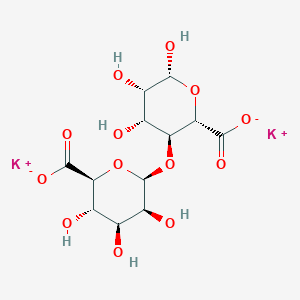
Potassium alginate
(9005-36-1)-

Industrial Grade / 99%
-

- / 99.00%
-

- / 99%
-

industrial Grade / 98%

Request for quotation , get quotes from more suppliers.
-

-

- / 99.00%
-

- / 99%
-

Industrial Grade / 99%


Request for quotation , get quotes from more suppliers.
-
 99% liquid SAA099890909 SAA")
Pharmaceutical Grade / 99%
$8300-9000/MT FOB
-
 99% transparent liquid KANBEI")
Industrial Grade / 99%
-
cyclohexane")
-
")


Request for quotation , get quotes from more suppliers.
More Information
Emulsion stabilizers are compounds used to maintain the stability of emulsions by preventing the separation of the oil and water phases. Emulsions, such as creams and lotions, consist of tiny droplets of one liquid dispersed in another. However, without proper stabilization, these droplets can coalesce and separate over time.
Emulsion stabilizers serve to ensure that the oil and water phases remain uniformly dispersed, thereby maintaining the desired consistency and appearance of the product. They achieve this by forming a protective barrier around the dispersed droplets, preventing them from merging or flocculating.
Common emulsion stabilizers include:
•Surfactants
•Emulsifiers
•Thickeners
•Polymers
Frequently Asked Questions
An emulsion stabilising agent is a substance added to emulsions—mixtures of two immiscible liquids like oil and water—to prevent phase separation. These agents work by reducing interfacial tension or forming protective barriers around droplets, ensuring long-term stability. Common types include surfactants, proteins, polysaccharides, and certain synthetic polymers, widely used in food, cosmetics, and pharmaceuticals.
Emulsion stabilisation is crucial because unstable emulsions can lead to product failure—such as ingredient separation, inconsistent texture, or reduced shelf life. In industries like food, personal care, and pharmaceuticals, stable emulsions ensure uniform delivery of active ingredients, consistent sensory properties, and compliance with quality standards. Proper stabilisation enhances both performance and consumer satisfaction.
Common natural emulsion stabilisers include lecithin (from soy or sunflower), gum arabic, xanthan gum, pectin, and casein. These ingredients are favored in clean-label formulations for their biocompatibility, safety, and regulatory approval. They provide effective stabilisation while meeting consumer demand for natural and sustainable ingredients in food, skincare, and haircare products.
Selecting the right emulsion stabiliser depends on several factors:1. The type of emulsion (oil-in-water or water-in-oil).2. pH, temperature, and ionic strength of the system.3. Desired texture, viscosity, and shelf life.4. Regulatory and labeling requirements (e.g., organic, vegan, allergen-free).5. Compatibility with other ingredients.Testing small-scale formulations and consulting technical data sheets from suppliers can help identify the optimal stabiliser.
Yes, combining synthetic and natural emulsion stabilisers—known as hybrid stabilisation—is a common strategy to enhance performance. For example, pairing a natural gum like xanthan with a mild synthetic surfactant can improve droplet coverage, viscosity control, and resistance to environmental stressors. This approach balances efficacy, cost, and consumer preferences for cleaner labels without compromising stability.