




Related News
-
SunChemical Pigments Obtains ECO PASSPORT by OekoTex® Certification
2024-01-29 -
Invest 10 million! The annual output of 5,000 tons of pigment project will start soon!
2022-12-27 -
FDA plans to expand use of Spirulina extract
2022-11-14 -
Clariant spins off pigment business to Heubach and SK Capital
2022-06-02 -
This new standard will be officially implemented soon!
2021-09-14 -
Senxin developed a new Phalaenopsis blue pigment, which was approved by the FDA for use in food
2021-09-13


Pigment Featured Products
Pigment
Pigment Red 48:2
(7023-61-2)-

- / 99.00%
-

Industrial Grade / 100%
$8.2/KG EXW
-

Industrial Grade / 99%
-


Request for quotation , get quotes from more suppliers.
-

Industrial Grade / 99%
-

Pharmaceutical Grade / 99%
-

pharmaceutical grade / 99%
-



Request for quotation , get quotes from more suppliers.
Pigment Violet 3
(1325-82-2)-

Industrial Grade / 99%
-

-

-

- / 98%




Request for quotation , get quotes from more suppliers.
Pigment Yellow 17
(4531-49-1)

Request for quotation , get quotes from more suppliers.
Pigment Orange 34
(15793-73-4)-

- / 99.00%
-

- / 100%
$12-14/KG FOB
-

Industrial Grade / 99.0%
-


Request for quotation , get quotes from more suppliers.
-

Pharmaceutical grad / 99%
$100/KG EXW
-
![buy disodium,(4E)-4-[(4-methyl-2-sulfonatophenyl)hydrazinylidene]-3-oxonaphthalene-2-carboxylate]( "disodium,(4E)-4-[(4-methyl-2-sulfonatophenyl)hydrazinylidene]-3-oxonaphthalene-2-carboxylate")
-

-
![buy disodium 3-hydroxy-4-[(4-methyl-2-sulphonatophenyl)azo]-2-naphthoate]( "disodium 3-hydroxy-4-[(4-methyl-2-sulphonatophenyl)azo]-2-naphthoate")

![buy disodium,(4E)-4-[(4-methyl-2-sulfonatophenyl)hydrazinylidene]-3-oxonaphthalene-2-carboxylate](https://file.echemi.com/fileManage/upload/cas/87/6f0ca341-3297-4190-81e1-3ed8a2513642.gif "disodium,(4E)-4-[(4-methyl-2-sulfonatophenyl)hydrazinylidene]-3-oxonaphthalene-2-carboxylate")
Request for quotation , get quotes from more suppliers.
-

- / 99.00%
-

Industrial Grade / 98%
-

- / 100%
-

Industrial Grade / 99.00%


Request for quotation , get quotes from more suppliers.
Prussian blue
(12240-15-2)-

- / 99.00%
-

Pharmaceutical Grade / 99%
-

Industrial Grade / 90%
-

Industrial Grade / 99%


Request for quotation , get quotes from more suppliers.
Pigment Yellow 65
(6528-34-3)-

- / 99.00%
-

Industrial Grade / 98%
-

Industrial Grade / 99%
-

industrial Grade / 98%



Request for quotation , get quotes from more suppliers.
-
 cas 5280-68-2")
-
")
- / 98%
-
 cas 5280-68-2")
Pharmaceutical Grade / 0%
-



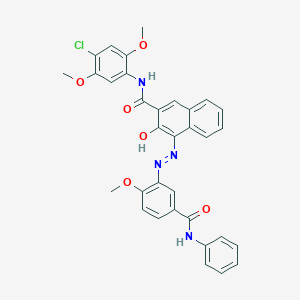
Request for quotation , get quotes from more suppliers.
Source Pigment Raw Materials by Region


More Information
Pigments are materials that can give colour to products which are extensively utilized across many sectors in the production of appealing shades. It is used in cosmetics, paints, textiles, and plastics among other products. Such small particles function by absorbing and reflecting certain wavelengths of light which results in the color we can see.
In industrial uses, pigments are selected according to characteristics flowing as lightfastness, opacity, and chemical or environmental stability. They are also useful in maintaining the colour quality of the various materials used in printing.
Here are some key applications of pigments:
- Paints and coatings
- Plastics and polymers
- Textiles and fabrics
- Inks and packaging materials
- Ceramics and glass products production
Frequently Asked Questions
A pigment is a finely ground, insoluble colored powder used to impart color to various materials such as paints, inks, plastics, and textiles. Unlike dyes, which dissolve in the medium they color, pigments remain dispersed as solid particles. This makes pigments more lightfast and chemically stable, ideal for applications requiring long-term color retention and resistance to environmental factors.
Industrial applications commonly use two main types of pigments: inorganic and organic. Inorganic pigments—such as titanium dioxide (white), iron oxides (reds, yellows, browns), and carbon black—are valued for their durability, heat stability, and opacity. Organic pigments—including phthalocyanines and quinacridones—offer brighter hues and higher tinting strength but may be less stable under extreme conditions. Choosing the right type depends on the end-use requirements like weather resistance, opacity, or regulatory compliance.
Selecting the right pigment for paint involves considering several factors:1. **Color properties**: Hue, chroma, and lightfastness.2. **Compatibility**: Ensure the pigment is compatible with your binder/resin system.3. **Opacity vs. transparency**: Titanium dioxide offers high opacity, while some organic pigments are transparent.4. **Regulatory compliance**: Especially important for coatings used in food packaging or children’s toys.5. **Cost-performance balance**: High-performance pigments may cost more but offer better durability.Always request technical data sheets and conduct small-scale trials before full-scale production.
Only specific pigments approved by regulatory bodies such as the U.S. FDA, EU Commission, or China’s NMPA can be used in cosmetics and food-contact materials. These include certain iron oxides, ultramarines, and certified lakes (pigment forms of dyes). It’s critical to verify that the pigment supplier provides documentation confirming compliance with relevant safety standards (e.g., FDA 21 CFR, EU Regulation (EC) No 1223/2009). Never assume a pigment is safe without proper certification.
Pigment quality and performance depend on several key factors:1. **Particle size and distribution**: Finer particles generally improve dispersion and color strength.2. **Purity and chemical composition**: Impurities can affect color consistency and stability.3. **Surface treatment**: Treated pigments disperse more easily in resins or solvents.4. **Heat and light stability**: Essential for applications like automotive coatings or outdoor plastics.5. **Batch-to-batch consistency**: Reputable manufacturers implement strict quality control to ensure uniformity. Always source from certified suppliers with robust QC systems.