




Catalyst and Auxiliary
- • Antioxidants (112)
- • UV Absorbers (92)
- • Polyethylene Glycol Derivatives (67)
- • Fluorescent Brightener (62)
- • Plastic Rubber Chemicals (91)
- • Polymer (470)
- • Precious Metal Catalysts (242)
- • Coupling Agent (8)
- • Zeolite (5)
- • Flame Retardants (11)
- • Petrochemical (28)
Related News
-
Gulbrandsen to Increase PE Wax Capacity and Build New Polymer Plant in India
2025-03-25 -
Shell begins operations at polymers plant in Pennsylvania
2022-11-24 -
How are polymers broken down and its uses
2022-09-28 -
What Reaction Is Used To Break Down Polymers?
2022-08-22 -
Cut Off The 'Gas' Warning! Chemical Giants Such As BASF And Covestro Speak Out Urgently!
2022-04-28 -
What Type of Reaction Links Monomers to Make Polymers and Its Uses
2022-03-16


Polymer Featured Products
Bisphenol A-carbonic acid copolymer
(25037-45-0)-

Chemical Grade / 99%
$1/KG FOB
-

- / 0.00%
-

- / 99.00%
-


Benzene, ethenyl-, homopolymer, brominated
(88497-56-7)-

Industrial Grade / 99%
-

Industrial Grade / 66%
$1.01/MT FOB
-

Industrial Grade / 99.00%
-


Request for quotation , get quotes from more suppliers.
Bis(2-chloroethyl) ether-1,3-bis[3-(dimethylamino)propyl]urea copolymer
(68555-36-2)-

- / 99.00%
-

Industrial Grade / 65%
-

Pharmaceutical Grade / 98%
-

industrial Grade / 98%


Request for quotation , get quotes from more suppliers.
-

- / 99%
-
![buy [(R)-(+)-2,2'-Bis(diphenylphosphino)-1,1'-binaphthyl]palladium(II) chloride]( "[(R)-(+)-2,2'-Bis(diphenylphosphino)-1,1'-binaphthyl]palladium(II) chloride")
Industrial Grade / 99.0%
-
![buy [(R)-(+)-2,2'-Bis(diphenylphosphino)-1,1'-binaphthyl]palladium(II) chloride]( "[(R)-(+)-2,2'-Bis(diphenylphosphino)-1,1'-binaphthyl]palladium(II) chloride")
-
![buy [(R)-(+)-2,2'-Bis(diphenylphosphino)-1,1'-binaphthyl]palladium(II) chloride]( "[(R)-(+)-2,2'-Bis(diphenylphosphino)-1,1'-binaphthyl]palladium(II) chloride")
Different Grade / 99.9%
![buy [(R)-(+)-2,2'-Bis(diphenylphosphino)-1,1'-binaphthyl]palladium(II) chloride](https://file.echemi.com/fileManage/upload/cas/822/147a36d0-decd-11eb-89d6-0255ac100033.png "[(R)-(+)-2,2'-Bis(diphenylphosphino)-1,1'-binaphthyl]palladium(II) chloride")
Request for quotation , get quotes from more suppliers.
Bisphenol A polysulfone
(25135-51-7)-

Industrial Grade / 99%
-

-

-




Request for quotation , get quotes from more suppliers.
Source Polymer Products Supply
Butyl acrylate-methacrylic acid-methyl methacrylate copolymer
(25035-69-2)-

- / 99%
-

-

Industrial Grade / 99%
$3250-3700/MT FOB
-

Industrial Grade / -


Request for quotation , get quotes from more suppliers.
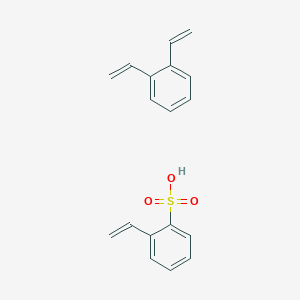
Benzenesulfonic acid, ethenyl-, polymer with diethenylbenzene
(39389-20-3)-

Different Grade / 99.9%
$0.1/KG EXW
-

- / 99.00%
-
 15 CAS 39389-20-3")
Pharmaceutical Grade / 99%
-

Industrial Grade / -


Request for quotation , get quotes from more suppliers.
-
 glycidyl end-capped CAS NO 25036-25-3")
Industrial Grade, Feed Grade, Food Grade, Pharma Grade / 99%
-
 glycidyl end-capped")
-
 glycidyl end-capped")
-

Industrial Grade ,Pharma Grade / 99%

Request for quotation , get quotes from more suppliers.
Bis(indenyl)zirconium dichloride
(12148-49-1)-
zirconium dichloride 99% transparent liquid KANBEI")
Industrial Grade / 99%
-
ZIRCONIUM(IV)")
-
ZIRCONIUM(IV)")
-
ZIRCONIUM(IV)")
Industrial Grade / 99%

Request for quotation , get quotes from more suppliers.
Benzene, ethenyl-, polymer with 1,3-butadiene, hydrogenated
(66070-58-4)-

-
-BLOCK-POLYSTYRENE")
Industrial Grade / 99%
-
-BLOCK-POLYSTYRENE")
-
-BLOCK-POLYSTYRENE")


Request for quotation , get quotes from more suppliers.
More Information
Polymers are large macromolecules formed from the combination of monomers which are small molecules. These materials are characterized by their high tensile strength, flexibility and chemical resistance and find wide application. Polymer clay is one of the types of synthetic polymers which have found its use in arts and crafts because of its flexibility and strength. Polymers are applied in several commodities and industries and may range from the simplest consumer products to the most complex industrial applications.
Polymers have several benefits and one of the biggest is that they are versatile. To this end, manufacturers can modify the chemical composition of polymers to meet certain property standards such as increasing tensile strength or increasing thermal stability. This flexibility in modification makes polymers ideal to be used in the manufacturing of anything from lightweight packaging materials to high-performance construction components.
Applications of polymers:
Auto parts for weight loss as well as fuel economy.
Prosthetics and implants which are medical devices.
Electrical components because of their capability to insulate.
Lightweight but strong and sturdy packaging material.
Polymer clay for decorative purposes and other purposes such as crafts.
Construction materials for strength and elasticity.
Frequently Asked Questions
A polymer is a large molecule composed of repeating structural units (monomers) linked by covalent bonds. Polymers are widely used across industries such as packaging, automotive, construction, healthcare, and electronics due to their versatility, durability, and lightweight properties. Common examples include polyethylene (PE), polypropylene (PP), and polystyrene (PS). Understanding polymer types and properties helps in selecting the right material for specific industrial needs.
Thermoplastics can be melted and reshaped multiple times when heated, making them recyclable—examples include PVC and PET. In contrast, thermosetting polymers undergo irreversible chemical changes when cured, becoming rigid and heat-resistant; once set, they cannot be remelted. Examples include epoxy and phenolic resins. Choosing between them depends on application requirements like heat resistance, mechanical strength, and recyclability.
Selecting a reliable polymer supplier involves evaluating several factors:1. Certifications such as ISO 9001 or compliance with REACH and RoHS regulations.2. Consistency in material quality and batch-to-batch reproducibility.3. Technical support capabilities, including formulation guidance and processing advice.4. Supply chain reliability and lead times.5. Sustainability practices, such as offering bio-based or recyclable polymers.A thorough assessment ensures long-term performance and cost-efficiency in your production process.
Engineering polymers like nylon (PA), polycarbonate (PC), and acrylonitrile butadiene styrene (ABS) are extensively used in automotive manufacturing for components requiring high strength, thermal stability, and impact resistance. Typical applications include dashboards, bumpers, engine covers, electrical connectors, and fluid reservoirs. Their lightweight nature also contributes to fuel efficiency and reduced emissions, aligning with modern vehicle design goals.
Biodegradable polymers—such as polylactic acid (PLA), polyhydroxyalkanoates (PHA), and starch-based blends—offer an eco-friendly alternative to traditional petroleum-based plastics, especially in single-use applications like packaging and disposable cutlery. However, their viability depends on proper composting infrastructure, performance requirements (e.g., barrier properties, heat resistance), and cost considerations. While not suitable for all uses, they play a growing role in sustainable material strategies when matched correctly to the application.