




Catalyst and Auxiliary
- • Antioxidants (112)
- • UV Absorbers (93)
- • Polyethylene Glycol Derivatives (67)
- • Fluorescent Brightener (62)
- • Plastic Rubber Chemicals (91)
- • Polymer (472)
- • Precious Metal Catalysts (242)
- • Coupling Agent (8)
- • Zeolite (5)
- • Flame Retardants (11)
- • Petrochemical (28)
Related News
-
Sumitomo Metal Mine plans to produce lithium in South America
2023-04-19 -
Scientists create entirely new material with plastic and metal properties that ‘can’t be explained’
2022-10-28 -
JX Metal and Volkswagen cooperate to promote power battery recycling
2022-06-21 -
Overseas non-ferrous metal strength will drive domestic metal upside
2022-03-28 -
Finland assesses heavy metals risk from foods
2020-05-19 -
Ongoing metals tariffs cloud newly signed US, Canada, Mexico free trade pact
2018-12-03


Precious Metal Catalysts
Precious Metal Catalysts
-
ruthenium (II) dichloride 99% transparent liquid KANBEI")
Industrial Grade / 99%
-
ruthenium dichlorideMedical Grade CAS14323-06-9")
Pharmaceutical Grade / 99.5%
-
ruthenium dichloride")
Industrial Grade / 99.0%
-
ruthenium(II) dichloride")
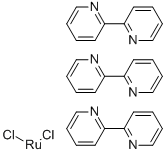
Request for quotation , get quotes from more suppliers.
-

Industrial Grade / 99%
-
(2-amino-1,1-biphenyl-2-yl)palladium(II)")
- / 99.00%
-

others / 99%
$1-2/G FOB
-

Industrial Grade / 99%


Request for quotation , get quotes from more suppliers.
-

Chemical Grade / 99%
-
 chloride trihydrate")
- / 99.00%
-
 trihydrate, CAS:16961-25-4")
Reagent Grade / 99%
$200-210/KG FOB
-

- / 99%



Request for quotation , get quotes from more suppliers.
-
dichlororuthenium(II) hexahydrate")
- / 99.00%
-
dichlororuthenium(II) hexahydrate 99% see COA kanbei")
- / 99%
-
RUTHENIUM(I) CHLORIDE HEXAHYDRATE")
pharmaceutical grade / 99%
-
RUTHENIUM(II) CHLORIDE HEXAHYDRATE")
Industrial Grade / 99%

Request for quotation , get quotes from more suppliers.
Tantalum pentachloride
(7721-01-9)-
 chloride 99.95% White powder")
Industrial Grade / 99.95%
-
 chloride 99% see COA kanbei")
- / 99%
-
 chloride 7721-01-9")
Industrial Grade / 99%
-
 chloride")


Request for quotation , get quotes from more suppliers.
Source Precious Metal Catalysts Products Supply
Transplatin
(14913-33-8)-
")
- / 99.00%
-
 99% transparent liquid KANBEI")
Industrial Grade / 99%
-
 Medical Grade CAS14913-33-8")
Pharmaceutical Grade / 99.5%
-
")
Industrial Grade / 99.0%


Request for quotation , get quotes from more suppliers.
-

- / 99.00%
-

all / 98%
$1-2/G FOB
-

Industrial Grade / 99%
-

Chemical Grade / 99%



Request for quotation , get quotes from more suppliers.
-

- / 99.00%
-

Pharmaceutical Grade / 99%
-

Industrial Grade / 98%
-
N,N'-Dimethyl-cyclohexane-1,2-diamine")
Industrial Grade / 99%


Request for quotation , get quotes from more suppliers.
Trimethyl(methylcyclopentadienyl)platinum
(94442-22-5)-
methylcyclopentadienylplatinum(IV)")
- / 99.00%
-
methylcyclopentadienylplatinum(IV) 99% transparent liquid KANBEI")
Industrial Grade / 99%
-
methylcyclopentadienylplatinum(IV)")
Industrial Grade / 99%
-
platinum(IV)")


Request for quotation , get quotes from more suppliers.
Tris(dimethylamino)antimony
(7289-92-1)-
,dimethylazanide 7289-92-1")
-
antimony(III), Sb(NMe2) 3 99% transparent liquid KANBEI")
Industrial Grade / 99%
-
ANTIMONY")
Industrial Grade / 99%
-
,dimethylazanide")


Request for quotation , get quotes from more suppliers.
Source Precious Metal Catalysts Raw Materials by Region

Frequently Asked Questions
Precious Metal Catalysts are substances—typically based on metals like platinum, palladium, rhodium, or ruthenium—that accelerate chemical reactions without being consumed in the process. They are widely used in industries such as petrochemicals, automotive (e.g., catalytic converters), and pharmaceuticals due to their high efficiency, selectivity, and stability under demanding conditions. These catalysts lower activation energy, enabling faster and cleaner reactions with reduced byproducts.
Precious Metal Catalysts are essential in several key applications:1. Automotive exhaust systems, where they convert harmful gases like CO, NOx, and hydrocarbons into less toxic emissions.2. Chemical synthesis, especially in hydrogenation, oxidation, and cross-coupling reactions in fine chemicals and APIs.3. Fuel cells, where platinum-based catalysts facilitate oxygen reduction.4. Environmental remediation processes, including VOC abatement and industrial emission control.Their versatility makes them indispensable in sustainable and high-performance industrial processes.
When selecting a supplier for Precious Metal Catalysts, consider these critical factors:1. Certifications and compliance with international standards (e.g., ISO, REACH, RoHS).2. Technical expertise and ability to provide customized catalyst formulations.3. Traceability and purity documentation for the precious metals used.4. Recycling or recovery programs, which are important due to the high cost and scarcity of these metals.5. Proven track record in your specific industry (e.g., pharma, automotive, or chemical manufacturing).A trustworthy supplier ensures consistent performance, regulatory compliance, and long-term cost efficiency.
Precious Metal Catalysts command higher prices primarily due to the rarity and market value of metals like platinum, palladium, and rhodium. Additionally, their superior catalytic activity, longevity, and selectivity often justify the cost by reducing waste, energy consumption, and the need for frequent replacement. In many high-value applications—such as pharmaceutical synthesis or emission control—the performance benefits outweigh the initial investment, making them economically viable over time.
Yes, Precious Metal Catalysts can and should be recycled due to the high economic and environmental value of the metals involved. Specialized recovery processes—such as pyrometallurgy, hydrometallurgy, or leaching—can extract and purify the active metals from spent catalysts. Many reputable suppliers offer take-back or recycling services, ensuring resource sustainability and cost recovery. Proper recycling also supports compliance with environmental regulations and circular economy initiatives.