




Petrochemicals:Market Will Remain Tight Despite New Capacity
Petrochemical makers in the U.S. are in the midst of commissioning the largest fleet of new ethylene crackers in more than a generation. However, the new supply shouldn’t sink profitability anytime soon.
With little capacity coming onstream elsewhere in the world, significant construction delays, and new plants for derivatives such as polyethylene already running, the world will need every metric ton of ethylene the new crackers will crank out. It won’t be until the middle of 2018 that they begin to ease a tight market.
The global ethylene market is snug, with effective operating rates—the utilization rate of plants that are running—at 92%, according to Steve Lewandowski, vice president of olefins for IHS Markit. “There is no spare capacity anywhere,” he says.
Hurricane Harvey, which made landfall in Texas on Aug. 25, 2017, cut through the heart of the U.S. chemical industry. By Sept. 5, more than half of U.S. ethylene capacity and 36% of ethylene derivative capacity was off-line, according to IHS Markit.
But the region bounced back quickly. Damage to chemical facilities was limited, and all but a few plants were up and running again by the end of the month.
Overall, the industry lost some 750,000 metric tons of ethylene production, nearly a cracker’s worth of output for a year. “That doesn’t sound like much,” Lewandowski says. “But when the whole system is pushing to the maximum operating rate, any disruption is a problem.”
Longer-lasting effects of Harvey are construction delays of about six months for two new crackers, each with 1.5 million metric tons of annual capacity, that ExxonMobil and Chevron Phillips Chemical meant to start up by the end of 2017.
These two companies already turned on new polyethylene plants earlier last year. With these and similar additions, Lewandowski says, the U.S. will have much more capacity for derivatives than for ethylene, straining ethylene supplies until the crackers are completed and up to full production around the middle of 2018.
In addition to the ExxonMobil and Chevron Phillips crackers, Indorama is set to restart a long-idled cracker in Lake Charles, La., and Formosa Plastics is due to complete a new cracker in Point Comfort, Texas, Lewandowski says. Shin-Etsu Chemical and Sasol will likely complete their ethylene projects in 2019.
Bob Patel, CEO of polymer maker LyondellBasell Industries, argues that the market for polyethylene won’t soften much either. He predicts operating rates for that product may remain above 90%.
Speaking to analysts in October, Patel explained that increases in polyethylene production outstripped demand growth by about 3% in 2017 and will by another 1% in 2018. “If you look across those two years, you end up with perhaps operating rates declining by 3% or 4% coming off very, very high operating rates and what we would consider still to be balanced markets,” he said.
Looking for chemical products? Let suppliers reach out to you!

You May Interested In


2026-06-12
-

Fine Chemicals Industry Overview Dec.2025
Insight into Structural Shifts, Capturing Long-Term Value in Fine Chemicals. Available for Permanent Download.Published in: Jan. 2026
Trade Alert
Delivering the latest product trends and industry news straight to your inbox.
(We'll never share your email address with a third-party.)

Related News
-
Asian petrochemicals markets mixed
-
In June, China's chemical market was still dominated by a gradual recovery
-
China petrochemical makers to cut output; consumption to weaken
-
Thirteen Years of Partnership Ends: SK Group Bids Farewell to Sinopec-SK Wuhan Petrochemical
-
Forced to "cut"! South Korean Petrochemical Giants Forced to Cut Production by 25%
-
Eastman and Huafon Chemical to Establish Cellulose Acetate Yarn Production Plant in China
-
Sika Impacted by Weaker Dollar in H1, Lowers Full-Year Sales Guidance
-
Givaudan Invests $215 Million in Ohio for Liquid Production Facility
-
Your Plant Has the Data. Your AI Cannot Reach It. Here Is Why That Is the Core Problem in Chemical Manufacturing.
-
Avril Group to Acquire Champlor Renewables from Valtris
Recommend Reading
-
Kemira Acquires AquaBlue
-
Huntsman Partners with Wobatek to Expand TPU Distribution
-

Backed by Hanwha and DL, Still No Rescue? South Korea's Third-Largest Ethylene Giant on the Brink of Collapse
-

Geno and Sojitz Collaborate to Accelerate the Commercialization of Nylon 6
-
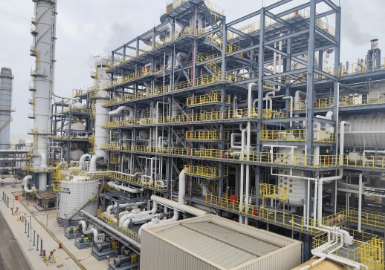
Clariant SynDane Catalyst Performs Excellently at Wanhua Maleic Anhydride Plant
-
Supply and Demand Weigh on Costs, Pushing Butadiene Market Downward
-
This Week's Caustic Soda Prices Remain Firm (3.16-3.20)
-
Butadiene Rubber Market Trend Weakly Consolidates
-

Formic Acid Shows a Stalemate Trend of "Stable Prices and Flat Volumes"
-
This Week's Styrene Market Fluctuates and Rises (3.16-3.20)