The treatment population of 'mabaloxavir' has expanded, and how much has the global anti-influenza drug progressed?
Recently, Roche announced that the European Union has approved the anti-influenza drug mabaloxavir (Xofluza®) for children 1 year of age and older for the treatment of uncomplicated influenza and for post-exposure prophylaxis of influenza.
Mabaloxavir was first discovered by Shionogi in Japan and later developed and commercialized worldwide in collaboration with Roche. Launched in Japan in 2018 and approved by the FDA in the same year, it is the first anti-influenza drug with a new mechanism of action in nearly 20 years.
Mabaloxavir is a prodrug that is hydrolyzed by arylacetamide deacetylase (AADAC) after entering the body to produce the active ingredient baloxavir with anti-influenza virus effects. Baloxavir inhibits influenza virus RdRp activity by binding to PA proteins with endonuclease activity (i.e., Cap-dependent endonuclease enzymes) and blocks the synthesis of viral mRNA, thereby inhibiting viral proliferation and exerting antiviral effects.
Currently, mabaloxavir is approved in more than 70 countries for the treatment of influenza A and B. In Europe, mabaloxavir is now approved for the treatment of uncomplicated influenza and for post-exposure prophylaxis in children, adolescents and adults aged 1 year and older. In China, mabaloxavir was approved for listing in China in April 2021 and was included in medical insurance in the same year.
THE EUROPEAN COMMISSION'S DECISION IS BASED ON THE RESULTS OF THE PHASE III MINISTONE-2 AND BLOCKSTONE STUDIES. This batch means that mabaloxavir can be used to treat and prevent non-concurrent influenza in children, adolescents and adults aged 1 year and older, and is the first single-dose oral influenza drug approved in Europe for children.
Figure 1 Roche announced that the European Commission (EC) approved mabaloxavir (Xofluza®) to expand the scope of treatment
Image source: Roche official website
MiniSTONE-2 is a phase III, multicenter, randomized, double-blind study evaluating the safety, pharmacokinetics, and efficacy of a single dose of mabaloxavir versus oseltamivir in healthy children under 1 to 12 years of age who have influenza and have not developed influenza symptoms for more than 48 hours (body temperature at or above 38°C, with one or more respiratory symptoms).
The MiniSTONE-2 study met its primary endpoint of safety, and the results showed that mabaloxavir and oseltamivir took comparable time to relieve flu signs and symptoms. The median time to relief of symptoms and signs in people infected with influenza who received mabaloxavir or oseltamivir was 138 hours (95% CI: 117,163) and 150 hours (95% CI: 115,166), respectively.
Compared with oseltamivir, mabaloxavir shortens the release of influenza from the body by more than two days (viral replication; The median time was 24.2 hours and 75.8 hours, respectively). Mabaloxavir was well tolerated and no new safety signals were found.
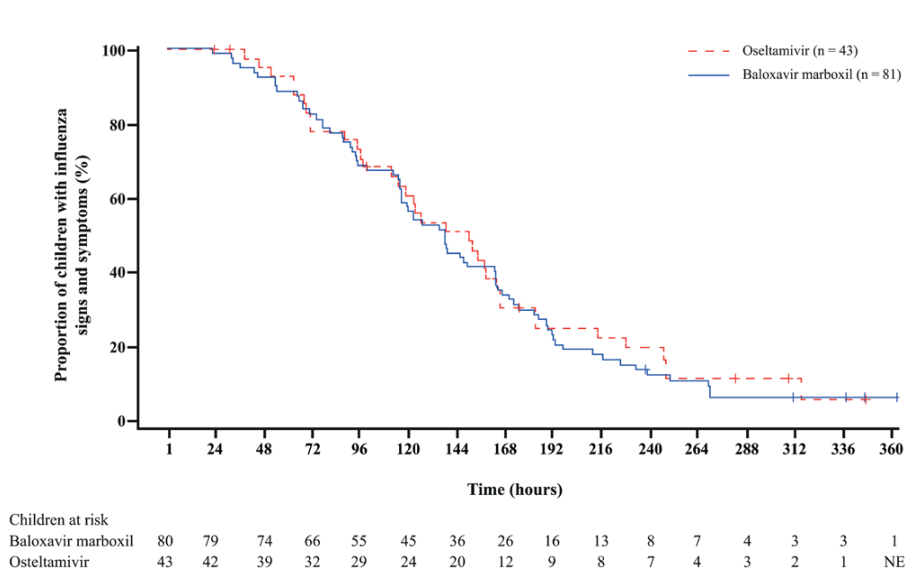
Fig. 2 Time to relief of influenza symptoms in target populations with mabaloxavir and oseltamivir
Image source: Reference 1
BLOCKSTONE is a phase III, double-blind, multicenter, randomized, placebo-controlled, post-exposure prophylaxis study that evaluated a single-dose mama baloxavir versus placebo in family members (adults and children) who lived with influenza patients confirmed by rapid influenza diagnostic tests ("index patients").
The findings showed that mabaloxavir showed a prophylactic effect after a single oral dose, with an 86% lower risk of influenza after contact with infected family members compared to placebo (1.9% in participants treated with mabalosavir versus 13.6% in the placebo group).
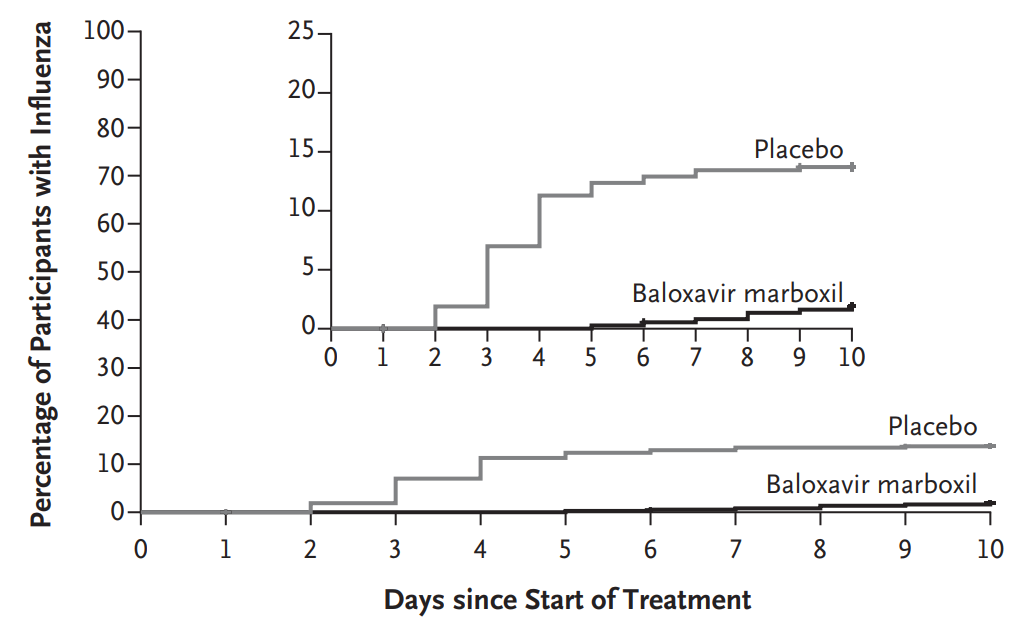
Figure 3 Cumulative percentage of participants with clinical influenza in the modified intention-to-treat population.
Image source: Reference 2
Global advances in influenza drug development
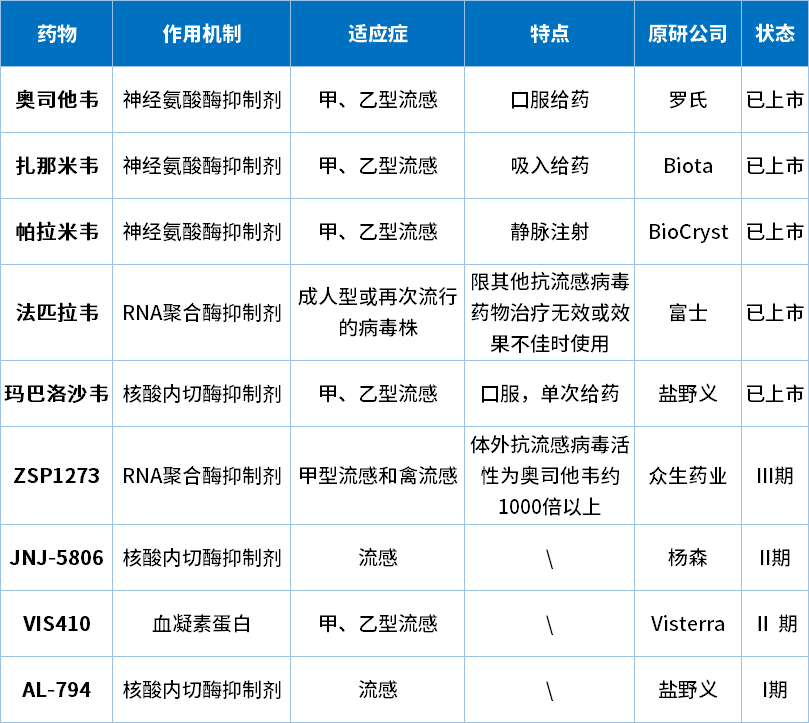
Currently, the most commonly used influenza drug is the neuraminidase inhibitor oseltamivir, along with zanamivir and peramivir. The RNA polymerase inhibitor favipiravir is mainly used for new or re-emerging influenza and is limited to those who do not respond to other anti-influenza drug treatments.
Other agents include Cap-dependent endonuclease selective inhibitor mabaloxavir and hemagglutinase inhibitor Arbidol. In addition, early anti-influenza drugs such as M2 ion channel inhibitors amantadine are currently not recommended for influenza treatment due to drug resistance.
In terms of domestic anti-influenza drug research and development, ZSP1273 developed by Zhongsheng Pharmaceutical is the first small molecule RNA polymerase inhibitor for the treatment of influenza A to complete phase II clinical trials in China.
In vitro tests have shown that its anti-influenza virus activity is about 1000 times more than oseltamivir. The preliminary results of the phase II trial showed that the ZSP1273 600 mg QD group significantly shortened the time of relief of influenza symptoms and the time of remission of fever compared with the placebo group, and achieved statistically significant differences in the secondary indicators related to virology.
At present, ZSP1273 is in the clinical phase III stage and enrollment is rapid.
Table 1 Research and development of anti-influenza drugs
What is the market for anti-flu drugs?
Currently, the global pediatric influenza treatment market is booming due to the increasing demand for antiviral drugs due to pandemics around the world.
In 2018, the global sales of anti-influenza drugs were 1.364 billion US dollars, and in 2019, the global sales of anti-influenza drugs were 1.731 billion US dollars, a year-on-year increase of 26.91%. Among them, oseltamivir sales in 2019 were 1.068 billion US dollars, accounting for 61.7% of the market share; It was followed by mabaloxavir and ranimivir, with sales of $3.21 and $188 million, accounting for 18.54% and 10.86% shares, respectively, while peramivir, zanamivir, arbidol and amantadine had lower sales at $0.24, 0.08, $0.58 and $64 million, respectively, accounting for a combined market share of 8.9%.
According to Evaluate Pharma's forecast, there is still more room for growth in sales of anti-influenza drugs in the next few years. Sales of anti-influenza drugs are expected to grow to $2.56 billion in 2024, approximately 1.5 times 2019 sales.
It is expected that the products with the highest market share will still be oseltamivir and mabaloxavir, but the proportion of oseltamivir will decline, while the market share of mabalosavir will increase, and the gap between the two will be further narrowed.
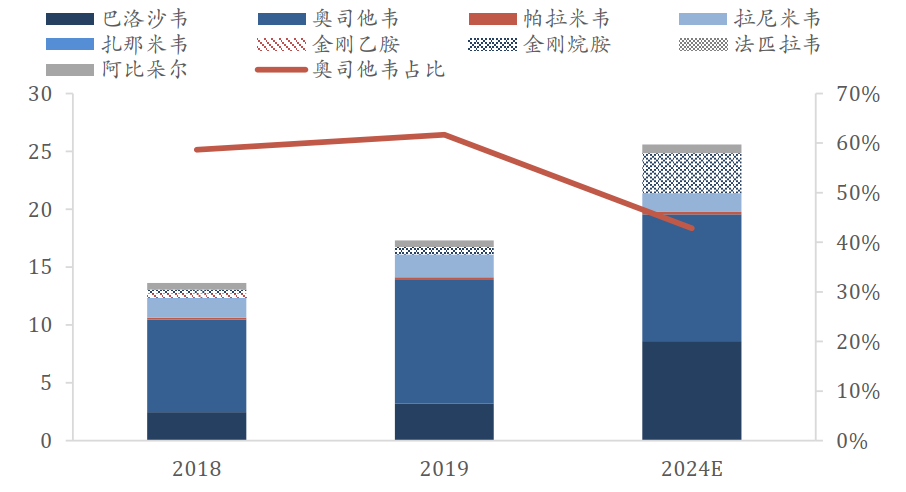
Figure 4 Global sales of anti-influenza drugs (US$ billion)
Image source: Huaan Securities Research Institute report
Mabaloxavir was similar to oseltamivir in terms of symptom relief, and in the CAPSTONE-1 study, 9.7% of patients who received mabaloxavir developed resistance during treatment.
As a result, post-launch sales of mabalosavir did not meet expectations, with sales in Europe and the US market of only 10 million Swiss francs in 2019, far lower than Tamiflu, whose patent expired (both were sold by Roche).
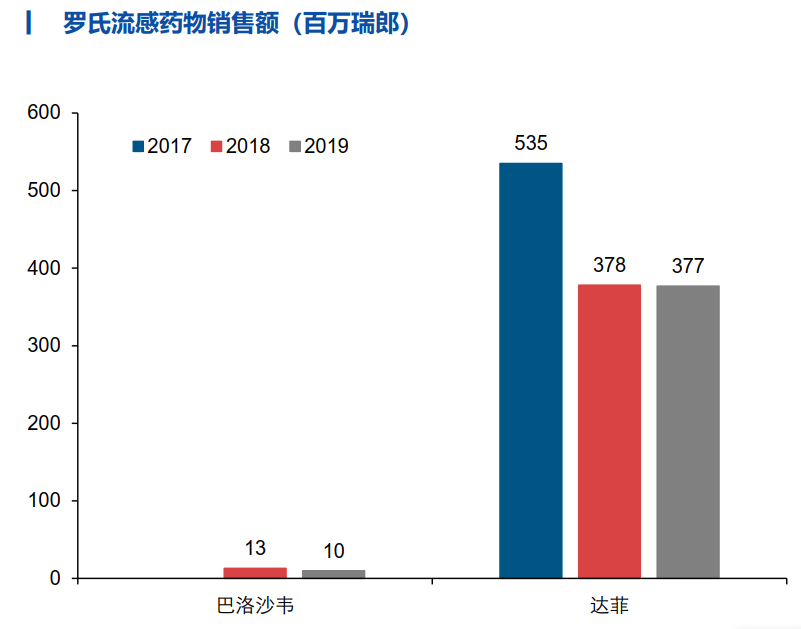
Figure 5 Sales of mabaloxavir and Tamiflu (2017~2019)
Image source: Huachuang Securities Report
Domestically, the amount of anti-influenza drugs has shown an increasing trend in recent years. In 2019, the total amount of anti-influenza drugs used in samples in key cities was 756.546 million yuan, an increase of 247% compared with 217.938 million yuan in 2016, and a compound annual growth rate of 36%. At the same time, it illustrates the susceptibility of influenza and the rapid expansion of the market. Among these drugs, oseltamivir still dominates the market for anti-influenza drugs.

You May Interested In


High Quality β-Nicotinamide adenine dinucleotide CAS 53-84-9 NADwith ready stock and best price
$3E+1/UNIT FOB


2026-10-24
Trade Alert
Delivering the latest product trends and industry news straight to your inbox.
(We'll never share your email address with a third-party.)

Related News
-
24th Pharma Asia International Exhibition & Conferences to Open in Karachi, Pakistan
-
Pharma Asia 2026: Bringing the Global Pharmaceutical Industry to Pakistan
-
Egyptian Pharmaceutical Market Research
-
CPHI China 2023 | At the Heart of Pharma
-
A Guide Into What the Pharmaceutical Use of Hexamine Is
-
In line with the 8201, Hengrui Pharmaceutical plans the HER2 ADC in this way
-
$50 billion in products were 'returned' to rationalize those blockbuster BD deals
-
Tronsound long-acting IL-36R antibody obtained FDA clinical IND
-
Dapagliflozin is approved in the EU for the treatment of symptomatic chronic heart failure
-
The FDA accepted Zuranolone's NDA application and granted it priority review rights for the treatment of MDD and PDD
Recommend Reading
-
![LG Chem Teams Up with Jianghua Microelectronics to Advance Semiconductor Ultra-High-Purity IPA]()
LG Chem Teams Up with Jianghua Microelectronics to Advance Semiconductor Ultra-High-Purity IPA
-
![Ammonia Leaks in Iraq and Jordan Put Fertilizer Production and Port Safety on Alert]()
Ammonia Leaks in Iraq and Jordan Put Fertilizer Production and Port Safety on Alert
-
![ExxonMobil’s 264,000-bpd Joliet Refinery Shuts After Site-Wide Power Failure]()
ExxonMobil’s 264,000-bpd Joliet Refinery Shuts After Site-Wide Power Failure
-
![From Fungus to Food: EFSA Greenlights Rhizomucor pusillus Biomass as Safe Novel Ingredient]()
From Fungus to Food: EFSA Greenlights Rhizomucor pusillus Biomass as Safe Novel Ingredient
-
![Sun-Kissed Insect Oil? EFSA Approves UV-Treated Mealworm Fat as Safe—and Vitamin D-Rich—Novel Food]()
Sun-Kissed Insect Oil? EFSA Approves UV-Treated Mealworm Fat as Safe—and Vitamin D-Rich—Novel Food
-
![MTBE Market Trend Weakly Consolidates]()
MTBE Market Trend Weakly Consolidates
-
![Mid-November Phosphate Market Stabilizes Amidst Gains (11.10–11.20)]()
Mid-November Phosphate Market Stabilizes Amidst Gains (11.10–11.20)
-
![This Week's Chinese Titanium Dioxide Market Remains Stagnant (11.17-11.22)]()
This Week's Chinese Titanium Dioxide Market Remains Stagnant (11.17-11.22)
-
![China's urea market shows an upward trend (11.17-11.21)]()
China's urea market shows an upward trend (11.17-11.21)
-
![Business Society September 14, 2026 MTBE Trend Analysis: Strong Consolidation]()
Business Society September 14, 2026 MTBE Trend Analysis: Strong Consolidation