Focusing on hearing and balanced medicine, why did Shurui Medical break into the 10 billion market of digital therapeutics?
One consensus: digital therapeutics have become a hot mess in recent years; Another small question: in addition to psychiatric diseases such as schizophrenia and attention deficit disorder, endocrine system diseases such as diabetes and obesity, and circulatory diseases such as hypertension and heart failure, what indications can the prevention, management and treatment of digital therapeutics become the next outlet of digital therapeutics?
It is true that since the 2010s when digital therapeutics originated in the United States and attracted keen attention in the industry in 2017, the development of digital therapeutics has blossomed around the world - not only has the market size reached $3.5 billion (according to the Eggshell Institute's Global Digital Therapeutics Industry Report (2022), the global digital therapeutics market size was $3.5 billion in 2020 and is expected to reach $19.1 billion in 2028), but also a number of people such as Welldoc, Well-known digital therapeutics companies such as Voruntis and PropellerHealth.
Moreover, while the development of the global digital therapy industry has entered the fast lane, the indications targeted by digital therapy have also shown a certain degree of aggregation.
According to the Eggshell Research Institute's "China Digital Therapy Industry White Paper (2021 Edition)", there are 12 categories of existing digital therapy products with more than 30 specific indications according to indications. Among them, there are 10 indications for psychiatric diseases, followed by neurological diseases, a total of 7 diseases, and again respiratory diseases, endocrine system diseases and circulatory system diseases, respectively, 3 diseases. That is, the indications of digital therapeutics products are relatively concentrated at present.
But it is undeniable that in these relatively concentrated digital therapy indications, a number of companies with certain market influence have emerged. This begs the question: Where is the next indication for digital therapeutics?
It may not be called a vent, but there are indeed related companies "divergent thinking" to explore the application of digital therapy in other indications, such as Duobaoshi's visual function training treatment software for strabismus amblyopia, and Shurui Medical has developed rehabilitation training software for vestibular function rehabilitation, creating a DTx platform for hearing and balance medicine.
Hearing and balance medicine may sound strange at first, how far can you go by choosing this track to start a business? How can the "digital therapeutic" of the fire bring this track to a long fire? In an interview with Huang Caixiang, CEO of Artery Network, Shurui Medical, he did not respond positively to this question, but put a set of data in front of Artery Network.
Settled in more than 100 third-class hospitals, recovered more than 20,000 patients, established projects, published more than 10 papers, and sold more than 10 million in 2022... This is the report card handed over by Shurui Medical so far. We don't seem to have the right to evaluate the results, but it is worth affirming that Shurui Medical is currently the first digital therapy platform focusing on hearing and balance medicine in China, or more precisely, Shurui Medical is the first digital therapy platform focusing on vestibular function rehabilitation in China.
Huge demand for vertigo treatment VS weak diagnosis and treatment rehabilitation resources and treatment methods
Vertigo is a kind of motor or positional illusion caused by the body's spatial positioning disorder, and patients often feel dizziness in the world, and even appear nausea, vomiting, cold sweat and other symptoms of autonomic nervous disorders. After the acute phase of vertigo, the patient's residual vestibular dysfunction will also evolve into chronic dizziness and balance dysfunction, which will seriously affect the patient's quality of life.
Vestibular rehabilitation refers to a series of targeted individualized rehabilitation training programs to improve the patient's vestibular, visual and proprioceptive coordination and control of balance, mobilize the compensatory function of the central nervous system, thereby reducing or eliminating the patient's vertigo symptoms.
Benign paroxysmal positional vertigo (BPPV), unilateral or bilateral vestibular dysfunction, Meniere's disease, senile vestibular dysfunction, central vestibular dysfunction, and postural imbalance can be treated with vestibular rehabilitation. That is, vestibular rehabilitation has a wide range of indications.
Moreover, according to Huang Caixiang, the base of vertigo patients is huge, and the number of people who go to the hospital for vertigo is about 40 million every year, and the incidence of vertigo is about 25%-30% in the elderly population over 60 years old.
According to a survey data from the US Centers for Disease Control and Prevention, the annual incidence of falls in the elderly over 65 years old is about 33%, and more than half of them will fall again, and the incidence of falls in the elderly over 80 years old has reached 50%. China has also officially ushered in an aging society, and with the deepening of the aging society in the future, the population base of patients with vertigo and balance disorders will still grow organically.
However, in the face of huge market demand, the diagnosis and treatment and rehabilitation resources of vertigo are somewhat "weak".
First of all, the current clinical vertigo diagnosis and treatment resources are extremely insufficient. The causes of vertigo are very complex, involving many departments such as otolaryngology, neurology, orthopedics, psychology, etc., and few hospitals have opened independent vertigo departments. The unclear department leads to the dispersion of patients to various departments, and there is also a lack of doctors who have systematically learned vertigo diagnosis and treatment in each dispersed department, and there is a lack of complete vertigo diagnosis and treatment equipment, resulting in many patients not being able to standardize vertigo diagnosis and treatment and miss diagnosis and misdiagnosis.
Second, there is a serious mismatch between supply and demand for rehabilitation from vertigo. "There are few doctors in primary and secondary hospitals who have vertigo patients but have systematically studied vertigo diagnosis and treatment and vestibular rehabilitation, and basically do not carry out vestibular rehabilitation, and tertiary hospitals have experts but have few beds for vertigo patients, and there are not enough vestibular rehabilitation therapists, so it is difficult to carry out vestibular rehabilitation training." Huang Caixiang said that drugs are usually used for symptomatic treatment of acute attacks of vertigo, and there are currently no specific drugs for vertigo. Vestibular rehabilitation has been internationally recognized as one of the main ways to treat vertigo, especially long-term recurrent vertigo.
However, as mentioned earlier, limited by the lack of professional medical resources, in the past, vestibular rehabilitation training was mainly through the patient's self-training according to the text and picture medical instructions (later developed into a CD), not only the process was boring, the patient's compliance was poor, and the training effect could not be evaluated. For doctors, because they cannot evaluate the recovery effect of patients, it is impossible to follow up the diagnosis and treatment of patients and adjust training programs in time.
In other words, ideal vestibular rehabilitation requires interesting content to improve patient adherence, and the ability to collect training data to evaluate the effectiveness of training to help doctors "manage" the rehabilitation process of vestibular function.
"Improve patient adherence", "evaluate effectiveness", "manage disease progression" may sound familiar, isn't this exactly what digital therapeutics are designed to achieve? Therefore, vestibular rehabilitation training is also an applicable scenario for digital therapy.
So, how does Shurui Medical specifically apply digital therapy to vestibular function rehabilitation training and even the entire field of hearing and balance?
Develop products based on evidence-based medicine and develop markets with mature sales channels
Shurui Medical's vestibular function rehabilitation training products began in 2018, when the concept of digital therapy had not yet fully emerged in China, and the approval policy was not yet clear. Previously, Shurui Medical was an enterprise focusing on the development of innovative medical devices, and it has maintained its sense of smell and corresponding capabilities for the development of innovative medical devices.
It should be pointed out that the development of Shurui Medical's vestibular function rehabilitation training software strictly abides by domestic and foreign treatment guidelines and expert consensus, and even the VR vestibular rehabilitation technology used by Shurui Medical has been written into the expert consensus of Chinese vestibular rehabilitation.
Not only that, the research and development of vestibular rehabilitation products of Shurui Medical has received cooperation and guidance from many well-known vertigo experts in China, including Professor Ou Yongkang, director of the vertigo department of Sun Yat-sen Memorial Hospital of Sun Yat-sen University, Jin Zhanguo, director of the Aerospace Vertigo Diagnosis and Treatment Research Center of the Air Force Characteristic Medical Center, Shan Xizheng, chairman of the Vertigo Medicine Branch of the Chinese Research Hospital Association, and Professor Zhao Sexquan, director of the Neurology Center of Beijing Tiantan Hospital affiliated to Capital Medical University. The clinical effect has also been verified by some papers.
At present, Shurui Medical is carrying out related multi-center clinical trials with Wuhan Union Medical College Hospital, Wuhan Tongji Hospital, the First Hospital of Shanxi Medical University, Peking University People's Hospital, Shanghai Changzheng Hospital, etc.
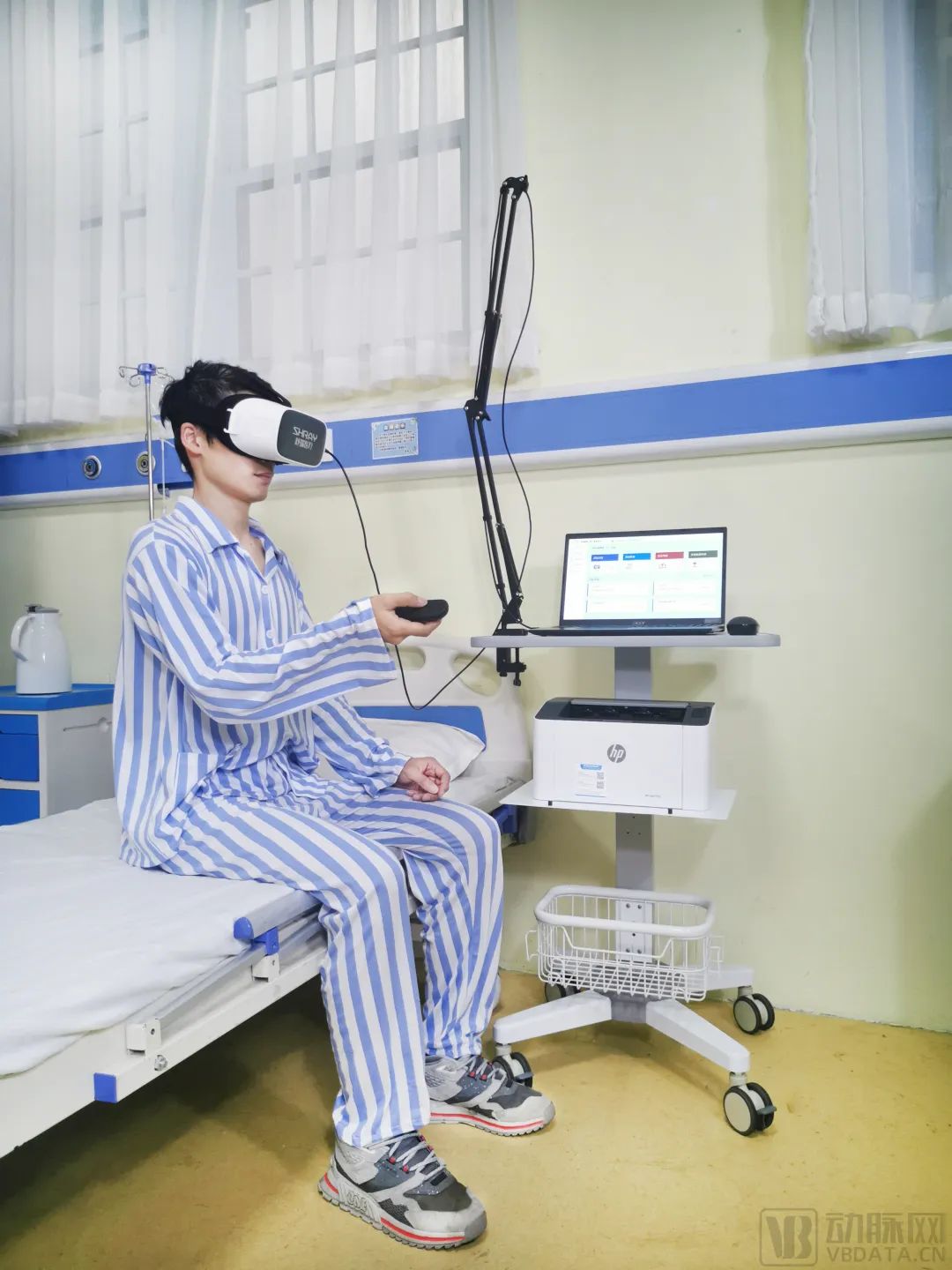
The primary reason that attracts many doctors to ally with it is naturally the product strength of vestibular rehabilitation training of Shurui Medical. Specifically, through VR technology, interesting content, sensor technology, etc., Shurui Medical can allow patients to conduct immersive training in VR scenarios, improve patient compliance and feedback training effects in real time.
In this way, for patients, the relaxed and interesting content helps them to insist on training, real-time feedback also helps to self-check whether the rehabilitation movements are standardized and helps them restore vestibular function, and based on the portability of the device and the successful construction of the Shurui Medical vestibular rehabilitation DTx platform, patients can also complete training in the home scene, without having to go to the hospital multiple times, saving economic costs and time costs.
For doctors, the emergence of vestibular rehabilitation training digital therapy products means that the dependence on doctors is reduced to a certain extent, and doctors do not need to supervise and guide patients during training, which means that the work efficiency of doctors is improved to a certain extent; Based on data collection technology, doctors can also grasp the training of patients in time and give intervention guidance when necessary.
What's more valuable is that Shurui Medical's vestibular rehabilitation training digital therapy products have dozens of built-in training modules to meet the personalized training needs of different patients, and doctors only need to combine different training modules for the patient after clearly diagnosing the type of vertigo to form a personalized training program. Therefore, it is very friendly to doctors who do not know enough about vertigo vestibular rehabilitation.
However, the era of "wine aroma is not afraid of deep alleys" has long passed, and no matter how good products want to achieve commercial success, they cannot do without the help of market strategy. In this regard, thanks to Shurui Medical's years of cultivation in the field of medical devices, it has formed a mature medical sales channel, and its agent network covers the whole country and its city- and county-level distributors will exceed 100 in 2022.
At this point, it should also be emphasized that in the field of vestibular rehabilitation digital therapy, Shurui Medical wants to launch a product that combines software and hardware, and based on this, create a vestibular rehabilitation digital therapy platform to complete the closed-loop layout of the whole process from diagnosis and treatment to rehabilitation. At present, the layout of the diagnosis and treatment links and the application of the registration certificate of vestibular rehabilitation digital therapy products have been started.
In the future, Shurui Medical, which is committed to becoming a leader in digital therapeutics in the field of hearing and balance medicine, will also be involved in the research and development of digital therapy products for tinnitus and deafness, so as to improve its layout of digital therapeutics in the field of hearing and balance medicine.

You May Interested In


High Quality β-Nicotinamide adenine dinucleotide CAS 53-84-9 NADwith ready stock and best price
$3/UNIT FOB


2026-10-04
Trade Alert
Delivering the latest product trends and industry news straight to your inbox.
(We'll never share your email address with a third-party.)

Related News
-
Egyptian Pharmaceutical Market Research
-
CPHI China 2023 | At the Heart of Pharma
-
A Guide Into What the Pharmaceutical Use of Hexamine Is
-
In line with the 8201, Hengrui Pharmaceutical plans the HER2 ADC in this way
-
$50 billion in products were 'returned' to rationalize those blockbuster BD deals
-
Tronsound long-acting IL-36R antibody obtained FDA clinical IND
-
Dapagliflozin is approved in the EU for the treatment of symptomatic chronic heart failure
-
The FDA accepted Zuranolone's NDA application and granted it priority review rights for the treatment of MDD and PDD
-
Asia Hong Pharma announced that it has co-developed an innovative tumor therapy based on AI+RNA technology route with ReviR
-
Ribo Biologics announced that the world's first FIH application for a siRNA drug targeting FXI has been successfully approved by HREC in Australia
Recommend Reading
-
![From Painting Walls to Total Collapse: The RMB 152 Million Debt That Tore Off the Last Veil of Asia Chuangneng’s Paint Empire]()
From Painting Walls to Total Collapse: The RMB 152 Million Debt That Tore Off the Last Veil of Asia Chuangneng’s Paint Empire
-
![September 1: Chemical Price Hikes Take Effect Across the Board]()
September 1: Chemical Price Hikes Take Effect Across the Board
-
![Qatar LNG Supply Disruption Persists for Nearly Six Months, Exports Plunge 96%]()
Qatar LNG Supply Disruption Persists for Nearly Six Months, Exports Plunge 96%
-
![Arkema's New Singapore Plant Commences Operations, Tripling Polyamide Capacity]()
Arkema's New Singapore Plant Commences Operations, Tripling Polyamide Capacity
-
![Chung Lien Oil’s 8,000-Ton Soybean Oil BaP Scandal: NT$165 Million Fine, 401 Product Recalls, Source Still Unknown]()
Chung Lien Oil’s 8,000-Ton Soybean Oil BaP Scandal: NT$165 Million Fine, 401 Product Recalls, Source Still Unknown
-
![This Week's Hydrogen Fluoride Market Operates Steadily in China (2.2-2.6)]()
This Week's Hydrogen Fluoride Market Operates Steadily in China (2.2-2.6)
-
![MTBE Market Prices Rise Significantly in China]()
MTBE Market Prices Rise Significantly in China
-
![Business Society’s Market Outlook for MIBK on September 1, 2026: Tending to Be Bearish]()
Business Society’s Market Outlook for MIBK on September 1, 2026: Tending to Be Bearish
-
![Reactions and Uses of Ammonium Dichromate]()
Reactions and Uses of Ammonium Dichromate
-
![This Week, the Domestic Polymeric MDI Market Showed a Weak Decline (2.2-2.6)]()
This Week, the Domestic Polymeric MDI Market Showed a Weak Decline (2.2-2.6)