In-depth thinking on the future development of domestic health food
The issuance of the "E-Commerce Law" in 2018, the legalization of cross-border e-commerce, allows consumers to purchase health care products from China and even countries around the world through the platform. Friends who are concerned about the health food industry may find that the currently active imported nutritional supplements of major cross-border e-commerce companies are selling extremely hotly. On special days such as 618 and 11.11, discounts are quite powerful. Imported brands use a variety of promotion methods such as TV advertisements, celebrity endorsements, crossovers, and microblog interactions to expose brand information in multiple fields and on a large scale. The ultimate goal is to obtain more popular traffic and increase consumer awareness of the brand. Awareness and realization of delivery.
On the contrary, domestic health foods are facing challenges such as difficulties in registration, promotion, restriction of promotion, and various irregular unannounced inspections. The "super national treatment" for imported health food companies or brands in the Chinese market makes practitioners feel that they are in an unfair role. Locally produced and imported health foods have long been in the market for a long time.
But after all, this is the “realistic” industry in which each of us is located. After all, the industry still needs to develop. After all, companies must seek breakthroughs in the “light through” gap amidst numerous challenges. How should local companies develop? Why are cross-border companies so sought after? This in itself is also worthy of our deep thinking and reflection.
According to the analysis of micro hotspot data, most imported health foods are sold through cross-border e-commerce, and Tmall Global is currently the most concerned sales platform.
The growth trend of health food e-commerce platforms
With the promulgation of many policies such as the "E-Commerce Law", it has promoted the development of e-commerce and cross-border e-commerce industries. In particular, most overseas brands rely on e-commerce channels for domestic sales, so e-commerce channels have developed rapidly in recent years. The health food industry is particularly prominent. E-commerce accounted for 4.3% in 2011 to 31.6% in 2018, and this number will continue to grow. And pharmacy sales fell from 43% to 18.5%, and subsequent declines will continue.
E-commerce provides an important channel for healthy consumption. Starting from January 1, 2019, the state has set up 37 comprehensive test areas for cross-border e-commerce in Beijing and Tianjin, which means that the first import of goods in these places does not require registration and filing.
Why are imported health foods so hot? What are the differences between domestic and imported products?
First, the fundamental reason is that the laws and regulations of different countries are different, and the categories are very different.
The health food regulations of various countries are very different. Compared with Japan and the United States, China is more stringent in terms of policies, regulations and approvals. Japan’s nutritional function food is equivalent to China’s dimensional mineral supplements. No filing is required. The United States classifies most plant herbs as dietary supplements and does not require any registration. It only needs to be submitted to the FDA 30 days before the product is launched. A copy of "self-compliance" is sufficient. Therefore, imported products are more abundant, and imported health foods using plant extracts such as Ashwagandha, elderberry, conifer, carob, etc. can be seen everywhere. The domestic health food raw materials are relatively limited. The few raw materials used in health foods require official registration, and the cost and time are unbearable for ordinary enterprises.
After the legalization of cross-border e-commerce, foreign health supplements have sprung up like mushrooms, and various products have emerged in endlessly. For example, the current popular NMN products, thousands of products can be found on the e-commerce platform. In fact, NMN has neither GRAS safety certification, nor clinical and animal experiment endorsements. No one knows its mechanism of action, dosage, stability, etc. Such a product without any reliable basis is sold hot on cross-border e-commerce. At present, it is almost impossible for Chinese enterprises to produce NMN products in a hot manner, which is equivalent to a fantasy. According to China’s laws and regulations and approval requirements, NMN can be introduced into China only after it has sufficient research basis and safety certification throughout the world, and then it will be determined as a new food material or a health food material, which will take another 3-5 years. Every step during this period is a long process. Therefore, Chinese companies can only look at foreign companies earning money.
The second is the difference in addition amount and ingredients.
Take Coenzyme Q10 capsules as an example. Imported brands indicate the net content of Q10 ingredients per capsule, generally 100-300㎎/capsule. Domestic brands indicate the total amount of all fillers per capsule, not the added amount of main functional ingredients. Usually, the net content is 24 grams, and the specification is 400㎎/capsule*60 capsules. After calculation, the net content of Q10 is usually 20-40㎎/grain, of course ≤50㎎/day is the maximum amount restricted by Chinese regulations.
For example, a certain domestic brand of coenzyme Q10 vitamin E soft capsules is labeled as 7.9 grams of Q10 per 100 grams, and the net content of a bottle is 24 grams, and each capsule is 400 mg. Many people think that 400㎎/capsule is the effective ingredient content, but it is not. The Q10 content of each capsule cannot be directly seen from the label alone. The true content needs to be calculated. For example, 0.4/100*7.9 is equal to 31.6㎎. That is, the amount of Q10 contained in each capsule is about 32㎎.
At present, most domestic Q10s are registered with a single raw material, and a small amount of vitamin supplements will be added. The imported products can be compounded with various nutrients and extracts.
The third is the difference in efficacy description.
Imported supplements are labeled with many functions. For example, Q10 has a variety of functional descriptions such as cardiovascular health, overall health, anti-oxidation, anti-free radicals, improving cholesterol levels, providing energy, and supporting sports muscle energy supply. The functional claims of domestic health foods are restricted by regulations. Q10 can only be labeled to enhance immunity, which is suitable for people with low immunity.
The fourth is the price difference.
Take a cross-border import of 240 Coenzyme Q10 capsules as an example. The price is 298 yuan/bottle. If you spend 299 yuan, you will get 100 yuan off. Most consumers will choose full discount. For the time being, think 199 yuan/bottle, the specification is (240 tablets 200㎎/tablet), the average price of each tablet is: 199/240 about 0.83 yuan/tablet/200㎎
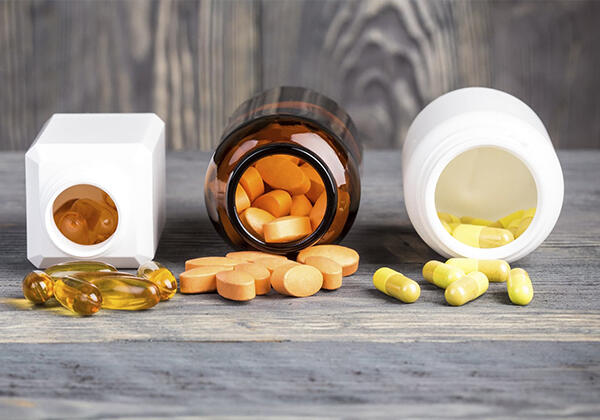
Choose a relatively cheap Q10 made in China. This member price is RMB 79. The net content is 24 grams (400㎎*60 tablets). The product contains 8.52 grams of coenzyme Q10 per 100 grams. After calculation, it is confirmed that the Q10 content is 34㎎/tablet. The average price per capsule: 79/60 is about 1.32 yuan/capsule/34㎎.
With the imported dosage of 200㎎ per capsule per day, domestic Q10 needs to eat 6 capsules, that is, 7.92 yuan. In this way, the price of domestically produced supplements is almost 10 times that of imported supplements.
Similarly, it is not difficult to find that the dosage is 1 Coenzyme Q10 capsule once a day. The daily intake of imports is 6 times that of domestic products, so consumers' personal feelings and functional performance are of course more obvious, and consumers' repurchase rates are naturally higher.
Future development thinking of domestic health food
1. Cross-border acquisitions of healthcare companies
With the development of China's economy and the increasing awareness of health care, China has huge consumer demand, but due to China's policies and products, it can't be imported. Therefore, many powerful companies are looking overseas.
According to statistics, in the past five years, Chinese companies have exceeded US$3 billion in international mergers and acquisitions, and more than 20 large-scale cross-border mergers and acquisitions have been filed, with a total value of more than US$3 billion.
Domestic brands can combine their own advantages in conventional areas such as vitamins, minerals, and proteins, and supplement foreign brands with functional dietary supplements such as grape seed, astaxanthin, Q10, curcumin, Ashwagandha, etc., to build a complete product echelon. Seize the market in various segments.
2. Multi-field development of healthcare companies
The competition in the health food industry has begun to shift from channel-driven to brand-driven. Companies are inevitably required to build their own product echelon, cultivate brand awareness, reach subdivided consumer groups through differentiated brands or products, and obtain industry development dividends. From a long-term perspective, health is a permanent and hot topic. Whether it is food, nutrition or health care, long-term investment must be made and multi-field layout can go further.
3. In the future, health food companies must improve their self-regulatory capabilities
Everyone believes that an important reason behind the chaos in the health food market is regulatory issues. Regulatory policies are often fisted after problems arise, and there is a phenomenon of “one foot high, one foot high”. Companies do not take this as a warning, but learn “lessons” and think of more ways to evade supervision. .
In terms of product manufacturing, quality control system, product tracking, daily supervision, etc., the production personnel of the enterprise must be more familiar with and understand the details than the government supervisors. If the enterprise complies with the approved documents, the quality and quantity are guaranteed and the production is regulated. Products, the responsibility and pressure of government supervision will be much smaller. Once there are individual enterprises that artificially and consciously produce substandard products for profit, it is difficult to guarantee that the next "power and health" will not be produced. With the occurrence of multiple health and safety accidents, it is difficult to increase consumer trust.
The government must think about how to allow enterprises to independently assume social responsibility. Only by breaking this "cat and mouse" supervision model and allowing companies to take responsibility for their own product safety can laws and policies be released, and the industry can develop and progress.
Now everyone generally thinks that the health food industry is not easy to do, especially in the domestic health food market. On the contrary, many big data show that with the rapid economic development, the consumption of health food is increasing year by year. Moreover, consumers in this era have unprecedented desire for good products and demand for product diversity, and the market is showing a prosperous scene, but many domestic companies may have nothing to do, or they may be sighed by foreigners. How to break this situation in the new consumer era? How to maintain product strength and embrace new growth?
Zhitiqiao’s annual industry event "Natural Health Products Industry Conference" will be held at the Guangdong (Tanzhou) International Convention and Exhibition Center from October 21st to 23rd, 2020. In 2020, we will use With the theme of "New Growth", focusing on hot topics such as the impact of the new crown epidemic, the rise of new consumer groups, and the wave of plant-based products, the three-day conference will focus on in-depth discussions on the new formats and new development stages of the natural health product industry.

You May Interested In


High Quality β-Nicotinamide adenine dinucleotide CAS 53-84-9 NADwith ready stock and best price
$3/UNIT FOB


2026-10-19
Trade Alert
Delivering the latest product trends and industry news straight to your inbox.
(We'll never share your email address with a third-party.)

Related News
-
China's e-commerce logistics activities expand in June
-
Exporters to focus on e-commerce, processing trade
-
SARFT to regulate and rectify 'double 11' e-commerce live broadcast
-
Cosmetics companies should pay attention to Indonesian e-commerce market
-
Wal-Mart E-Commerce may lose $1 billion this year
-
Snowflake Show is based in Lazada, Southeast Asia E-Commerce Company
-
Yujiahui expects net profit to fall by 70% in the first quarter of 2019
-
From profit to loss, it is difficult for e-commerce companies to regain hegemony
-
Saudi Aramco’s 400,000 bpd Jazan Refinery Shuts After Attack
-
China’s Chemical Time Bomb Just Got a Legal Fuse: The New Law That Could Save Thousands of Lives
Recommend Reading
-
![Snack Tests Put Red 40, Titanium Dioxide and BHT Back Under Pressure]()
Snack Tests Put Red 40, Titanium Dioxide and BHT Back Under Pressure
-
![TSMC, Samsung, and SK Hynix Scramble for Electronic-Grade Hydrofluoric Acid as High-End Supply Tightens; Some Suppliers Raise Prices by 30% This Year]()
TSMC, Samsung, and SK Hynix Scramble for Electronic-Grade Hydrofluoric Acid as High-End Supply Tightens; Some Suppliers Raise Prices by 30% This Year
-
![Middle East Polyolefins Hit by Catalyst Constraints: PE/PP Recovery May Be Slower]()
Middle East Polyolefins Hit by Catalyst Constraints: PE/PP Recovery May Be Slower
-
![Guangxi Huayi Starts 300,000-Tonne VAM Unit: EVA Chain Keeps Expanding]()
Guangxi Huayi Starts 300,000-Tonne VAM Unit: EVA Chain Keeps Expanding
-
![Behind Japan's Tungsten Hexafluoride Crisis: Can China's Electronic Specialty Gases Seize a New Opportunity?]()
Behind Japan's Tungsten Hexafluoride Crisis: Can China's Electronic Specialty Gases Seize a New Opportunity?
-
![Coking Coal Supply Continues to Tighten, Coking Coal Market Prices Show Strength]()
Coking Coal Supply Continues to Tighten, Coking Coal Market Prices Show Strength
-
![FDA Revokes Orange B Authorization and Proposes Removing Citrus Red No. 2]()
FDA Revokes Orange B Authorization and Proposes Removing Citrus Red No. 2
-
![Business Society October 8, 2026 BDO Trend Analysis: Volatile Consolidation]()
Business Society October 8, 2026 BDO Trend Analysis: Volatile Consolidation
-
![Premium Global Chemical Sourcing Requests (22-26 Dec 2025)]()
Premium Global Chemical Sourcing Requests (22-26 Dec 2025)
-
![Construction Starts Decline; Isooctanol Prices Fluctuate and Fall This Week]()
Construction Starts Decline; Isooctanol Prices Fluctuate and Fall This Week