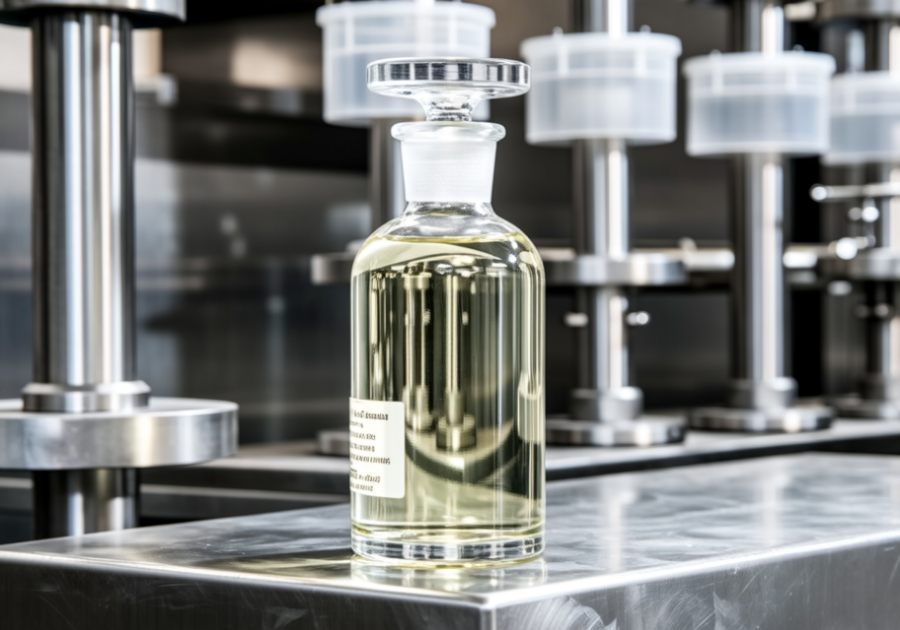
Extraction of polyphenols with ultrasound-assisted low eutectic solvent
Recently, an article entitled "Green extraction of antioxidants polyphenols from green tea (Camellia sinensis)" was published in the international famous journal "Antioxidants". "In the experimental article, a new method for the extraction of antioxidant polyphenols from green tea using ultrasound-assisted extraction and low eutectic solvent (DES) extraction was introduced in detail. Compared with conventional extraction methods, this method not only has the advantages of short extraction time, mild extraction conditions, simple and stable extraction process, and high extraction rate of tea polyphenols, but also avoids the use of organic solvents, is green and safe, and can effectively alleviate the problem of environmental pollution, and has strong popularization and application value. Dr. Rengyou Gan, Chief Scientist of Plant and Human Health Mechanisms Innovation Team, Institute of Urban Agriculture, Chinese Academy of Agricultural Sciences, and Prof. Xinlin Wei, Department of Food Science and Engineering, College of Agriculture and Biology, Shanghai Jiao Tong University, are the co-corresponding authors, and Qiong Luo, a master's student and Jiarong Zhang, a postdoctoral fellow, are the co-first authors.
Low co-melt solvents are a class of excellent green solvents that have been rapidly emerging in recent years. Compared with traditional organic solvents, low coalescence solvents have the advantages of low price, simple preparation, chemical stability, easy storage, non-toxicity and biodegradability, making them an ideal alternative to traditional organic solvents and green extraction solvents of natural products. As a green auxiliary extraction method, ultrasonic extraction has been widely used in the extraction of natural plant products. Ultrasound-assisted low eutectic solvent extraction can not only reduce the amount of solvent used, but also realize the destruction of plant cell wall and accelerate the solubilization of active ingredients in plant cells through strong cavitation effect and stirring, so as to accelerate the extraction process and improve the extraction rate. This article introduces a method for the extraction of antioxidant polyphenols by combining ultrasonic technology with DESs (UAE-DES).
Tea polyphenols are the main secondary metabolites in tea, with physiological activities such as antibacterial, anticancer, anti-radiation and lipid-lowering, which have been widely used in health food, natural cosmetic raw materials or natural antioxidants in medicine, daily chemicals, food and other fields. In this work, an ultrasound-assisted low eutectic solvent extraction method for antioxidant polyphenols from green tea was developed, followed by a single-factor test, and the extraction process was optimized using the response surface method. The optimum total polyphenol content (TPC) was 243 ± 7 mg GAE/g under the conditions of 36:1 liquid-solid ratio, 461.5 W ultrasound power and 21 min ultrasound time, and the contents of the four main catechins (EGC, EC, EGCG and ECG) extracted under the optimal conditions were also significantly higher than those of the traditional method. In addition, electron microscopy analysis showed that UAE-DES causes internal structure loosening and surface corrosion of green tea leaves, which is more conducive to solvent penetration. The results of this work suggest that the combination of green solvents (DESs) and ultrasound-assisted extraction (UAE) is a novel and efficient method for extracting antioxidant polyphenols from green tea. In addition, the extension of UAE-DES for the extraction of other plant polyphenols needs to be further investigated.

You May Interested In


High Quality β-Nicotinamide adenine dinucleotide CAS 53-84-9 NADwith ready stock and best price
$3/UNIT FOB


2026-10-12
Trade Alert
Delivering the latest product trends and industry news straight to your inbox.
(We'll never share your email address with a third-party.)

Related News
-
Years of Low Prices of Powdered Kudzu Root, How Much Room for Future Upside?
-
Progress in antioxidant activity fraction of pepper
-
Celanese to Close Acetate Tow Plant in Lanaken, Belgium by 2026
-
Asia’s Plastics Chain Faces a Shock: Tight Naphtha Supply Drives Up Polymer Costs
-
German Chemical Sentiment Hits a Three-Year Low: Supply Disruption Amplifies Pressure on European Manufacturing
-
New York’s Additive Ban Signals a Tougher Era for Food Formulation
-
EU Chemical Antidumping Complaints Hit a Record High: Trade Remedies Reshape Export Competition
-
Wanhua Shuts 1.1 Million-Tonne Yantai MDI Unit for 45-Day Maintenance
-
China, U.S. and Australia Escalate Antidumping Scrutiny: Chemical Exports Face Rising Compliance Pressure
-
USDA Puts Fresh Money Into Local Food Markets
Recommend Reading
-
![Vietnam Drives ASEAN Towards a Modern Economy]()
Vietnam Drives ASEAN Towards a Modern Economy
-
![Ukraine Strikes Russia’s Perm Refinery Again, Forcing Crude Unit Offline at 260,000-BPD Facility]()
Ukraine Strikes Russia’s Perm Refinery Again, Forcing Crude Unit Offline at 260,000-BPD Facility
-
![Global Chemical Giants Accelerate Plant Closures and Layoffs as Industry Enters Structural Capacity Rationalization]()
Global Chemical Giants Accelerate Plant Closures and Layoffs as Industry Enters Structural Capacity Rationalization
-
![European Diesel Crack Spread Hits Record $74.66 per Barrel as Global Refinery Outages Mount]()
European Diesel Crack Spread Hits Record $74.66 per Barrel as Global Refinery Outages Mount
-
![Qatar LNG Hit by Attack: 17% Export Capacity Lost, $20 Billion Wiped Out]()
Qatar LNG Hit by Attack: 17% Export Capacity Lost, $20 Billion Wiped Out
-
![Business Society’s August 10, 2026 Acrylic Acid Market Outlook: Clearly Upward Trend]()
Business Society’s August 10, 2026 Acrylic Acid Market Outlook: Clearly Upward Trend
-
![Demand-Side Negative Factors Abound as Acrylic Market Stalls at Low Levels]()
Demand-Side Negative Factors Abound as Acrylic Market Stalls at Low Levels
-
![Zimbabwe’s Second-Quarter $1.59 Billion Investment Focuses on the Industrial and Mining Sectors]()
Zimbabwe’s Second-Quarter $1.59 Billion Investment Focuses on the Industrial and Mining Sectors
-
![October Isopropyl Alcohol Market Price Rises First, Then Falls]()
October Isopropyl Alcohol Market Price Rises First, Then Falls
-
![Business Society’s August 10, 2026 Styrene Market Outlook: Volatile Rise]()
Business Society’s August 10, 2026 Styrene Market Outlook: Volatile Rise