The chip maker went after the body parts
Xellar Biosystems completed an angel round of funding of tens of millions of dollars, which was co-funded by Junellar Capital, Zhenfund and Yael Capital, to expand the Boston Center R&D team, establish the Asia Pacific Center, build the high-throughput organ chip wet experiment platform and artificial intelligence 3D cell image analysis platform.
Speaking of sensitive "chip" two words, Yao speed technology can not help but cause the pursuit of domestic capital. The biotech startup, founded in late 2021, is committed to "3D-Wet-AI" high-throughput organ chip Wet experimental platform drug discovery using biochips combined with high-connotation three-dimensional (3D) cell imaging, computer vision (CV) and artificial intelligence (AI).
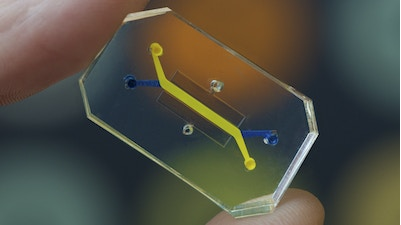
The so-called organ chip is simply a miniaturized biological test system. The organ chip is equivalent to a mini version of the human organ, which reconstructs the cell structure, biological force and cell interaction in the human body in vitro to simulate and reflect the real human environment. In addition to combining multiple cell types, these devices also contain hollow microfluidic channels. So researchers can apply mechanical forces to create fluid flows that mimic the physiological conditions of real organs.
In the traditional drug development pipeline, in vitro cell experiments and animal experiments are essential steps. However, the cells in the dish are still very different from the cells in our own bodies, and do not reflect the actual effects of the drug candidates in humans. The same is true in animal models, where species differences among mammals often result in a large number of seemingly promising drug candidates being held back from preclinical trials.
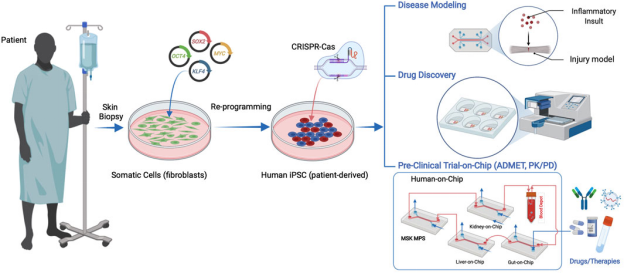
Organ chips will greatly improve this situation. For example, organ chips can create complex flow models between multiple organs to simulate the diffusion and delivery of drugs in the real human body, as well as final concentration determination. In addition, if human stem cells can be used to create individual organ chips, drug screening can be greatly personalized and precise for the treatment of specific genotypes of diseases, and efficient screening of sensitive and non-sensitive populations. Thus, the use of such tiny devices as organ chips will greatly improve the accuracy and efficiency of preclinical drug testing, and it will also mean that more initial screening experimental drugs will succeed in clinical trials by reducing the risk of clinical conversion.
This kind of miniature "human on a chip" technology breaks the boundary between biology and semiconductor chips, microelectronics, microfluidic and other intersecting fields, and combines various frontier Science and technology fields and applies them rapidly. It has been listed as one of the "Ten emerging technologies" by Science magazine and the World Economic Forum in Davos.

Yosu is the first biotech company to advance this cutting-edge technology. Its co-founder and CEO, Dr. Xie Xin, and his team have an extremely strong technical background and rich experience in the development of pharmaceutical products in the industry, as well as the pioneer in the field of organ chips and the inventor of the world's first organ chip, Professor Donald Ingber of the Wyss Institute of Harvard University. It is not surprising that a technology consultant such as Polina Golland of the MIT Artificial Intelligence Laboratory (CSAIL), who developed the Cell Profiler, one of the most popular computer vision and cell shape analysis software, has easily secured tens of millions of dollars in angel funding.
In addition to the new generation of Yaosu Technology, the old traditional pharmaceutical companies have not missed this potential huge future market. Last August, for example, Sanofi's new drug NCT04658472, a collaboration between organ-chip company Hesperos, became the first drug in the world to enter clinical trials based on preclinical data from an organ-on-a-chip study, for two rare autoimmune demelinating nerve disorders. Namely chronic inflammatory demyelinating polyneuropathy (CIDP) and multifocal motor neuropathy (MMN). At the time, the historic and revolutionary "IND with Microphysiological Systems (hMPS) data" initiative gave the entire organ-on-a-chip industry a lot of confidence and excitement, leading global pharmaceutical companies to deploy the pipeline.
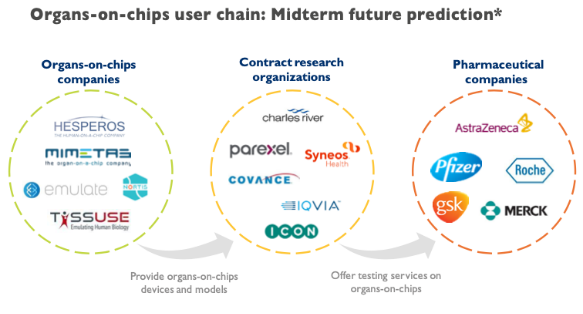
In fact, as early as May 2020, Oaks Technology, a pioneer in the field of organ chips in China, was selected by Merck China Innovation Center Accelerator to achieve innovation cooperation. In August of the same year, Big Pacific Technology launched the first batch of domestic commercial organ chips, and announced the completion of A round of financing worth tens of millions of yuan in May 2021. The investment was led by CDH VGC, followed by Qiji Chuantan, and the old shareholders Wuxi Apptec, Jiuyou Capital and Furong Investment continued to increase their participation. Not long ago, Hangzhou Lingzhi Technology, which owns the core technology of thin film transistor (TFT) semiconductor chips, also announced the completion of ten million yuan Pre-A+ round of financing, led by Xingze Capital and followed by Zhenge Fund, vigorously promoting the application of biochips in the interdisciplinary field.
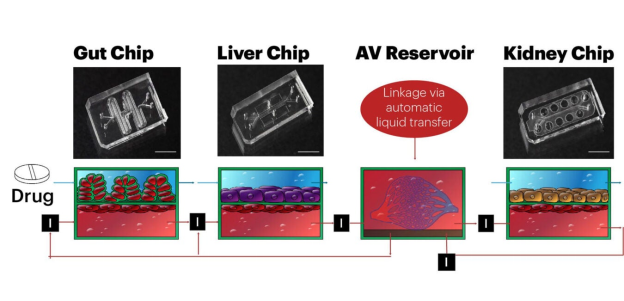
We believe that with the continuous development of human science and technology as a whole, the organ chip will move from "organ on a chip" to "animal on a chip" and then to "human on a chip", which will certainly break the boundary of possibility one by one in the future. It is especially promising in the field of rare diseases where biological models are rare. In addition, in the field of traditional diseases, organ chips could gradually reduce animal testing, while realizing commercial and social value. We hope that more and more interdisciplinary talents will emerge, sublimating the sum of human wisdom and changing the fate of millions of people.

You May Interested In


High Quality β-Nicotinamide adenine dinucleotide CAS 53-84-9 NADwith ready stock and best price
$3E+1/UNIT FOB


2026-10-23
Trade Alert
Delivering the latest product trends and industry news straight to your inbox.
(We'll never share your email address with a third-party.)

Related News
-
ADNOC Reroutes Naphtha via Oman to Bypass Hormuz Risk
-
US MDI Supply Squeeze Triggers Price Hikes
-
Uzbekistan Bets $17 Billion on Chemical Industry Upgrade
-
Lupin Secures Tentative U.S. Approval for Its Multiple Sclerosis Tablet
-
Celanese Raises Acetyl Chain Prices Globally, VAM Up $150/MT in Latin America
-
Laboratoire PYC showcases its collagen-driven nutricosmetic innovations
-
Kemira to Acquire SIDRA Wasserchemie, Expanding European Water Treatment Footprint
-
Hormuz in Crisis: Freight Rates Surge to $6,000 as Global Trade Feels the Shock
-
Hormuz Disruptions Affect Nearly 20% of Global Ethylene Capacity as Polyethylene Supply Tightens
-
Hormuz Closes, Paint Feels It First: How a Barrel of Oil Rewrites the Cost of Every Barrel of Coatings
Recommend Reading
-
![Two Commercial Ships Confirmed Sunk Near Strait of Hormuz Within 24 Hours]()
Two Commercial Ships Confirmed Sunk Near Strait of Hormuz Within 24 Hours
-
![From Coffee Waste to Superfood Additive: EU Declares Pectin-Rich Arabica Extract Safe for Food Use]()
From Coffee Waste to Superfood Additive: EU Declares Pectin-Rich Arabica Extract Safe for Food Use
-
![Australia Approves Lab-Grown “Milk Sugar” for Babies—A Breakthrough in Infant Nutrition]()
Australia Approves Lab-Grown “Milk Sugar” for Babies—A Breakthrough in Infant Nutrition
-
![Chung Lien Oil’s 8,000-Ton Soybean Oil BaP Scandal: NT$165 Million Fine, 401 Product Recalls, Source Still Unknown]()
Chung Lien Oil’s 8,000-Ton Soybean Oil BaP Scandal: NT$165 Million Fine, 401 Product Recalls, Source Still Unknown
-
![Sulfur Price Hits 7,633 CNY/Ton, Up Nearly Sixfold in a Year and a Half; Domestic Refining Giants Halt New Orders Due to Tight Supply]()
Sulfur Price Hits 7,633 CNY/Ton, Up Nearly Sixfold in a Year and a Half; Domestic Refining Giants Halt New Orders Due to Tight Supply
-
![Cost-Side Impact: Asphalt Market Shows Slight Recovery After Prolonged Decline]()
Cost-Side Impact: Asphalt Market Shows Slight Recovery After Prolonged Decline
-
![Pure Benzene Market Prices Fell First, Then Rose This Week (10.21–10.24)]()
Pure Benzene Market Prices Fell First, Then Rose This Week (10.21–10.24)
-
![Premium Global Chemical Sourcing Requests (20-23Aug, 2026)]()
Premium Global Chemical Sourcing Requests (20-23Aug, 2026)
-
![This Week's PVC Market Stabilizes in China (10.20-24)]()
This Week's PVC Market Stabilizes in China (10.20-24)
-
![This week, the polyester bottle chip market in China showed a trend of first declining then rising (10.20-24)]()
This week, the polyester bottle chip market in China showed a trend of first declining then rising (10.20-24)