Govt. favours use of pet coke only as feedstock in certain industries
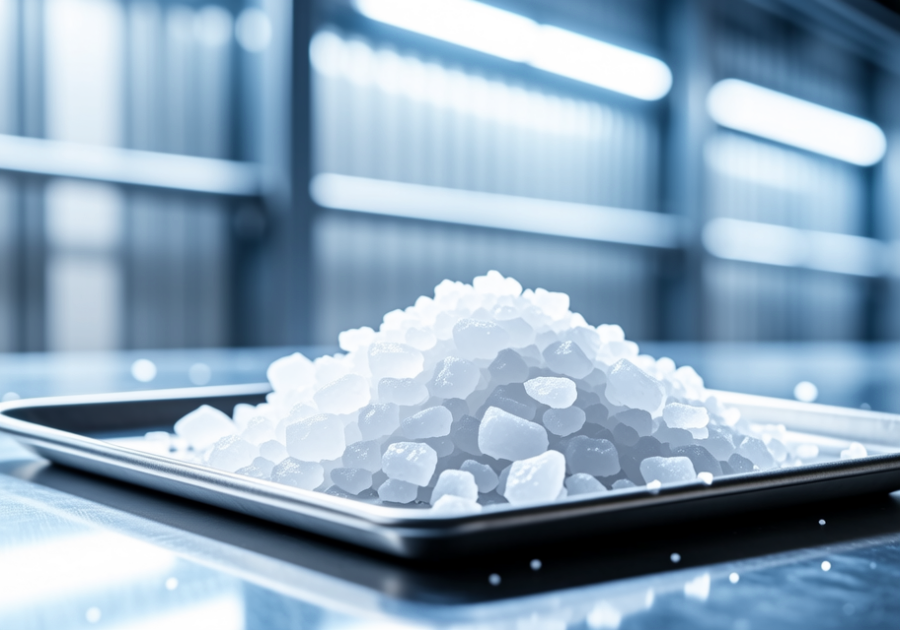
The government has told the Supreme Court that pet coke is a “highly polluting” fuel and its use should be allowed only in certain industries as feedstock and not for manufacturing purpose.
This could pave the way for a ban on its import for use as fuel by industries and thermal power plants. While China and the US have long stopped import of pet coke, proceedings in the Supreme Court on a petition against air pollution in the Delhi-national capital region has led to India considering a ban on its imports too.
The Ministry of Environment, Forest and Climate Change (MoEF&CC) told a bench of justices Madan Lokur and Deepak Gupta that it had convened a meeting with the officials of Ministry of Petroleum and Natural Gas (MoPNG) and Environment Pollution Control Authority (EPCA) in this regard and had also discussed it with Directorate General of Foreign Trade (DGFT). Additional Solicitor General Mr. A. N. S. Nadkarni, appearing for the MoEF&CC, said that a consensus decision was taken during the deliberation that use of imported pet coke all over the country be permitted only in industries like cement, lime stone and calcium carbide.
Mr. Nadkarni said that import of pet coke was running into Rs. 15,000-crore annually and decision to ban it would have implication on foreign exchange and they would discuss with the Ministry of Finance on this issue. “But we have said that it (pet coke) is highly polluting. It can only be used for cleaner purposes,” he told the bench.
More polluting than coal
In its affidavit to the Supreme Court, the Environment Ministry referred to the findings of a recent Technical Expert Committee’s (TEC’s) findings on the pollution impact of pet coke. The TEC, consisting of scientists from IIT and CPCB, found pet coke to be five to six times more polluting than coal.
In case of thermal power plants, even under the most stringent pollution control scenarios, the particulate matter emission load from pet coke is five to six times higher. TEC concluded that coal would be a better alternative to pet coke. Similar results were found for large boilers, too, where pet coke was found to be 3 to 6 times more polluting. But the emission load of pet coke was found to be lower than coal in case of small boilers. The SC-mandated EPCA has said that as the pollution control systems of small boilers are rudimentary and emission standards lax, regulating the use of pet coke in small boilers will be a huge challenge. The Central Pollution Control Board (CPCB) also said that allowing import of pet coke for small boilers could pose a monitoring challenge.
Mr. Nadkarni said that issue of use of pet coke by aluminium and steel industries was pending consideration and it would take eight weeks’ time to take a decision on it. The Supreme Court bench said that since a decision has been taken by the authorities on use of pet coke, the same should be notified and implemented immediately. The apex court, which noted that it had earlier asked the Centre to decide on the issue of banning import of pet coke by June 30, has posted the matter for hearing on October 9.

You May Interested In


Trade Alert
Delivering the latest product trends and industry news straight to your inbox.
(We'll never share your email address with a third-party.)

Related News
-
Lubrizol Announces Elimination of PFAS from Its Peptide Synthesis Process
-
Sekisui Specialty Chemicals Has Announced a Global Price Increase
-
U.S. Chemical Companies Are Benefiting from This Feedstock Shock
-
Strait of Hormuz Reopens, Oil Prices Plunge: Is the Chemical Price Rally Over?
-
Arkema's New Singapore Plant Commences Operations, Tripling Polyamide Capacity
-
Honeywell Acquires Johnson Matthey Catalyst Business at a Discount, Cutting £475 Million from the Price
-
Iran Closes Strait of Hormuz to All Vessels: Global Chemical Trade Gets Choked
-
Solvay's "Slimming Action": Soda Ash Production Capacity in Spain Slashed by 180,000 Tons, 77 Jobs to Go
-
API Supplier Audits Move to the Center of Pharma Supply Resilience
-
Chung Lien Oil’s 8,000-Ton Soybean Oil BaP Scandal: NT$165 Million Fine, 401 Product Recalls, Source Still Unknown
Recommend Reading
-
![Cracking Europe: When the Chemical Empire Loses Its Heat]()
Cracking Europe: When the Chemical Empire Loses Its Heat
-
![Coal Price Surge Coupled with El Niño Drives Urea Up by RMB 100/Ton in a Single Day]()
Coal Price Surge Coupled with El Niño Drives Urea Up by RMB 100/Ton in a Single Day
-
![Chemicals Take the Hit as China's Markets Thin Out — Wanhua, Juhua Chemical Slide Over 2%]()
Chemicals Take the Hit as China's Markets Thin Out — Wanhua, Juhua Chemical Slide Over 2%
-
![“The Tariff Crucible”: How Trump’s 100% Duties and China’s Rare Earth Offensive Are Reshaping Global Supply Chains]()
“The Tariff Crucible”: How Trump’s 100% Duties and China’s Rare Earth Offensive Are Reshaping Global Supply Chains
-
![“Freight Fee Warfare”: The U.S. Imposes Port Charges on Chinese-Linked Vessels — A Shipping Clash Unfolds]()
“Freight Fee Warfare”: The U.S. Imposes Port Charges on Chinese-Linked Vessels — A Shipping Clash Unfolds
-
![Business Society’s Market Outlook for DOP on September 9, 2026: Stagflation Warning]()
Business Society’s Market Outlook for DOP on September 9, 2026: Stagflation Warning
-
![In Mid-August, the Phosphate Market in China Experienced a Slight Decline (8.11-8.19)]()
In Mid-August, the Phosphate Market in China Experienced a Slight Decline (8.11-8.19)
-
![Import Supply Tight, Ethylene Glycol Spot Price Hits a 4-Year High in China]()
Import Supply Tight, Ethylene Glycol Spot Price Hits a 4-Year High in China
-
![High Inventory Levels Put Pressure on DMF Market]()
High Inventory Levels Put Pressure on DMF Market
-
![Business Society’s Market Outlook for Caustic Soda on September 8, 2026: Fluctuating Trend]()
Business Society’s Market Outlook for Caustic Soda on September 8, 2026: Fluctuating Trend