Strait of Hormuz Reopens, Oil Prices Plunge: Is the Chemical Price Rally Over?
Early on April 8, as a two-week ceasefire agreement took effect, navigation through the Strait of Hormuz resumed. The news triggered an immediate "waterfall" drop in international oil prices.
-
Brent crude plunged about 16%, falling below $92 per barrel to a low of $91.70.
-
WTI crude dropped more than 16% during trading, breaking below the $95 per barrel mark.
-
European diesel futures fell about 23%, recording their largest single-day drop in nearly four years.
Previously, due to escalating conflict and disrupted passage through the strait, oil prices surged over 60% in March, with Brent briefly exceeding $140 per barrel. Even after today's crash, WTI prices remain nearly 50% higher than before the conflict broke out in late February.
The collapse in feedstock costs directly dragged down China's domestic energy and chemical futures market:
-
Methanol fell more than 10%
-
Propylene and paraxylene dropped over 9%
-
Pure benzene fell more than 7%
-
Bitumen, PTA, and styrene all declined over 7%
These chemical raw materials, highly correlated with crude oil prices, experienced significant short-term pullbacks.
However, a temporary reopening does not solve the core problem; production infrastructure has already suffered actual damage.
Saudi Arabia's Jubail Industrial City – An explosion has threatened 6-8% of global petrochemical capacity. Jubail accounts for 5% of global plastics capacity, 3% each of global ethylene glycol, PP, and urea capacity, and 2.5% of methanol capacity. These products are mainly exported, with export shares far exceeding capacity shares. If production is disrupted, global chemical supplies face a "cliff-edge" risk.
Iran's Assaluyeh facility – Iran's largest petrochemical complex has been severely damaged and has ceased operations. The facility accounts for about 50% of Iran's total petrochemical output and handles the majority of Iran's petrochemical exports.
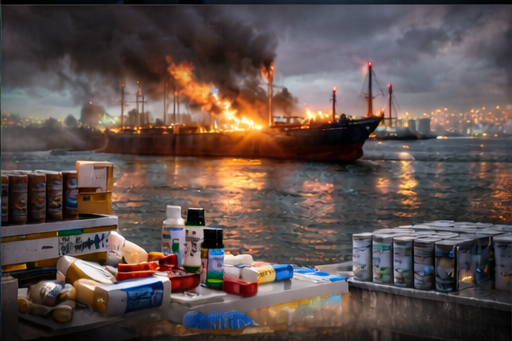
UAE petrochemical plant – The Borouge petrochemical plant in Abu Dhabi has been attacked, causing multiple fires; operations have been suspended pending further assessment.
Long-term supply gaps deserve attention. On April 7 and 8, while crude oil crashed, China's A-share basic chemicals sector surged strongly, with sub-sectors like chemical raw materials, silicones, and fertilizers leading gains. This reflects market expectations of future supply-demand dynamics.
The damage to Middle Eastern production facilities represents an irreversible hard gap. The reopening of the strait only solves the "ability to ship" problem, not the "ability to produce" problem. Shuttered overseas facilities are opening up market space for domestic enterprises.
In summary: The sharp drop in oil prices may indeed ease cost pressures in the short term, and products highly correlated with crude costs could see short-term pullbacks. But the navigation opening is time-limited, while production-side damage is substantial. If key Middle Eastern petrochemical facilities cannot be restored, global chemical supplies will face a prolonged shortage, and price hikes are far from over.

You May Interested In


2026-09-16
Trade Alert
Delivering the latest product trends and industry news straight to your inbox.
(We'll never share your email address with a third-party.)

Related News
-
EU Finalizes Anti-Dumping Duties on BDO from China, with Rates up to 113.7%
-
India Imposes Final Anti‑Dumping Duties on Ethylenediamine from China, EU, Saudi Arabia, and Taiwan, China, with Top Rate of $575/tonne
-
India Imposes Anti-Dumping Duties on Rubber Chemicals from China, EU and U.S.
-
Urea Market Lacks Direction as China, Iran Supply and India Tender Shape Outlook
-
Venezuela’s Moron Petrochemical Complex Restarts as Regional Supply Risks Remain
-
EU Eyes Rare Trade Tool as PET, Epoxy Resin and Glass Fibre Face Import Curbs
-
German Chemical Industry Posts Q2 Rebound but Capacity Utilization Remains at 73.2%
-
BASF Raises European NPG and HDO Prices by Up to €300/Tonne as Costs Climb
-
EU Puts Chemicals on Its China De-Risking Watchlist
-
A $25 Billion Bill Hits Global Companies as Chemical Costs Are Repriced
Recommend Reading
-
![Affordable GLP-1s Could Rewrite the Global Obesity Market]()
Affordable GLP-1s Could Rewrite the Global Obesity Market
-
![South Africa Wants Lenacapavir at Home, Not Just Imported]()
South Africa Wants Lenacapavir at Home, Not Just Imported
-
![Canada’s Acynonapyr Review Offers More Than a New Mite Product]()
Canada’s Acynonapyr Review Offers More Than a New Mite Product
-
![West Asia’s Conflict Is Testing the Hidden Fragility of Pharma Trade]()
West Asia’s Conflict Is Testing the Hidden Fragility of Pharma Trade
-
![India’s Latest Manufacturing Clarification Is Really a Delayed Regulatory Line in the Sand]()
India’s Latest Manufacturing Clarification Is Really a Delayed Regulatory Line in the Sand
-
![Business Society’s August 26, 2026 Toluene Market Outlook: Volatile]()
Business Society’s August 26, 2026 Toluene Market Outlook: Volatile
-
![Business Society PVC Trend Analysis for September 11, 2026: Pullback Pressure]()
Business Society PVC Trend Analysis for September 11, 2026: Pullback Pressure
-
![Business Society’s September 2, 2026 Toluene Market Outlook: Volatile with a Slight Bullish Bias]()
Business Society’s September 2, 2026 Toluene Market Outlook: Volatile with a Slight Bullish Bias
-
![Business Society’s Market Outlook for Maleic Anhydride on August 26, 2026: Volatile]()
Business Society’s Market Outlook for Maleic Anhydride on August 26, 2026: Volatile
-
![Business Society September 11, 2026 PC Trend Analysis: Clearly Upward]()
Business Society September 11, 2026 PC Trend Analysis: Clearly Upward