Understanding the Solubility of Barium Sulfate in Water
The solubility of barium sulfate in water is crucial characteristic that determines its behavior and applications. In the case of barium sulfate, its solubility in water has been a subject of interest due to its limited solubility compared to other salts. This article aims to explain the solubility behavior of barium sulfate in water, focusing on its significance, factors influencing solubility, and potential applications. Barium sulfate exhibits extremely low solubility in water, with a solubility product constant (Ksp) of approximately 1.08 x 10⁻¹⁰ at 25C. This value indicates that only a small fraction of barium sulfate dissolves in water to form barium ions and sulfate ions.
What Is Barium Sulfate?
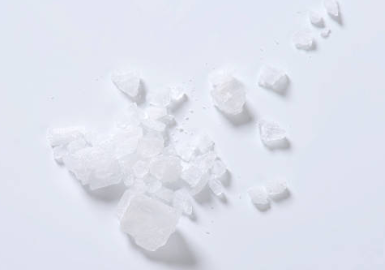
Barium sulfate (BaSO4) is an inorganic compound composed of barium ions (Ba2+) and sulfate ions (SO42-). It is a white, crystalline solid that is highly insoluble in water. Barium sulfate occurs naturally as the mineral barite and can be synthesized through chemical processes. Its insolubility in water makes it an ideal compound for various applications where its stability and inertness are advantageous.
Solubility Characteristics
The solubility of barium sulfate in water is exceptionally low, making it virtually insoluble under normal conditions. At room temperature (25C), the solubility of barium sulfate in water is approximately 2.4 mg/L. This low solubility arises from the strong electrostatic attractions between the barium and sulfate ions, which prevent them from dissociating in water. The equilibrium expression for the dissolution of barium sulfate in water is as follows:
BaSO4(s) Ba2+(aq) + SO42-(aq)
The solubility product constant (Ksp) measures the equilibrium between the solid and dissolved ions. For barium sulfate, the Ksp value is approximately 1.1 x 10 -10 at 25C. This extremely small value indicates that only a minute fraction of barium sulfate dissolves in water, resulting in a saturated solution.
Factors Affecting Solubility
While barium sulfate's solubility in water is generally low, certain factors can influence its solubility behavior. These factors include temperature, pH, and the presence of other ions or compounds.
- Temperature: The solubility of barium sulfate is proportional to temperature. As the temperature increases, the solubility increases too. This relationship is consistent with Le Chatelier's principle, which states that an increase in temperature favors endothermic processes, such as the dissolution of barium sulfate.
- pH: The pH of the solution can also impact the solubility of barium sulfate. Under normal conditions, the solubility remains constant across various pH values. However, the solubility may vary due to the formation of other barium or sulfate species at extremely high or low pH levels.
- Presence of other ions: Certain ions in the solution can affect the solubility of barium sulfate. For example, sulfate ions from other sources can compete with the sulfate ions in barium sulfate, reducing solubility. Similarly, barium ions from other compounds can also influence the solubility equilibrium.
Applications of Barium Sulfate
The unique properties of barium sulfate, including its insolubility in water, make it an invaluable compound in various industries. Some of its notable applications include:
- Radiology: Barium sulfate is widely used as a contrast agent in X-ray examinations. Due to its high atomic number and low solubility, it provides excellent visibility in X-ray imaging of the gastrointestinal tract.
- Paints and Coatings: Barium sulfate is used as a filler in producing high-quality paints and coatings. Its high density, and opacity contribute to the final product's brightness, durability, and weather resistance.
- Oil and Gas Industry: Barium sulfate is utilized in drilling fluids for oil and gas wells. It helps to increase the density of the drilling fluid, control wellbore stability, and prevent blowouts.
- Pharmaceuticals: In the pharmaceutical industry, barium sulfate is used as a contrast agent for imaging studies, such as CT scans and MRI, to enhance visualization of the gastrointestinal tract.
- Chemical Manufacturing: Barium sulfate finds applications in producing various chemicals, such as pigments, dyes, and catalysts. Its inert nature and stability make it an ideal component in many chemical processes.
Wrapping Up
Barium sulfate is an intriguing compound with minimal solubility in water. Its unique properties and applications have made it a valuable component in various industries, including radiology, paints and coatings, oil and gas, pharmaceuticals, and chemical manufacturing. Understanding the solubility characteristics of barium sulfate provides insights into its behavior, allowing for informed decision-making and innovative applications in the future. Visit Echemi's official website to explore various chemical compounds and their applications. Our comprehensive database and user-friendly interface will assist you in finding the information you need. Browse through our products to discover high-quality chemicals for your specific requirements. Remember, regarding barium sulfate and other chemical compounds, Echemi is your reliable partner, delivering knowledge and excellence in chemistry.
Looking for chemical products? Let suppliers reach out to you!
You May Interested In


Glow70/KLOW80 99% China Peptides Warehouse Direct Delivery Lyophilized Powder in Stock
$169/UNIT FOB


2026-10-22
Trade Alert
Delivering the latest product trends and industry news straight to your inbox.
(We'll never share your email address with a third-party.)

Related News
-
Reactions and Uses of Ammonium Dichromate
-
Chemical Properties of Dibenzylideneacetone
-
Applications of Aluminium Orthophosphate
-
Applications of Diphenyl Cyanide
-
Uses of Dithiothreitol in Laboratories
-
Chemical Reactions and Uses of Stilbene
-
EDTA (Ethylenediaminetetraacetic acid): Chelation Therapy & Industrial Uses
-
Lanolin: Benefits for Skin, Cosmetic Uses, and Allergy Risks
-
Paraffin Wax vs. Beeswax: Candles, Cosmetics, and Industrial Applications
-
Sulfuric Acid (H2SO4): Properties, Battery Uses, and Extreme Safety Hazards
Recommend Reading
-
![What is Trametenolic Acid? (Structure, Sources & Research)]()
What is Trametenolic Acid? (Structure, Sources & Research)
-
![Sodium Chloride (NaCl): Food Grade vs Industrial Grade Uses & Safety Data]()
Sodium Chloride (NaCl): Food Grade vs Industrial Grade Uses & Safety Data
-
![Chemical Raw Materials: How to Source Quality Suppliers & Understand Grades]()
Chemical Raw Materials: How to Source Quality Suppliers & Understand Grades
-
![Polystyrene (PS): Properties, Foam Applications, and Recycling Challenges]()
Polystyrene (PS): Properties, Foam Applications, and Recycling Challenges
-
![Magnesium Stearate in Supplements: Is it Safe? (Vegan Status & Function)]()
Magnesium Stearate in Supplements: Is it Safe? (Vegan Status & Function)
-
![Business Society’s Market Outlook for Fuel Oil 180CST on August 10, 2026: Volatile]()
Business Society’s Market Outlook for Fuel Oil 180CST on August 10, 2026: Volatile
-
![Business Society’s Diesel Market Outlook on August 10, 2026: Volatile but Rising]()
Business Society’s Diesel Market Outlook on August 10, 2026: Volatile but Rising
-
![Business Society’s Market Outlook for Petroleum Coke on August 10, 2026: Volatile]()
Business Society’s Market Outlook for Petroleum Coke on August 10, 2026: Volatile
-
![Business Society’s Market Outlook for Gasoline on August 10, 2026: Volatile but Rising]()
Business Society’s Market Outlook for Gasoline on August 10, 2026: Volatile but Rising
-
![Multiple Positive Factors Drive Significant Increase in MTBE Market in China]()
Multiple Positive Factors Drive Significant Increase in MTBE Market in China