Is Polycarbonate Plastic? Everything You Should Know About PC
Polycarbonate, well known as PC, is a popular material in various fields. People may pursue the answer to the question is Polycarbonate plastic. Here, get the answer and learn what Polycarbonate is and how to better use it.
What Is Polycarbonate
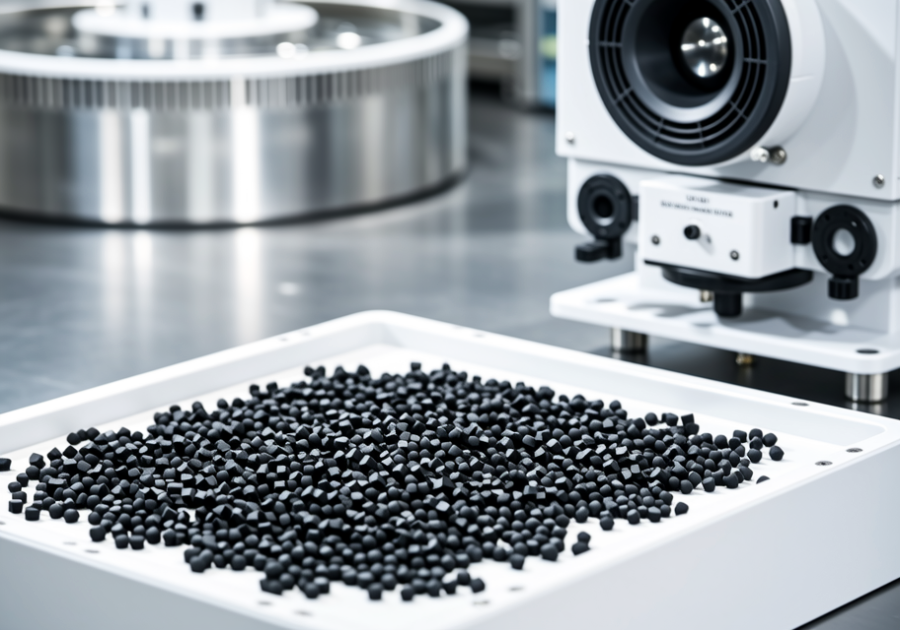
Polycarbonates (PC) refer to a group of thermoplastic polymers that have carbonate groups within their chemical structure. The polycarbonate used in engineering has good strength and elasticity. Some grades are optically clear and are used in polycarbonate lenses. It is easy to machine, mold and thermoform. Due to these chemical properties, polycarbonate has many uses. So, is polycarbonate plastic? Get the answer in the next section.
Is Polycarbonate Plastic
Is Polycarbonate plastic? The answer is that Polycarbonate is a type of plastic. Polycarbonate polymers are formed by the reaction of bisphenol A and phosgene COCl2. These are high molecular weight polymers. Importantly, it becomes liquid when heated and freezes into a glass when cooled. Therefore, it is a thermoplastic polymer, and it can be easily molded and molded into the required shape.
What are the differences between Polycarbonate and commonly used plastics? Plastics are polymers with large molecular weights. The main difference between polycarbonate and plastic is that polycarbonate is lighter but much stronger than plastic. Another important difference is that polycarbonate can be thinner than plastic. Polycarbonate is also tougher and less fragile than plastic.
The Uses of Polycarbonate as Plastic
The answer to the question is polycarbonate plastic you have already known. Actually, Polycarbonate has a variety of users in multiple industries. Since its light and strong, it is more widely used than general plastics. Here, check how to use it in daily life.
1.Appliances
Polycarbonates and their blends are used in appliances such as refrigerators, air conditioners, coffee makers, blenders, washing machines, hair dryers, steam irons, and water tanks. Due to the wide range of mechanical properties of PC, the use of PC allows free-form shaping, increasing product robustness and aesthetic appeal.
2.Automotive/Transportation
PC is lightweight and transparent to create eye-catching designs, reduce weight without sacrificing durability, and improve vehicle efficiency by improving vehicle aerodynamics will be used. Due to its high heat resistance, it is used for lamp housings, headlight bezels, lenses, etc. Due to its stiffness and excellent creep resistance, PC blends are ideal for automotive interior and exterior body panels.
3.Food Contact
Polycarbonate is used in applications where there is direct contact with food and beverages due to its heat and impact resistance. PC food storage containers are reusable, preserve freshness, protect food from contamination, and are convenient for refrigerators and microwaves.
4.Medical Use
Polycarbonate is mainly used in medical applications due to its excellent combination of properties such as transparency, heat resistance, dimensional stability, and toughness. PC can be sterilized by ethylene oxide, high-energy radiation, and limited autoclave cycles. Typical medical applications include surgical instruments, drug delivery systems, hemodialysis membranes, blood reservoirs, blood filters, etc., where polycarbonate replaces glass and metal.
5.Architecture and Construction
Due to its properties such as high impact resistance, transparency, and UV resistance, PC is used in various glass applications such as agricultural housing, industrial or public buildings, facades, security windows, shelters, and skylights. It is considered a suitable alternative to glass.
6.Consumer products
PC has low birefringence, low internal stress, and high dimensional accuracy, making it suitable for CD/DVD manufacturing. In addition, its high transparency enables the development of innovative products for everyday use, such as safety glasses, spectacle lenses, and large-capacity water bottles. It is also optically clear, making it ideal for shatterproof sunglasses, face shields, and other objects, goggles, and even as a component of bulletproof windows.
7.Other uses
Telecommunications - Mobile phone cases, pager parts.
Municipal equipment - streetlight covers, vandal-resistant glass, food processors.
Sports – ski clamp parts, helmets, and eye protection visors to protect children and athletes from injury.
Conclusion
This is the ultimate guide to the material Polycarbonate. We have talked about the question is Polycarbonate plastic and the daily use of Polycarbonate. We know that it is a kind of plastic and better than general plastic materials. Indeed, Polycarbonate (PC) benefits our life a lot. We can apply this material in a swell of industries. By knowing its properties and uses, you can utilize it better.
Looking for chemical products? Let suppliers reach out to you!
You May Interested In


2026-10-03
Trade Alert
Delivering the latest product trends and industry news straight to your inbox.
(We'll never share your email address with a third-party.)

Related News
Recommend Reading
-
![Business Society’s BDO Market Outlook on August 21, 2026: Strong Consolidation]()
Business Society’s BDO Market Outlook on August 21, 2026: Strong Consolidation
-
![This Week's Activated Carbon Prices Rise (11.10-11.14)]()
This Week's Activated Carbon Prices Rise (11.10-11.14)
-
![BDO Market Trends Show Narrow Upside Movement]()
BDO Market Trends Show Narrow Upside Movement
-
![Construction Starts Decline; Isooctanol Prices Fluctuate and Fall This Week]()
Construction Starts Decline; Isooctanol Prices Fluctuate and Fall This Week
-
![This week, sodium metabisulfite prices rose in China (8.17-8.21)]()
This week, sodium metabisulfite prices rose in China (8.17-8.21)