The Impact of Red Sea Navigation Suspension on Global Trade and Supply Chains: Challenges and Opportunities
The recent suspension of navigation in the Red Sea and security threats have had a direct impact on global supply chains and trade. Several major shipping companies have announced the suspension of Red Sea sailings, including MSC, Maersk, CMA CGM and Hapag-Lloyd, among others. Security in the Red Sea and surrounding waters has been strained by attacks on ships by Houthi militants in Yemen. Ships chose to sail around the Cape of Good Hope in South Africa rather than through the Suez Canal, adding about 10 days to the voyage. Maersk, the world's largest container shipping line, has also suspended vessel sailings through the Mandeb Strait.
The events sent gas prices in Europe soaring 13 per cent and Brent crude futures up 3.9 per cent, in the clearest evidence of the impact on energy trade since the Hamas conflict.
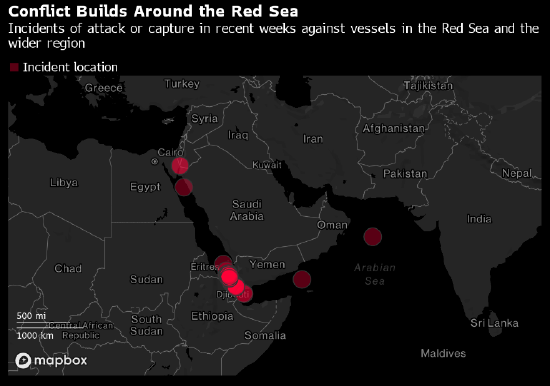
Due to the increased risk of Red Sea shipping, many container ships have abandoned Red Sea routes and detour to South Africa instead. Forty-six container ships have reportedly taken the step, with 78 more awaiting instructions. These route adjustments and the detour of ships around the Cape of Good Hope in South Africa have resulted in increased transportation costs, reduced vessel turnover efficiency and squeezed container capacity. Shipping Tesla electric cars from China to Europe by sea has taken an alternative route around the Cape of Good Hope, but the extended route has added about 20% to shipping costs. Instability in the Red Sea has a significant impact on global trade, especially when it comes to transport between Asia, Europe and the Americas.
According to the CICC report, about 10 percent of the world's shipping volume passes through the Suez Canal. If the Far East-Northern Europe route were to bypass the Suez Canal and pass through the Cape of Good Hope instead, the distance would increase by about 30%. The detour to the Cape of Good Hope will extend the voyage by about 10 days and increase the total voyage by about one-third. This will increase the cost of fuel for shipping companies, the cost of fixed expenses on board, and may also lead to additional potential costs such as longer trade cycles and insurance claims.
The Red Sea Passage is an important waterway from Asia to the Mediterranean and Europe, with more than 20,000 ships passing through the Suez Canal and the Red Sea Passage each year, accounting for about 14% of the world's seawall trade. About 30% of Red Sea traffic is container trade and 10% is crude oil trade. Shipping companies use alliance partners' ships to move boxes in response to the inability to navigate Red Sea routes.
In addition, tensions in the Red Sea have also led to higher freight rates. Freight forwarders said that from the end of November, spot market freight rates gradually increased. Freight rates on the Far East to eastern Mediterranean routes have risen sharply, doubling to the northern ports of Israel (HAIFA) and the second largest in western Israel (Ashdod).


According to foreign media reports, about 5% of global trade depends on the Panama Canal and about 12% on the Suez Canal. At the same time, drought-induced capacity problems in the Panama Canal are also severely affecting trade. Central banks are cautious about inflation risks. In the face of global trade threats, American officials are trying to craft a response. Defense Secretary Austin will convene a meeting of other ministers to plan the creation of a new maritime task force to deal with Yemeni militants. However, implementation is not simple, and there is no agreement among the Gulf states.
According to experts, rising uncertainty over the Suez Canal coupled with a global economic rebound and easy financial conditions could put upward pressure on commodity prices in the coming months.
According to several industry sources, the suspension of Red Sea sailings and pick-up by container lines could push up freight rates on Asia-Europe routes. Freight rates on routes between China and Europe have surged for four consecutive weeks. On December 15, the freight price of exports from Shanghai port to the European basic port market was USD 1,029 /TEU, up 11.2% from the previous period. The market situation of Mediterranean routes is basically synchronized with that of European routes. On December 15, the freight rate of export from Shanghai port to Mediterranean basic port market was USD 1,569 /TEU, up 13.1% compared with the previous period.
Shipping companies believe that the incident is a double-edged sword for shipping companies. On the one hand, shrinking routes could help shipping companies raise container rates. On the other hand, a small increase in freight rates will have limited impact because of the current trough in trade, excess global containerization capacity and a paucity of goods and a large number of ships.
Short-term increases in freight rates could add to profits for freight forwarders. However, due to the unsatisfactory environment this year and the reduction of cargo volume as the Christmas peak season in Europe comes to an end, the impact of the freight rate increase on freight forwarers is relatively small.
In the long run, long-term contract orders are less sensitive to market fluctuations. Shipowners usually enter into long-term contracts with their customers, and market fluctuations do not have an impact on freight rates on these long-term contracts.
Although the damage caused by the Red Sea incident to international trade may benefit the logistics and shipping industries in the short term, it is not good for international trade and economic development in the medium and long term. The serial downturn over the past year and a half due to continued increases in freight rates is one example.
Companies will face longer flights to transport commodities such as consumer goods, coal, corn and energy products. The incident has again highlighted the fragility of global supply chains, which have so far managed to cope with tight capacity. However, the sudden closure of the Suez Canal in 2021 brought home the challenges that logistics networks face when major shipping hubs fail.
Meanwhile, there have been recent reports of rising insurance costs for Red Sea shipping. The Joint War Risk Committee, a leading insurer, ranks the Red Sea as one of the most dangerous waters in the world, meaning ships must pay higher premiums for war risk. Such premiums have risen nearly ninefold since the first attack.
According to a statement by Osama Rabie, chairman of Egypt's Suez Canal Authority, 55 ships have chosen to bypass the Suez Canal since November 19 and use the Cape of Good Hope route instead. This is just a fraction of the 2,128 ships that passed through the Suez Canal during the same period.
The announcement of a detour around the Cape of Good Hope may be an attempt by liner companies to find a reason to raise prices, which is good news for these companies. The extent to which shipowners can increase their prices is generally limited by the premium rate, because shipowners who have purchased additional war risks can claim from the insurance company. In addition to the detour around the Cape of Good Hope, the Arctic route has also become an emerging route in recent years. While the Arctic route offers advantages for China because of shorter voyages, it requires ice-breaking capabilities and considerations such as geopolitics.

You May Interested In


2026-08-31
Trade Alert
Delivering the latest product trends and industry news straight to your inbox.
(We'll never share your email address with a third-party.)

Related News
-
Red Sea Ship Attacks Threaten Global Trade and Oil Prices
-
Maritime Attacks and Trade Route Adjustments: Navigating Challenges in the Red Sea
-
25 Companies Raise Prices Three Times Within a Month: China’s Titanium Dioxide Industry Shifts from “Price Wars” to a “Pricing Alliance”
-
Brazil Expands Chemical Tax Breaks as India’s Crop Protection Industry Warns of a 25% Cost Increase
-
Behind the Three Consecutive Titanium Dioxide Price Hikes, Sulfur and Sulfuric Acid Costs Are Rewriting the Pricing Floor
-
From “10,000-Ton Bet” to “5,000-Ton Test”: Acore’s Polyetheramine Dilemma—Is This a Symptom of Industry Winter or the Prelude to Strategic Retreat?
-
“Oil Sheikhs” Buy Germany’s Chemical Crown: A €14.7 Billion Green Gamble or a Power Play in the Age of Carbon Neutrality?
-
High Crude Prices Are Passing Through the Coatings Chain as More Than 20 Companies Launch Price Increases
-
Kumho Mitsui Chemicals to Further Expand MDI Production, Annual Capacity to Reach 710,000 Tons
-
Lupin Secures Tentative U.S. Approval for Its Multiple Sclerosis Tablet
Recommend Reading
-
![NOVA Chemicals Launches PE Resins with Next-Generation Non-Fluoropolymer Processing Aid]()
NOVA Chemicals Launches PE Resins with Next-Generation Non-Fluoropolymer Processing Aid
-
![Solvay’s Zhenjiang Plant Expansion Goes Online, Doubling Electronic-Grade Hydrogen Peroxide Output to Support Semiconductor Advancements]()
Solvay’s Zhenjiang Plant Expansion Goes Online, Doubling Electronic-Grade Hydrogen Peroxide Output to Support Semiconductor Advancements
-
![Clean Food Group Secures UK, EU, and US Approval for Fermentation-Derived Cosmetic Oils]()
Clean Food Group Secures UK, EU, and US Approval for Fermentation-Derived Cosmetic Oils
-
![Sun Pharma’s Winning Formula: Precision Over Expansion]()
Sun Pharma’s Winning Formula: Precision Over Expansion
-
![ExxonMobil “Hits the Brakes”: Industrial Fractures Under the EU’s Chemical Recycling Policy Reef]()
ExxonMobil “Hits the Brakes”: Industrial Fractures Under the EU’s Chemical Recycling Policy Reef
-
![Cyclohexane Market Prices Mainly Stable in China]()
Cyclohexane Market Prices Mainly Stable in China
-
![Benzyl Alcohol: Uses in Cosmetics, Preservative Efficacy, and Safety]()
Benzyl Alcohol: Uses in Cosmetics, Preservative Efficacy, and Safety
-
![Ammonia Chemical Formula: NH3 Structure & Properties]()
Ammonia Chemical Formula: NH3 Structure & Properties
-
![BDO Market Continues to Fluctuate and Rise in China]()
BDO Market Continues to Fluctuate and Rise in China
-
![March Ethylene Oxide Prices Surge 52.73% in China]()
March Ethylene Oxide Prices Surge 52.73% in China