




Poly Aluminum Chloride Market – Global Industry Estimated to Grow Strongly by 2024
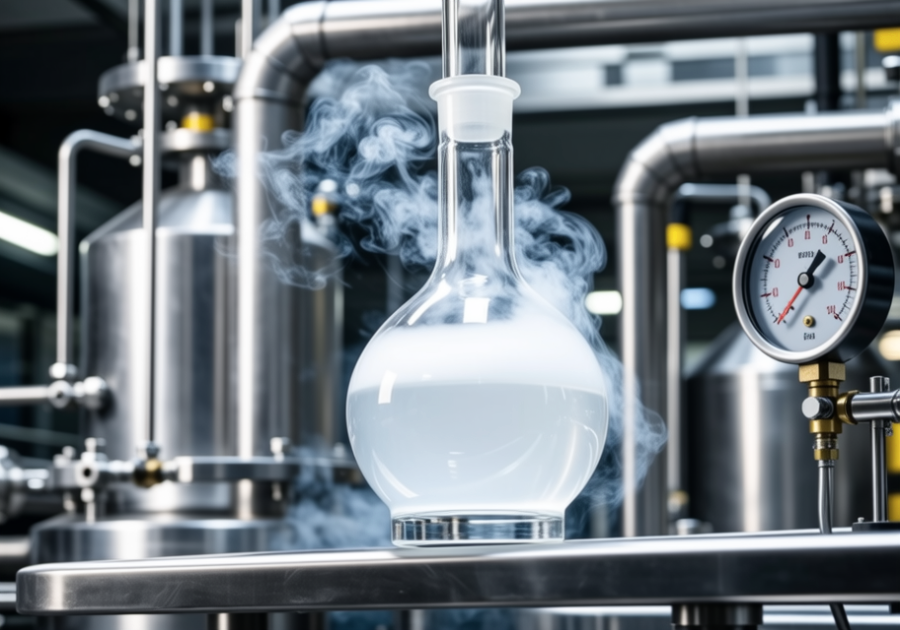
Poly aluminum chloride is present in liquid as well as solid form. In its powder version, it occurs as a yellow substance which must be packed in bags lined with polyethylene, whereas in its liquid form, it is colorless to pale yellow and needs to be packed in acid-resistant rubber or plastic-lined tanks or containers. Poly aluminum chloride, also known as poly aluminum chloride hydroxide sulphate and poly aluminum chloride hydroxide. It is readily soluble in water. Poly aluminum chloride in the powdered form is known to absorb moisture when exposed to the atmosphere. The raw materials required to manufacture Poly aluminum chloride in its liquid form are sulphuric acid, calcium carbonate, aluminum hydroxide, and hydrochloric acid. Poly aluminum chloride is used on a large scale for the purpose of wastewater treatment.
Poly Aluminum Chloride Market: Market Trends
Poly aluminum chloride is an efficient flocculent and coagulant. It is also employed in cosmetics and personal care products such as deodorants and antiperspI countryts, in the treatment of potable water, as well as for paper sizing.
Among all of its applications, Poly aluminum chloride is used widely for water treatment. It increases the rate of flocculation and coagulation during the process of water purification, causing the impurities to form a floc or to coagulate together. These can then be removed by other methods once they are precipitated. In recent times, Poly aluminum chloride has substituted alum in water treatment as it forms larger flocs.
Manufacturers are seeking methods using which they can produce Poly aluminum chloride in large quantities so that it can be exported to potential consumers across the globe. The rising consumption of and the demand for Poly aluminum chloride is equivalent to the changing lifestyle trends as well as developments taking place in industrial processes in which treatment of wastewater has become essential for the safety of the environment. Untreated water, if disposed ineffectively, could harm the flora and fauna and in turn affect the biodiversity of that particular area.
Increasing awareness about the use of safe drinking water due to the involvement of and investments by government agencies has led to rising demand for Poly aluminum chloride which has successfully replaced alum in most countries, which is again poised to be a major driving factor for the market in the near future.
Poly Aluminum Chloride Market: Region-wise Outlook
The market for Poly aluminum chloride is well-developed in North America, with numerous activities associated with water treatment carried being out here on a large scale. In the region of Asia Pacific, the market for Poly aluminum chloride is in its developmental stage due to which the region is expected to witness gradual evolution in the next few years. Europe offers a comparatively constant rate of growth for the Poly aluminum chloride market. In Middle East & Africa, the demand for poly aluminum chloride is anticipated to rise eventually because of the multiple water treatment activities, changing lifestyles of the population and awareness regarding sanitation and hygiene. The market for Poly aluminum chloride in Latin America is likely to expand at a sluggish pace due to its limited scope for applications and lack of awareness.
Poly Aluminum Chloride Market: Key Players
Few of the key players operating in the Poly aluminum chloride market are as follows GEO Specialty Chemicals, Coyne Chemicals, Central Glass Co. Ltd., Westwood Chemical Corporation, Summit Research Labs, Grasim Industries Ltd., and DCM Shriram Industries Ltd.

You May Interested In


High Quality β-Nicotinamide adenine dinucleotide CAS 53-84-9 NADwith ready stock and best price
$3E+1/UNIT FOB


2026-10-21
Trade Alert
Delivering the latest product trends and industry news straight to your inbox.
(We'll never share your email address with a third-party.)

Related News
-
After 20 Years of Negotiations, 90% of Tariffs to Be Cut! EU and Mercosur Sign Free Trade Agreement: Trade Barriers Ease, Transatlantic Cooperation Warms Up?
-
Is India’s “Luck” Finally Here? HPCL’s 10-Year LNG Deal Is a High-Stakes Bet on National Destiny
-
“Deregulation” or “Concession”? The Hidden Crisis Behind India’s Repeal of QCOs on Seven Key Petrochemicals
-
MDI Price Surge Hits EMEAI: Is This a Market Correction or the Beginning of a Supply Crisis?
-
Cracking Europe: When the Chemical Empire Loses Its Heat
-
Urea Prices Surge as India Faces Critical Shortages: Will China’s Export Quotas Provide Relief?
-
Two Commercial Ships Confirmed Sunk Near Strait of Hormuz Within 24 Hours
-
From Coffee Waste to Superfood Additive: EU Declares Pectin-Rich Arabica Extract Safe for Food Use
-
Australia Approves Lab-Grown “Milk Sugar” for Babies—A Breakthrough in Infant Nutrition
-
“Soaring Sulfuric Acid, Tightening Ore Supplies”: The High-Stakes Battle Behind the Titanium Dioxide Price Surge
Recommend Reading
-
![Shandong’s Export Growth Is 2.8%; This Category Is 19%: Shandong Has a Chokehold on the Upstream of Global Manufacturing]()
Shandong’s Export Growth Is 2.8%; This Category Is 19%: Shandong Has a Chokehold on the Upstream of Global Manufacturing
-
![Coal Price Surge Coupled with El Niño Drives Urea Up by RMB 100/Ton in a Single Day]()
Coal Price Surge Coupled with El Niño Drives Urea Up by RMB 100/Ton in a Single Day
-
![US Imposes Heavy Duties on Chinese L-Lysine with Combined Rates up to 188%]()
US Imposes Heavy Duties on Chinese L-Lysine with Combined Rates up to 188%
-
![Alipay, Baidu, and iFlytek Win Big—As the Government Spends $1.1 Billion on AI Healthcare, Is This a Lifeline or a Feeding Frenzy for Tech Giants?]()
Alipay, Baidu, and iFlytek Win Big—As the Government Spends $1.1 Billion on AI Healthcare, Is This a Lifeline or a Feeding Frenzy for Tech Giants?
-
![$530 Million Lawsuit Unheard, $76 Million Counterclaim Filed: Is Qicai Chemical’s ‘Reputation Defense’ a Desperate Last Stand or a Calculated PR Gambit?]()
$530 Million Lawsuit Unheard, $76 Million Counterclaim Filed: Is Qicai Chemical’s ‘Reputation Defense’ a Desperate Last Stand or a Calculated PR Gambit?
-
![Business Society Hydrofluoric Acid Trend Analysis for October 9, 2026: Volatility]()
Business Society Hydrofluoric Acid Trend Analysis for October 9, 2026: Volatility
-
![China's urea market shows a strong upward trend (11.3-11.7)]()
China's urea market shows a strong upward trend (11.3-11.7)
-
![Polyethylene Rises Under Pressure and Retreats from Weekly Highs]()
Polyethylene Rises Under Pressure and Retreats from Weekly Highs
-
![Business Society October 10, 2026 Lithium Carbonate Trend Analysis: Volatility]()
Business Society October 10, 2026 Lithium Carbonate Trend Analysis: Volatility
-
![This Week Aniline Market Stabilizes and Rises (11.3-11.7) in China]()
This Week Aniline Market Stabilizes and Rises (11.3-11.7) in China






- Hot Searches
- where do they sell kerosene
- guar gum for incense
- tirzepatide research peptide for sale
- where to get 2cb
- nylon 6 6 price
- industrial grade sodium bicarbonate
- methylene blue supplier
- price formic acid
- retatrutide supplier china
- retatrutide supplier china
- soy protein isolate supplier
- aluminum chlroide