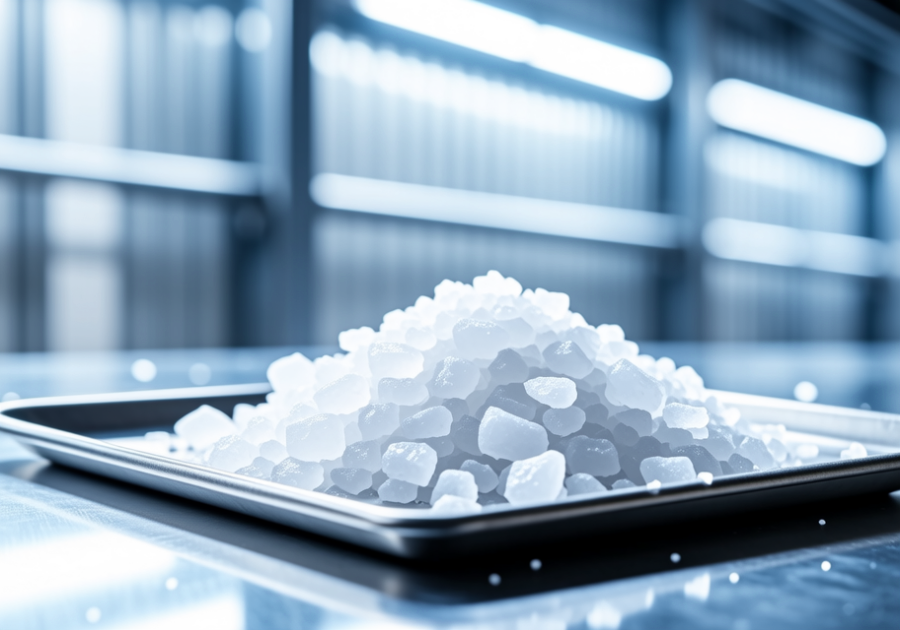
Calcium Chloride Uses in Food, De-Icing, and Safety Concerns
When Calcium Chloride comes up in conversation, the immediate questions are usually practical: what is it used for, and is it safe? You might notice it on food labels, see it mentioned in road maintenance manuals, or even find it in a construction guide. This compound bridges food science and industry, and its relevance continues to grow.
Formula and Chemical Identity
Chemically, Calcium Chloride is written as CaCl2. The pairing of one calcium atom with two chlorine atoms creates a salt that dissolves readily in water and pulls in moisture from the environment. This hygroscopic character explains why it shows up in moisture-control packets as well as in heavy-duty de-icing mixtures.
Calcium Chloride Formula and Applications
The usefulness of CaCl2 lies in how it behaves under different conditions. Experts highlight its exothermic reaction with water, its solubility, and its ability to adjust texture in foods. Its main applications include:
- Road safety: Applied to roads, sidewalks, and airport runways in winter because it melts ice faster than sodium chloride.
- Building and construction: Added to concrete to speed up curing, especially in cold weather projects.
- Food processing: Used to keep vegetables firm in canning and to balance calcium in dairy production.
- Moisture management: Packaged goods sometimes include small sachets with Calcium Chloride to prevent dampness.
Calcium Chloride in Food Industry
The food industry makes subtle but important use of this compound. Cheese producers add it to milk to improve coagulation when pasteurization reduces natural calcium content. In canned beans or cucumbers, it helps maintain firmness during heat treatment. Fruit handlers sometimes use it to reduce softening in apples or melons after cutting. Regulators such as the FDA set strict limits for its use, and within those boundaries, it contributes to quality without raising safety concerns.
Difference Between Calcium Chloride and Calcium Carbonate
Although both are calcium salts, their performance diverges in notable ways. Calcium Carbonate is familiar as an antacid or dietary calcium source, while Calcium Chloride is valued for its reactivity and solubility. Understanding their differences helps clarify why industries choose one over the other.
| Aspect | Calcium Chloride (CaCl2) | Calcium Carbonate (CaCO3) |
|---|---|---|
| Solubility | Very soluble in water | Poorly soluble in water |
| Typical Use | De-icing, food firming, desiccants | Dietary supplement, antacid, filler |
| Safety Notes | Safe at controlled levels, but concentrated forms can irritate | Generally safe, widely consumed in food and medicine |
Safety and Handling
In daily use, Calcium Chloride is not considered hazardous, provided it is used as directed. However, because it reacts strongly with moisture, concentrated contact may irritate the skin or eyes. Workers managing industrial quantities typically wear gloves and goggles. For consumers, the amounts in food or household products fall well within safety guidelines set by international standards organizations.
Looking Forward
The future of Calcium Chloride involves more than ice control. Environmental specialists are examining it as a tool for dust suppression on rural roads. Food scientists are exploring whether it can replace synthetic additives to extend shelf-life naturally. These emerging avenues show that even a simple salt like CaCl2 can adapt to new challenges in sustainability and safety.
FAQs
What is the Calcium Chloride formula and applications?
The chemical formula is CaCl2. It is applied in food processing, road safety, concrete curing, and as a moisture absorber.
How is Calcium Chloride used in the food industry?
It helps in curdling milk for cheese, strengthens vegetables in cans, and preserves firmness in fruit pieces.
What is the difference between Calcium Chloride and Calcium Carbonate?
Calcium Chloride dissolves readily and supports industrial and food applications. Calcium Carbonate is poorly soluble and mainly provides calcium as a supplement or antacid.
Is Calcium Chloride safe to use?
Yes. When used at levels allowed by regulators, it is safe. High concentrations require careful handling due to its moisture-reactive nature.
Looking for chemical products? Let suppliers reach out to you!
You May Interested In


Glow70/KLOW80 99% China Peptides Warehouse Direct Delivery Lyophilized Powder in Stock
$169/UNIT FOB


2026-10-24
Trade Alert
Delivering the latest product trends and industry news straight to your inbox.
(We'll never share your email address with a third-party.)

Related News
-
This is How Calcium Carbonate Reacts with Hydrogen Chloride
-
How to Use Calcium Chloride in Food: A Practical Guide with Tips and Real-Life Uses
-
The Calcium Connection: Calcium Chloride And Sodium Carbonat
-
What Color Should a Zinc-Copper Couple Be?
-
Understanding the Arsenate Symbol and Its Uses
-
Why You Should Never Mix Bleach and Vinegar
-
Benzoylecgonine: Detection and Testing Methods
Recommend Reading
-
![Upstream Decline & Lackluster Trading Activity: April PC Prices Fall from High Levels]()
Upstream Decline & Lackluster Trading Activity: April PC Prices Fall from High Levels
-
![April DMF Market Prices Show an Initial Rise Followed by a Decline]()
April DMF Market Prices Show an Initial Rise Followed by a Decline
-
![In April, the overall trend of maleic anhydride in China declined]()
In April, the overall trend of maleic anhydride in China declined
-
![Crude Oil and Supply-Demand Dynamics Drive Toluene Market to First Decline and Then Rise in April]()
Crude Oil and Supply-Demand Dynamics Drive Toluene Market to First Decline and Then Rise in April
-
![Caustic Soda Prices Decline in April]()
Caustic Soda Prices Decline in April