This is How Calcium Carbonate Reacts with Hydrogen Chloride
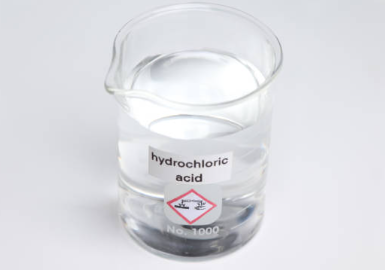
When calcium carbonate (CaCO₃) comes into contact with hydrochloric acid (HCl), it reacts to form calcium chloride (CaCl₂), water (H₂O), and carbon dioxide (CO₂). This is a straightforward acid-base reaction often demonstrated in laboratories and widely applied in industry.
Chemical Reaction Equation
The balanced chemical equation for this reaction is:
CaCO₃ + 2HCl → CaCl₂ + H₂O + CO₂↑
Why Does This Reaction Happen?
Calcium carbonate is an ionic compound made up of calcium ions (Ca²⁺) and carbonate ions (CO₃²⁻). Hydrochloric acid is a strong acid that dissociates completely into hydrogen ions (H⁺) and chloride ions (Cl⁻) in solution. The H⁺ ions react with the carbonate ion to form carbonic acid (H₂CO₃), which quickly breaks down into water and carbon dioxide gas. Meanwhile, calcium ions bond with chloride ions to produce calcium chloride, a soluble salt.
Step-by-Step Reaction Process
| Step | Chemical Process | Result |
|---|---|---|
| 1 | CO₃²⁻ + 2H⁺ → H₂CO₃ | Carbonic acid forms |
| 2 | H₂CO₃ → H₂O + CO₂ | Breakdown to water and carbon dioxide |
| 3 | Ca²⁺ + 2Cl⁻ → CaCl₂ | Calcium chloride produced |
Applications in Real Life
This simple reaction has wide-ranging significance across different industries and everyday life:
- Laboratory Demonstrations: Commonly used in chemistry education to illustrate gas evolution reactions and to generate CO₂ for experiments, including photosynthesis studies.
- Medicine: Basis of antacid formulations to neutralize excess stomach acid and relieve symptoms of heartburn and indigestion.
- Pharmaceutical Technology: Sometimes used in controlled-release formulations to aid the dispersion and absorption of active ingredients.
- Industrial Use of Calcium Chloride: The calcium chloride produced is used for road de-icing, dust suppression, and as a drying agent in laboratories.
- Construction: Calcium carbonate and its derivatives contribute to cement and concrete formulations, enhancing strength and durability.
Safety Considerations
Because the reaction releases carbon dioxide gas, it should be conducted in a well-ventilated area. High concentrations of CO₂ can displace oxygen in the air, potentially causing dizziness or respiratory issues. Industry guidelines, including those from occupational health agencies, recommend monitoring CO₂ levels in enclosed workspaces.
Scientific & Educational Importance
This reaction illustrates fundamental acid-base chemistry and provides a real-world example of chemical principles such as ionic bonding, acid dissociation, and gas evolution. It also demonstrates how a simple classroom experiment connects to large-scale applications in medicine, construction, and industrial production.
FAQs
What happens when calcium carbonate reacts with hydrochloric acid?
It produces calcium chloride, water, and carbon dioxide gas, following the equation: CaCO₃ + 2HCl → CaCl₂ + H₂O + CO₂.
Why is this reaction used in antacids?
Because calcium carbonate neutralizes stomach acid, reducing discomfort from heartburn and indigestion. The same principle underlies its laboratory and industrial uses.
Is calcium chloride safe?
Yes, in controlled amounts. Calcium chloride is widely used in food processing, road safety, and laboratories. However, it should be handled carefully as it is hygroscopic and can cause skin or eye irritation in concentrated form.
Looking for chemical products? Let suppliers reach out to you!
You May Interested In


2026-10-09
Trade Alert
Delivering the latest product trends and industry news straight to your inbox.
(We'll never share your email address with a third-party.)

Related News
-
Calcium Chloride Uses in Food, De-Icing, and Safety Concerns
-
How to Use Calcium Chloride in Food: A Practical Guide with Tips and Real-Life Uses
-
The Calcium Connection: Calcium Chloride And Sodium Carbonat
-
Applications of Caesium Iodide
-
Calcium Sulfate: Properties, Uses, and Applications
-
Heptane: Properties, Uses, and Industrial Applications
-
HNO2 (Nitrous Acid): Properties, Uses, and Safety
-
Silver Nitrate: Medical Uses, Photography History, and Staining Properties
-
Phosphoric Acid: Uses in Cola, Rust Removal, and Fertilizers Explained
-
Bovine Serum Albumin (BSA): Role in Cell Culture & Laboratory Applications
Recommend Reading
-
![Cytosine: Structure, DNA Pairing, and Role in Genetics]()
Cytosine: Structure, DNA Pairing, and Role in Genetics
-
![Sodium Dodecyl Sulfate (SDS): Properties, Uses, and Safety]()
Sodium Dodecyl Sulfate (SDS): Properties, Uses, and Safety
-
![Hydrobromic Acid: Properties, Uses, and Safety]()
Hydrobromic Acid: Properties, Uses, and Safety
-
![Dimethyl Carbonate: Properties and Industrial Applications]()
Dimethyl Carbonate: Properties and Industrial Applications
-
![Potassium Carbonate: Properties, Uses, and Applications]()
Potassium Carbonate: Properties, Uses, and Applications
-
![Business Society September 24, 2026 LDPE Trend Analysis: Volatility]()
Business Society September 24, 2026 LDPE Trend Analysis: Volatility
-
![High Inventory Levels Put Pressure on DMF Market]()
High Inventory Levels Put Pressure on DMF Market
-
![Business Society PVC Trend Analysis for September 30, 2026: Slightly Bullish with Volatility]()
Business Society PVC Trend Analysis for September 30, 2026: Slightly Bullish with Volatility
-
![Business Society September 24, 2026 PP (Fiber) Trend Analysis: Volatility]()
Business Society September 24, 2026 PP (Fiber) Trend Analysis: Volatility
-
![Cost Volatility & Supply Tightening: PP Prices Surge and Consolidate in September]()
Cost Volatility & Supply Tightening: PP Prices Surge and Consolidate in September