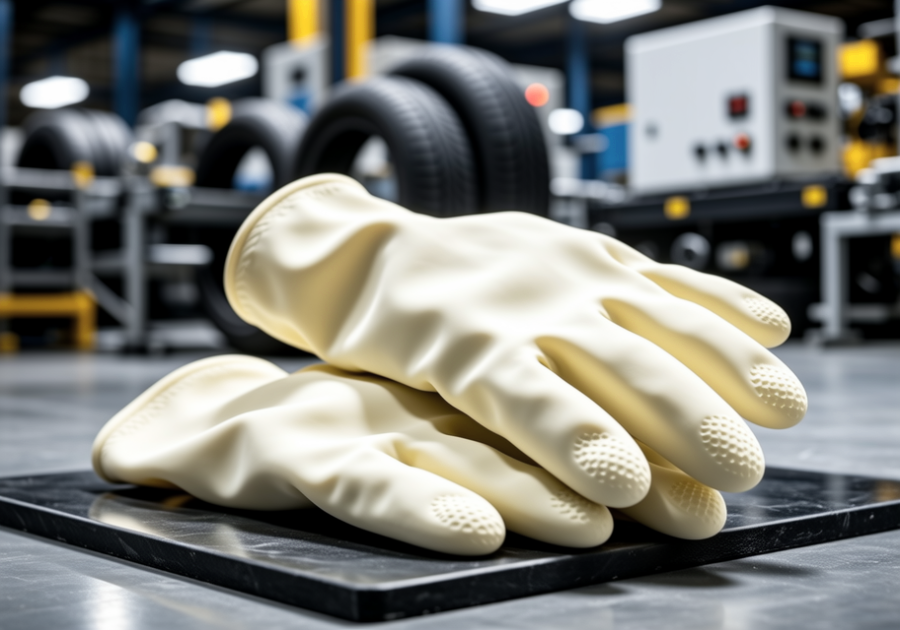
How can you Fuse Rubber Together?
Sometimes, gluing rubber to rubber doesn’t work, and this article solves that situation by explaining why that happens and how to make it work.
Introduction:
Glue is arguably one of the most common chemicals found in our households and industries. The majority of glues are manufactured from collagen derived from animal byproducts bones and skin). And are made by heating their collagen at extremely high temperatures, resulting in the formation of glue. Glue is also one of the common and cheap art supplies no matter whether in homes, workplaces, or classrooms. But most of the time people face trouble when gluing rubber to rubber to make it withstand during their DIY projects. Let’s explore why this happens along with related concepts of glue and commonly asked questions.
Types of Rubber in Chemistry:
To find success when gluing rubber to rubber, it is extremely important to understand the types of material you are trying to join with this glue and the type of glue itself. According to the chemistry concepts, rubber is commercially made in two broad types: thermoplastic and thermoset. Thermoplastics are known for their elastic and soft nature when they are heated. While, thermoset rubber, on the other hand, don’t melt when heated and are known to just catch fire during the process.
Fusing Rubber with Glue:
Before gluing rubber to rubber, it is important to know which kind of rubber you have, whether both are thermoplastic, thermosets, or different materials. This is to say, if they are the same, for example, both are thermoplastic materials, then heat them on a hot plate following gentle hand pressing into each other will result in a proper fix.
Sure, there will be some extra glue protruding outside from the joint which can be smoothed out with a suitable tool. It should be noted that this type of joint will not withstand high pressure applied on the surface of this service.
When Gluing Rubber to Rubber Doesn’t Work?
If you are trying to glue different types of plastics, they won’t work. That is why it is crucial to know what kind of rubber you are dealing with and what is the melting point of rubber. Rubbers with higher polymer density tend to have higher melting or softening temperatures before they can be used for gluing together.
Before attempting to glue rubber, it is recommended to first inspect whether the two participants in this gluing process stick together upon heating or not. Are they catching fire or are they becoming soft upon heating? Always start with a small piece of rubber or try to find the specification sheet of the rubber it was made for commercial use. If extra rubber is not available for experimentation, then it is recommended to start with a little adhesive and small area of rubber to check the gluing action and replace it if it doesn’t work.
Another common misconception is that vulcanizing fluid can be used in gluing rubber together. Vulcanizing fluids are only used during commercial rubber production processes. Many other strong chemicals like sulfur or other curing agents are also used which help in the polymer cross-linking in a rubber strand. Using such processes and chemicals for DIY is not feasible on a domestic scale.
Does Rubber Burn during Gluing?
The type of rubber being used for gluing will determine whether it will burn or not. Thermosets usually burn when externally heated during gluing process. Thermoplastic usually don’t burn, instead they melt and soften. It should be noted that if both kinds of rubbers are exposed to too much heat, they can end in uncontrolled burning and can completely damage the polymer structure. The result will be a spoiled piece of rubber along with the release of harmful fumes.
Wrapping Up:
Successful gluing rubber to rubber can happen only if one knows which kind of rubber he is dealing with and the type of glue used for sticking them together. It is always a good idea to first inspect the type of plastic involved in the process and avoid overheating the rubber if the adhesion process requires an external increase in temperatures.
Looking for chemical products? Let suppliers reach out to you!
Effective nuclear charge of Carbon?
You May Interested In


Glow70/KLOW80 99% China Peptides Warehouse Direct Delivery Lyophilized Powder in Stock
$169/UNIT FOB


2026-10-25
Trade Alert
Delivering the latest product trends and industry news straight to your inbox.
(We'll never share your email address with a third-party.)

Related News
-
HNO2 (Nitrous Acid): Properties, Uses, and Safety
-
Potassium Hydroxide (KOH): Soap Making, Batteries, and Safety
-
Heptane: Properties, Uses, and Industrial Applications
-
Sodium Pentothal: Medical Applications and Safety
-
Ascorbyl Palmitate: Properties, Uses, and Benefits
-
Isobutyl: Properties, Uses, and Industrial Applications
-
Chemical Reactions and Uses of Stilbene
-
Uses of Dithiothreitol in Laboratories
-
Iohexol: Properties, Uses, and Safety
-
Calcium Hypochlorite: Properties, Uses, and Safety
Recommend Reading
-
![Applications of Diphenyl Cyanide]()
Applications of Diphenyl Cyanide
-
![Chemical Properties of Dibenzylideneacetone]()
Chemical Properties of Dibenzylideneacetone
-
![Bivalirudin: Medical Uses, Properties, and Safety]()
Bivalirudin: Medical Uses, Properties, and Safety
-
![Permanganate: Properties, Uses, and Safety]()
Permanganate: Properties, Uses, and Safety
-
![SiO2: Properties, Uses, and Applications]()
SiO2: Properties, Uses, and Applications
-
![Premium Global Chemical Sourcing Requests (23 - 27 Feb, 2026)]()
Premium Global Chemical Sourcing Requests (23 - 27 Feb, 2026)
-
![Business Society September 20, 2026 Polyester Staple Fiber Trend Analysis: Clearly Downward]()
Business Society September 20, 2026 Polyester Staple Fiber Trend Analysis: Clearly Downward
-
![Business Society September 21, 2026 Acrylonitrile Trend Analysis: Mild Correction]()
Business Society September 21, 2026 Acrylonitrile Trend Analysis: Mild Correction
-
![China's Natural Rubber Market Fluctuates with an Initial Rise Followed by a Fall, Experiencing Range-bound Volatility]()
China's Natural Rubber Market Fluctuates with an Initial Rise Followed by a Fall, Experiencing Range-bound Volatility
-
![Recent Butadiene Rubber Market First Rapidly Surged, Then Experienced High-level Fluctuations]()
Recent Butadiene Rubber Market First Rapidly Surged, Then Experienced High-level Fluctuations